Apply Now

News
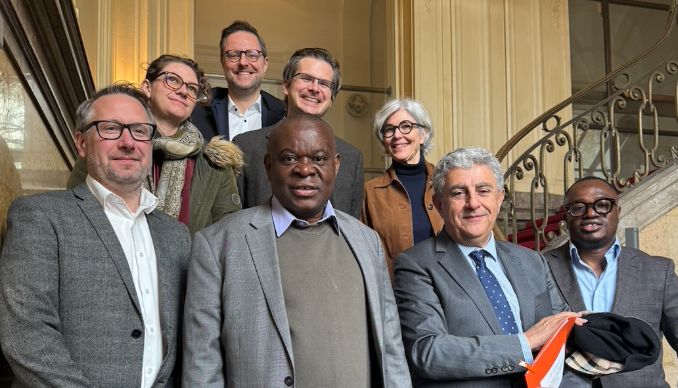
Sultan Barakat Visits Berlin as Keynote speaker on the Evolving Middle East–Africa Partnerships
Dr. Sultan Barakat, Professor at the College of Public Policy, and Distinguished Visiting Professor at the University of Johannesburg’s Qatar–South Africa Center for Peace Studies, undertook a strategic outreach visit to Berlin from November 3 to 5, 2025, as part of the research initiative West Asian and Sub-Saharan African Partnerships in Flux (WASSAP). The initiative is organized in partnership with CARPO and supported by the Robert Bosch Stiftung, with the visit aimed at advancing dialogue on how shifting relations between the Middle East and Sub-Saharan Africa are influencing European and German engagement.
During the trip, Dr. Barakat held consultations with senior German policymakers and analysts, including meetings at the German Institute for International and Security Affairs, Federal Foreign Office, and Ministry of Economy and Energy. Discussions focused on the growing diplomatic, economic, and security ties between Gulf states and African governments, and their implications for Europe’s strategic policy approach amid evolving global power dynamics.
A key highlight of the visit was the expert roundtable hosted at the Robert Bosch Stiftung, where Dr. Barakat served as a keynote contributor. The session explored how Gulf engagement is reshaping African agency, regional diplomacy, and the broader shift toward multipolarity. Participants discussed opportunities for constructive trilateral cooperation involving Germany, the Gulf, and African states.
Sultan Barakat Visits Berlin as Keynote speaker on the Evolving Middle East–Africa Partnerships
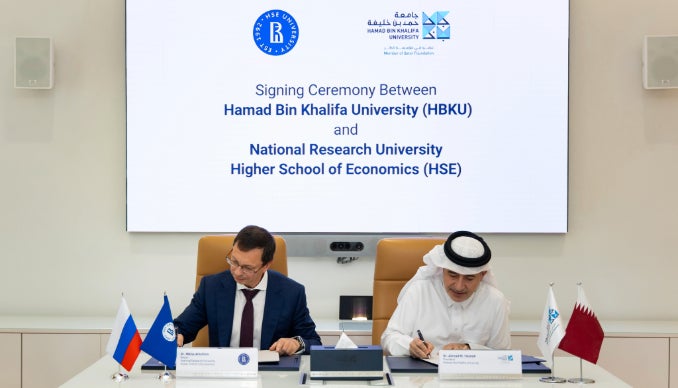
Hamad Bin Khalifa University and Russia’s National Research University Higher School of Economics Sign Cooperation Agreement
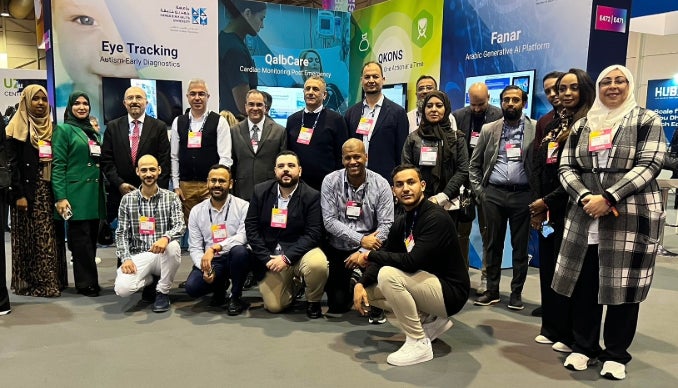
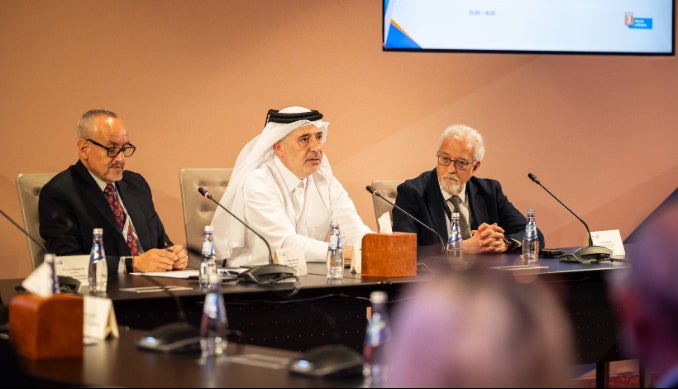
Hamad Bin Khalifa University Puts Innovation and Academic Excellence in the Spotlight at WISE 2025
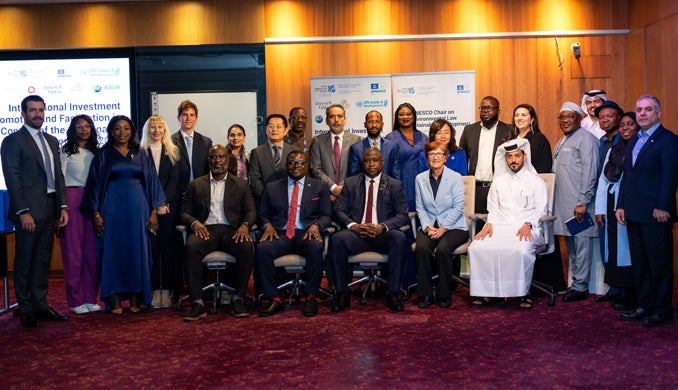
HBKU Hosts Global Conference on Investment Promotion and Sustainable Development
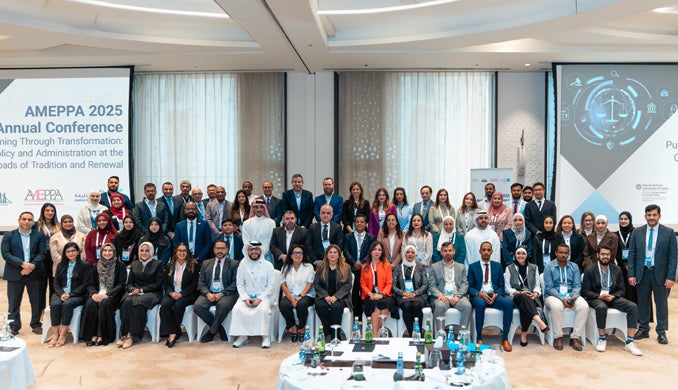
Experts Gather at HBKU for AMEPPA 2025 to Explore Governance Through Transformation
Insights

Healing the Metabolic Scar of Obesity
Obesity is one of Qatar’s most pressing public health challenges, affecting more than 70% of the adults and nearly half of all children. The most significant difficulty lies not in losing weight but in maintaining weight loss, a struggle driven by a powerful biological phenomenon: the epigenetic memory of adipocytes (fat cells). This “memory” prompts the body to regain lost weight.
Recent research indicates that heritable changes in gene expression, specifically epigenetic modifications that do not alter the DNA sequence, play a crucial role in the persistence of obesity and the development of type 2 diabetes (T2D). For Qatar, which faces some of the world’s highest rates of both obesity and diabetes, understanding this challenge is an urgent health priority.
The Obesity Challenge in Qatar
Qatar faces a unique health landscape. High consanguinity rates (54%), combined with unhealthy lifestyle changes, increase genetic susceptibility, making obesity prevention especially challenging. As a result, the country is seeing a sharp rise in T2D, especially among people with obesity. To tackle this challenge, efforts must go beyond conventional diet and exercise programs and address biological factors that drive weight gain and diabetes.
For instance, adipose tissue is more than a fat storage site. Fat cells are endocrine regulators that release hormones and signals that affect appetite, metabolism, inflammation, and insulin sensitivity. When a person gains too much weight, these cells become enlarged and stressed, leading to inflammation, mitochondrial dysfunction, and insulin resistance. Most importantly, fat cells retain a “memory” of past eating and metabolic patterns through epigenetic modifications. Even after weight loss, persistent gene changes leave individuals prone to weight gain and metabolic complications. This helps explain why traditional weight loss approaches often fail to produce lasting results.
Epigenetic Memory: the Biology Behind Obesity
Epigenetics is the mechanism behind this cellular memory, involving reversible, heritable changes in how genes work without altering the DNA sequence. In obesity, these mechanisms program fat cells to store fat more efficiently and resist insulin, while turning off genes that help the body burn energy. Even after weight loss, the body can remember its previous obese state and tends to return to it. This explains the high relapse rate after traditional interventions and why obesity is now recognized as a chronic, relapsing condition rather than a short-term disease.
In Qatar, childhood obesity is common, and the resulting epigenetic changes accelerate the risk of developing early-onset diabetes. While this presents a major public health challenge, it also opens new opportunities. Emerging evidence shows that lifestyle interventions such as regular physical activity and diets rich in anti-inflammatory nutrients can gradually remodel these epigenetic marks, softening the long-term scar of obesity. At the same time, researchers and scientists are developing innovative drug therapies and approaches targeting epigenetic pathways.
Addressing obesity in Qatar requires a comprehensive strategy. First, lifestyle approaches remain essential but should be designed with an understanding of their epigenetic impact. Second, Qatar’s advanced healthcare system, including resources like the Qatar Biobank, provides a platform for precision medicine approaches, where genetic and epigenetic biomarkers guide personalized interventions. Finally, the most significant long-term benefit will come from prevention, which starts in early life. Since children’s epigenomes are especially malleable, policies that promote maternal health, breastfeeding, and healthy childhood nutrition can help build resilience against obesity and metabolic disease.
Obesity is not just the accumulation of excess weight; it is an accumulation of epigenetic memory that locks the body into a state of weight gain and metabolic dysfunction. For Qatar, this scientific insight is a powerful call to action. By advancing research into adipocyte epigenetics and integrating these insights into its healthcare system, Qatar can protect its population from the growing burden of disease, set a global example in science-driven healthcare, and invest in the well-being of future generations.
Dr. Olfa Khalifa is a Research Fellow at Hamad Bin Khalifa University’s Qatar Biomedical Research Institute.
The thoughts and views expressed are the author’s own and do not necessarily reflect an official University stance.