 Apply Now
The University highlighted research, expertise, and new technologies shaping global conversations on human-centered and resilient learning systems
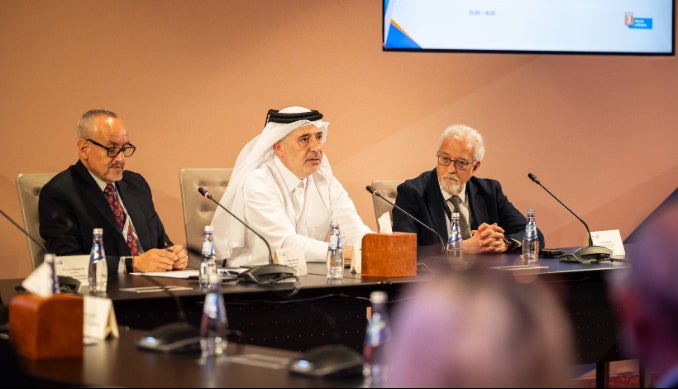
Hamad Bin Khalifa University (HBKU) participated proudly at the 12th edition of the World Innovation Summit for Education (WISE), continuing its long-standing, integral role as a partner of the conference.
This year’s event took place under the theme ‘Humanity.io: Human Values at the Heart of Education.’ This message was directly in tune with HBKU’s priorities of advancing human-centered innovation, ethics, interdisciplinary collaboration, and conversations that shape the future of education, globally, and particularly in the Global South.
Throughout the two-day event, HBKU actively contributed across the Summit’s program, demonstrating its commitment to strengthening society through teaching, learning, and science. HBKU faculty and researchers engaged with other experts, examining how education systems can, and must, serve humanity, while integrating new technologies and ethical models of innovation.
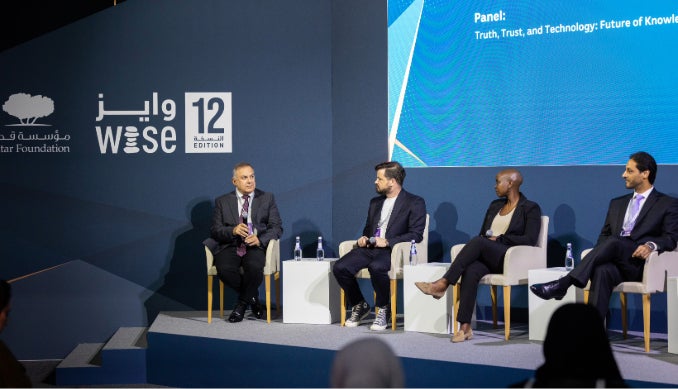
Her Excellency Sheikha Hind bint Hamad Al Thani, Vice Chairperson of Qatar Foundation and Chairperson of the Board of Trustees at Hamad Bin Khalifa University, chaired a timely high-level roundtable on ‘Building a National Response to Digital Addiction: Advancing Child and Adolescent Wellbeing in Qatar,’ which included Dr. Ahmad M. Hasnah, President of HBKU. Dr. Hasnah also participated in the session ‘Reinforcing the Ethos of Universities: Knowledge, Dialogue and Civic Responsibility,’ where he emphasized that HBKU champions knowledge-driven societies and advances national priorities through excellence and informed public discourse.
In the ‘Innovation and Identity,’ panel, Dr. Ahmed K. Elmagarmid, Executive Director, Qatar Computing Research Institute (QCRI), shed light on Qatar’s significant position in linguistic sovereignty and advancing Arabic-themed Large Language Models (LLMs). HBKU also presented a number of technological solutions originating from its research institutes and innovation clusters. QCRI displayed NUMUe, an AI-powered platform that supports Arabic language learning and literacy through cutting-edge models tailored to the cultural and contextual nuances of the Arab world. The Qatar Biomedical Research Institute’s (QBRI) eye tracking device for Autism diagnosis was further showcased, demonstrating how HBKU leverages emerging technologies to address regional priorities. These contributions highlighted the university’s role as a driver of impact-driven innovation, integrating research excellence, cultural relevance, and emerging technologies to sustainable solutions.
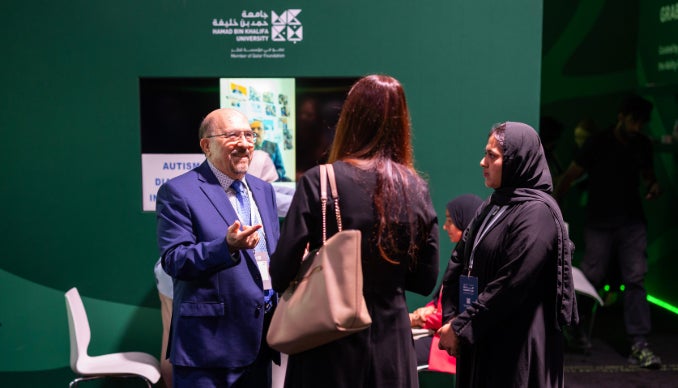
HBKU’s contributions at WISE 2025 reaffirm its growing role as a catalyst and leader within Qatar Foundation’s ecosystem, convening expertise, promoting collaboration, and driving transformation toward a more inclusive and human-centric educational future.
Share: