Apply Now

Discussion highlighted emerging technology and workforce trends in the energy industry
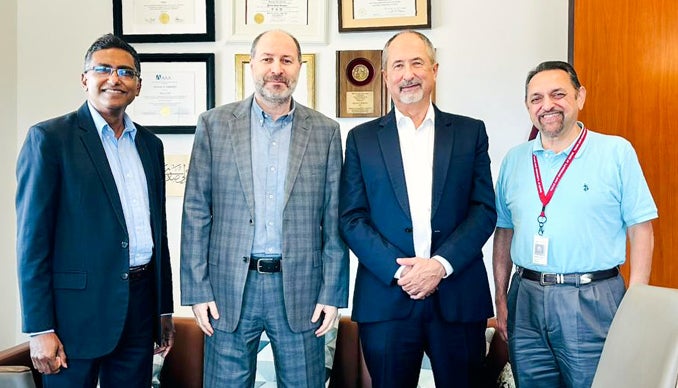
The College of Science and Engineering (CSE) recently hosted Olivier Houzé, President, Society of Petroleum Engineers, and Co-Founder and Managing Director of KAPPA, for an interactive talk session titled ‘Updates on Energy Transition, Professional Demographics and Generative AI’.
The talk, hosted by Dr. Mohammad Azizur Rahman, Associate Professor, CSE, explored three key themes shaping the SPE’s direction in the coming decade. The first theme examined the organization’s position in the context of the global energy transition, offering a unified narrative that reconciles diverse regional perspectives on this critical issue. The second focused on the evolution and demographics of SPE’s professional membership, underscoring the challenge of attracting and retaining students and young professionals. The final topic highlighted SPE’s latest advancements in artificial intelligence through the launch of the Energy LLM—a generative AI model trained on 70 years of SPE publications.
During the session, Houzé extensively discussed the SPE’s commitment to promoting collaboration among members as well as encouraging more young adults to pursue petroleum engineering at universities, highlighting the growing competition from emerging sectors such as renewable energy, data science, and technology. He emphasized the importance of adopting sustainable practices in the industry to address modern challenges. He also added that the Energy LLM launch demonstrates how AI can accelerate problem-solving in critical areas such as energy efficiency, emissions reduction, and resource management, thereby contributing to the global energy transition.
Commenting on the lecture, Dr. Rahman said: “It is important for students and aspiring engineers to hear from the SPE president. The discussions touch on critical issues that shape not only the SPE but the future of energy in hydrocarbon-producing countries. HBKU’s role as a pioneer in research and development in Qatar makes this session particularly significant, inspiring the next generation of engineers to tackle the most pressing challenges and explore emerging opportunities.”
The event highlighted the importance of dialogue between industry leaders and academia in preparing future workforce for the energy sector and fostering sustainable solutions for the years ahead.
Share:
Related News

Hamad Bin Khalifa University and Quantum Computing Inc. Expand Global Quantum Adoption Through New Framework Agreement

Hamad Bin Khalifa University Earns Scale-Up Grant for AI Scholar MaternaCare Project

Hamad Bin Khalifa University and Smithsonian Science Advance STEM Learning in Qatar
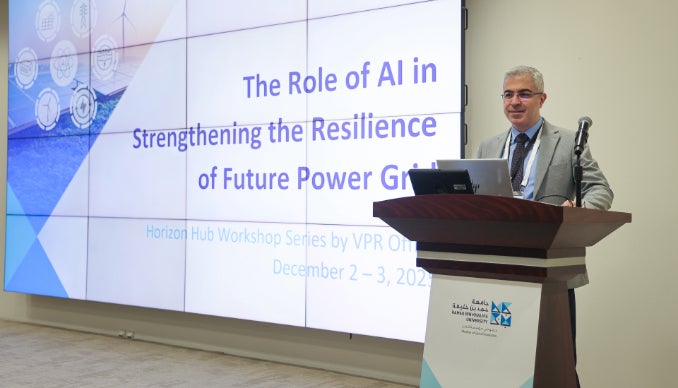
Experts Examine Important AI Solutions in Building Resilient and Sustainable Power Systems