Apply Now

CILE convened leading scholars to reflect on key publications shaping the global discourse on AI and its moral, social, and political implications
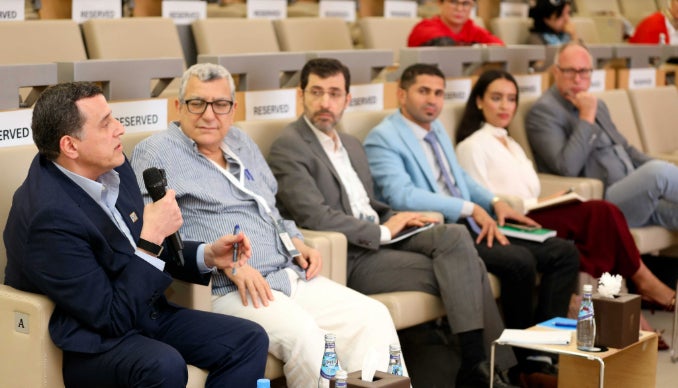
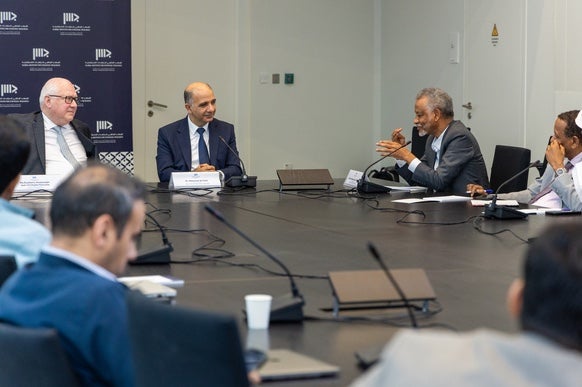
The College of Islamic Studies (CIS) has highlighted several informative publications addressing the growing impact of artificial intelligence (AI) in our daily lives. In a seminar, titled Seminal Texts in AI Ethics: Author Reflections and Dialogues, hosted by the Research Center for Islamic Legislation and Ethics (CILE), leading scholars debated the philosophical, moral, and ethical applications of AI as well as its implications for humanity.
This enlightening event built on the global conference AI Ethics: The Convergence of Technology and Diverse Moral Traditions, hosted by Hamad Bin Khalifa University (HBKU). Discussions focused on four books, with each author elaborating on the central arguments of their work. The presentations were followed by reflections from experts and dialogue with the audience, further enriching the exchange of ideas on this critical discourse.
Featured authors and works include Dr. David Gunkel, Northern Illinois University, who talked about the interaction between humans and machines through his book titled Person, Thing, Robot. For his part, Dr. Munther Dahleh, Massachusetts Institute of Technology, presented Data, Systems, and Society: Harnessing AI for Societal Good, highlighting the intersection of statistics, data science, information and decision systems with social and institutional behavior across multiple domains.
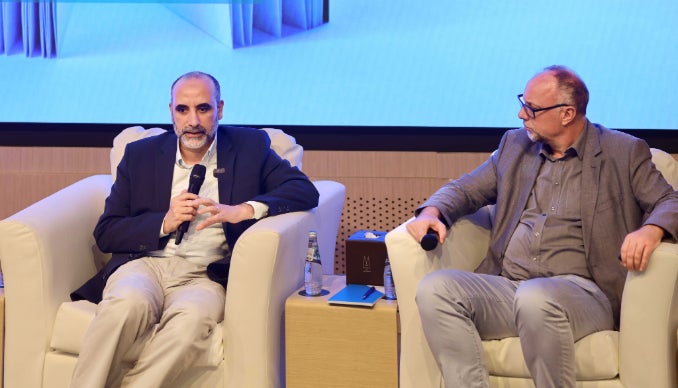 Additionally, Dr. Mark Coeckelbergh, University of Vienna, discussed his work The Political Philosophy of AI: An Introduction,which describes how AI affects political and civil issues such as democracy, racism and climate change. Dr. Aída Ponce Del Castillo, European Trade Union Institute, discussed the impact of AI in the workplace through her book Artificial Intelligence, Labour and Society which employs a multidisciplinary approach, incorporating a diversity of geographical and cultural perspectives.
Commenting on the event, Dr. Mohammed Ghaly, Professor of Islam and Biomedical Ethics and Head of CILE, said: “AI is increasingly embedded in our lives, shaping the future of humanity and our values in the process. This lecture adds a new dimension to the conversation, highlighting key literature that emphasizes the urgent need for a multidisciplinary and ethical approach to AI development.”
Insights shared during the event amplified calls for dialogue and collaboration on these pressing issues, fostering a future where technology and humanity coexist responsibly. In doing so, the seminar reflects the overarching themes of the recent conference on AI Ethics, spanning healthcare, urban design, security, education, finance, and the future of the workplace.
Share:
Related News
Hamad Bin Khalifa University Partners with QFFD and UNHCR for World Refugee Day Gathering
MoPH and HBKU Launch National Survey on Developmental Disabilities Diagnostics, Interventions
Hamad Bin Khalifa University Hosts 10th CEOs and Islamic Finance Leaders Roundtable