Apply Now
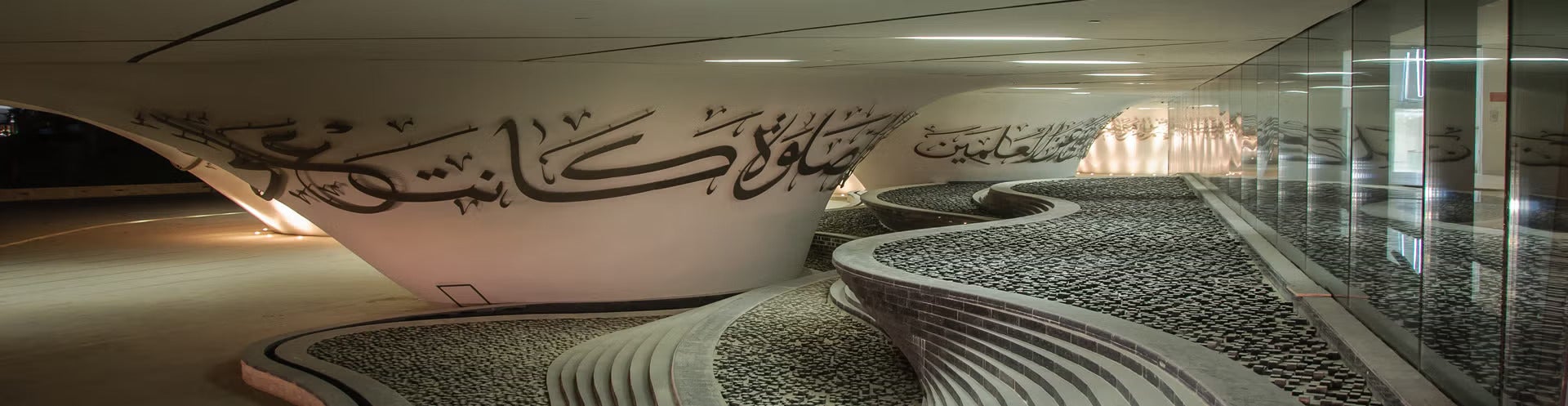
Event emphasized the importance of inclusive environments, reflecting Qatar's commitment to empowering individuals with disabilities through cohesive policies
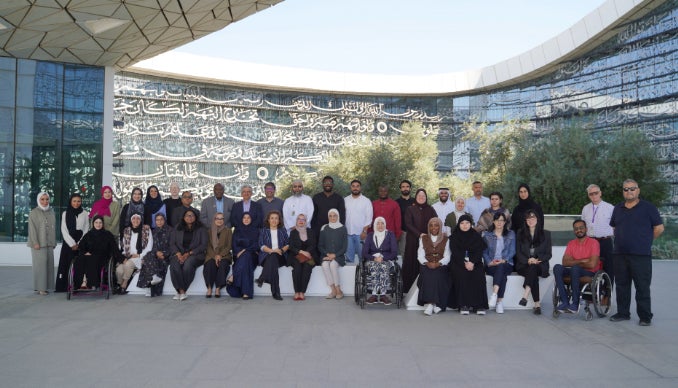
Hamad Bin Khalifa University’s College of Public Policy (CPP), in partnership with the College of Islamic Studies (CIS) and the College of Humanities and Social Sciences (CHSS), hosted a capacity-building workshop to examine the inclusion of persons with disabilities through enabling accessibility of the built environment.
The high-demand session brought together practitioners and graduate students from architecture, social sciences, public policy, and the disability community. It builds on the recently issued Law No. 22 of 2025 regarding Persons with Disabilities in Qatar, which reinforces the state’s commitment to ensuring that those with disabilities fully participate in society. The Law establishes a robust legal framework to protect and promote the rights of persons with disabilities and introduces measures to encourage inclusion, accessibility and non-discrimination across all sectors.
The workshop was delivered by Mo Mohammadi, a UK-based inclusive design planning and strategy specialist who led the inclusion aspect of delivering FIFA’s most accessible World Cup 2022 in Qatar. The workshop provided participants with insights on developing solutions that prioritize accessibility, equity, and people-centered urban design.
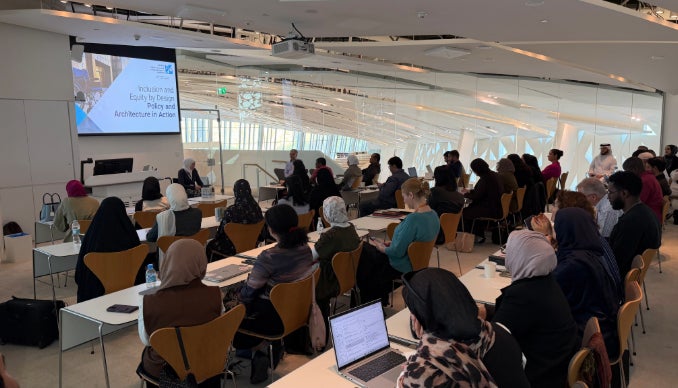
Commenting on the workshop, Dr. Hira Amin, Assistant Professor, CPP, stated: “This workshop provided a valuable opportunity to bring together participants to reimagine and debate what truly inclusive spaces can look like. By working together and sharing insights, the university champions meaningful, action-oriented conversations that shift our roles from being ignorant obstructors to informed facilitators for our peers with disabilities.”
Participants engaged with the core principles of inclusive design in a lively conversation, drawing practical lessons from everyday encounters with built environments in Qatar and more broadly Sessions covered local and international design standards, linking theory to practice while equipping participants with the knowledge that meaningful accessibility extends well beyond basic building codes. The workshop concluded by emphasizing key insights and empowering participants to apply inclusive principles across their organizations, driving tangible impact toward more accessible, equitable environments.
Share:
Related News

Hamad Bin Khalifa University Lecture Explores Industrial Policy as an Engine of Diversification and Development
College of Public Policy Professor Appointed to International Review of the Red Cross Editorial Board
Hamad Bin Khalifa University’s College of Public Policy and International Public Policy Association Host Second International Winter School on Public Policy

Hamad Bin Khalifa University Workshop Examines Gulf States’ Contributions to Social Protection in Crisis Zones