Apply Now
Color Centers in Diamond for Quantum Applications
Group:
Quantum Sensing
Status:
Active
Duration:
2 years
(October 2025
–
September 2027)
This project focuses on advancing quantum technologies in the areas of computation, communication, and sensing, with a particular emphasis on utilizing color centers in diamonds, specifically nitrogen-vacancy (NV) and silicon-vacancy (SiV) centers. These color centers possess unique properties, such as long-lived spin quantum states and spin-dependent optical transitions, which make them highly suitable for a range of quantum applications.
One of the primary goals of the project is to develop highly sensitive quantum sensors using NV centers. These sensors are capable of detecting extremely subtle magnetic fields, electric fields, and temperature variations, with nanoscale resolution. Such capabilities are crucial for applications in fields like navigation, robotics, biology, and nanotechnology, where precise measurements are essential.
In addition to sensing, the project aims to create scalable quantum processors by leveraging the electron and nuclear spins of NV centers. Through the development of sophisticated optical and microwave techniques, we will perform quantum logic operations and implement quantum error correction schemes. The long coherence times of these spin states, particularly in ultrapure diamond samples, enable the preservation of quantum information over extended periods, which is critical for effective quantum computation.
The project also explores the potential of NV centers in quantum communication networks. By functioning as single-photon sources and detectors, NV centers can support quantum key distribution (QKD) protocols and enable the creation of long-distance quantum communication channels. The ability to coherently couple NV centers to photons is essential for implementing quantum teleportation protocols and extending quantum networks.
Our research is supported by state-of-the-art experimental equipment, including a custom-built confocal microscope, which allows us to conduct cutting-edge experiments. By combining the exceptional properties of color centers with innovative quantum techniques, this project seeks to pioneer scalable quantum technologies with transformative applications in quantum computing, sensing, and communication. Additionally, the project will explore hybrid quantum architectures by integrating NV centers with other quantum systems, such as superconducting circuits or trapped ions, to harness the benefits of different quantum technologies.
Collaborators

Funding


Towards Quantum Large Language Models
Group:
Quantum Computing
Status:
Active
Duration:
3 years
(September 2025
–
August 2028)
Large Language Models (LLMs), such as GPT and BERT, have revolutionized natural language processing (NLP), excelling in tasks like translation, summarization, and sentiment analysis. Powered by advanced transformer architectures and trained on vast datasets, these models achieve impressive performance. However, classical machine learning (ML) approaches face inherent limitations when dealing with the high-dimensional, unstructured, and evolving nature of language, often requiring resource-intensive retraining and fine-tuning to maintain performance.
Quantum Machine Learning (QML) offers promising, though still largely exploratory, solutions to these challenges. By leveraging quantum properties such as superposition and entanglement, QML has the theoretical potential to process complex data spaces more efficiently, offering insights into linguistic patterns and relationships. However, one of the major hurdles in QML remains the efficient handling of large-scale data, as current quantum devices are limited in size and capability.
This project seeks to cautiously explore the integration of QML with LLMs to address some of the latter’s classical limitations. By operating in high-dimensional Hilbert spaces, quantum-enhanced methods could uncover richer linguistic structures and improve NLP applications such as translation and summarization. To achieve this, a hybrid classical-quantum framework will be developed, combining the strengths of both paradigms to address computational bottlenecks in training and optimization.
Custom QML algorithms will also be designed to tackle specific LLM challenges, including efficient training on smaller datasets and optimizing model configurations within the constraints of current quantum hardware. These approaches will be rigorously tested on near-term intermediate-scale quantum (NISQ) devices, with performance benchmarks against classical techniques.
While the field remains in its early stages, this project aims to provide realistic insights into the potential of quantum-enhanced LLMs, carefully addressing existing challenges while contributing foundational knowledge to advance quantum computing in NLP.
Funding
Members

Dr. Saif Al‑Kuwari
Director
Read More
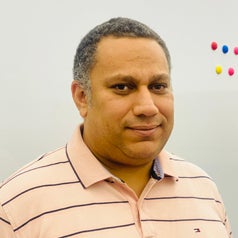
Dr. Ahmed Farouk
Senior Scientist Quantum Computing
Read More

Dr. Muhammad Bilal Akram Dastagir
Postdoc Quantum Computing
Read More
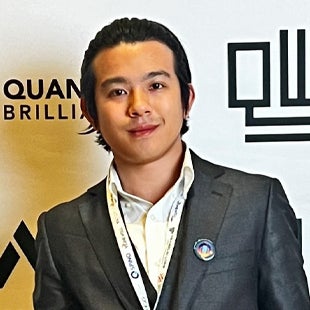
Dr. Kuancheng Chen
Postdoc Quantum Computing
Read More

Asma Al-Othni
PhD Student Quantum Computing
Read More

Jawaher Kaldari
PhD Student Quantum Computing
Read More

Aldana Al-Sulaiti
PhD Student Quantum Computing
Read More
Quantum Random Number Generator
Group:
Quantum Communication
Status:
Active
Duration:
2 years
(January 2025
–
December 2026)
Random number generation is an essential capability with wide-ranging applications, including cryptography, data security, statistical analysis, and video gaming. However, generating truly random numbers remains a challenge. Conventional random number generators (RNGs) often rely on deterministic algorithms, making their output predictable if the initial state or operational sequence is known.
Quantum Random Number Generators (QRNGs) offer a revolutionary solution by leveraging the inherent unpredictability of quantum processes to produce genuine randomness. These devices exploit the principles of quantum mechanics—specifically, the probabilistic behavior of quantum particles—to achieve randomness that is both information-theoretically secure and provably unpredictable. A prime example of this is using a single photon interacting with a 50:50 beam splitter, where its path choice (reflection or transmission) provides the basis for generating random bits.
Our QRNG research focuses on advancing the capabilities of these systems by utilizing photonics to generate and manipulate single photons from sources such as Spontaneous Parametric Down-Conversion (SPDC) or quantum emitters. These photons serve as the fundamental resource for producing high-rate, entanglement-certified random numbers. Through innovative techniques, we aim to ensure the randomness is generated efficiently, securely, and at a speed suitable for modern applications.
The impact of QRNGs extends beyond cryptographic security. Their ability to provide genuinely unpredictable random numbers holds promise for a variety of fields, from enhancing simulations in statistical modeling to improving fairness in gaming and lotteries. By developing scalable, fast, and secure QRNG technologies, we contribute to the next generation of quantum-enabled tools that redefine the standards of randomness, paving the way for secure and reliable applications across industries.
Funding

Quantum Sensing for Highly Precise Gravity Measurement
Group:
Quantum Sensing
Status:
Active
Duration:
3 years
(April 2024
–
March 2027)
Gravimetry is the science of measuring and quantifying the strength of a gravitational field. The sensors used for these measurements are known as gravimeters. Quantum gravimeters, in particular, leverage quantum effects to measure gravitational acceleration with high precision.
The concept of wave-particle duality, formulated by Louis de Broglie, suggests that particles exhibit both wave-like and particle-like properties. Atomic physicists exploit these quantum effects to develop quantum sensors based on matter-wave interferometry. In this project, we aim to combine the existing knowledge of such interferometers with state-of-the-art optically engineered lasers to enhance the sensitivity and precision of quantum sensors for inertial sensing, specifically gravity sensing.
Our approach involves trapping Rubidium atoms in a magneto-optical trap and cooling them to microkelvin temperatures using pairs of counter-propagating, frequency-tuned lasers. We employ a Raman pulse scheme to split the atomic wave function into a superposition of two momentum states, effectively creating two groups of atoms that follow different paths while free-falling under gravity. During free fall, another pulse reverses their momentum and direction of propagation, causing the two groups of atoms to converge and close the interferometer. A final pulse is then applied to produce an interference fringe, which reflects the ground state population probability fluctuations as a function of phase. This fringe carries the signature of gravity or acceleration.
We also aim to develop a broadband optical coherent control benefiting cold atom interferometry.
Earth's gravitational field varies with time and location, and precise information about these variations is crucial for many geophysical activities. For example, wise, accurate gravity and acceleration data can provide insights into gravity fluctuations caused by construction activities, as well as the presence of oil and mineral deposits. This, in turn, can lead to more accurate mapping of underground water currents, improved surveying techniques, and the development of satellite-free navigation systems.
Collaborators

Funding



Quantum Key Distribution Testbed
Group:
Quantum Communication
Status:
Active
Duration:
2 years
(November 2024
–
October 2026)
The future quantum internet will revolutionize global connectivity by enabling the secure transmission of information through quantum bits (qubits), harnessing the principles of quantum mechanics. At QC2's Quantum Communication Group, we are at the forefront of developing technologies to facilitate secure quantum communication and advance the realization of a quantum internet.
Our work focuses on creating a comprehensive control stack and innovative applications for the quantum internet while conducting experimental demonstrations compatible with existing telecom infrastructure. A key milestone in our mission is the establishment of Qatar’s first Quantum Key Distribution (QKD) Testbed. This testbed uses entangled photons generated through spontaneous parametric down-conversion to securely distribute encryption keys, ensuring that any eavesdropping attempts can be detected.
Initially, the QKD Testbed will establish a secure connection between two locations, laying the groundwork for a scalable network by integrating additional quantum nodes. This effort not only enhances the functionality and reach of the QKD network but also represents a significant step toward building the infrastructure necessary for entanglement-based QKD. These advancements promise transformative applications, most notably the ability to ensure private, tamper-proof communication.
By pioneering secure quantum communication technologies, QC2 is contributing to the global effort to build a future where the quantum internet revolutionizes how we connect and share information securely.
Collaborators
Funding