 Apply Now
Overview
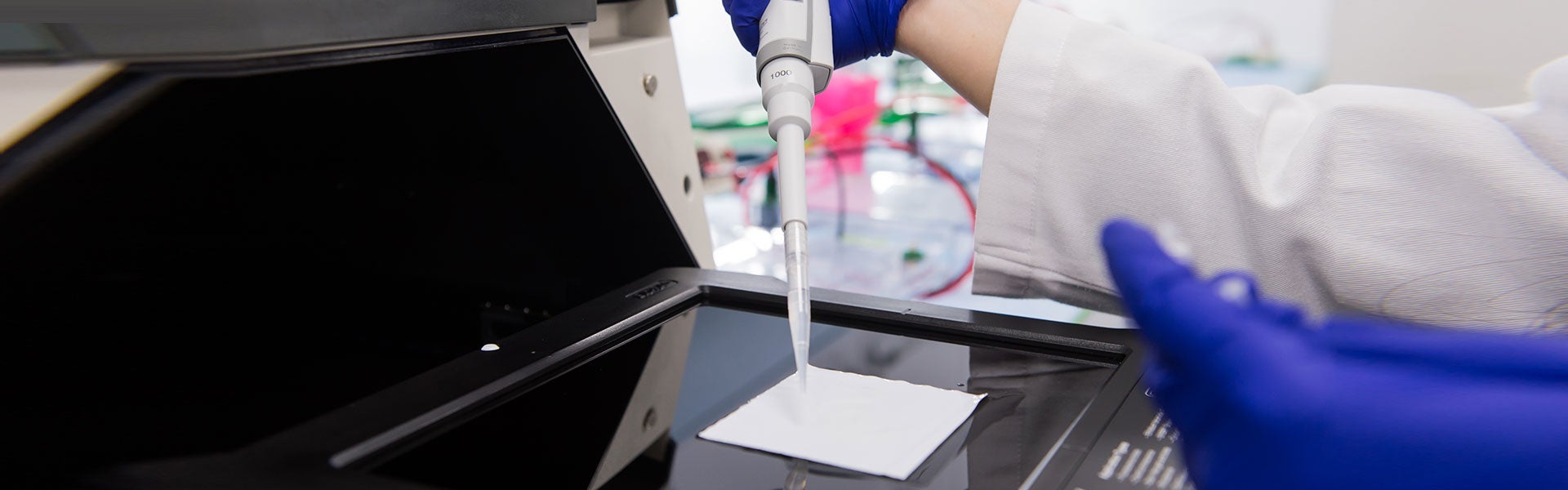
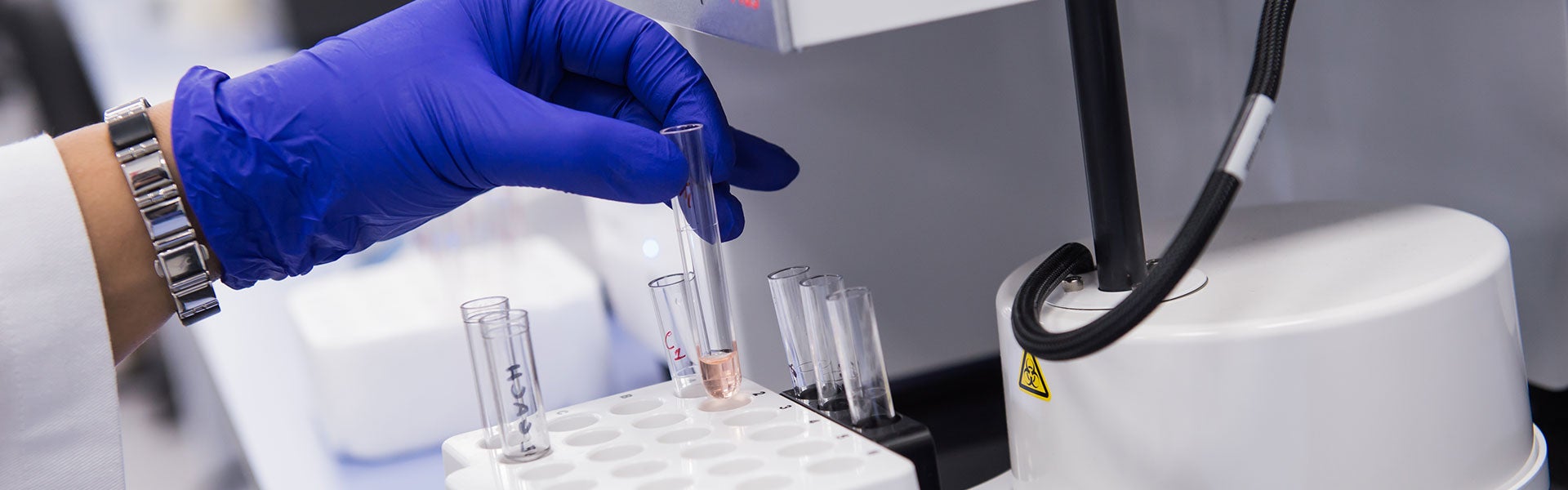
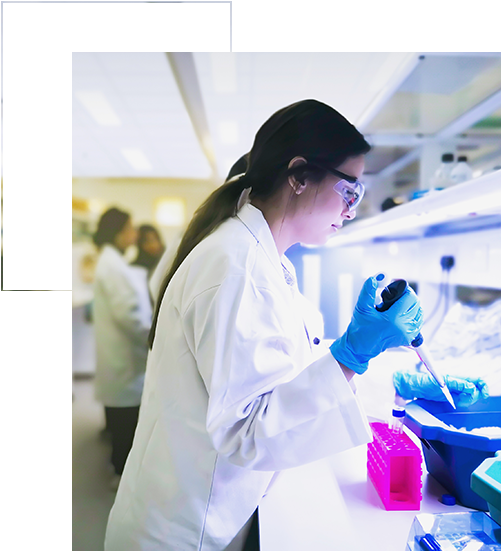
The College of Health and Life Sciences (CHLS) embodies a multidisciplinary learning approach to research and aims to become a dedicated hub of knowledge sharing in the area of health and life sciences.
The research at the college emphasizes the fields of biomedical sciences, genomics, precision medicine, and exercise science. A major focus is the creation of multidisciplinary teams, allowing the college to attract the necessary resources to maintain and build the technologies required to support its research goals.
Latest Research Projects
Lead Principal Investigator (LPI)

Dr. Omar Khan
Research Scientist & Lab Manager
Sponsor
QNRF
Project ID
HSREP03-1231-20003
Total Funding
QAR 30,000 to 60,000 for one year.
Qatar is experiencing an unprecedented increase in the number of cancer patients with colorectal cancer (CRC) being the second most diagnosed. Incidentally, it is the leading cause of cancer-related deaths worldwide and there is a greater risk that this might soon be true in Qatar. Two major challenges in colorectal cancer treatment are chemotherapy resistance and the lack of personalized medicine targets. Differences in patients’ genetic background and intra-tumor heterogeneity often yield a poor response to conventional chemotherapy, leading to disease relapse with acquired resistance and metastasis. Thus, there is an urgent need to identify molecular targets of prognostic and therapeutic value that cannot only predict chemotherapy outcome but ideally when inhibited could provide maximum synergy to chemotherapy. The goal of the proposed work is to characterize one such precision medicine target in colorectal cancer.
During this project, the team will perform a comprehensive functional and biological characterization of an anti-cancer target protein NRF7 in the mammalian intestine and CRC. The research will employ 3D mini-gut culture, genetically engineered fruit fly models, and CRISPR/Cas9 based genome editing as state-of-the-art to achieve the goals desired. The preliminary data strongly suggests that inhibiting NRF7 will block CRC and sensitize it to chemotherapy. Additionally, the team will explore the possibility of using NRF7 as a prognostic marker whose levels might predict whether a patient will or will not respond to Taxol therapy.
Lead Principal Investigator (LPI)
Dr. Omar Khan
Research Scientist & Lab Manager
Sponsor
QNRF
Project ID
HSREP03-1231-20003
Total Funding
QAR 30,000 to 60,000 for one year.
Qatar is experiencing an unprecedented increase in the number of cancer patients with colorectal cancer (CRC) being the second most diagnosed. Incidentally, it is the leading cause of cancer-related deaths worldwide and there is a greater risk that this might soon be true in Qatar. Two major challenges in colorectal cancer treatment are chemotherapy resistance and the lack of personalized medicine targets. Differences in patients’ genetic background and intra-tumor heterogeneity often yield a poor response to conventional chemotherapy, leading to disease relapse with acquired resistance and metastasis. Thus, there is an urgent need to identify molecular targets of prognostic and therapeutic value that cannot only predict chemotherapy outcome but ideally when inhibited could provide maximum synergy to chemotherapy. The goal of the proposed work is to characterize one such precision medicine target in colorectal cancer.
During this project, the team will perform a comprehensive functional and biological characterization of an anti-cancer target protein NRF7 in the mammalian intestine and CRC. The research will employ 3D mini-gut culture, genetically engineered fruit fly models, and CRISPR/Cas9 based genome editing as state-of-the-art to achieve the goals desired. The preliminary data strongly suggests that inhibiting NRF7 will block CRC and sensitize it to chemotherapy. Additionally, the team will explore the possibility of using NRF7 as a prognostic marker whose levels might predict whether a patient will or will not respond to Taxol therapy.
Lead Principal Investigator (LPI)
Dr. Omar Khan
Research Scientist & Lab Manager
Sponsor
QNRF
Project ID
HSREP03-1231-20003
Total Funding
QAR 30,000 to 60,000 for one year.
Qatar is experiencing an unprecedented increase in the number of cancer patients with colorectal cancer (CRC) being the second most diagnosed. Incidentally, it is the leading cause of cancer-related deaths worldwide and there is a greater risk that this might soon be true in Qatar. Two major challenges in colorectal cancer treatment are chemotherapy resistance and the lack of personalized medicine targets. Differences in patients’ genetic background and intra-tumor heterogeneity often yield a poor response to conventional chemotherapy, leading to disease relapse with acquired resistance and metastasis. Thus, there is an urgent need to identify molecular targets of prognostic and therapeutic value that cannot only predict chemotherapy outcome but ideally when inhibited could provide maximum synergy to chemotherapy. The goal of the proposed work is to characterize one such precision medicine target in colorectal cancer.
During this project, the team will perform a comprehensive functional and biological characterization of an anti-cancer target protein NRF7 in the mammalian intestine and CRC. The research will employ 3D mini-gut culture, genetically engineered fruit fly models, and CRISPR/Cas9 based genome editing as state-of-the-art to achieve the goals desired. The preliminary data strongly suggests that inhibiting NRF7 will block CRC and sensitize it to chemotherapy. Additionally, the team will explore the possibility of using NRF7 as a prognostic marker whose levels might predict whether a patient will or will not respond to Taxol therapy.
Lead Principal Investigator (LPI)
Dr. Omar Khan
Research Scientist & Lab Manager
Sponsor
QNRF
Project ID
HSREP03-1231-20003
Total Funding
QAR 30,000 to 60,000 for one year.
Qatar is experiencing an unprecedented increase in the number of cancer patients with colorectal cancer (CRC) being the second most diagnosed. Incidentally, it is the leading cause of cancer-related deaths worldwide and there is a greater risk that this might soon be true in Qatar. Two major challenges in colorectal cancer treatment are chemotherapy resistance and the lack of personalized medicine targets. Differences in patients’ genetic background and intra-tumor heterogeneity often yield a poor response to conventional chemotherapy, leading to disease relapse with acquired resistance and metastasis. Thus, there is an urgent need to identify molecular targets of prognostic and therapeutic value that cannot only predict chemotherapy outcome but ideally when inhibited could provide maximum synergy to chemotherapy. The goal of the proposed work is to characterize one such precision medicine target in colorectal cancer.
During this project, the team will perform a comprehensive functional and biological characterization of an anti-cancer target protein NRF7 in the mammalian intestine and CRC. The research will employ 3D mini-gut culture, genetically engineered fruit fly models, and CRISPR/Cas9 based genome editing as state-of-the-art to achieve the goals desired. The preliminary data strongly suggests that inhibiting NRF7 will block CRC and sensitize it to chemotherapy. Additionally, the team will explore the possibility of using NRF7 as a prognostic marker whose levels might predict whether a patient will or will not respond to Taxol therapy.
Research Highlights
Research Partners
Towards the Transition to zero-carbon Community: Scientific Framework for Integrated Social, Economic, and Technology