Apply Now

Have you ever wondered about the secrets behind the acceptance of Dua made by Allah’s righteous servants? Do you wish to learn the etiquette of Dua from the best of His chosen ones—the prophets, peace be upon them all?
The Qur’anic narratives of the prophets teach us valuable lessons and provide insight into the hardships and tribulations they endured. These stories remind us of their humanity—they were human beings like us who faced disobedient offspring, illness, the agony of child loss, and many other hardships that believers encounter.
What a source of comfort it is for Allah’s servants to know that this has been the divine tradition even with the most beloved of His creation! Through these stories, Allah teaches us how the prophets turned to Him in their most difficult moments, guiding us to follow their leads.
The Significance of Dua in Islam
Before delving into these lessons, it is essential to highlight the esteemed status of Dua in Islam. It is one of the greatest acts of worship, as Allah says: “Call on Me; I will answer your (Prayer): but those who are too arrogant to serve Me will surely find themselves in Hell – in humiliation!”(Ghafir: 60).
The Prophet Muhammad, peace be upon him, also emphasized this by saying: "Dua is the worship."
Reflecting on this noble worship act, one realizes it is among the greatest blessings bestowed upon believers. It is a refuge during life’s tribulations and connects the creations directly to their Creator without any intermediary.
Just as addressing kings requires proper etiquette, speaking to the Divine Almighty demands reverence and devotion. Who better for the believer to follow than His prophets, emulating their sacred conduct and drawing nearer to Allah through the guidance of His chosen ones? As Allah Himself commands: “These ˹prophets˺ were ˹rightly˺ guided by Allah, so follow their guidance.”(Al-An‘am: 90). Ibn Hajar Al-‘Asqalani defines Dua as "expressing utmost humility and need before Allah." It is "the advocate of one’s needs and the means to fulfill them through persistence."
Scholars have outlined several etiquettes of Dua, including sincerity, humility, avoiding transgression in prayer, maintaining purity, facing the Qibla, beginning with praise and gratitude, concluding with blessings upon the Prophet, peace be upon him, raising one’s hands towards the sky, and persistently beseeching Allah.
Lessons from the Dua of the Prophets
Prophet Ibrahim, peace be upon him, teaches us that Dua works miracles and that one of its foremost etiquettes is to affirm Allah's Oneness and obey His commands. He supplicated to his Lord after leaving his family in a barren valley, saying: “My Lord, make this city ˹of Mecca˺ secure and provide fruits to its people”(Al-Baqarah: 126).
Allah answered his prayer, making it a sacred and safe sanctuary where no blood is shed, no one is wronged, and no hunting is permitted. Later, the blessed Zamzam spring flowed for his descendants. Ibrahim also sought Allah’s mercy by invoking his dedication to prayer and good deeds:
“Our Lord! I have settled some of my offspring in a barren valley near Your Sacred House, our Lord, so that they may establish prayer. So, make the hearts of ˹believing˺ people incline towards them and provide them with fruits, so perhaps they will be thankful.” (Ibrahim: 37).
Back in the old days in the Arab region, a seeker of generosity would often remind benefactors of their past kindness to elicit further generosity. Similarly, the prophets recall Allah’s previous blessings to instill hope in their Dua.
Prophet Zakariya, peace be upon him, prayed: “ I have never been disappointed in my prayer to You, my Lord!” (Maryam: 4). What a powerful hope “ I have never been disappointed”
He recalled all his past dua and all Allah’s responses to his dua, hence, I won’t be disappointed this time as well, and Allah honored his present request: “O Zachariah! Indeed, we give you the good news of ˹the birth of˺ a son” (Maryam: 7). Likewise, Prophet Ibrahim (peace be upon him) said:
“I will continue to call upon my Lord ˹alone˺, trusting that I will never be disappointed in invoking my Lord.” (Maryam: 48).
In the same chapter, Allah responds by granting him what he asked – children- and more:
"So We gave him Isaac and Jacob, and all of them We made prophets." (Maryam: 49-50).
Another lesson from Prophet Zakariya’s Dua is praying to Allah when witnessing His blessings upon others. When he saw divine sustenance granted to Maryam – Mary, peace be upon her, he prayed for an offspring: "Every time Zechariah entered upon her in the prayer chamber, he found with her provision. He said, "O Mary, from where is this [coming] to you?" She said, "It is from Allah. Indeed, Allah provides for whom He wills without account. At that, Zakariya called upon his Lord, saying, ‘My Lord, grant me from Yourself a good offspring. Indeed, You are the Hearer of Dua.’ So, the angels called him while he was standing in prayer in the chamber, "Indeed, Allah gives you good tidings of John, confirming a word from Allah and [who will be] honorable, abstaining [from women], and a prophet from among the righteous." (Aal ‘Imran: 37-39).
The prophets endured immense hardships. When Prophet Hud, peace be upon him, was rejected and threatened by his people, he turned to the Ever-Living, the Sustainer, fully relying on Him:
"I have put my trust in Allah—my Lord and your Lord. There is no living creature that is not completely under His control. Surely my Lord’s Way is perfect justice." (Hud: 56). This is a divine reminder to all his servants, that all creatures are under Allah’s control.
Similarly, Prophet Lut, peace be upon him, faced severe hardship, and in his moment of helplessness, he cried: "If only I had the strength ˹to resist you˺ or could rely on a strong supporter." (Hud: 80).
The Prophet Muhammad, peace be upon him, later commented on this saying: "May Allah have mercy on Lut! He indeed took refuge in a strong support."
The angels said, “O Lot! We are the messengers of your Lord. They will never reach you. So travel with your family in the dark of night, and do not let any of you look back, except your wife. She will certainly suffer the fate of the others.1 Their appointed time is the morning. Is the morning not near?” (Hud: 81)
Prophet Yusuf, peace be upon him, beautifully acknowledged Allah’s mercy and benevolence in his Dua: "He was truly kind to me when He freed me from prison and brought you all from the desert after Satan had ignited rivalry between me and my siblings. Indeed my Lord is subtle in fulfilling what He wills. Surely, He ˹alone˺ is the All-Knowing, All-Wise. My Lord! You have surely granted me authority and taught me the interpretation of dreams. ˹O˺ Originator of the heavens and the earth! You are my Guardian in this world and the Hereafter. Allow me to die as one who submits and join me with the righteous." (Yusuf: 100-101).
Reflecting on the Dua of the prophets is an invitation to every believer seeking closeness to Allah—especially in the blessed month of Ramadan. For those enduring hardships, it is a reminder of Allah’s power and mercy, an encouragement to seek Him through His past kindness, and a call to take refuge and trust His stronghold. Indeed, Allah’s deliverance is always near.
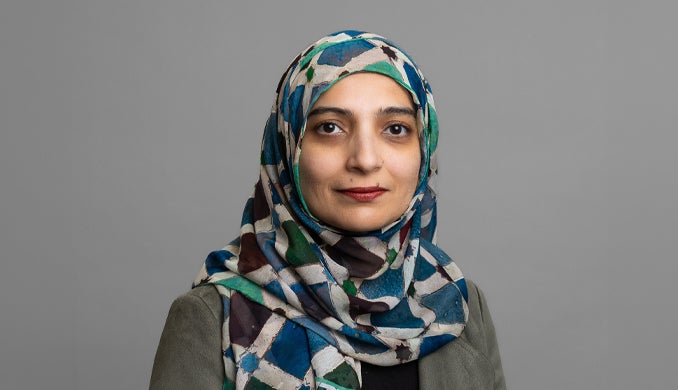
Fatima El-Hag is a DPhil candidate at the Centre for Socio-Legal Studies, Faculty of Law, University of Oxford. She is an alum of the Master’s program in Contemporary Islamic Studies at Hamad Bin Khalifa University’s College of Islamic Studies.
Share:
Related News