Apply Now
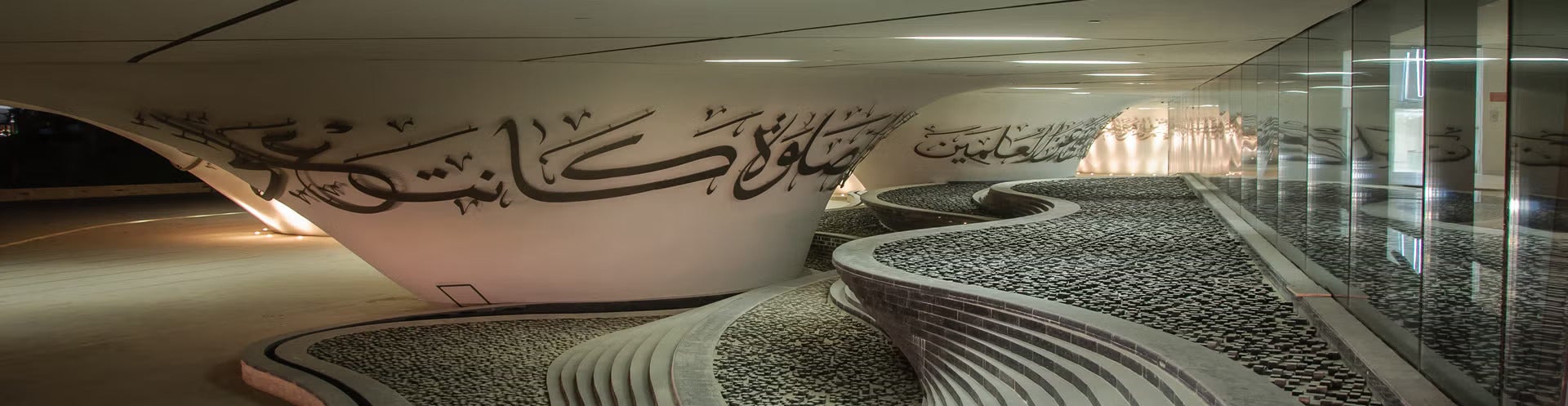
As the 2026–27 academic year gets underway, 282 public schools and 69 kindergartens welcomed around 148,000 students. At its annual educational meeting, the Ministry of Education and Higher Education set the tone for the year under the theme: “People First, Authenticity is Strength, Digitalization is Empowerment.”
Schools do more than transmit knowledge; they shape how children understand themselves and their place in the world. Every educational reform carries an idea of the person education should cultivate. When borrowed from another context without examining its assumptions, that idea risks defining children in terms that leave little room for their own histories and aspirations. This matters in both the curriculum and teacher education. If a civilization appears only as heritage, rather than as a living tradition of values, thought, and reasoning, students may receive the message that serious thinking happens elsewhere.
Similarly, if teachers are prepared chiefly to deliver measurable outcomes, they may have fewer opportunities to attend to students’ questions, judgements and ability to develop a sense of self. Identity cannot, therefore, be secured simply by adding a subject called ‘identity’ while leaving the system’s underlying idea of the person unexamined.
A central theme in educational thought in Islam is that purpose is primary. Al-Ghazālī opens the Kīmiyāʾ al-Saʿāda with self-knowledge, because a person who does not know what they are, cannot know what their learning is for. In the Iḥyāʾ, his sharpest criticism is reserved for scholars who seek knowledge for status and disputation: knowledge sought for the wrong reasons deforms its holder. By understanding what education is for, educators can judge a subject, teaching method, or assessment by whether it serves that criterion.
Otherwise, the question of purpose stays unanswered: primary school prepares children for secondary school, secondary school for university, and university for employment. The labour market then answers a question education has never resolved for itself: what is it for? Yet, market logic only prices a credential; it cannot describe a holistic person, because its instruments signify the transaction and the interchangeable unit, while education runs on neither. Education is a relationship before it is a service, and the same lesson given to two students becomes two different things. Early Muslim societies built their institutions of learning on this understanding; knowledge was transmitted as a trust within a chain of people, endowed through waqf, becoming gifted as an ‘amanah’ rather than sold as a ‘commodity’.
When education is reduced to a transaction between a student-customer and a teacher-provider, its purpose shifts from shaping a holistic person to delivering a product for the job market, along with transforming the social architecture that once held teacher, student and community in a relation of trust.
Such a balance of rootedness and openness informs the newly established School of Education at Hamad Bin Khalifa University. Its first programme, the MA in Comparative Education, prepares educators, researchers and leaders to navigate these questions. Students begin with Islamic accounts of human flourishing, study educational thought from other civilizations critically, and spend sustained time in Qatari classrooms. Our work begins with a fundamental question: education for all, but to shape what kind of person?
Ibn Khaldūn understood learning as malakah: a habit of mind formed by sustained practice under a teacher. He objected to teaching through abridgements, arguing that this gave students the words of a science without developing the habits needed to make it theirs. In this sense, competency frameworks can become modern abridgements when they specify outcomes without explaining how the intellectual habits underpinning them are formed. Since education systems across the region have drawn selectively on international frameworks, the task is to examine how these frameworks are interpreted and used: what idea of the learner do they convey, how far does that idea reflect the society they are intended to serve, and how well do they prepare teachers to grapple with the complexities of ‘authenticity’ in these settings?
Frameworks and examinations do not interpret purpose; but teachers do. Teacher education is, therefore, identity work before it is method. Would a child who arrives at seven with an appetite for wonder still retain it at 14? Do teachers, rightly placed by the Ministry at the heart of the process, have time to know a child rather than merely process one? As artificial intelligence enters the curriculum, are we forming judgement as well as skill?
More than a century ago, the Tunisian Muslim scholar Muḥammad al-Ṭāhir Ibn ʿĀshūr critically examined the Zaytūna institution in Tunis, where he had studied and taught. He challenged teaching detached from learners’ needs, social life and educational purpose. His critique began with a Qur’anic question: A-laysa al-ṣubḥ bi-qarīb? “Is the morning not near?” His approach to reform emerged from the scholarly lineage that had shaped him, combining openness to useful ideas with a commitment to renewing the tradition while remaining rooted in it.
The new academic year offers promise, but a pertinent question that should prompt every good teacher remains: What am I doing this for? The year's theme sets the stage for an answer; the rest is for teacher education programmes to accomplish.
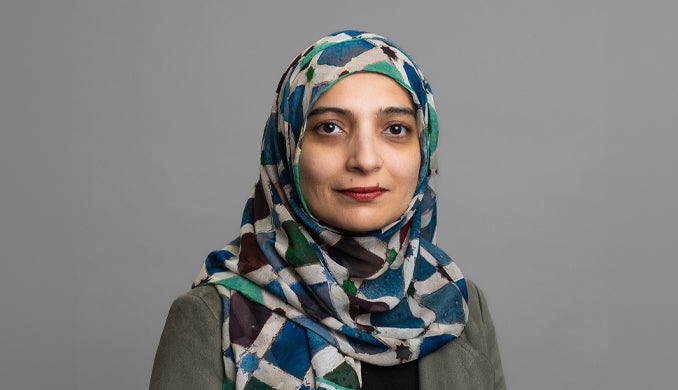
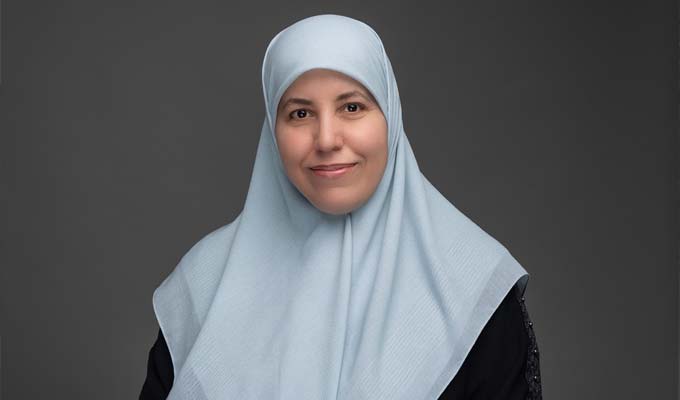
Dr Fella Lahmar is Assistant Professor of Education at Hamad Bin Khalifa University's School of Education, where she coordinates the MA in Comparative Education.
Share:
Related News