Apply Now

Robust frameworks foster investor confidence, ensuring equitable participation in the global economy
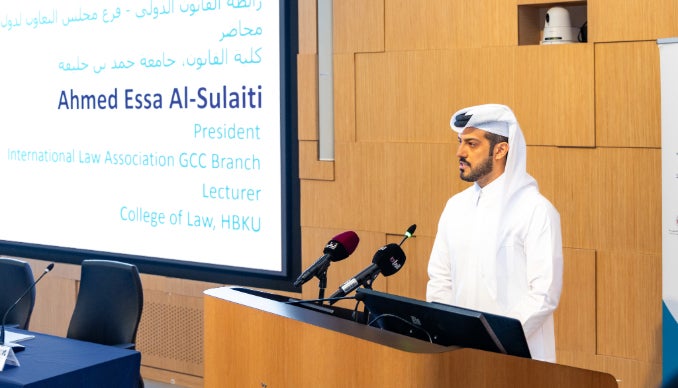
For single-sector dominant economies, foreign direct investment (FDI) will not be determined by tax breaks and trade zones; it will instead be directed by countries that can guarantee investors a fair, prompt, and enforceable legal framework. In the case of Qatar, embedding alternative dispute resolution (ADR) and intellectual property (IP) protection into its economic structure must become a strategic imperative for Qatar National Vision (QNV) 2030.
To attract FDI, governments must incorporate progressive and globally-aligned legal practices to protect and expand investment opportunities as well as boost investor confidence. The recently concluded high-level conference on ADR, IP protection, and innovation as it relates to advancing FDI for sustainable development hosted by Hamad Bin Khalifa University (HBKU) and other partners, underscores the significance of integrating these concepts into economic policies.
During the conference, senior policymakers, legal scholars, international experts, practitioners, and industry leaders deliberated on how robust ADR and IP frameworks can drive investment, protect creativity, and strengthen governance systems aligned with the United Nations’ Sustainable Development Goals (SDGs).
Emphasis remains on the fact that ADR and IP are not limited to technical legal mechanisms; rather, they are strategic tools of legal diplomacy and institutional innovation that allow states to assert their interests, foster investor confidence, and ensure equitable participation in the global economy. Crucially, each intervention connects these tools to Qatar’s broader ambition to realize QNV 2030’s vision of a diversified, knowledge-driven economy underpinned by strong legal institutions and global partnerships.
ADR and IP Protection as Propellers of Diversification
Recent reports by the National Planning Council (NPC) disclosed that Gross Domestic Product (GDP) for the first quarter of 2025 grew by 3.7% compared to the same period in 2024, with the non-hydrocarbon sector contributing 63.6% of real GDP for the first quarter of 2025. These figures reflect Qatar’s positive economic trajectory, further enhancing the country's investment appeal to investors across sectors.
During the conference, His Excellency Dr. Ahmed bin Mohammed Al-Sayed, Minister of State for Foreign Trade Affairs, underscored Qatar’s commitment to embedding ADR and IP protection within the country’s diversification agenda and the Third National Development Strategy (NDS3, 2024–2030). He also emphasized that reinforcing ADR and IP institutions is central to attracting foreign investment, thereby establishing Qatar as a pivotal regional hub for innovation and investment.
This approach aligns seamlessly with the broader objectives outlined in QNV 2030, which aims to balance diversity and a sustainable economy. By reinforcing these institutions, Qatar seeks to not only boost its economic landscape but also position itself as a leader in fostering technological advancements and safeguarding intellectual rights, ultimately strengthening the foundations of a dynamic economic ecosystem.
Aligning Legal Frameworks with Sustainable Growth
IP rights protect creators from others copying or using their IP without permission. Due to this, rights holders can reasonably reap economic value from their innovations. This prospect encourages individuals and businesses to invest in developing practical solutions and drive creativity across sectors and industries.
By aligning these rights with economic governance and the SDGs, they stimulateentrepreneurship, enable energy transition, and promote inclusive growth. A solid, quick, confidential, and flexible ADR mechanism enhances institutional trust and strengthens development capacities.
Additionally, encouraging capacity-building, regional cooperation, and notably, integrating ADR and IP into Qatar’s broader sustainability agenda demonstrates that these are not merely legal instruments but pillars of the country’s long-term development trajectory.
Ensuring Progress
The real test for Qatar will not be passing IP laws like it did with Law No. 11 of 2021 ahead of the FIFA World Cup, but ensuring enforcement capacity matches global expectations. For progress to be maintained, several measures must be incorporated into policy frameworks. First, blending mainstream ADR mechanisms into judicial and regulatory processes to enhance efficiency, predictability, and investor confidence, reinforcing QNV’s emphasis on rule of law and strong institutions. Modernizing legislation and enforcement, as with global best practices to safeguard innovation and entrepreneurship, accelerates QNV’s knowledge economy objectives.
Second, it is imperative to build capacity and expertise. Priority must be given to developing tailored training for judges, arbitrators, lawyers, and policymakers, in partnership with HBKU, World Intellectual Property Organization (WIPO), and other international institutions. This will ensure human capital growth in line with the state’s human development pillar.
Third, encouraging innovation and entrepreneurship by providing legal and institutional support to startups and Small-to-Medium-Enterprises, particularly in sustainability-driven sectors, fosters a culture of innovation which is critical to QNV’s diversification strategy. Significantly, ensuring that dispute resolution and IP policies explicitly support green technologies and climate governance, bridges this strategy with QNV’s environmental sustainability goals. This reinforces Qatar’s role in achieving global climate targets.
Finally, Qatar must consolidate its role as a hub for ADR and IP by hosting high-level dialogues and expanding global partnerships. ‘The Role of Alternative Dispute Resolution (ADR), Intellectual Property (IP) Protection, and Innovation in Advancing Foreign Direct Investment (FDI) for Sustainable Development’ conference reinforces this strategy.
Convening a diverse community of stakeholders, HBKU and its partners demonstrated Qatar’s strategic vision to embed ADR and IP into national, regional, and global frameworks. As Qatar advances its NDS3 and QNV 2030 objectives, ADR and IP will remain essential instruments of legal empowerment, innovation, and international leadership. They will continue to drive economic diversification, foster social cohesion, cultivate human capital, and promote environmental sustainability, ensuring that Qatar achieves its long-term vision of a diversified, knowledge-based, and environmentally responsible future.
Ahmed Al Sulaiti is a lecturer at Hamad Bin Khalifa University’s College of Law and admitted lawyer before the Court of Appeal.
This piece has been submitted by HBKU’s Communications Directorate on behalf of its author. The thoughts and views expressed are the author’s own and do not necessarily reflect an official University stance.
Share:
Related News
Qatar’s Engagement with WIPO and the Evolution of Global Intellectual Property Governance


Iran’s Closure of the Strait of Hormuz: A Threat to the International Legal Order and Global Energy Security?

Investment Governance for Sustainable Development: Building the Foundations of a Knowledge-Based Economy