
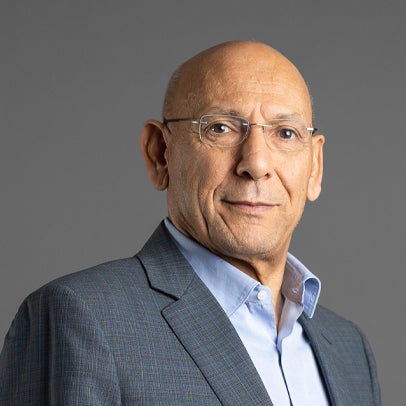
Dr. Omar El Agnaf
Principal Investigator
Joint Professor
Entity
Qatar Biomedical Research Institute
College of Health and Life Sciences
Division
Neurological Disorders Research Center
Biography
Dr. Omar El-Agnaf is considered a pioneer in the field of Parkinson’s and related neurodegenerative diseases. He was awarded his Doctor of Philosophy (PhD) in Biochemistry in 1997 at Queen’s University Belfast, UK. Between 1997 to 1999, he worked as a postdoctoral scientist at the School of Biology and Biochemistry, Queen’s University Belfast. Following this, Dr. El-Agnaf undertook an additional two-year post-doctoral position at St. George’s Medical School in London. In 2001, he was awarded a Research Fellowship from the Parkinson’s Disease Society-UK to establish his research group at Lancaster University. After completing his Research Fellowship in 2004, Dr. El-Agnaf joined the College of Medicine at UAE University and was appointed to the Biochemistry Department. In September 2014, he joined Hamad Bin Khalifa University (HBKU) at Qatar Foundation (QF), and in 2016 he was appointed Acting Executive Director of Qatar Biomedical Research Institute (QBRI), part of HBKU, and became the Executive Director (2018 - 2022).
Dr. El-Agnaf has successfully directed QBRI’s efforts towards translational research to improve and transform healthcare through innovations in the prevention, diagnosis, and treatment of diseases affecting Qatar and the region. Under his leadership, QBRI has realized significant achievements. This has included securing extramural research funding to establish robust alliances with biotechnology and pharmaceutical companies to winning the 2017 Arab Best Research Institution of the Year Award.
Since his move to the region in 2004, Dr. El-Agnaf has assembled an excellent research team that has positioned itself at the forefront of neuroscience research internationally, building a reputable portfolio in the Middle East and beyond, and has been successful in attracting an array of scientific funding from prestigious international funding agencies. Individually, his discoveries have greatly impacted the scientific research community, provided further insight into the molecular pathogenesis of Parkinson’s disease, and offered new opportunities for the development of novel diagnostic and therapeutic tools for the disease.
Dr. El-Agnaf is frequently invited as a speaker at international scientific and clinical meetings and is currently a member of the editorial boards of several international journals. Publications in high-ranking scientific journals validate Dr. El-Agnaf's track record of superior basic and translational research productivity. He has published nearly 137 refereed articles, with citations exceeding 13,350 (to date), and possesses an h-index of 61.
- Identifying Potential Molecular Biomarkers for Autism Spectrum Disorder
- Identifying Novel Biomarkers for Type-2 Diabetes- associated Complications and Comorbidities
- Development of Novel Diagnostic and Therapeutic Tools for Parkinson's Diseases and Related Disorders
- Engineering Antibodies for Diagnostic and Therapeutic Approaches
- Non-viral Mediated Delivery of CRISPR/Cpf1 to the Central Nervous System for Efficient Non-Homologous Gene Correction in Neuronal Cells
As part of Dr. El-Agnaf’s academic tenure (Mentoring)
He has supervised numerous graduate and PhD students.
2001 to 2018
Teaching, HBKU, Postgraduate Course (Professor)
Advanced Biochemistry
Teaching, HBKU, Postgraduate Course (Professor)
Molecular and Cellular Biology of Neurodegenerative diseases.
Teaching, HBKU, Postgraduate Course (Professor)
Advanced Techniques in Biochemistry and Molecular Biology
Selected Patents
Selected Publications
Complex I reductions in the nucleus basalis of Meynert in Lewy body dementia: the role of Lewy bodies. Acta Neuropathol Commun. 8(1):103. doi: 10.1186/s40478-020-00985-8.
CSF Biomarkers Reflecting Protein Pathology and Axonal Degeneration Are Associated with Memory, Attentional, and Executive Functioning in Early-Stage Parkinson's Disease. Int J Mol Sci. 21(22):8519. doi: 10.3390/ijms21228519.
Expression, purification and characterization of α-synuclein fibrillar specific scFv from inclusion bodies. PLoS One;15(11):e0241773. doi: 10.1371/journal.pone.0241773.
Safety and immunogenicity of the α-synuclein active immunotherapeutic PD01A in patients with Parkinson's disease: a randomised, single-blinded, phase 1 trial. Lancet Neurol. 19(7):591-600. doi: 10.1016/S1474-4422(20)30136-8.
Fibrillar form of α-synuclein-specific scFv antibody inhibits α-synuclein seeds induced aggregation and toxicity. Sci Rep. 10(1):8137. doi: 10.1038/s41598-020-65035-8.
M. Goillandeau, C. Perier, C. Estrada, N. Garcia-Carrillo, A. Recasens, N.N. Vaikath, O.M.A. El-Agnaf, M.T. Herrero, P. Derkinderen, M. Vila, J.A. Obeso, B. Dehay, E. Bezard (2020). Identification of distinct pathological signatures induced by patient-derived α-synuclein structures in nonhuman primates. Sci Adv. 6(20):eaaz9165. doi: 10.1126/sciadv.aaz9165.
Investigating the presence of doubly phosphorylated α-synuclein at tyrosine 125 and serine 129 in idiopathic Lewy body diseases. Brain Pathol. 2020 Jul;30(4):831-843. doi: 10.1111/bpa.12845.
P. Derkinderen, B. Dehay, E. Bezard (2020). Bidirectional gut-to-brain and brain-to-gut propagation of synucleinopathy in non-human primates. Brain.143(5):1462-1475. doi: 10.1093/brain/awaa096.
CSF total and oligomeric α-Synuclein along with TNF-α as risk biomarkers for Parkinson's disease: a study in LRRK2 mutation carriers. Transl Neurodegener. 9(1):15. doi: 10.1186/s40035-020-00192-4.
CSF or serum neurofilament light added to α-Synuclein panel discriminates Parkinson's from controls. Mov Disord. 35(2):288-295. doi: 10.1002/mds.27897.
α-Synuclein BAC transgenic mice exhibit RBD like behaviour and hyposmia: a prodromal Parkinson's disease model. Brain;143(1):249-265. doi: 10.1093/brain/awz380.
Lewy Body Pathology Is More Prevalent in Older Individuals With Mitochondrial Disease Than Controls. Acta Neuropathol. 139(1):219-221.
Towards Acoustic Radiation Free Lamb Wave Resonators for High-resolution Gravimetric Biosensing. IEEE Sensors Journal, (In press).
Generation of monoclonal antibodies against phosphorylated α-Synuclein at serine 129: Research tools for synucleinopathies. Neurosci Lett. 7;725:134899. doi: 10.1016/j.neulet.2020.134899.
Inhibition of alpha-synuclein seeded fibril formation and toxicity by herbal medicinal extracts. BMC Complement Med Ther. 6;20(1):73. doi: 10.1186/s12906-020-2849-1.
- 2020 – 2024. NPRP Program (QNRF, Qatar): Corneal Confocal Microscopy A rapid diagnostic and prognostic imaging biomarker for neurodegeneration in dementia. Co- Principal Investigator
- 2019 – 2024. Cluster Program (QNRF, Qatar): Qatar Diabetes Prevention Program (QDPP). Co- Principal Investigator
- 2019 – 2022. Interdisciplinary Research Program (QBRI, HBKU): Identifying Potential Biomarkers for Autism Spectrum Disorder. Principal Investigator
- 2019 – 2022. Interdisciplinary Research Program (QBRI, HBKU): Identifying Biomarkers for Diabetes Complications. Principal Investigator
- 2016 – 2019: PNRP-QNRF (Doha, Qatar) > Development of Novel Diagnostic and Therapeutic Tools for Parkinson's Diseases and Related Disorders. Principal Investigator
- 2016 – 2019: Lundbeck A/S (Copenhagen, Denmark) > Development of antibody-based assays for detection of alpha-synuclein species in human CSF and plasma. Co-Investigator
- 2015 – 2018: PNRP-QNRF (Doha, Qatar) > Application of conformation-specific antibodies to biomarker development for Parkinson’s disease. Principal Investigator
- 2016-2018: Micheal J Fox Foundation for Parkinson’s Research (NY, USA). > Pre-analytical extracellular esicle enrichment for increased reliability for alpha-synuclein detection in plasma and CSF. Co-investigator.
- Micheal J Fox Foundation for Parkinson’s Research (NY, USA) > Validation of CSF alpha-synuclein species as surrogate biomarkers for Parkinson’s disease. Principal Investigator
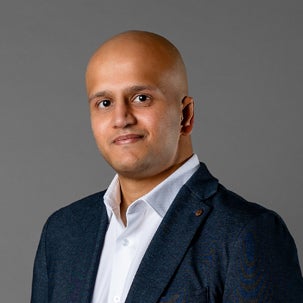
Mohammed Shinoy
Software Engineer
Educational Qualifications
MEng in Mechanical and Mechatronics
BEng in Mechatronics
Entity
Qatar Computing Research Institute
Biography
Mohammed Shinoy is a Software Engineer at QCRI working on converting research outcomes to production-quality software. He received his Master’s in Mechanical and Mechatronics from the University of Waterloo.
MEng in Mechanical and Mechatronics
University of Waterloo; Canada
2015
BEng in Mechatronics
Manipal University; India
2012
- Software Engineering
- Data Science
- Robotics
Software Engineer
QCRI; HBKU
2020 - Present
Student Mentor
Machine Learning Nanodegree; Udacity
2017 - Present
Research Assistant
QTTSC; Qatar University
2018 - 2020
Test Systems Developer
Reliability Engineering; Blackberry
2014 - 2015
"Driver Drowsiness Detection Model Using Convolutional Neural Networks Techniques for Android Application,"; 2020 IEEE International Conference on Informatics, IoT, and Enabling Technologies (ICIoT), Doha, Qatar, 2020, pp. 237-242, doi: 10.1109/ICIoT48696.2020.9089484.
"Urban Traffic Monitoring and Modeling System: An IoT Solution for Enhancing Road Safety," ; 2019 International Conference on Internet of Things, Embedded Systems and Communications (IINTEC), Tunis, Tunisia, 2019, pp. 13-18, doi: 10.1109/IINTEC48298.2019.9112118.
"A Model-Based and Resource-Aware Testing Framework for Parking System Payment using Blockchain,"; 2020 International Wireless Communications and Mobile Computing (IWCMC), Limassol, Cyprus, 2020, pp. 1252-1259, doi: 10.1109/IWCMC48107.2020.9148212
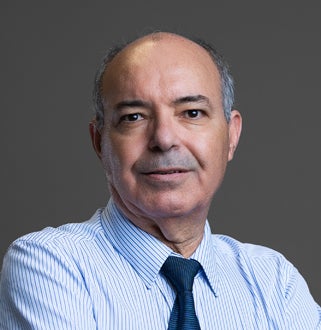
Dr. Laoucine Kerbache
Acting Dean of the School of Economics and Management
Professor and Head of Division at CSE
Dr. Laoucine Kerbache
Acting Dean of the School of Economics and Management
Professor and Head of Division at CSE
Educational Qualifications
PhD in Industrial Engineering and Operations Research
MSc in Industrial Engineering and Operations Research
Entity
School of Economics and Management
College of Science and Engineering
Division
Engineering Management & Decision Sciences
Biography
Dr. Laoucine Kerbache is the Acting Dean for School of Economics and Management (SEM) and Professor of logistics and supply chain management. He is also a Founding Member of the Engineering Management and Decisions Science (EMDS) division in the College of Science and Engineering at Hamad Bin Khalifa University. He holds a PhD, an MSc, and a BSc degree in industrial engineering and operations research from the University of Massachusetts at Amherst. His research areas span interfaces of industrial engineering, operations research, operations management, logistics, and supply chain management with a special focus on modeling and optimization of problems relative to industrial facilities and service organizations.
Over the last 35 years, Dr. Kerbache has been in academia for 24 years at HEC Paris where he was a Professor of operations management, logistics, and supply chain management. He also held various academic and managerial positions including Associate Dean in charge of the PhD Program, and Dean and CEO of HEC Paris in Qatar.
He has been very active in research theses/dissertations and has published over 150 publications in top-tier international journals and a significant number of academic textbooks. In addition, he is an active member of numerous academic and research professional organizations such as INFORMS, POMS, MSOM, IEEE, EUROMA, IEOM, etc.
PhD in Industrial Engineering and Operations Research
University of Massachusetts, Amherst, United States
1984
MSc in Industrial Engineering and Operations Research
University of Massachusetts, Amherst, United States
1981
BSc in Industrial Engineering and Operations Research
University of Massachusetts, Amherst, United States
1979
Research Habilitation of Research (HDR)
University of Nantes, France
1998
International Teaching Program Certification (ITP)
IMD – Lausanne, Switzerland
2004
- Mathematical modeling and optimization of logistics and supply chain analytics
- Deterministic and stochastic optimization of network designs and supply chains
- Manufacturing and service operations management
- Impacts of smart logistics and additive manufacturing on supply chains
- Queueing networks and simulation of large scale stochastic systems
Professor and Head of Division
Engineering Management and Decision Sciences, College of Science and Engineering, Hamad Bin Khalifa University
2018 - Present
Innovation Senior Strategist
Qatar Foundation Research Development, Hamad Bin Khalifa University
2016 - 2018
Dean and CEO
Executive Education, HEC Paris in Qatar (member of QF)
2013 - 2016
Professor and Senior Management Officer
Information Systems and Operations Management Department, HEC Paris, Jouy-en-Josas (France)
1999 - 2023
Professor and Management Officer
Quantitative Methods Department, Rennes International Business School, Rennes (France)
1990 - 1999
Xu, Z., Elomri, A., Baldacci, R., & Kerbache, L. (2024). Frontiers and trends of supply chain optimization in the age of industry 4.0: An operations research perspective. Annals of Operations Research, 1–43.
Tellache, N. E. H., & Kerbache, L. (2023). A genetic algorithm for scheduling open shops with conflict graphs to minimize the makespan. Computers & Operations Research, 156, 106247.
Raza, S. A., Rathinam, S., Turiac, M., & Kerbache, L. (2018). An integrated revenue management framework for a firm’s greening, pricing and inventory decisions. International Journal of Production Economics, 195, 373–390.
Kerbache, L., & Smith, J. M. (2012). State dependent models of material handling systems in closed queuing networks. International Journal of Production Research, 50(2), 461–484.
Lee, J., Kerbache, L., & Danaher, P. (2010). Optimal internet media selection. Marketing Science, 29(2), 336–347.
Complete Publication Listing(s): Google Scholar
- Medal of academic excellence and contributions to research and executive education in Europe and EMEA
- IEOM Award for most influential academics in the IEOM disciplines
- IEOM Distinguished Teaching Award, 2025
- Member of Alpha Pi Mu: Honor Society for Industrial and Systems Engineers, USA
- Member of Tau Beta Pi: Honor Society of Engineers, USA

Dr. Tareq Ali H A Al-Ansari
Executive Director of QEERI
Associate Professor at the College of Science and Engineering
Dr. Tareq Ali H A Al-Ansari
Executive Director of QEERI
Associate Professor at the College of Science and Engineering
Educational Qualifications
PhD in Sustainable Development and Environmental Engineering
MPhil in Engineering for Sustainable Development
Entity
Qatar Environment and Energy Research Institute
College of Science and Engineering
Biography
Dr. Tareq Al- Ansari is the executive director of the Qatar Environment and Energy Research Institute and an associate professor at the College of Science and Engineering at Hamad Bin Khalifa University. He acquired a BEng. in Mechanical Engineering from the University College London, an MPhil in Engineering for Sustainable Development from the University of Cambridge, and a PhD from Imperial College London.
PhD in Sustainable Development and Environmental Engineering
Imperial College London, United Kingdom
2011 - 2016
MPhil in Engineering for Sustainable Development
University of Cambridge, United Kingdom
2010 - 2011
BEng in Mechanical Engineering
University College London, United Kingdom
2005 - 2009
- Energy-water-food nexus and food security
- Waste to value-added products
- Energy systems & clean fuels
- Carbon capture and utilization
Executive Director
Qatar Environment and Energy Research Institute, Hamad Bin Khalifa University
2025 - Present
Acting Executive Director
Qatar Environment and Energy Research Institute, Hamad Bin Khalifa University
2023 – 2025
Associate Professor
College of Science and Engineering, Hamad Bin Khalifa University
2016 - Present
Technical Advisor
Qatar National Food Security Program
2013
Luqman, M., Mahmood, F., & Al-Ansari, T. (2023). Supporting sustainable global food security through a novel decentralised offshore floating greenhouse. Energy Conversion and Management.
Alherbawi, M., McKay, G., & Al-Ansari, T. (2023). Development of a hybrid biorefinery for jet biofuel production. Energy Conversion and Management.
Fouladi, J., AlNouss, A., & Al-Ansari, T. (2023). Sustainable energy-water-food nexus integration and carbon management in eco-industrial parks. Journal of Cleaner Production.
Ghiat, I., Mahmood, F., Govindan, R., & Al-Ansari, T. (2021). CO2 utilisation in agricultural greenhouses: A novel ‘plant to plant’ approach driven by bioenergy with carbon capture systems within the energy, water and food nexus. Energy Conversion and Management.
AlNouss, A., McKay, G., & Al-Ansari, T. (2019). A techno-economic-environmental study evaluating the potential of oxygen-steam biomass gasification for the generation of value-added products. Energy Conversion and Management, 196, 664–676.
Complete Publication Listing(s): Google Scholar
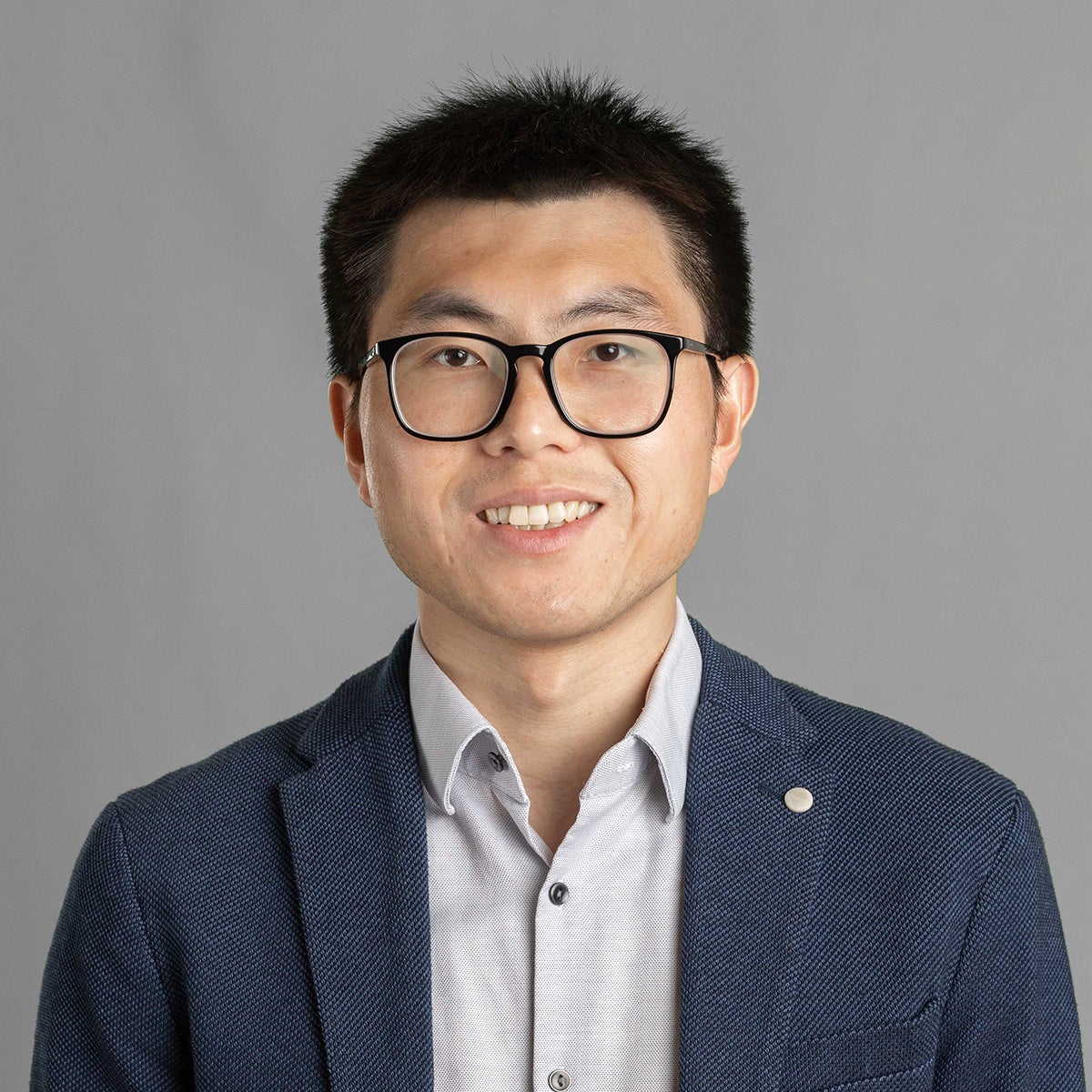
Dr. Bo Wang
Associate Professor
Educational Qualifications
PhD in Electronic and Computer Engineering
B. Eng in Electrical and Electronic Engineering
Entity
College of Science and Engineering
Division
Information & Computing Technology
Biography
Dr. Bo Wang is an Associate Professor in the College of Science and Engineering at Hamad Bin Khalifa University. He received the B. Eng. degree in Electrical and Electronic Engineering from Zhejiang University, Hangzhou, China, in 2010 and the M. Phil and PhD degrees in Electronic and Computer Engineering from the Hong Kong University of Science and Technology (HKUST), Hong Kong, in 2012 and 2015, respectively.
He worked in RLE, Massachusetts Institute of Technology (MIT) on low-power graphene-based pressure sensor interface design, in 2016. From 2010 to 2015, he was with the Smart Sensory Integrated System Laboratory (s2is) of HKUST as a research assistant and then a research associate. From 2012 to 2014, he also worked as a mixed-signal IC designer in ZAMI, Hangzhou, to commercialize the chip during his PhD research. Dr. Bo Wang is a member of IEEE (CAS Society and SSCS Society).
He received the Best Design Award at the Asia and South Pacific Design Automation Conference (ASP-DAC) in 2016. He also serves as a technical committee member of the IEEE CAS Committee on Sensory Systems and Associate Editor for the IEEE Sensors Journal.
PhD in Electronic and Computer Engineering
Hong Kong University of Science and Technology, China
2015
B. Eng in Electrical and Electronic Engineering
Zhejiang University, China
2010
- CMOS sensors
- Mixed-signal IC design
- Data converters
- Heterogeneous sensing systems
Associate Professor
College of Science and Engineering, Hamad Bin Khalifa University
2023 - Present
Assistant Professor
College of Science and Engineering, Hamad Bin Khalifa University
2017 - 2023
Research Scientist
Research Laboratory of Electronics (RLE), Massachusetts Institute of Technology, United States
2016 - 2017
Research Associate
Electronic and Computer Engineering (ECE), Hong Kong University of Science and Technology, China
2015

Dr. Marco Agus
Associate Professor
Dr. Marco Agus
Associate Professor
Educational Qualifications
PhD in Mechanical Engineering
MSc in Electronics Engineering
Entity
College of Science and Engineering
Division
Information & Computing Technology
Biography
Marco Agus is an Associate Professor in the College of Science and Engineering at Hamad Bin Khalifa University. He obtained an MSc and PhD from the University of Cagliari, Italy. He has also worked as a Research Engineer at the King Abdullah University of Science and Technology, Saudi Arabia, and as a Research Scientist at the Center of Research, Development, and Advanced Studies (CRS4), in Cagliari, Italy.
Marco Agus's research interests span different domains in visual computing, from haptics and visual rendering for medical applications to real-time exploration of massive models, to machine learning methods for electron microscopy biology data and indoor environments. He taught courses at several important visual computing venues, including IEEE CVPR, ACM SIGGRAPH, and Eurographics, and he regularly acts as a committee member, reviewer, chair, and associate editor for top journals and conferences in the visual computing domain.
PhD in Mechanical Engineering
University of Cagliari, Italy
2004
MSc in Electronics Engineering
University of Cagliari, Italy
1999
- Applied visual computing
- Scientific and date visualization and analytics
- Interactive computer graphics and virtual reality
- Computer vision and pattern recognition
Associate Professor
College of Science and Engineering, Hamad Bin Khalifa University
2024 - Present
Assistant Professor
College of Science and Engineering, Hamad Bin Khalifa University
2020 - 2024
Expert Researcher
Visual Computing, CRS4, Italy
2019 - 2020
Research Engineer
Visual Computing Center, King Abdullah University of Science and Technology, Saudi Arabia
2016 - 2019
Researcher
Visual Computing, CRS4, Italy
2007 - 2016
Complete Publication Listing(s): Google Scholar
- Honorable Mention Award at ACM Web3D 2023 conference for the full paper “PanoVerse: automatic generation of stereoscopic environments from single indoor panoramic images for Metaverse applications”
- Best Paper Award at EG VCBM 2022 conference for the full paper “HistoContours: a Framework for Visual Annotation of Histopathology Whole Slide Images”
- Best Paper Award at EG GCH 2016 conference for the full paper “Interactive 3D exploration of a virtual sculpture collection: an analysis of user behavior in museum setting”
- Best Paper Award at Digital Heritage 2015 conference for the full paper “Digital Monte Prama: 3D Cultural Heritage Presentations in Museums and Anywhere”
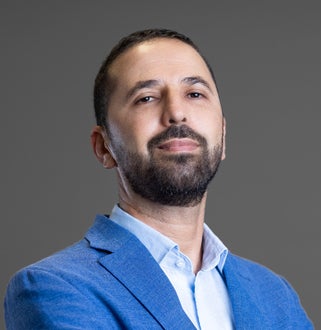
Dr. Adel Elomri
Associate Professor
Dr. Adel Elomri
Associate Professor
Educational Qualifications
PhD in Industrial Engineering
MSc in Industrial Engineering
Entity
College of Science and Engineering
Division
Engineering Management & Decision Sciences
Biography
Dr. Adel Elomri is an Associate Professor in the Division of Engineering Management and Decision Sciences at the College of Science and Engineering, Hamad Bin Khalifa University. He holds a PhD and MSc with highest honors in supply chain and operations management from École Centrale Paris (CentraleSupélec), France, and a BS with highest honors in industrial engineering from the National Engineering School of Tunis (ENIT), Tunisia.
Dr. Adel Elomri is a scholar in operations management and supply chains, with expertise and research interests at the intersection of operations research, economics, and sustainability. His research explores how complex supply chains can be designed and managed, and his findings have been widely published, attracting significant funding. Dr. Elomri’s work spans three key areas: sustainable supply chain management, smart supply chains, and healthcare operations management.
PhD in Industrial Engineering
École Centrale Paris (CentraleSupélec), France
2009
MSc in Industrial Engineering
École Centrale Paris (CentraleSupélec), France
2006
BSc in Industrial Engineering
National Engineering School of Tunis (ENIT), Tunisia
2005
- Sustainable supply chain
- Smart supply chain
- Healthcare operations management
Associate Professor
College of Science and Engineering, Hamad Bin Khalifa University
2022 - Present
Assistant Professor
College of Science and Engineering, Hamad Bin Khalifa University
2019 - 2022
Assistant Professor
College of Engineering, Qatar University
2012 - 2019
Postdoctoral Fellow
Industrial and Systems Engineering, University of Minnesota, United States
2010 - 2012
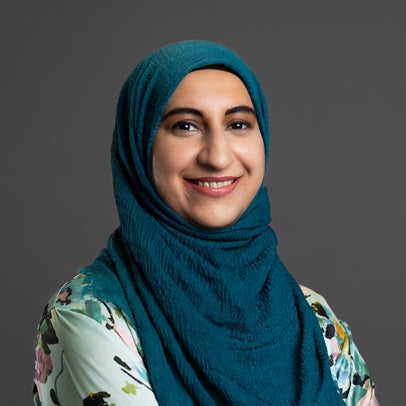
Dr. Hira Amin
Assistant Professor
Educational Qualifications
PhD in History
MSc in History of International Relations
Entity
College of Public Policy
Biography
Dr. Hira Amin is an Assistant Professor at the College of Public Policy at Hamad Bin Khalifa University. After completing her PhD in History at the University of Cambridge, she has been involved in various interdisciplinary projects. Her research interests broadly fall into two categories: the first is social, cultural, and religious transformations in the modern Muslim world; the second is social inclusion, accessibility, and disability.
She has undergone training in systems thinking, LEGO Serious Play, participatory co-design, and strategic foresight at the Institute for the Future. She is currently working on multiple research grants that utilize these various tools and methods, such as education for sustainability and global citizenship, strategic foresight in culture, identity, and education, and systems mapping the disability diagnostics landscape in Qatar.
PhD in History
University of Cambridge, United Kingdom
2017
MSc in History of International Relations
London School of Economics, United Kingdom
2012
BSc in Mathematics and Philosophy
King’s College London, United Kingdom
2008
- Modern Muslim movements
- Migration
- diaspora
- and citizenship
- Social inclusion and accessibility
- Strategic foresight
Assistant Professor
College of Public Policy, Hamad Bin Khalifa University
2021 - Present
Visiting Assistant Professor
College of Islamic Studies, Hamad Bin Khalifa University
2018 - 2021
Lecturer
University of Kent, United Kingdom
2018
Amin, H. (2022). The shifting contours of Saudi influence in Britain. In Wahhabism and the world: Understanding Saudi Arabia's global influence on Islam. Oxford University Press.
Complete Publication Listing(s): Google Scholar

Seerin Nizam
Program Manager
Seerin Nizam
Program Manager
Educational Qualifications
Associate Chartered Accountant (ACA)
MBA - International Business
Entity
Qatar Computing Research Institute
Biography
Seerin Nizam is a Program Manager at Qatar Computing Research Institute (QCRI) and an Associate Member of the Chartered Accountants of Sri Lanka, the Institute of Public Accountants of Australia, the Institute of Financial Accountants of the UK, and the Institute of Chartered Professional Managers of Sri Lanka. Additionally, he is a Senior Member of the Association of Accounting Technicians of Sri Lanka. Seerin holds a Master’s in Business Administration (MBA) in International Business from the University of the West of Scotland.
With over 15 years of work experience, including 9 years in Qatar, Seerin specializes in budgeting and reporting, financial planning, analytics and strategies, and procurement. Most recently, he served as a Management Accountant within the Budgeting and Reporting team at Qatar Foundation.
Associate Chartered Accountant (ACA)
The Chartered Accountants of Sri Lanka, Sri Lanka
2021
MBA - International Business
University of the West of Scotland, United Kingdom
2021
- Financial reporting tools
- Procurement
- Financial planning
- Financial analytics
- Financial strategies
Program Manager
Qatar Computing Research Institute, Hamad Bin Khalifa University
2021 - Present
Senior Member
The Association of Accounting Technicians of Sri Lanka, Sri Lanka
2021
Project Manager
Qatar Computing Research Institute, Hamad Bin Khalifa University
2019 – 2021
Member
The Institute of Public Accountants, Australia
2019
Associate Member
The Institute of Financial Accountants, United Kingdom
2019
Management Accountant
Qatar Foundation
2015 - 2019
Associate Member
The Institute of Chartered Professional Managers of Sri Lanka
2013
Accountant & Assistant Accountant
Expolanka Pharmaceuticals (Pvt) Ltd, Sri Lanka
2013 – 2015
Audit Executive & Audit Staff
Ernst & Young, Chartered Accountants, Sri Lanka
2009 - 2012
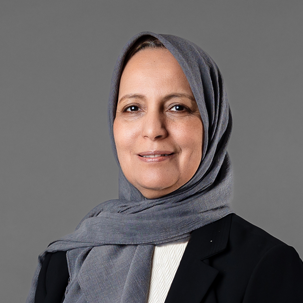
Dr. Eman Fituri
Director of Educational Initiatives
Dr. Eman Fituri
Director of Educational Initiatives
Entity
Qatar Computing Research Institute
Division
Management