 Apply Now
primary

Dr. Ehsan Pourkarimi Daryakenari
Assistant Professor
Dr. Ehsan Pourkarimi Daryakenari
Assistant Professor
Educational Qualifications
Ph.D in Genetics
M.Sc. in Genetics
Entity
College of Health and Life Sciences
Biography
Dr. Ehsan Pourkarimi obtained his undergraduate degree from Eötvös Loránd University (ELTE) in Budapest, Hungary.
After receiving a Cancer Research Fellowship, he moved to the United Kingdom to join Professor Anton Gartner at the Wellcome Trust Center for Gene Regulation and Expression at the University of Dundee. During his post-doctoral work, Dr. Pourkarimi focused his research on understanding the effect of chromatin modifiers in cellular response during acute stress conditions. He then moved to New York City and worked as a Research Associate in the lab of Dr. Iestyn Whitehouse at Memorial Sloan Kettering Cancer Center where he studied DNA replication.
Ph.D in Genetics
Wellcome Trust Center For Gene Regulation and Expression, University of Dundee, United Kingdom
2007 - 2012
M.Sc. in Genetics
Eötvös Loránd University, Budapest, Hungary
2001 - 2007
- Transgenerational Inheritance of Epigenetic Information
- Establishing an all-in-one Toolkit for Epigenome Editing
- Understanding the Role of Histone Modification in DNA Damage-Induced Apoptosis
Research Associate
Memorial Sloan Kettering Cancer Center, New York, USA
2016 - 2018
Post Doctoral Fellow
Memorial Sloan Kettering Cancer Center, New York, USA
2013 - 2016
Post Doctoral Fellow
University of Dundee, UK
2012 - 2013
Ehsan Pourkarimi, James M Bellush, Iestyn Whitehouse
Vikram Narayan, Tony Ly, Ehsan Pourkarimi, Alejandro Brenes Murillo, Anton Gartner, Angus I. Lamond, and Cynthia Kenyon
Mark Larance*, Ehsan Pourkarimi*, Bin Wang, Alejandro Brenes Murillo, Robert Kent, Angus I. Lamond and Anton Gartner
Federico Pelisch, Remi Sonneville, Ehsan Pourkarimi, Ana Agostinho, J. Julian Blow, Anton Gartner & Ronald T. Hay
Luca Fancsalszky, Eszter Monostori, Zsolt Farkas, Ehsan Pourkarimi, Neda Masoudi, Balázs Hargitai, Maja Herak Bosnar, Martina Deželjin, Annamária Zsákai, Tibor Vellai, Anil Mehta, Krisztina Takács-Vellai
Alper Akay , Ashley Craig , Nicolas Lehrbach , Mark Larance , Ehsan Pourkarimi , Jane E. Wright , Angus Lamond , Eric Miska and Anton Gartner
Neda Masoudi*, Luca Fancsalszky*, Ehsan Pourkarimi*, Tibor Vellai, Anita Alexa, Attila Reményi, Anton Gartner, Anil Mehta, Krisztina Takács-Vellai.
Ehsan Pourkarimi & Anton Gartner
Ehsan Pourkarimi, Sebastian Greiss & Anton Gartner
Sarah L. Murdoch, Katharina Trunk, Grant English, Maximilian J. Fritsch, Ehsan Pourkarimi, Sarah J. Coulthurst
Mark Larance, Aymeric P Bailly, Ehsan Pourkarimi, Ronald T Hay, Grant Buchanan, Sarah Coulthurst, Dimitris P Xirodimas, Anton Gartner & Angus I Lamond
- Best science image award. Visions of discovery.
- Cancer research UK PhD scholarships, UK
- Overseas Research Students Awards Scheme (ORSAS) award, UK
Dr. Lina Majed
Assistant Professor
Dr. Lina Majed
Assistant Professor
Educational Qualifications
PhD in Human Movement Science
MSc in Motor Control and Perception
Entity
College of Health and Life Sciences
Biography
Dr. Lina Majed is an Assistant Professor at the College of Health and Life Sciences at Hamad Bin Khalifa University. She obtained her Master's and PhD degrees in Human Movement Science from Paris-Saclay University. Her research area focuses on a multidisciplinary approach to preferred motor behaviors. She is currently examining characteristics of gait patterns as related to health and the influences of culture and environments on gait.
She has a keen interest in understanding the interplays between physical activity, preferred motor behaviors, health, and well-being. Dr. Lina is the leader of the national task force on the Qatar ‘Active Healthy Kids Report Card’ (part of a Global Alliance) in collaboration with several governmental and academic institutions. She has contributed to the National Physical Activity Guidelines for Qatar. With more than 10 years of academic experience, she has published several high-impact journal publications with direct relevance to Qatar and its population's health.
PhD in Human Movement Science
Paris-Saclay University, France
2013
MSc in Motor Control and Perception
Paris-Saclay University, France
2008
BA in Physical Education
University of Balamand, Lebanon
2006
- Preferred motor behaviors
- Gait analysis
- Physical activity and health
- Exercise and fitness
Assistant Professor
College of Health and Life Sciences, Hamad Bin Khalifa University
2023 - Present
Associate Professor of Exercise and Fitness
College of Education, Qatar University
2021 - 2023
Adjunct Faculty
College of Health and Life Sciences, Hamad Bin Khalifa University
2021
Visiting Faculty
College of Health and Life Sciences, Hamad Bin Khalifa University
2020
Assistant Professor of Exercise and Fitness
College of Health and Life Sciences, Qatar University
2013 - 2021
Complete Publication Listing(s): Google Scholar
Dr. Shammur Absar Chowdhury
Scientist
Educational Qualifications
PhD in Computer Science
Bachelor of Science in Electronics and Communication Engineering, with 2nd major in Bachelor of Science in Computer Science
Entity
Qatar Computing Research Institute
Division
Arabic Language Technologies
Biography
Dr. Chowdhury specializes in designing Conversational AI models, primarily addressing complex challenges such as multispeaker interactions, nuanced multilingual and dialect variations, and code-switching, among various other intricate conversational dynamics. She is currently the leading (PI) on the QVoice project, which empowers speakers—both native and non-native of all ages alike—to learn spoken Arabic. The QVoice project leverages adaptive speech technologies and multimodal feedback modules as its underlying technologies. Dr. Chowdhury has received numerous awards and grants, including the NVIDIA Academic Hardware Grant for her research in simulating human language learning capabilities using DNN-based language models, a study that was also conducted as a part of the TRAILs project, funded by PRIN MIUR. As a key contributor to the EU-funded projects SENSEI and PortDial, Dr. Chowdhury developed conversational models adept at understanding human conversation, facilitating automatic summarization and mental health screening. She authored over 60 peer-reviewed publications in top-tier conferences and journals and played an active role in the research community by organizing shared tasks, challenges, and workshops, as well as serving on the committees of top-tier conferences and special interest groups. She co-founded the Bangla Language Processing Community and MyVoice, a crowdsourced platform, designed to bridge the gaps between standard and dialectal Arabic resources.
PhD in Computer Science
ICT Doctoral School, University of Trento, Italy
Nov-2012 to April-2017
Bachelor of Science in Electronics and Communication Engineering, with 2nd major in Bachelor of Science in Computer Science
BRAC University, Bangladesh
Jan-2007 to Dec-2010
- Multilingual and multi-view representation learning
- Conversational AI
- Non-Verbal Communication
- Spoken Language Processing
- Natural Language Processing
Scientist
Qatar Computing Research Institute (QCRI)
October 2021 - Present
Postdoctoral Researcher
Qatar Computing Research Institute (QCRI)
May 2019 - September 2021
Postdoctoral Researcher
Center for Mind/Brain Sciences (CIMEC), University of Trento
June 2017 - April 2019
PhD Researcher Signals and Interactive Systems Lab (SIS Lab)
University of Trento
November 2012 - April 2017
Research Assistant
Signals and Interactive Systems Lab (SIS Lab), University of Trento
March 2012 - October 2012
Lecturer
Department of Computer Science and Engineering, BRAC University
January 2011 - February 2012
Senior Research Assistant
Center for Research on Bangla Language Processing (CRBLP), BRAC University
October 2010 - February 2012
Chowdhury, S. A., Durrani, N., & Ali, A. (2023). What do end-to-end speech models learn about speaker, language and channel information? A layer-wise and neuron-level analysis. Computer Speech & Language, 83, 101539.
Kheir, Y. E., Chowdhury, S. A., & Ali, A. (2023). Multi-View Multi-Task Representation Learning for Mispronunciation Detection. Speech and Language Processing Tools in Education.
Chowdhury, S. A., Hussein, A., Abdelali, A., & Ali, A. (2021). Towards one model to rule all: Multilingual strategy for dialectal code-switching Arabic ASR. arXiv preprint arXiv:2105.14779.
Chowdhury, S. A., Stepanov, E. A., Danieli, M., & Riccardi, G. (2019). Automatic classification of speech overlaps: feature representation and algorithms. Computer Speech & Language, 55, 145-167.
Chowdhury, S. A., Stepanov, E. A., & Riccardi, G. (2016). Predicting User Satisfaction from Turn-Taking in Spoken Conversations. In Interspeech (pp. 2910-2914).
Complete Publication Listing(s): Google Scholar
H.E. Tijjani Muhammad-Bande
H.E. Tijjani Muhammad-Bande
Entity
Translation and Interpreting Institute (TII)
Dr. George Mikros
Professor
Phone
+974 44540920Office location
C.01.030, First Floor, Minaretein Building
Dr. George Mikros
Professor
Educational Qualifications
Ph.D. in Linguistics, Dissertation: Sociolinguistic approach of Modern Greek phonological problems.
B.A. in Italian Language and Literature.
Entity
College of Humanities and Social Sciences
Program
Master of Arts in Digital Humanities and Societies
Division
Middle Eastern Studies Department (MESD)
Biography
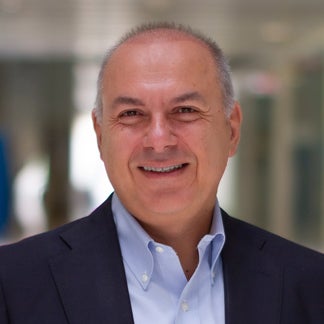
George Mikros before assuming his Professor position at the MA Program of Digital Humanities at HBKU, he was Professor of Computational and Quantitative Linguistics at the University of Athens Greece. He is the director of the Computational Stylistics lab. He is also Adj. Professor at the Department of Applied Linguistics at the University of Massachusetts, Boston, USA. He had the position of Research Associate at the Institute for Language and Speech Processing and he was part of research groups that have developed significant language resources and NLP tools for Modern Greek. Since 1999 holds the position of Teaching Associate at the Hellenic Open University and since 2016 he is the Director of the Undergraduate Program “Spanish Language and Culture”. Prof. Mikros has authored 5 monographs and more than 80 papers published in peer-reviewed journals, conference proceedings, and edited volumes. Since 2007 he has been elected as Member of the Council of the International Association of Quantitative Linguistics (IQLA). In 2018 he was elected its President. He is a keynote speaker and invited speaker in many international conferences, workshops and summer schools related to Digital Humanities and Quantitative Linguistics. His main research interests are computational stylistics, quantitative linguistics, computational linguistics, and forensic linguistics.
Ph.D. in Linguistics, Dissertation: Sociolinguistic approach of Modern Greek phonological problems.
Phonetic variation in nasal consonants, Department of Linguistics, Faculty of Philology, National and Kapodistrian University of Athens, Greece.
1992 - 1999
B.A. in Italian Language and Literature.
Department of Italian Language and Literature, Aristotelian University of Thessaloniki, Greece.
1987 - 1991
- Computational Stylistics
- Quantitative Linguistics
- Computational Linguistics
- Forensic Linguistics
Core Editor of the International Journal of Digital Humanities published by Springer.
https://www.springer.com/journal/42803/updates/19892272
2021
Visiting Researcher
Department of Linguistic and Literary Studies (DiSLL) Università Degli Studi di Padova, Italy.
2018
Director of the Computational Stylistics Laboratory
Department of Italian Language and Literature, School of Philosophy, National and Kapodistrian University of Athens, Greece.
2017 - Present
Director of the Undergraduate Program “Spanish Language and Literature”
Hellenic Open University, Patras, Greece.
2016 - 2019
Visiting Researcher
Exploring Variations in Language (EVL) Laboratory. Department of Computing Science and Mathematics, Duquesne University, Pittsburgh, U.S.A.
2015
Visiting Professor
Department of Applied Linguistics, University of Massachusetts, Boston, U.S.A.
2014
Adjunct Faculty
Department of Applied Linguistics, Master of Arts Online Program, University of Massachusetts, Boston, U.S.A.
2013 - Present
Teaching Associate
Coordinator of the Linguistics Module at the Hellenic Open University, Patras, Greece.
2001 - 2019
Professor of Computational and Quantitative Linguistics
Department of Italian Language and Literature, School of Philosophy, National and Kapodistrian University of Athens, Greece.
2000 - 2019
Language and Text: Data, Models, Information, Applications. Amsterdam: John Benjamins. (ISBN 9789027210104), 275 pp.
Development and Validation of a Corpus of Written Parliamentary Questions in the Hellenic Parliament. Journal of Open Humanities Data, 7: 18, pp. 1–14. DOI: https://doi.org/10.5334/johd.45
A Modern Greek Readability Tool: Development of Evaluation Methods. In Pawłowski, A., Mačutek, J., Embleton, S. & Mikros, G., (eds). Language and Text: Data, Models, Information, Applications, (pp. 163-176). Amsterdam: John Benjamins.
The terms “immigrant”, “refugee” and “illegal immigrant” in the Questions Corpus of the Hellenic Parliament. In the Proceedings of the 13th Conference «Hellenic Language and Terminology», November 11-13, 2021, Athens, Greece.
Authorship Detection and Gender Identification in ‘fake’ proclamations using Stylometry. The case of the ‘orphan’ proclamations of the Greek Revolutionary Organization 17N. In the 15th Biennial Conference of the International Association of Forensic Linguists, Aston Institute for Forensic Linguistics (IAFL), Aston University, Birmingham, UK, September 13-16, 2021.
Does the Century matter? Machine learning methods to attribute historical periods in an Italian literary corpus. In QUALICO 2021 (postponed QUALICO 2020), Tokyo, Japan, September 9-12, 2021.
Big-Five personality author prediction in Modern Greek essays using stylometric features. In QUALICO 2021 (postponed QUALICO 2020), Tokyo, Japan, September 9-12, 2021.
Emotion and ideology in terrorist language: A case of four violent Greek groups. In 3rd ILLA Focus Conference on Forensic Linguistics, University of Alicante, September 6, 2021.
Exploring the development of written syntactic complexity in L2 Greek: The case of Spanish and Catalan L1 learners. In 54th Annual Meeting of the Societas Linguistica Europaea (SLE 2021), August 30 – September 3,2021 http://sle2021.eu/downloads/SLE%202021%20List%20of%20accepted%20papers.pdf
“#εμβόλιο. A quantitative analysis of the vaccination discourse in Greek Twitter”. In DH goes Viral Digital Workshop, April 26, 2021, https://apollonis-infrastructure.gr/2021/04/08/dh-goes-viral-digital-workshop-26-04-2021/
XtraLingua: An open-source tool for extracting quantitative text profiles. In Digital Humanities 2020, July 20 - 25, 2020, Ottawa, Canada. https://aseees.hcommons.org/deposits/item/hc:31757
#κορονοιος: analyzing tweets containing the greek coronavirus hashtag in the first month of the COVID19 pandemics. In Twitter Conference #DHgoesVIRAL (April 2, 2020) https://twitter.com/gmikros/status/1245695951764885504
Improving machine translation output of German compound and multiword financial terms: comparison with cross-linguistic data. Human-Intelligent Systems Integration, 2(1), 29-34. https://doi.org/10.1007/s42454-020-00014-y
Journal of the Association for Information Science and Technology, 70: 61-70. doi:10.1002/asi.24073
Journal of Quantitative Linguistics, DOI: 10.1080/09296174.2018.1458395
In A. Tuzzi & M. Cortelazzo (Eds.), Drawing Elena Ferrante's Profile. Workshop Proceedings,Padova, 7 September 2017 (pp. 85-95). Padova: Padova University
Towards a Blended Authorship Attribution Methodology. Paper presented at the 14th International Conference on Statistical Analysis of Textual Data (JADT 18), 15 June 2018, Rome, Italy.
In Iezzi, D., Celardo, L. and Misuraca, M. (Eds.), JADT 2018: Proceedings of the 14th International Conference on Statistical Analysis of Textual Data, (pp.165-173), Rome: UniversItalia.
Word length distribution and text length: two important factors influencing the properties of word length motifs. In H. Liu & J. Liang (Eds.), Motifs in Language and Text (pp. 151-164). Berlin: Walter de Gruyter.
Cross-Linguistic Correlations in Lexical Complexity: An Approach to Cross-Linguistic Authorship Attribution.
Personality prediction in Facebook status updates using multilevel Ngram profiles (MNP) and word features. Paper presented at QUALICO 2016, 24-28 August 2016, Trier, Germany.
Paper presented in the Digital Humanities 2016, 11-16 July, Kraków, Poland. Available at: http://dh2016.adho.org/abstracts/158.
Sentiment Analysis of Hotel Reviews in Greek: A Comparison of Unigram Features. In V. Katsoni (Ed.), Cultural Tourism in a Digital Era (pp. 373-383). New York: Springer.
Athens: Hellenic Academic Libraries Link. Available Online at http://hdl.handle.net/11419/4860
Berlin: Walter de Gruyter. (ISBN: 978-3-11-036287-9
In Mikros George & J. Mačutek (Eds.), Sequences in Language and Text (pp. 125-132). Berlin: De Gruyter.
In A. Tuzzi, M. Benešová & J. Macutek (Eds.), Recent Contributions to Quantitative Linguistics (Vol. 70, pp. 75-88). Berlin: De Gruyter.
A constructional approach to polysemy and the grammar of challenge. Cognitive Linguistics, 25(4), 655-699. doi: 10.1515/cog-2014-0060
Theoretical and methodological approaches [in Greek]. Athens: Metexmio. (ISBN: 978-960-455-524-6), 408 pp.
“Basic quantitative characteristics of the Modern Greek language using the Hellenic National Corpus”. Journal of Quantitative Linguistics, 12, pp. 167-184.
Athens: LIBRIS-TECH (ISBN: 960-8319-29-3), 150 pp.
“Word length, word frequencies, and Zipf’s law in the Greek language”. Journal of Quantitative Linguistics, 8, pp. 175-185.
Textbook for the Program of Studies “Spanish Language and Culture”, Patras: Hellenic Open University, 220 pp.
- 2017 Unmasking Elena Ferrante’s real identity using multiple author profiling methods during the International Workshop “Drawing Elena Ferrante’s Profile” organized by the FISPPA Department at the University of Padua, 7th September 2017.
- 2017 Teaching award for excellence in lecturing at IQLA-GIAT Summer School in Quantitative Analysis of Textual Data from the University of Padua, Italy, 2017.
- 2015, 2016 Teaching distinction (merit award) due to the “dedicated and creative contribution in teaching, research, and service activities” in the Online Master of Applied Linguistics of the University of Massachusetts, Boston, USA. 2015, 2016)
- 2011 2nd position (out of 13 participating research teams) in the international competition of authorship attribution task organized by the 5th International Workshop on Uncovering Plagiarism, Authorship, and Social Software Misuse PAN'11 (Official results available at http://www.uni-weimar.de/medien/webis/research/events/pan-11/pan11-talks/pan11-results.pdf)
Ali Soufan
Ali Soufan
Entity
Student Affairs
Anastasios Fragopoulos
Systems Engineer (Research Computing IT)
Anastasios Fragopoulos
Systems Engineer (Research Computing IT)
Educational Qualifications
PhD Researcher
Diploma in Physics
Entity
Qatar Computing Research Institute
Division
Management
Biography
Since August 2015, Anastasios has been working at the Qatar Computing Research Institute as a systems engineer under the division of the Research Computing IT Infrastructure team. He mainly works on supporting, configuring and administering QCRI’s Private Cloud and Azure Public Cloud, back-end IT infrastructure systems, while coping with researchers’ requirements for IT infrastructure provisioning and services design and deployment.
QCRI has made great strides in the utilization of Private & Public Clouds, allowing researchers to self-provision IaaS, PaaS and other IT services, and Anastasios has contributed to this success. He is working extensively in the area of performance optimization of QCRI’s back-end systems, in the building of monitoring tools for the core systems of QCRI’s Private Cloud, and in helping researchers efficiently utilize resources and build services and applications, on top of our virtualized environment.
Anastasios is a focal point for designing and deploying services and applications, providing Linux-based servers (as virtual machines) to researchers, on top of our virtualized private cloud. He acts as a liaison between QCRI and vendors (VMware, EMC, DC services provider), for any support cases and escalation. He also documents architectural and functional specifications of QCRI's core internal systems, applications and infrastructure.
PhD Researcher
University of Patras, Department of Electrical & Computing Engineering, Computing Systems Lab
2004 - 2015
Diploma in Physics
University of Patras, School of Theoretical Sciences and Scientific Disciplines, Physics Department
1999
- Virtualization technologies
- Automation of IT services (IaaS
- PaaS) provisioning
- Software Defined Networking using VMware NSX
- Software Defined Storage
- Infrastructure as Code
- Computing Systems Security
Senior IT Systems Engineer
Qatar Computing Research Institute, (QCRI), Qatar Foundation, Qatar
2015-present
Researcher
Qatar Computing Research Institute, (QCRI), Qatar Foundation, Qatar
2014 - 2015
Group Head of IT
Security, Systems & Operations, VIVERE Group, Greece
2010 - 2014
Manager
Systems & Operations, IT & Telecoms Division, Theros International Gaming Inc., Greece
2009 - 2010
Administrative Assistant
The Director of Operations, Theros International Gaming Inc., Greece
2003 - 2009
Software Analyst & Developer
INTRACOM S.A. (Patras Section) – ERICSSON, Greece
2001 - 2003
Ahmed Al-Saadi
Research Assistant
Educational Qualifications
Bachelor of Engineering (B.Eng.), Electrical Engineering
Entity
Qatar Environment and Energy Research Institute
Biography
Ahmed Al-Saadi is a Research Assistant (Software Engineer) in the Energy Management program at QEERI. He is a graduate of Concordia University in Montréal with a Bachelor of Engineering (B.Eng.) in Electrical Engineering. He has over 15 years of experience in a variety of domains, including web engineering, concurrent systems, fault-tolerant systems, application security, network security, among others. Ahmed believes in applying software engineering principles that are grounded in academic research to solve real-world, practical problems.
Bachelor of Engineering (B.Eng.), Electrical Engineering
Concordia University, Montréal, Québec, Canada
2007
- Blockchain
- Systems Engineering
Research Assistant
QEERI
2021 - Present
Software Engineer
QCRI
Apr 2016 - 2021
Senior Software Developer (DDoS)
Security Compass
Apr 2015 - Apr 2016
Security Software Developer
Security Compass
Oct 2014 - Apr 2015
Senior Web Developer
Kinetic Social
Sep 2012 - Oct 2014
Principal Software Consultant
Solea Research
Mar 2010 - Dec 2012
Husrev Taha Sencar
Principal Scientist
Husrev Taha Sencar
Principal Scientist
Educational Qualifications
PhD
Entity
Qatar Computing Research Institute
Division
Cybersecurity
Biography
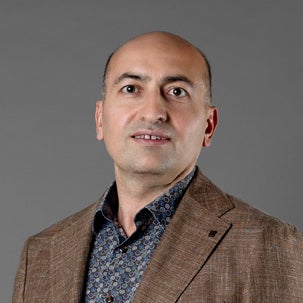
Dr. Husrev Taha Sencar is a principal scientist at QCRI's cybersecurity group. Previously, he was an Associate Professor at TOBB University, Ankara, Turkey. During 2012-2015, he served as the local director of the Center for Cyber Security at NYU Abu Dhabi. Taha is a renowned digital forensics expert specializing in source attribution and forensic data recovery. His research at QCRI focuses on building AI-powered solutions to address security challenges and improving the robustness of AI models. He earned his PhD from the New Jersey Institute of Technology in 2004.
PhD
New Jersey Institute of Technology, NJ, USA
2004
- Forensic data recovery
- Data Provenance
- Threat intelligence
- Robustness of AI models
Associate Professor
Computer Engineering, TOBB University, Ankara, Turkey
2015 - Present
Dr. Ferda Ofli
Principal Scientist
Dr. Ferda Ofli
Principal Scientist
Educational Qualifications
PhD in Electrical and Electronics Engineering
BSc in Electrical and Electronics Engineering
Entity
Qatar Computing Research Institute
Division
Qatar Center for Artificial Intelligence
Biography
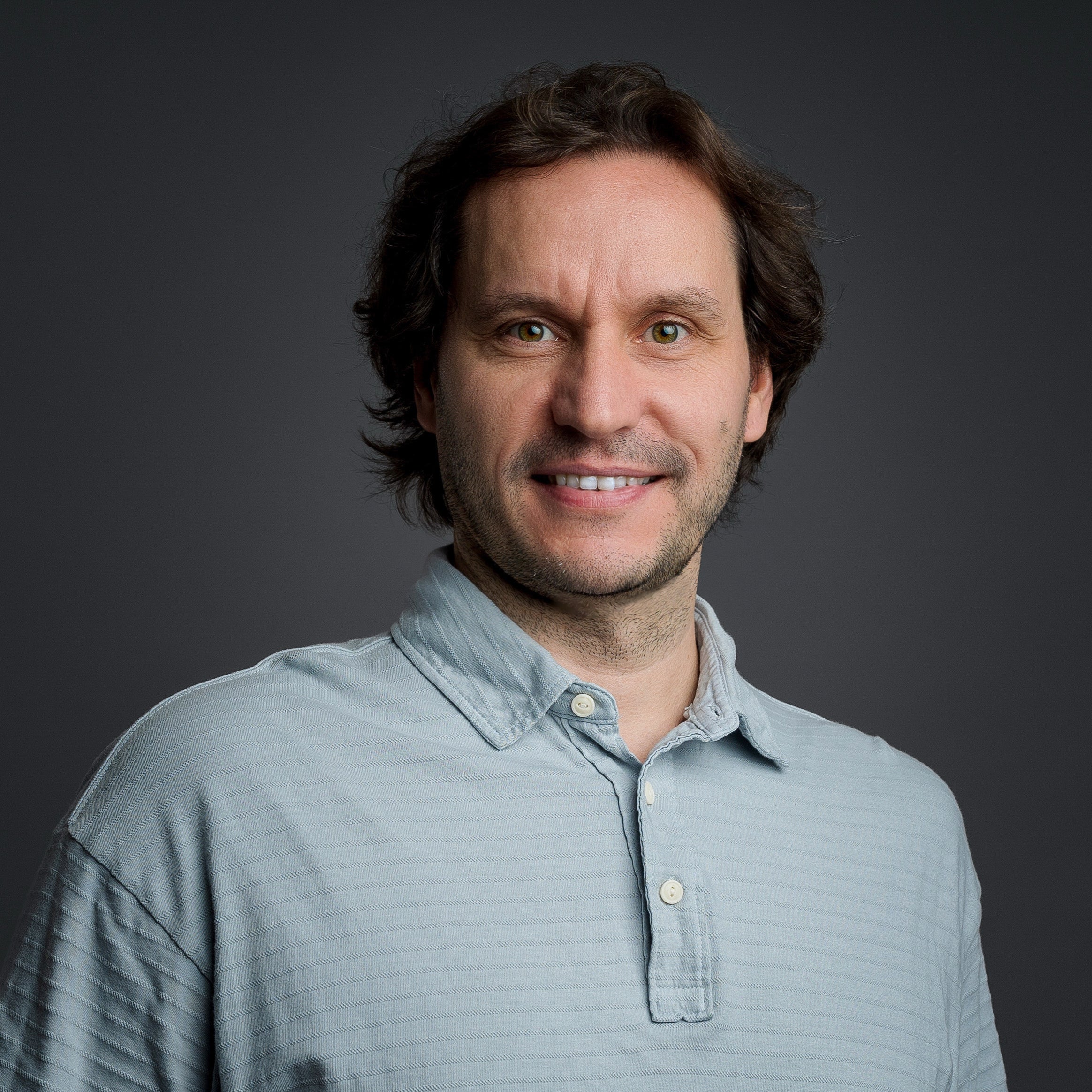
Dr. Ferda Ofli is a Principal Scientist at Qatar Computing Research Institute. Before joining QCRI, he was a postdoctoral researcher at the University of California, Berkeley, CA, USA, from 2010 to 2014. He received BSc degrees both in Electrical and Electronics Engineering and Computer Engineering, and a PhD degree in Electrical Engineering from Koc University, Istanbul, Turkey, in 2005 and 2010, respectively.
Dr. Ofli's research interests span computer vision, machine learning, remote sensing, and multimedia signal processing. In recent years, his work has focused on applying deep learning techniques to image data from diverse sources, including the Internet, UAVs, and satellites, to enhance object recognition and scene understanding in real-world conditions. His research is particularly driven by applications in the social good domain, including disaster response, crisis management, and sustainable development. To tackle the challenges posed by real-world distribution shifts, he leverages domain adaptation, domain generalization, open-set/open-world recognition, and zero-shot and few-shot learning techniques.
Dr. Ofli is a Senior Member of IEEE and ACM, with over 80 publications in top-tier conferences and journals, including CVPR, ECCV, WWW, AAAI, IJCV, and PAMI. His contributions have been recognized with several awards, including the AAAI Deployed Application Award (2024), Best Paper Awards at ISCRAM (2019–2020), the Elsevier JVCI Best Paper Award (2015), and the IEEE SIU Best Student Paper Award (2011). He has also received multiple Outstanding Reviewer Awards from CVPR (2020, 2021, 2025) and SIU (2023). Beyond academia, his work has been featured in the BBC, New Scientist, Wired, and other mainstream media outlets.
PhD in Electrical and Electronics Engineering
Koc University; Istanbul, Turkey
2010
BSc in Electrical and Electronics Engineering
Koc University; Istanbul, Turkey
2005
BSc in Computer Engineering
Koc University; Istanbul, Turkey
2005
Dr. Ofli's research interests span computer vision, machine learning and multimedia signal processing. His current research focuses on using deep learning techniques on Internet image data, created and annotated by online communities, to improve object recognition and scene understanding. Specific areas of interest include (i) understanding health habits from profile pictures and food photos, and (ii) extracting actionable information from imagery content for crisis response and management.
- Computer vision
- Machine learning
- Remote sensing
- Multimedia signal processing
Principal Scientist
Qatar Computing Research Institute, Hamad Bin Khalifa University
2025 – Present
Senior Scientist
Qatar Computing Research Institute, Hamad Bin Khalifa University
2019 - 2025
Scientist
Qatar Computing Research Institute, Hamad Bin Khalifa University
2014 - 2019
Postdoctoral Researcher
Department of Electrical Engineering and Computer Sciences; University of California, Berkeley, CA, USA.
2010 - 2014
Teaching Assistant
College of Engineering; Koc University, Istanbul, Turkey.
2005 - 2010
Complete Publication Listing(s): Google Scholar
- 2020/2021/2025: Outstanding reviewer award; CVPR
- 2024: Deployed application award; AAAI'
- 2019/2020: Best paper award; ISCRAM
- 2015: Best paper award; JVCI
- 2010: Graduate Studies Excellence Award; Koç University, Istanbul, Turkey