 Apply Now
The initiative creates an innovative experience through merging heritage and environmental awareness
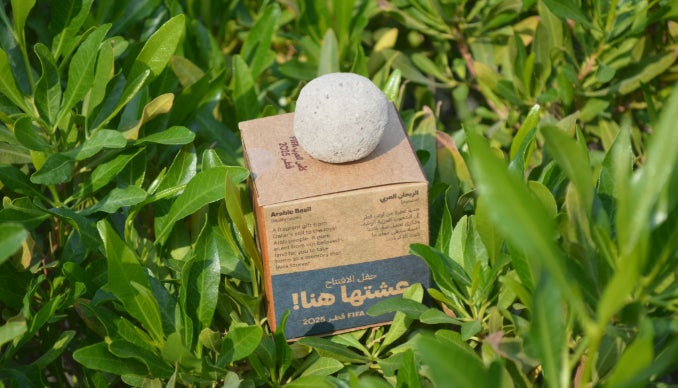
The Qur’anic Botanic Garden (QBG), a member of Hamad Bin Khalifa University (HBKU), has developed a unique mudball to commemorate the FIFA Arab Cup 2025 taking place in Qatar from December 1-18, 2025. This initiative aligns with the Garden’s mission to highlight Qatar’s natural environment and deepen public engagement with nature through creative experiences that blend heritage with environmental awareness.
QBG partnered with the design company taking the opportunity to showcase Qatar’s reputation for innovation, excellence, and sustainable practice.
Beyond the technical aspects, the project offers a distinctive environmental experience. Each fan receives a clay ball they can plant in their garden or personal pot. As the ball naturally dissolves in water, the basil seeds inside begin to sprout, creating a vibrant connection that extends beyond the tournament.
Commenting on this initiative, Fatima Saleh Al-Khulaifi, Director, QBG, said: “This project embodies the vision and mission of QBG. Our contribution to developing the mudball is not simply an artistic endeavor, it is a message to the world that Qatar’s environment carries a heritage that can be creatively and compellingly reimagined. This initiative also reflects QBG’s role in preserving plant resources, raising environmental awareness, and offering models that connect society with nature within the context of a major international sporting event. Showcasing elements of the local environment at such an event reflects the country’s confidence in its natural resources and underscores the creativity and innovative capabilities of its national institutions.”
Sharing the experience of delivering the project, Eng. Mohamed Hassona, Horticulturist at QBG, and lead developer of the mudball, said: “The primary challenge was the ball’s weight, as clay is naturally heavy and unsuitable for general handling. Also, maintaining the seed viability during the shaping process, which required precise moisture control and drying techniques to ensure it remained capable of germination without affecting the ball’s structure posed a challenge. To overcome these, we used modern materials such as biochar, various lightweight fibrous soils, and Qatari clay to produce one of the lightest clay balls used in planting applications.”
This initiative exemplifies the ability of national institutions to integrate horticulture, conservation, and heritage into a single product that enriches cultural and sporting events. It also reinforces Qatar’s environmental identity during the tournament.
Share: