Apply Now

Shocking event highlights regional need for proactive measures amidst contemporary challenges
In today’s rapidly evolving world of interconnected crises, the importance of foresight has become increasingly significant across a state’s operational apparatus. Neglecting to consider emerging trends constitutes a genuine risk given that seemingly minor signals today may escalate into major crises tomorrow. Israel’s recent attack on Qatar serves as a timely reminder that those who do not recognize looming threats may be unprepared when they happen.
Despite sending shockwaves throughout the region and wider international system, the attack nevertheless cast further light on subtle signals that have fanned shifting alliances and escalating tensions. It also provided a reminder that governments should redouble efforts to develop proactive approaches for future challenges.
In this context, foresight is not fortune telling or guesswork but a disciplined and structured process of uncovering faint signals, mapping out uncertainties, and constructing scenarios to enhance resilience and adaptability. This needs to be accompanied by specialized training on foresight methods, models, frameworks, and fostering strategic thinking about the systems at play within the region.
Futures Triangle Approach
In our currently volatile, uncertain, complex, and ambiguous (VUCA) world, survival and prosperity depend on the ability to anticipate, adapt, and shape future developments. Volatility triggers sudden shifts in alliances and conflicts; uncertainty limits opportunities to discern the intentions of others; complexity intertwines energy, debt, technology, and diplomacy markets; and ambiguity renders signals vulnerable to multiple interpretations. Consequently, traditional forecasting tools are no longer sufficient, requiring deeper approaches, such as proactive trend monitoring, systems thinking, and scenario planning across the region.
To tackle these vulnerabilities, one valuable framework that can be employed is the Futures Triangle, which illustrates three forces shaping future outcomes: envisioning the preferred future through long-term stability, diversified economies, and Gulf leadership; the push of the present, which includes economic pressures, proxy conflicts, and new military technologies; and finally, the weight of history such as unresolved conflicts and ideological divisions that slow progress. Combining these forces reveals tensions that make the “unlikely to happen” events, such as an Israeli attack on Qatar, less improbable. Ignoring any side of the triangle highlights a lack of understanding.
Why Were We Unprepared?
Part of the answer is due to cognitive biases. Our brains are conditioned to replay familiar conflicts, such as Israel–Iran or Gaza, instead of imagining new entanglements. Another contributing factor lies in the questions posed. As Peter Drucker once observed, “The most serious mistakes are not being made as a result of wrong answers. The truly dangerous thing is asking the wrong question.” Much of the regional analysis focuses on visible flashpoints while overlooking Qatar’s evolving role as mediator and power broker. Meanwhile, weak signals, minor logistical changes, subtle diplomatic shifts, and disturbances in energy markets analysis are often fragmented rather than integrated into one cohesive vision.
Ways Forward
To effectively prepare for future uncertainties, we need practical and accessible skill sets. First, it is essential to scan for faint signals – paying attention to small shifts that may seem irrelevant but could evolve into major trends. Second, mapping interconnections is crucial as it involves understanding how politics, technology, economics, and culture shape one another and recognizing the bigger picture to avoid surprises and design adaptive policies. Third, scenario planning and backcasting which entails envisioning “what if” scenarios, to prioritize a preferred future and then identify necessary steps to be taken today.
Gulf countries must foster a culture of foresight within their government institutions, education systems, and research centers. Long-term thinking must become a daily part of decision-making, and not a reactive crisis response. Educating future leaders in foresight, encouraging open debate on alternative futures, and prioritizing long-term policies will drive the shift from reactive crisis management to proactive future shaping. This is not a skill that is limited to a select elite but a mindset that every citizen, policymaker, and entrepreneur needs to adopt to ensure stability and prosperity in an ever-evolving world.
Foresight is not prophecy; it is about using disciplined imagination. The lessons for our region are clear – the future will not arrive through a press release; it will be whispered through weak signals and hidden connections. By embracing VUCA, using tools like the Futures Triangle, and strengthening foresight competencies, the Gulf countries can anticipate disruptions and shape outcomes rather than being reactive to them.
Those who identify subtle signals today, will confidently shape the future.
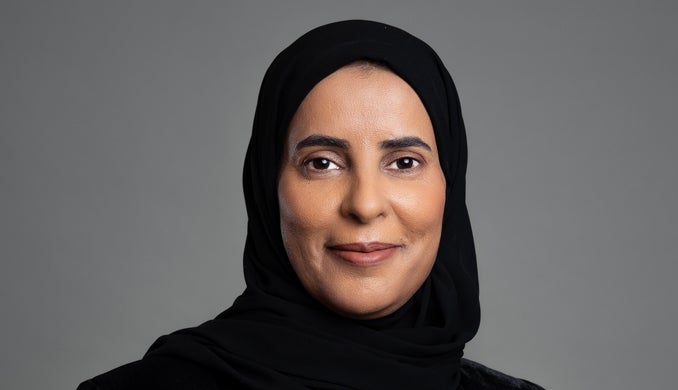
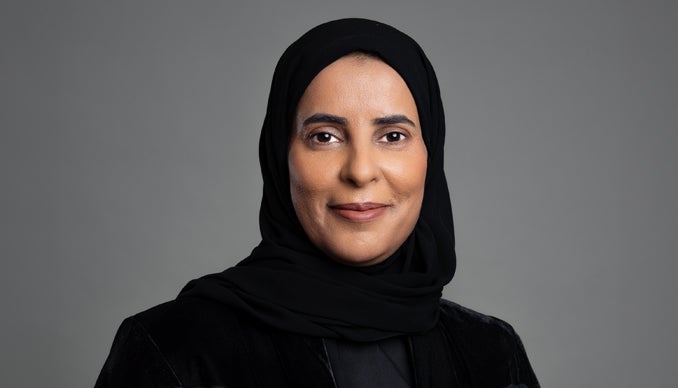
Dr. Asmaa Al-Fadala is Assistant Professor at Hamad Bin Khalifa University’s College of Public Policy.
Share:
Related News
Small States, Big Contributions: The Role of Qatar and Other Small States in Shaping the Pandemic Agreement
Gulf’s Post-Conflict Recovery Requires Bold Vision, Unity, and Regional Integration
Japan–Qatar Cooperation: Building a Resilient Framework For Global Energy Stability