 Apply Now
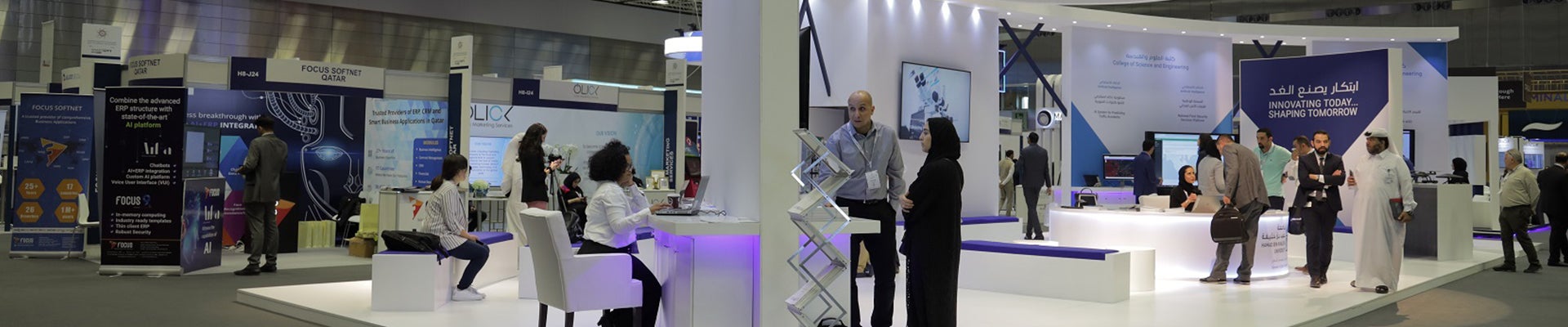
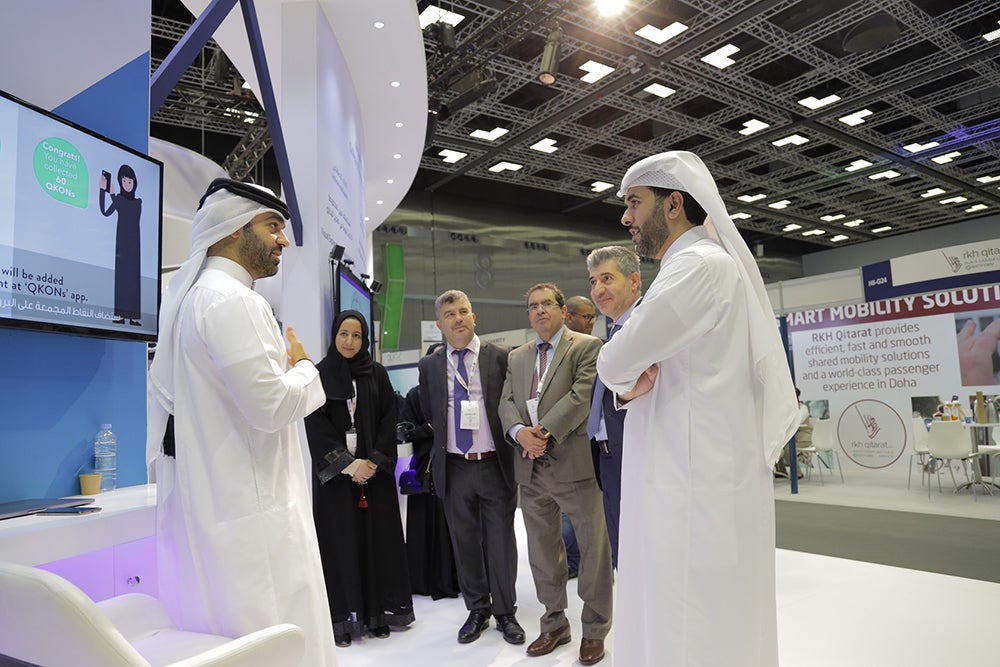
Hamad Bin Khalifa University’s (HBKU) contribution to Qatar IT Exhibition and Conference (QITCOM) 2019 rested on four pillars essential to the development of safe, smart and sustainable cities. By specifically focusing on Artificial Intelligence (AI), cybersecurity, the Internet of Things (IoT) and online learning, the university was able to showcase more projects than ever to policymakers, thought leaders and other participants.
Wearable wireless devices for construction workers and traffic analysis drones were among 15 cutting-edge projects highlighted by HBKU’s College of Science and Engineering (CSE). Qatar Computing Research Institute’s (QCRI) AI-based traffic prediction and remote healthcare platforms also attracted considerable interest. However, when it comes to developing smart cities, such technologies rarely work in isolation, a point proven by HBKU’s project to enhance investment and open access to local renewable energy.
An ‘Integrated’ Energy Market
While Qatar is a major oil and gas producer, domestic purchases of electric vehicles are increasing. These vehicles are powered by batteries which require regular charging. Conversely, many homes in Qatar generate energy via solar panels, some of which is stored for future use. In response, HBKU is developing technology that enables electric vehicles to purchase energy from an increasingly diverse array of resources, including domestic supplies. Managed by CSE’s Dr. Mohamed Abdallah and Dr. Noureddine Lasla, the project has the potential to integrate AI, the IoT and cybersecurity practices.
The premise of CSE’s technology is simple: instead of immediately going to an ‘established’ provider, an electric vehicle owner uses an app to locate alternative sources of stored energy. The owner will be presented with a list of service providers, prices, location and booking options. Upon finding a suitable provider, the app then arranges an appointment for charging to take place.
Anonymity is at the heart of each transaction. Blockchain technology facilitates payments and stores relevant information. These processes are complemented by the drawing up of a ‘smart contract’ applicable to both parties. At no stage will either party come into direct contact with each other. Electronic vehicle owners will also be provided with an automatically-generated breakdown of the amount of energy purchased.
Thanks to blockchain’s encryption capabilities, both energy vendor and purchaser will enter into a transactional relationship impervious to interference by criminals and other cybersecurity threats. This also reflects that blockchain acts as a distributed ledger spread across a network in which all members hold a complete copy of the ledger. Mass shared access also makes internal and external tampering with the ledger extremely difficult to undertake but very easy to detect.
The security of a transaction is enhanced by blockchain’s ‘add-only’ component. Data can only be added in a blockchain in sequential order, meaning that deviation from this process is again easily detectable. Indeed, legitimate updates to the ledger can only happen with the ‘consensus’ of the entire network. New entries must also adhere to strict criteria as defined by blockchain protocol.
Beyond Blockchain
An extra layer of security for CSE’s app will also be provided by technology synonymous with the IoT. Smart meters will accurately record the amount of energy purchased in each transaction. By no means a new technology, smart meters nevertheless highlight the centrality of the IoT to smart cities initiatives. The IoT is essentially a network of devices that communicate and store data. Such data can then be used to inform projects that aim to make cities even smarter. To this end, smart meters’ relevance to CSE’s ongoing research demonstrate that much of the framework required to open up a smart city’s energy market and consumption patterns might already be in place.
Domestic smart meters also work with basic AI to collect and collate data that supports entire utility operations. This often vast amount of data is then processed and stored in a cloud environment. Yet, as QCRI’s Dr. Rade Stanojevic points out, this isn’t the only cloud which potentially benefits CSE’s project.
“AI can do more than simply record when energy is used. On the contrary, machine learning tools can determine the best time of day or season to harvest renewable energy.”
Dr. Stanojevic is convinced that smarter AI could be incorporated to undertake short-term weather forecasts and track cloud positions. Not only will this better calibrate energy collection to specific times, it also provides opportunities to determine how much energy can be generated in any given timeframe. This could help with the rationalization of renewable energy supplies to cope with peaks in demand.
The ‘when’ behind renewable energy collection should also be of interest to electric vehicle owners. Knowing the best time helps to refine opportunities for recharging vehicles. AI can also be employed to help drivers estimate how much energy they might use over a period of time.
Looking Ahead
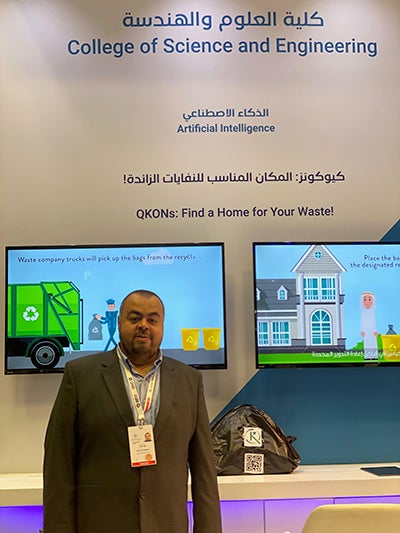
Dr. Mohamed Abdallah and Dr. Noureddine Lasla are adamant their research can also be applied to Qatar’s wider smart city aspirations.
“Sharing energy could inspire a ‘sharing economy’ in which citizens share anything from automobiles to Wi-Fi networks. In the case of Wi-Fi, blockchain can once again be utilized to anonymously facilitate temporary Wi-Fi access. The transaction is based on a provider making their connection available when out of office or on vacation. Doing so might offset periods of increased demand, especially in cities where the development of the IoT remains a work-in-progress.”
Accordingly, there can be no denying that renewable energy and new technologies are significantly contributing to a worldwide transition towards more clean, healthy and smart cities. The future of these cities also rests on their agility and ability to ensure citizens have a stake in their development. From family cars to fully-integrated public transport systems, electric vehicles are potentially one of the biggest customers of clean energy. What is required is a decentralized and open market that better reflects the consumption needs and patterns of vehicle users. Allowing a more diverse range of providers and electric vehicle owners to trade energy without a direct intermediary is a smart move.
Share: