 Apply Now

Event drew upon history to examine the power of narrative control and significance of digital archiving in preserving truth in Palestine
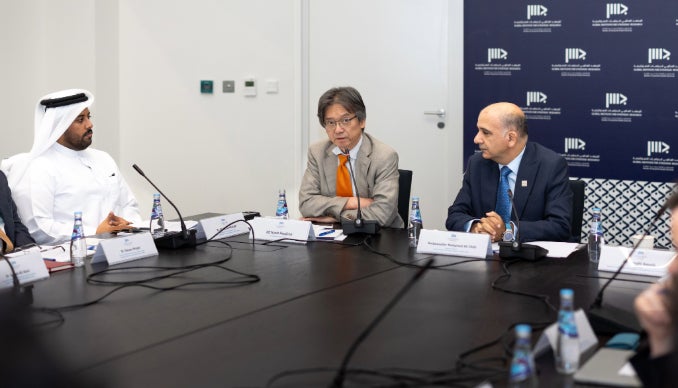
The Global Institute for Strategic Research (GISR) at Hamad Bin Khalifa University (HBKU) concluded a symposium examining the growing prominence of narrative construction and the critical role of digital archiving in preserving authentic records of war atrocities.
Titled ‘From Hiroshima to Gaza: A Japan-Qatar Dialogue on the Power of Documentation and Diplomacy,’ the event was held at Minaretein, and attended by the Ambassador of Japan to the State of Qatar, His Excellency Naoto Hisajima, experts in academia and public policy, alongside students. Across three sessions, participants analyzed Japan’s post-war recovery from the bombings of Hiroshima and Nagasaki 80 years ago, demonstrating the power of documentation and collective memory in rebuilding societies and fostering reconciliation.
Additionally, the symposium examined the structure and dynamics of contemporary information warfare, as well as the contributions of Japan and Qatar to advancing sustainable peace, while addressing Palestine as a critical contemporary case. In doing so, the discussion aimed to raise awareness on the mechanisms of information warfare and highlight the crucial role of digital archiving in preserving authentic records and combating propaganda.
The opening session titled ‘The Battle for Truth in Palestine: Documenting Reality Against Information Warfare’ was moderated by Dr. Steven Wright, Professor and Associate Dean for Academic Affairs at HBKU’s College of Humanities and Social Sciences (CHSS). It featured Dr. George Mikros, Professor, CHSS; Dr. Marc Owen Jones, Associate Professor in Residence, Northwestern University in Qatar; and Ryan Takeshita, Project Executive Officer, Tokyo Broadcasting System Television. They stressed the importance of keeping authentic stories from Palestine and the long-term implications of narrative control.
Commenting on the symposium, Ambassador Dr. Mohamed Ali Chihi, Executive Director, GISR, stated: “This event reflects our commitment to fostering informed dialogue on the intersections of truth, recording events and diplomacy. In an era where information control is significant in building narratives, preserving authentic versions of events has become both a moral and strategic imperative. We want to underscore how documentation can be a foundation for peace, accountability, and upholding human dignity, particularly for Palestine and the wider region.”
Subsequent sessions, ‘Archiving Palestine: Digital Repositories as Pillars of Resistance and Peace’, and ‘Envisioning Palestine's Future: Lessons from Japanese Memory and Qatari Mediation’, further emphasized the need for documentation and shed light on how Qatari mediation and the Japanese experience can help shape a progressive future for Palestine.
The event reaffirmed HBKU’s position as a convener of meaningful dialogue addressing regional and global policy challenges, while promoting impactful policies that advance peace and social change.
Share: