Apply Now

A booming global construction sector underlines the fundamental need for sustainable solutions in supply chains and codes
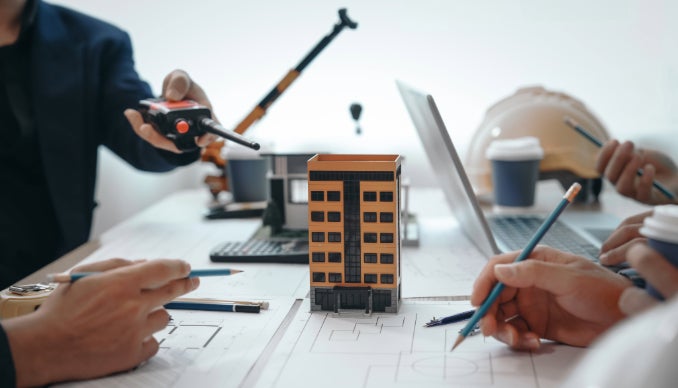
Rapid global urbanization has resulted in substantial growth in the construction industry. This increase indicates the rising demand for infrastructure and housing as populations continue to expand.
As a result, construction has emerged as a massive economic driver, valued at over $12 trillion in 2024 and projected to continue growing significantly due to urbanization, infrastructure development, and government investment. While this growth is impressive it comes at a substantial cost to the planet's health. The buildings and construction sector is by far the largest emitter of greenhouse gases, accounting for an overwhelming 37% of global emissions. Construction materials such as cement, steel, and aluminum have a significant carbon footprint throughout their lifecycle, from extraction, manufacturing, transportation, through to end use.
With this in mind, consider the following questions:
- What if the materials used in construction were carbon-neutral?
- What if building walls sequestered carbon instead of emitting it?
- What if building facades absorbed excess humidity, reducing outdoor discomfort and allowing for walkable environments?
A Research-Backed Solution
To tackle these challenges, researchers at Hamad Bin Khalifa University (HBKU) have developed sustainable alternatives that turn these questions into practical applications. By leveraging naturally occurring perlite - a volcanic glass - they’ve created high-performance composites that yield high compressive strength, low thermal conductivity, and effective acoustic insulation. This nature-based solution has the potential to revolutionize the construction industry.
The team’s research into expanded perlite concrete shows that replacing just 20% of traditional cement with this lightweight, porous material can optimize the balance between mechanical strength and insulation. Integrating perlite also lowers the embodied carbon of concrete by 20-30%, directly addressing CO2 emissions from cement production.
This isn't just a lab-scale concept; it utilizes an abundant global resource, with annual production exceeding 4 million metric tons, and can incorporate recycled waste powder from its own processing, aligning with circular economy principles. But the innovation doesn't stop at mineral-based solutions. Parallel research into bio-based materials suggests a future where building envelopes are grown, rather than manufactured.
Mycelium-based composites (MBCs) produced by growing fungal networks on agricultural waste like hemp or straw present another paradigm shift. These materials capture carbon from the air as they grow, turning buildings into carbon sinks, not sources. Certain formulations, such as mycelium-hemp, achieve a thermal conductivity of 0.0404 W/m·K, a performance competitive with conventional rock wool but with a net CO2 emissions figure of just 0.005 kg per kg of material. For context, that is over 250 times less than cement and 200 times less than steel.
Sustainability and Impact
The implications for the industry are substantial. These materials offer a dual advantage: they drastically reduce the upfront embodied carbon of a building, which is crucial for achieving global decarbonization targets, while simultaneously improving operational efficiency through superior insulation. This translates into long-term energy savings for building owners and a reduced lifetime carbon footprint for assets. For investors and developers, this represents a convergence of ESG objectives with performance and long-term value, considering the expanding market for sustainable building materials, growing demand for green buildings and associated stricter regulations.
The challenge now is scaling production and integrating these materials into mainstream supply chains and building codes.
The path to a net-zero built environment is not a single solution but a portfolio of innovations. Materials like perlite-based concrete and mycelium composites are no longer speculative ideas; they are proven, data-backed alternatives ready for deployment. The question is no longer whether such materials are possible, but if the construction industry is prepared to build the future with them.
Azzam Abu-Rayash is an Assistant Professor in the Division of Sustainable Development, College of Science and Engineering at Hamad Bin Khalifa University. Tariq Khattab is Chief Executive Officer of AppZzon Info Technologies.
Share:
Related News



Sustainable Urban Cooling in Doha: Integrating Green, Blue, and Smart Infrastructure

HBKU Research Explores Impact of Women-only Running Groups on Qatar’s Sporting Landscape