 Apply Now
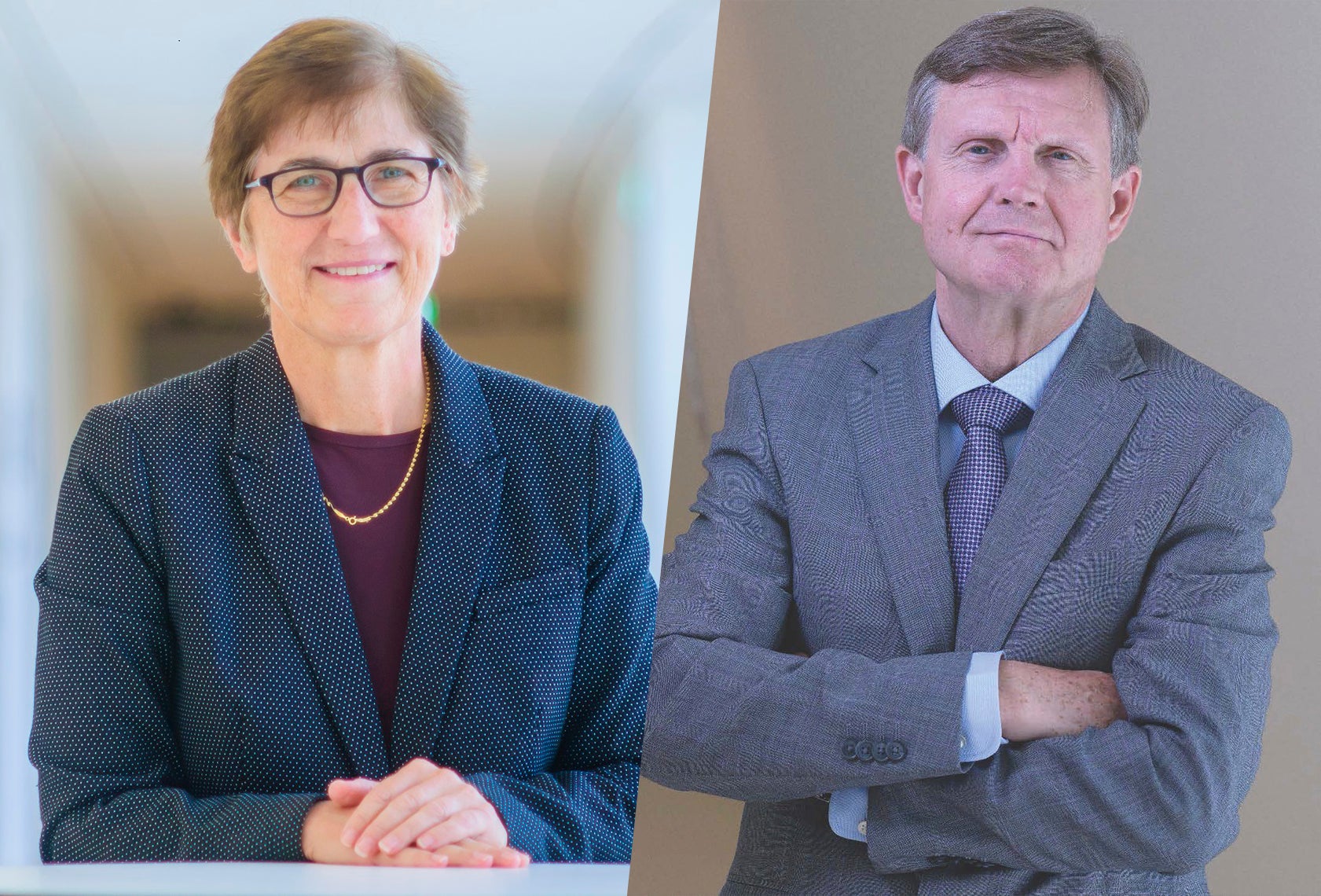
The International Day of Education, held annually on January 24, is a celebration of the role of education in promoting peace and development. To mark this day, we asked two deans from Hamad Bin Khalifa University (HBKU) for their thoughts on how education can help eradicate violent extremism.
Dr. Leslie A. Pal, founding dean of the College of Public Policy at HBKU, and Dr. Susan L. Karamanian, dean of the College of Law at HBKU, have both participated in Educate to Eradicate (E2E) forums at HBKU. They explain the role education can play in tackling this issue.
Dr. Pal explains below how violent extremism has evolved and discusses the challenges higher education institutions face and the impact E2E can make.
How has the way we tackle violent extremism evolved over the years and where do you see the ‘Educate to Eradicate’ initiative fit in?
You have to think of violent extremism as being the result or effect of a host of factors. Like a fire in a building, the first thing you need to do is tackle the fire itself and the damage and threat it poses. That is how violent extremism was, and to a large extent, still is, being addressed. Over time, of course, as the problem has persisted and erupted in different places, we have tried to get at the root causes. That takes you to economic and social factors that create the conditions where people will turn to violence. We have tried to understand the economic circumstances that induce extremism, and persistent unemployment is a key one. We have tried to understand the role culture, ideology and misrepresentations of religion play, and so we have focused on populism. We have tried to figure out how people form their images of the world, the kind of news they rely on, especially through social media. “Educate to Eradicate” is a broad movement to address these latter factors, hearts, minds, and eyes and ears.
What challenges do higher education institutions face today that might challenge the role they can play in stemming the growth of violent extremism?
One challenge is that higher education institutions are far removed from the conditions of economic poverty and social distress. A second challenge is that they focus on teaching and research, not on solving social problems or on advocacy or activism. However, higher education institutions still enjoy high levels of trust, precisely because they are somewhat removed from the front lines. Their research mission gives them the capacity to think more deeply about violent extremism and the best ways to tackle it. I think there are opportunities here, especially in working with partners and NGOs, to do a great deal of good, over the longer term.
What are the implications of E2E from a policy perspective?
If E2E is to be effective, it has to be threaded into educational policies, official development assistance (ODA) policies, and global cooperation frameworks. On the educational front, terrific work is under way on developing tools for students and teachers at all levels – for example, recognizing fake news and navigating the worst sewers in social media. Regarding ODA, we have to deal with the reality that some species of violent extremism are bred in very poor and destitute countries, and so our aid to those countries has to incorporate an E2E component. Finally, violent extremism is confronting us as a global community. The UN and other international agencies know this, and are working hard to better coordinate their efforts. E2E will be an important part of that.
Dr. Karamanian explains below how education has a positive role to play and can help students to think critically and independently, and also explores the ways different universities handle the right to free speech.
What positive role can education play in trying to eradicate violent extremism?
Education is essential in preventing violent extremism in the first instance. Through education, individuals with differing social backgrounds and views of the world come together to better understand societal objectives. A classroom in which content focuses on respect for others and personal responsibility, as well as the development of analytical and problem-solving skills in a global environment, enables each person to understand and formulate a view of self that has a benevolent purpose. Further, an education that prepares an individual to be an advocate for these values when he or she leaves the classroom is essential, as invariably the real test is when the individual’s informed values are challenged.
How do universities balance the right to free speech with their obligation to provide a safe/secure learning environment for community members?
Universities typically foster a dynamic environment, one that encourages community members to question and engage in open debate. Key to achieving this mission is the right of each member to engage in free speech. Yet the right to free speech, when used to promote extremism, could undermine a meaningful sense of security on campus and even lead to violence. In the ideal world, even the most insulting words would cause a listener to question and reject the message, which itself is a learning experience. Unfortunately, for some, the words could prompt them to take disruptive and harmful action.
Some universities have enacted codes that prohibit events likely to cause an environment of fear or intimidation. Some may require speakers to submit copies of their speeches in advance of an event. Various universities have adopted free-speech zones.
The University of Chicago, through its Chicago principles, has advocated a broad approach to freedom of expression on campus subject to what it describes as “narrow exceptions.” The latter gives the university the authority to “restrict expression that violates the law, that falsely defames a specific individual, that constitutes a genuine threat or harassment, unjustifiably invades substantial privacy or confidentiality interests, or that is otherwise directly incompatible with the functioning of the university.”
Another, perhaps more effective, response is one in which members of the university community tackle potentially violent speech through non-violent words and action. An example is Texas A&M University, which in 2016, in response to a student group’s invitation to a controversial alt-right speaker, held a competing event to unite the community through music and speeches.
As an educator, are there any skills that should be encouraged in students toward the overall task of combating extremism?
Educators should instill in students the ability to discern fact from fiction and to think critically and independently. In today’s world, endless messages, readily available on many online sources, have the potential to shape the narrative. The possibility of a destructive one is real unless readers ask the right questions. Second, educators need to develop in their students the communication skills, both verbal and written, to be effective advocates. Finally, students must have a strong understanding of history. Through it, we can avoid future mistakes or at least put today’s problems in their appropriate context.
Share: