 Apply Now

Overview
The Global Alliance for AI Ethics (GAAIE) is founded on the need to shift the global AI ethics discourse from a monocentric, prohibition-focused model to a polycentric, innovation-enabling one. It addresses the core challenges of techno-solutionism, the epistemic injustice embedded in AI data, and the hegemony of a singular ethical worldview. To spearhead this global dialogue, Hamad Bin Khalifa University (HBKU), a member of Qatar Foundation, offers its stewardship, leveraging an established role as a global bridge and its proven capabilities in convening high-stakes international mediation.
The advance of Artificial Intelligence marks a pivotal moment in human history, akin to the advent of transformative technologies like the printing press, electricity, and the internet. In the global race for technological supremacy, the call for “ethics” is too often misconstrued as a brake on progress or an apocalyptic warning of existential risk. This Global Alliance is founded on a different premise: ethics is not a barrier to innovation; it is the catalyst for beneficial innovation, moving us beyond what is technologically doable to what is humanly desirable. The principle that sophisticated ethical reasoning opens beneficial pathways rather than simply closing harmful ones lies at the heart of our mission.
The current trajectory of AI development is driven by a techno-solutionist paradigm where success is measured by technical capability and commercial scale. This logic, guided by profit maximization and market concentration, risks sidelining the diverse human values and societal structures essential for human flourishing. The Global Alliance for AI Ethics will serve as a necessary global counterbalance, championing an approach that aligns technological progress with enduring values like dignity, equity, and well-being, embedding these principles into the AI lifecycle as essential guardrails that direct innovation toward the public interest.
The integrity of current AI systems is compromised by data biases that mirror and amplify global inequalities. This failure stems from two sources: data availability, where models trained on the English-dominant internet render entire civilizations invisible, creating a distorted digital reality; and data selection, where the narrow worldview of developers leads to phenomena like “Techno-Orientalism,” a systemic bias where historical stereotypes are encoded as objective fact.
AI is currently shaped by an exclusivist ethical discourse where a handful of Western perspectives are presented as the “international” standard, a model that is both ethically and intellectually unsustainable. The Alliance will dismantle this monocultural approach by fostering a polycentric dialogue. While some frame the need for global data as the “8 Billion Problem,” we see an opportunity to incorporate the wisdom of 8 billion people, ensuring diverse moral traditions actively and collectively shape the ethical future of AI.
The Alliance is, by its nature, a collaborative enterprise that must engage stakeholders across the entire global AI ecosystem. To this end, we will actively forge partnerships with a broad range of leading organizations, including:
- Intergovernmental Organizations: To align with global policy, we will seek to partner with bodies such as the UN Office for Digital and Emerging Technologies (ODET), the United Nations Educational, Scientific and Cultural Organization (UNESCO), the International Telecommunication Union (ITU), and the Islamic World Educational, Scientific and Cultural Organization (ICESCO).
- Academic and Research Institutions: To ground our work in rigorous scholarship, we will collaborate with institutions like Leverhulme Centre for the Future of Intelligence (CFI) at the University of Cambridge, University of Oxford’s Institute for Ethics in AI, Georgetown University’s Center for Security and Emerging Technology, Tsinghua University’s AI Research Institute (AIR) in China, African Institute for Mathematical Sciences (AIMS), and RIKEN Center for Advanced Intelligence Project (AIP) in Japan.
- Civil Society and Non-Profit Organizations: To connect our work to public needs, we will engage with organizations such as Alan Turing Institute, AI Now Institute, Center for Humane Technology (CHT), Distributed AI Research Institute (DAIR), AlgorithmWatch, and other digital rights groups.
- Technology Industry and Multi-stakeholder Bodies: To translate principles into practice, we will foster constructive dialogue with technology companies and bodies like the Partnership on AI, and Global Partnership on AI (GPAI).
Our Vision
To forge a new paradigm for AI ethics, where ethics is embraced as a catalyst for beneficial innovation, not a barrier to progress.
Our Mission
To build a global framework for AI ethics that reflects the world's diverse moral perspectives by serving as a hub for dialogue, research, and action-oriented initiatives connecting all global stakeholders.
A Commitment to Action: Core Initiatives
لترجمة الرؤية إلى أثر فعلي، يعمل التحالف كمؤسسة ترتكز على الإجراءات والحلول العملية. وسيبدأ العمل بمبادرتين رئيسيتين:

The Global AI Ethics Observatory
This dedicated Observatory will serve as the Alliance's intellectual core. It will act as an independent auditor, assessing major AI models for embedded biases like “Techno-Orientalism,” while concurrently serving as a global center for comparative AI ethics, producing analysis to equip policymakers and developers with insights on how diverse ethical traditions would approach key dilemmas.

The Global Heritage AI Project
To counteract digital marginalization, this initiative will fund and coordinate the large-scale digitization of underrepresented cultural and scholarly archives. By creating new, diverse, and high-quality datasets, the project will provide the essential resources to build more equitable AI systems, in close collaboration with source communities and respecting principles of data sovereignty.

Dr. Mohammed Ghaly
Director of the Research Center for Islamic Legislation and Ethics (CILE) at Hamad Bin Khalifa University

Dr. David Leslie
Director of Ethics Research at The Alan Turing Institute, and Professor of Ethics, Technology and Society at Queen Mary University of London

Dr. Aída Ponce Del Castillo
Senior Researcher at the European Trade Union Institute (ETUI)

Dr. Mark Coeckelbergh
Leading philosopher of technology and a key advisor to the European Commission’s High Level Expert Group on AI

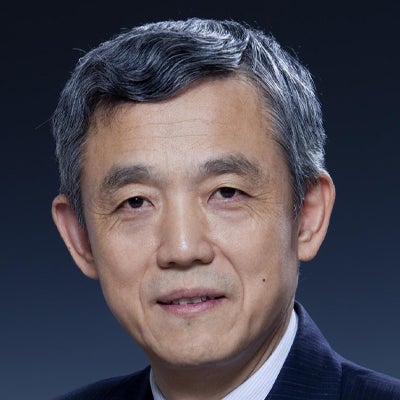
Dr. Xue Lan
Dean of Schwarzman College at Tsinghua University and Co-Chair of China’s National Governance Committee for the New Generation Artificial Intelligence
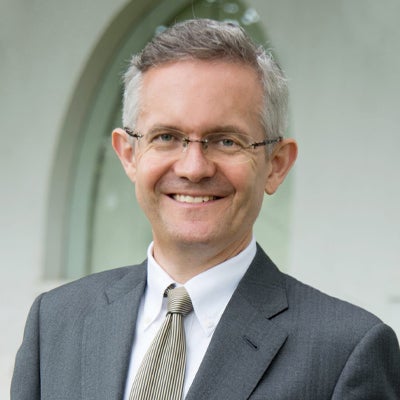
Dr. Simon Chesterman
Vice Provost of Educational Innovation, AI Governance and Policy Lead, NUS AI Institute
Alliance Charter
This Charter establishes the formal framework for the Global Alliance for AI Ethics (GAAIE).