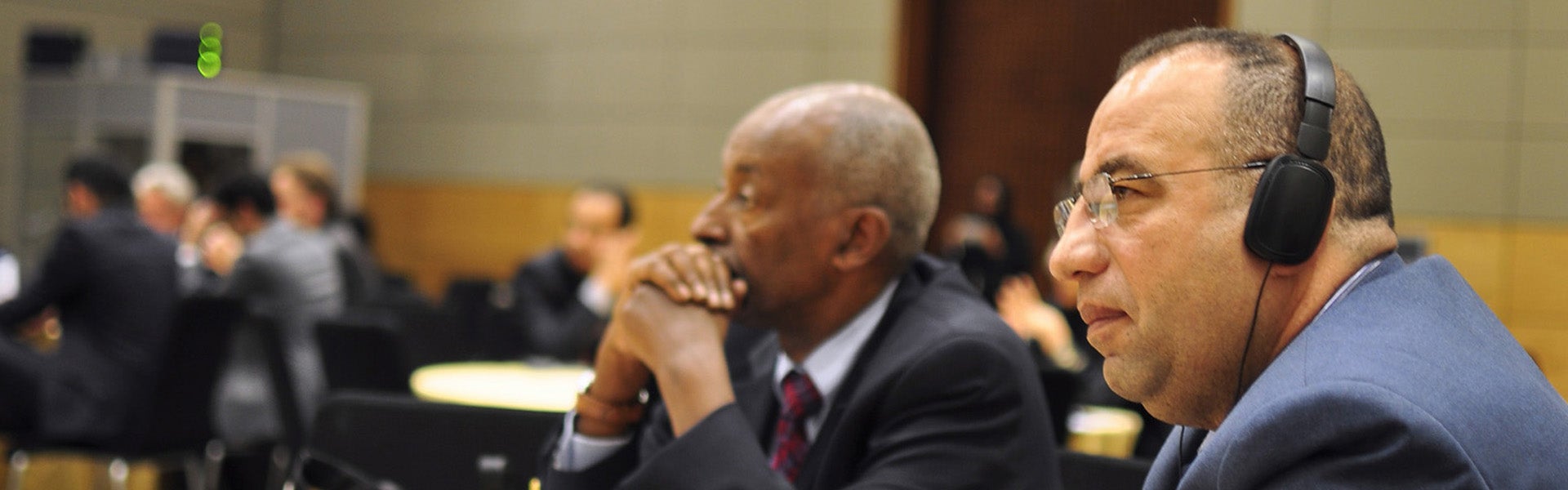

Dr. Kenza Maher
Scientist
Dr. Kenza Maher
Scientist
Educational Qualifications
PhD in electrochemistry of Li-ion batteries
Master’s degree
Entity
Qatar Environment and Energy Research Institute
Biography
Dr Kenza Maher joined Qatar Environment and Energy Research Institute (QEERI) in January 2015 as a Scientist at the Energy Science and Technology Group. She has more than 10 years' experience in researching energy storage. Before joining QEERI, Dr Maher was Research Fellow and Project Leader at the Joint Future Mobility Research Lab with the BMW Group and Nanyang Technological University, Singapore. Her research focused on safety evaluation and diagnostics of BMW electric cars’ batteries to overcome the hazard of thermal runaway in cars.
Dr Maher received her PhD from Cadi Ayyad University, Morocco in January 2011. Her PhD focused on the development of new phosphate and oxides materials for high energy lithium-ion batteries. During her PhD, she was a Guest Researcher at Angström Laboratory, Department of Material Chemistry, Uppsala University, Sweden.
After her PhD, she joined the Energy Research Institute at Nanyang Technological University, Singapore as Research Fellow. She worked on development of a new method to determine the battery state of charge (SOC) and state of health (SOH) based on its thermodynamics properties.
After that she moved to TUM CREATE LTd, Singapore. Her research focused on the study of batteries’ thermodynamics and kinetics properties
PhD in electrochemistry of Li-ion batteries
LCME, FST Marrakech, University Cadi Ayyad, Marrakech, Morocco.
2010
Master’s degree
Physical-chemistry of materials, LCMS, faculty of sciences, Ben M’Sik, University Hassan II Mohammedia, Casablanca, Morocco.
2006
Bachelor's degree
Inorganic Chemistry, faculty of sciences, Ben M’Sik, University Hassan II Mohammedia, Casablanca, Morocco.
2004
DEUG in Physics and chemistry (undergrads degrees)
faculty of sciences, Ben M’Sik, University Hassan II Mohammedia, Casablanca, Morocco.
2002
Scientist
Qatar Environment and Energy Research Institute (QEERI), Hamad Bin Khalifa University (HBKU), Doha, Qatar.
January 2015 to present
Research Fellow and Project Leader
Joint Future Mobility Research Lab with BMW Group and Nanyang Technological University, Singapore.
November 2013 - January 2015 - 1 year and 3 months
Research Fellow
TUM CREATE Ltd., Singapore.
November 2012 – October 2013 - 1 year
Research Fellow
Energy Research Institute (ERI@N), Nanyang Technological University (NTU), Singapore
July 2011 – October 2012 - 1 year and 4 months
R. Essehli, H. Ben Yahia, K. Maher, M.T. Sougrati, A. Abouimrane, J.-B. Park, Y.-K. Sun, M.A. Al-Maadeed, I. Belharouak, J. Power Sources 324 (2016) 657.
R. Essehli, I. Belharouak, H. Ben Yahia, K. Maher, A. Abouimrane, B. Orayech, S. Calder, X. L. Zhou, Z. Zhou, Y.-K. Sun, Dalton Trans., 44 (2015) 7881.
Kenza Maher, Rachid Yazami, J. Power Sources 261 (2014) 389
Kenza Maher, Rachid Yazami, J. Power Sources 247 (2014) 527.
Kenza Maher, Rachid Yazami, Electrochemica Acta 101 (2013) 71-78.

Dr. Mohammad Istiaque Hossain
Scientist
Dr. Mohammad Istiaque Hossain
Scientist
Educational Qualifications
Doctor of Philosophy in Electrical
Master of Science in Electrical
Entity
Qatar Environment and Energy Research Institute
Biography
Dr. Mohammad Hossain is a Research Scientist at the Qatar Environment and Energy Research Institute (QEERI), where he is working as an experimentalist to fabricate and characterize photonic devices and on a numerical simulation basis to assess the theoretical performance of the devices. Since 2012, he has been involved in establishing the 'Thin Films Lab' at QEERI by contributing to the installation and commissioning of various major research tools.
Doctor of Philosophy in Electrical
Electronic and Systems Engineering, National University of Malaysia , Malaysia
2016
Master of Science in Electrical
Electronic and Systems Engineering, National University of Malaysia, Malaysia
2011
Bachelor of Engineering (Hons) in Electronics
Multimedia University, Malaysia
2008
- Solar cell materials
- Solar cell device physics
- Computational materials screening
- New concepts for solar energy utilization
- Simulation of optical and transport behaviors in optoelectronics devices
- 2D-TMDC materials
- CO2 reduction
Scientist
Qatar Environment and Energy Research Institute (QEERI), Qatar Foundation.
June 2012 - Ongoing
Molybdenum Bi-Layer Thin Films for Thin Film Solar Cell Application, Thin Solid Films, 2017, http://dx.doi.org/10.1016/j.tsf.2016.10.039.
Copper oxide as inorganic hole transport material for lead halide perovskitebased solar cells, Solar Energy, 120, 370–380, 2015.
Optical concentration effects on conversion efficiency of split-spectrum solar cell system, Journal of Physics D: Applied Physics, 47-075101, 2014.
Recent advances in alternative material photovoltaics, Materials Technology: Advanced Performance Materials, Volume 28, pp. 88-97, March 2013.
Performance Analysis of Copper-Indium-Gallium-Diselenide (CIGS) Solar Cells with Various Buffer Layers by SCAPS, Current Applied Physics, pp. 387–391, 2010.
2010, MTCP scholarship, Ministry of Higher Education, Malaysia
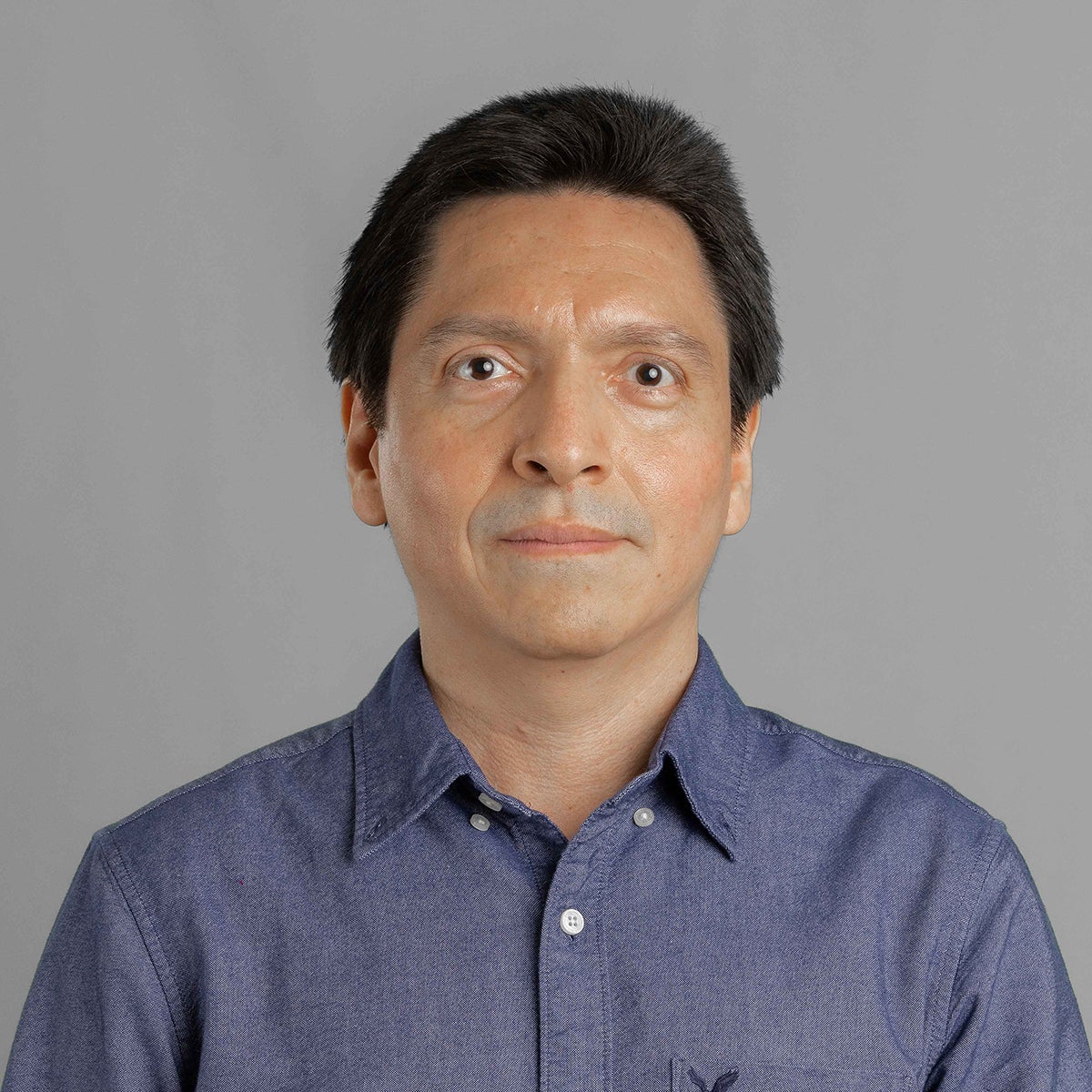
Dr. Daniel Perez Astudillo
Scientist
Dr. Daniel Perez Astudillo
Scientist
Educational Qualifications
Bachelor’s degree
Master of Science, Applied Physics
Entity
Qatar Environment and Energy Research Institute
Biography
Daniel received his doctoral degree in physics in 2006, in the field of High-Energy Experimental Particle Physics (HEP), working on the phenomenology of HEP within the H1 Collaboration, using experimental data from the H1 detector and HERA accelerator at DESY (Deutsches Elektronen-Synchrotron), in Hamburg, Germany, performing simulations and analyzing data, in addition to being involved in the operation, maintenance and control of the H1 Central Silicon Tracking detector. He also has postdoctoral experience working in the simulation of radiotherapy accelerators for medical physics applications and physics with the ALICE detector of the Large Hadron Collider. He joined QEERI in 2012 to work on Solar Resource Assessment, mainly working on ground measurements and data analysis of solar radiation.
Bachelor’s degree
Industrial Engineering; Instituto Tecnológico de Mérida; Merida, Mexico.
1997
Master of Science, Applied Physics
CINVESTAV-Merida; Merida, Mexico.
2001
Doctor of Science, Applied Physics
CINVESTAV-Merida. Merida, Mexico.
2006
Doctoral degree in Physics
CINVESTAV Merida; in the field of High-Energy Experimental Particle Physics (HEP), working on the phenomenology of HEP within the H1 Collaboration at DESY in Hamburg, Germany.
2001-2006
Postdoctoral stay
CINVESTAV-Mexico; two fields: Medical Physics and High Energy Physics.
2007-2008
Postdoctoral stay
CIEMAT-Madrid, Spain; in Supercomputation and Monte Carlo techniques for radiotherapy applications.
2008-2009
Research Scientist
QEERI Doha, Qatar; in Solar Resource Assessment.
2012-present
Ground measurements of Global Horizontal Irradiation in Doha, Qatar. Renewable Energy 71:32-36. Doi: 10.1016/j.renene.2014.05.005
Deriving solar direct normal irradiance using lidar-ceilometer. Solar Energy 110:316-324. Doi: 10.1016/j.solener.2014.09.022
Variability of measured Global Horizontal Irradiation throughout Qatar. Solar Energy 119:169-178. Doi: 10.1016/j.solener.2015.06.045
An adaptive multi-modeling approach to solar nowcasting. Solar Energy 125:77-85. Doi: 10.1016/j.solener.2015.11.041
Analysis of the long-term solar potential for electricity generation in Qatar. Renewable and Sustainable Energy Reviews 73:1231-1246. Doi: 10.1016/j.rser.2017.01.125

Dr. Brahim Aïssa
Senior Scientist
Dr. Brahim Aïssa
Senior Scientist
Educational Qualifications
PhD in Materials and Energy sciences
MS in Materials and Energy Sciences
Entity
Qatar Environment and Energy Research Institute
Biography
Dr. Brahim Aïssa received his PhD degree in Materials Science and Energy from the University of Quebec, Institut National de la Recherche Scientifique, Canada, with the highest honors. Both his PhD and MS theses were awarded top prize for the best scientific achievement and part of his work was selected in the best TOP-10 scientific discovery in Canada. Parts of the samples he developed during his PhD were selected to be saved in the museum of Science and Technology in Ottawa (Canada). Dr. Aïssa joined MPB Communications Inc., Space and Photonics Division (Top 10 High Tech companies in Canada), as a scientist, where he developed a new generation of self-healing materials for space applications.
In 2014, Dr. Aïssa joined Qatar Environment and Energy Research Institute (QEERI) as a Senior Scientist. In a close collaboration with the PV-Lab at École Polytechnique Fédérale de Lausanne (EPFL), he broke the world record twice for certified efficiencies for quasi-mono silicon solar cells. He published more than 170 refereed journal papers, three books, and holds many patents. He has numerous international awards, prizes and fellowships, including the prestigious NPI award from European Space Agency; the Australian Endeavour fellowship; the NSERC R&D fellowship.
PhD in Materials and Energy sciences
National Institute of Scientific Research, Energy, Materials and Telecommunications, Varennes, Québec, Canada.
2010
MS in Materials and Energy Sciences
National Institute of Scientific Research, Energy, Materials and Telecommunications, Varennes, Québec, Canada.
2005
Dr. Aïssa’s research interests include the cold plasma synthesis of structured materials (bulk, thin films, and nanoparticles) and their applications in electronic, space, and energy sciences.
In particular, his research work focuses on studying the electronic and optoelectronic properties of advanced materials, to design and synthesize novel structures with a controlled composition, morphology and dimension for PV, electronic and space applications. An emphasis is currently placed on the PV Energy field of research, revolving more specifically around six main axes, namely:
- Light Management in Solar Cells using Plasmonics and Metamaterials.
- The PV-Soiling in desert environment: its understanding
- forecasting and its mitigation.
- Technology and Performance of Bifacial Half-Cell Modules for desert climates.
- Efficient Carbon Management System for Improving Sustainability.
- AI-based Risk Mitigation for PV Plant Management and Integration.
- The silicon technology that includes the design
- fabrication and testing of silicon heterojunction solar cells for applications in a hot and sunny climate.
Senior Scientist
Qatar Environment and Energy Research Institute-Hamad Bin Khalifa University, Qatar Foundation. Doha, Qatar. (Research and Development).
2014 - Present
Invited Associate Professor
PV-Lab, École Polytechnique Fédérale de Lausanne (EPFL), Neuchâtel, Switzerland.
2015 - 2019
Joint Faculty Associate Professor
College of Science and Engineering-Hamad Bin Khalifa University, Qatar Foundation. Doha, Qatar. (Teaching SENS621: Advanced materials synthesis and characterizations).
2015 - Present
Scientist
MPB Communications Inc. Space and Photonics. Montreal, Quebec, Canada.
2011 - 2014
Postdoctoral fellow (Following NSERC Fellowship)
MPB Technologies Inc. Department of smart materials and sensors for space missions. Montreal, Quebec, Canada.
2010 - 2011
Books
Self-healing Materials: Innovative materials for terrestrial and space applications. Smithers Rapra Publisher. Shawbury, UK, ISBN: 9781909030107 (274 pages).
Fibre Bragg Grating in harsh and Space environments: principles and applications. IET publishing, UK. ISBN: 978-1-78561-980-9. (232 pages).
Self-healing materials from fundamental concepts to advanced space and electronics applications, Second Edition, IET publishing, UK, ISBN: 978-178561-992 (240 pages).
Book Chapters
“Carbonaceous Nanomaterials for Hybrid Organic Photovoltaic Application” Chapter 5, pages 109-125. Published in Ceramic Matrix Composite, ISBN: 978-3-11-035300-6. DE Gruyter, Germany, 2016. (https://www.degruyter.com/view/product/337768).
“Advances in Self-healing based on carbon nanomaterials for electrical circuits. A review” Chapter 6, pages 127-141. Published in Ceramic Matrix Composite, ISBN: 978-3-11-035300-6. DE Gruyter, Germany, 2016. (https://www.degruyter.com/view/product/337768).
“Carbonaceous Materials for Polymer-Based Nanocomposites: Overview of Major Advances and Current Challenge”. Chapter 1, pages 27-60. Published in: Nanocomposites, synthesis, characterization and applications, ISBN: 978-1-62948-227-9. Nova biomedical publisher, New York, 2013.
“Self-Healing Materials Systems as a Way for Damage Mitigation in Composites Structures Caused by Orbital Space Debris”. Chapter 1, pages 1-25. Published in: Handbook of Research on Nanoscience, Nanotechnology, and Advanced Materials, ISBN: 9781466658240. IGI Global Disseminator of knowledge Publisher, Pennsylvania (USA), 2014.
“Si-NWs: Major advances in synthesis and applications”. Chapter 5, pages 108-130. Published in: Handbook of Research on Nanoscience, Nanotechnology, and Advanced Materials, ISBN: 9781466658240. IGI Global Disseminator of knowledge Publisher, Pennsylvania (USA), 2014.
Selected refereed journal papers
Study of Wide Bandgap SnOx Thin Films Grown by a Reactive Magnetron Sputtering via a Two-Step Method” Sci. Reports, DOI: 10.1038/s41598-022-19270-w, September 2022.
“Growth and characterization of transparent vanadium doped zinc oxide thin films by means of a spray pyrolysis process for TCO application” Journal of Sol-Gel Science and Technology, https://doi.org/10.1007/s10971-022-05875-0, May 2022.
“Advancements and Applications of Electrohydrodynamic Printing in Modern Microelectronic Devices: A Comprehensive Review” Appl. Phys. A 128, 780 (2022). https://doi.org/10.1007/s00339-022-05796-3.
“Density functional theory study on the magneto-electronic, mechanical, thermal, and transport properties of a novel Co2VGa0.5Al0.5 quaternary Heusler alloy” Emergent Materials, DOI: 10.1007/s42247-022-00393-9.
“Photovoltaic properties of hybrid c-Si/ZnO nanorods solar cells” Materials Advances, 2022, DOI: 10.1039/D2MA00416J
“PV-Soiling Field-Assessment of Mars™ Optical Sensor Operating in the Harsh Desert Environment of the State of Qatar” Solar Energy 239,139-146, 2022, https://doi.org/10.1016/j.solener.2022.04.064.
“Condensation as a predictor of PV soiling” Solar Energy 238, 30-38, https://doi.org/10.1016/j.solener.2022.04.025, 2022.
“Probing the hydrophilic behavior of e-beam evaporated silica thin films for PV-soiling application” Materials Science and Technology, https://doi:10.1080/02670836.2022.2063526, 2022.
“Broadband self-powered photodetection with p-NiO/n-Si heterojunctions enhanced with plasmonic Ag nanoparticles deposited with pulsed laser ablation” J. Mater. Sci: Mater Electron (2022), 1-13, doi: https://doi.org/10.1007/s10854-022-08058-3.
“Laser ablation fabrication of a p-NiO/n-Si heterojunction for broadband and self-powered UV-Visible-NIR photodetection” Nanotechnology 33 (25), 255202, https://doi.org/10.1088/1361-6528/ac5ca6.
“Research Progress of Plasmonic Nanostructure-Enhanced Photovoltaic Solar Cells” Nanomaterials 12, no. 5: 788. https://doi.org/10.3390/nano12050788.
“Computational determination of structural, electronic, magnetic and thermodynamic properties of Co2HfZ (Z= Al, Ga, Si and Sn) full Heusler compounds for spintronic applications” Journal of Alloys and Compounds 894, 162503. https://doi.org/10.1016/j.jallcom.2021.162503.
“X-ray photoelectron spectroscopy and spectroscopic ellipsometry analysis of the p-NiO/n-Si heterostructure system grown by pulsed laser deposition” Thin Solid Films 743, 139077, 2022. https://doi.org/10.1016/j.tsf.2021.139077.
“Metamaterials and Metasurfaces: A Review from the Perspectives of Materials, Mechanisms and Advanced Metadevices” Nanomaterials 2022, 12(6), 1027; https://doi.org/10.3390/nano12061027.
“Inkjet printing of metal oxide coatings for enhanced photovoltaic soiling environmental applications” Global J. Environ. Sci. Manage. 8(4): 1-18 (2022), http://dx.doi.org/10.22034/GJESM.2022.04.03.
“Computational determination of structural, electronic, magnetic and thermodynamic properties of Co2HfZ (Z = Al, Ga, Si and Sn) full Heusler compounds for spintronic applications” Journal of Alloys and Compounds, 2021, 162503, https://doi.org/10.1016/j.jallcom.2021.162503.
“Numerical and Experimental Investigation of Infrared Optical Filter based on Metal Oxides Thin Films for Temperature Mitigation in Photovoltaics” Journal of Electronic Materials 51, 179-189, 2022. https://doi.org/10.1007/s11664-021-09269-w.
“High Performance of Anion Exchange Blend Membranes Based on Novel Phosphonium Cation Polymers for All-Vanadium Redox Flow Battery Applications” ACS Applied Materials & Interfaces, 2021, 13, 38, 45935–45943, https://doi.org/10.1021/acsami.1c10872.
“Oxide and Organic–Inorganic Halide Perovskites with Plasmonics for Optoelectronic and Energy Applications: A Contributive Review” Catalysts 2021, 11(9), 1057; https://doi.org/10.3390/catal11091057.
“Investigating the suitability of poly tetraarylphosphonium based anion exchange membranes for electrochemical applications” Scientific Report 11, (pp 1-12), 13841 (2021). https://doi.org/10.1038/s41598-021-93273-x.
“Investigation of Ruthenium based Full-Heusler compound for thermic, spintronics and thermoelectric applications: DFT Computation” Materials Science in Semiconductor Processing, 134, 106047 (2021) https://doi.org/10.1016/j.mssp.2021.106047
“Synthesis and Characterization of a Novel Hydroquinone Sulfonate-Based Redox Active Ionic Liquid” Materials 2021, 14, 3259. https://doi.org/10.3390/ma14123259.
“Dust potency in the context of solar photovoltaic (PV) soiling loss Solar Energy” Solar Energy 220, 1040-1052, 2021. https://doi.org/10.1016/j.solener.2021.04.015.
“Nanoelectromagnetic of a highly conductive 2D transition metal carbide (MXene)/Graphene Nanoplatelets composite in the EHF M-band Frequency” Carbon 173 (2021) 528-539, https://doi.org/10.1016/j.carbon.2020.11.024 (2021).
“Hydrophilic Antireflection and Antidust Silica Coatings” ACS Omega, 2021, 6, 8, 5276–5286, 2021, https://dx.doi.org/10.1021/acsomega.0c05405
“Bandgap Tuning of High Mobility Magnetron Sputtered Copper (I) Oxide Thin Films for Perovskite Solar Cell Applications” Journal of Thin Films Research, Vol. 5, Issue 1, 2021 Pages 51 – 54, https://doi.org/10.30799/jtfr.026.21050101
“Thermoelectric Potential of OsAl2 Chimney Ladder Compound: A Theoretical Investigation” Journal of Superconductivity and Novel Magnetism 34, 1215–1223 (2021) https://doi.org/10.1007/s10948-021-05803-3
“Nonlinear multi-mode electromagnetic insole energy harvester for human-powered body monitoring sensors: Design, modeling and characterization” Journal of Mechanical Engineering Science, Part C, 0954406221991178, 2121. https://doi.org/10.1177/0954406221991178
“Machine-Learning-Accelerated Recovery of the Large-grain and Cubic Structure in Mixed Cations Perovskite Thin Films” Chem. Mater. 2020, 32, 7, 2998-3006, https://doi.org/10.1021/acs.chemmater.9b05342 (2020).
“Unusual Bimodal Photovoltaic Performance of Perovskite Solar Cells at Real-World Operating Temperatures”, J. Phys. Chem. C 2020, 124, 17, 9118-9125. https://doi.org/10.1021/acs.jpcc.9b11818 (2020)
“Multi-year field assessment of seasonal variability of photovoltaic soiling and environmental factors in a desert environment” Solar Energy, Volume 211, 15 November 2020, Pages 1392-1402, https://doi.org/10.1016/j.solener.2020.10.076 (2020).
“PCDTBT:PCBM:Graphene-Nanoplatelet Photoabsorbers” Journal of Electrochemical Society, 167(13), 136504 (2020). https://iopscience.iop.org/article/10.1149/1945-7111/abb6ce (2020).
“E-beam evaporated hydrophobic metal oxide thin films as carrier transport materials for large scale perovskite solar cells”. Materials Technology: Advanced Performance Materials. https://doi.org/10.1080/10667857.2020.1830551. (2020).
“Structural, electronic, elastic, Magnetic and thermodynamic properties of Mn2LuZ (Z = B, Al, Ga, In) Heusler compounds: a first principle study”, Int. Journal of Quantum Chemistry, V. 121(9), e26601, 2021. DOI: 10.1002/qua.26601.
“Failure analysis of self-healing epoxy resins using microencapsulated 5E2N and carbon nanotubes” Smart materials and structures, https://doi.org/10.1088/1361-665X/abd005 (2020).
“Nb-based MXenes for the efficient electrochemical sensing of small biomolecules in the anodic potential” Electrochemistry Communications, 119, 106811. 2020. https://doi.org/10.1016/j.elecom.2020.106811
“Single crystal structure, vibrational spectroscopy, gas sorption and antimicrobial properties of a new inorganic acidic diphosphates material (NH4)2Mg(H2P2O7)2•2H2O” Scientific Reports (2020) 10:8909| https://doi.org/10.1038/s41598-020-65718-2.
“Vibration-based piezoelectric, electromagnetic and hybrid energy harvesters for microsystems applications: A contributed review” Int. J. Energy Res. Vol. 45 (1); pp 65– 102. https://doi.org/10.1002/er.5643
“Multimodal Hybrid Piezoelectric-Electromagnetic Insole Energy Harvester Using PVDF Generators” Electronics 2020, 9(4), 635; https://doi.org/10.3390/electronics9040635
“First Principle Investigation of Structural, Electronic and Optical Properties of Quaternary BxInyGa1-x-yN Compounds”, SPIN journal, 10 (4), 2050024 (2020). https://doi.org/10.1142/S2010324720500241.
“Development of an inorganic cesium carbonate-based electron transport material for a 17 % power conversion efficiency perovskite solar cell device” Journal of Photonics for Energy 10(1), 015502 (2020). https://doi.org/10.1117/1.JPE.10.015502
“Recovery of electro-mechanical properties inside self-healing composites through microencapsulation of carbon nanotubes” Scientific Reports 10 (1), 1-13 (2020). https://doi.org/10.1038/s41598-020-59725-6
“Surface atomic packing fraction as a figure of merit for the structural transition and the bulk-to-nano transformation of spherical FCC and BCC nanosolids” Physica E, 120, 114015, DOI: https://doi.org/10.1016/j.physe.2020114015 (2020).
“Theoretical study of magneto-electronic properties of TmCo2 and NdCo2 intermetallic compounds through Density Functional Theory calculations” International Journal of Quantum Chemistry, Vol. 121(5), e26488, pp 1-9. DOI: 10.1002/qua.26488, 2020.
“Functionalized Single-Walled Carbon-Nanotube-Blended P3HT-Based high performance Memory Behavior Thin-Film Transistors Devices” Nanotechnology 31, 075201 https://orcid.org/0000-0002-4768-9891(2020).
“Structural, Magnetic, and Band Structure Characteristics of the Half-Metal–Type Heusler Alloys Co2VSi1−xAlx (x = 0, 0.25, 0.5, 0.75, and 1)” Journal of Superconductivity and Novel Magnetism volume 33, pages1177–1186 (2020). https://doi.org/10.1007/s10948-019-05315-1
“Influence of single-walled carbon nanotubes induced exciton dissociation improvement on hybrid organic photovoltaic devices” Journal of applied physics, Vol. 126, 113101, 2019. DOI: 10.1063/1.5105388, DOI: https://doi.org/10.1063/1.5105388
“Optimized design of silicon heterojunction solar cells for field operating conditions” IEEE journal of photovoltaics, Vol. 9 (6), pp 1541 - 1547, 2019, DOI: 10.1109/JPHOTOV.2019.2938449
“Adaptive state estimation of groundwater contaminant boundary input flux in a 2-dimensional aquifer” Journal of Groundwater Science and Engineering 2019, 7(4), 373-382, DOI: 10.19637/j.cnki.2305-7068.2019.04.008
“Record Efficiency P- and N-type Mono-like Silicon Heterojunction Solar Cells with High Temperature Gettering Process”, ACS Applied Energy Materials, Vol. 2(7), 4900-4906, (2019).
“Photovoltaic Soiling in Dry Climates: Causes, Impacts and Solutions” PV Tech Power 21, Technical paper, pp 14-18, Dec. 2019
“Annealing of silicon heterojunction solar cells: Interplay of solar cell and ITO properties” IEEE Journal of Photovoltaics, Vol. 99, 1-6, (2019). Doi:10.1109/JPHOTOV.2019.2924389
“Electronic structure of REFe2 (RE = Dy, Ho and Er) intermetallic compounds: Ab initio spin-density functional theory” Solid State Communications, Vol. 296, 42-48 (2019).
“Catalyst-free synthesis of ZnO-CuO-ZnFe2O4 nanocomposites by a rapid one-step thermal decomposition approach” Materials Science in Semiconductor Processing, Vol. 90, 41-49, (2018).
“Correlation effects on the electronic structure of Co2VGa1−xSix (x = 0, 0.25, 0.5, 0.75 and 1) quaternary Heusler alloys: first-principles calculations” Journal of Alloys and Compounds Vol. 771, 1062-71, (2018).
“Effect of Synthesis on Performance of MXene/Iron Oxide Anode Material for Lithium-Ion” Langmuir Vol. 34 (38):11325-34 (2018).
“Cure kinetics of poly (5-ethylidene-2-norbornene) with 2nd generation Hoveyda-Grubbs’ catalyst for self-healing applications” Polymer Vol. 153, 1-8, (2018).
“The Economic Value of Common Urban Trees in the State of Qatar from an Air Quality Control Perspective” J. Environ. Sci. Pollut. Res. Vol. 4 (3), 285–288 (2018).
“Ab-initio study of the structural, elastic and electronic properties of CeN and LuN rare-earth nitride compounds” J. Supercond. Nov. Magn. Vol. 31 (10), 3323-30 (2018).
“Development of microwave susceptors based on SiC composites and their application for a one-step synthesis of ZnO nanostructures” Ceramics International Vol. 44(7), 7674 (2018)
“Ultrahigh-flux and fouling-resistant membrane based on layered silver/MXene(Ti3C2Tx) nanosheets” Journal of materials Chemistry A Vol. 6, 3522-33 (2018).
“Graphene nanoplatelets doping of P3HT:PCBM photoactive layer of bulk heterojunction organic solar cells for enhancing performance” Nanotechnology Vol. 29, 105405 (2018).
“Nanoelectromagnetic of the N-doped single wall carbon nanotube in the extremely high frequency band”, Nanoscale Vol. 9, 14192 – 14200 (2017).
“Towards an optimum silicon heterojunction solar cell configuration for high temperature and high light intensity environment” Energy Procedia Vol. 124, 331-337 (2017).
“Emerging technologies in crystal growth of Photovoltaic Silicon: Progress and Challenges”, Energy Procedia Vol. 130, 7-13 (2017).
“Structural and Optical Characterization of an Easy to Scale up TiO2 Thin Films Prepared by Adsorptive Self-Assembly” Scientific Reports Vol. 7, 9466, (2017).
“Photoluminescence quenching, structures, and photovoltaic properties of ZnO nanostructures decorated plasma grown single walled carbon nanotubes” Journal of Nanoparticle Research Vol. 19, 157 (2017).
“Energy Yield in Hot & Sunny Climates: Impact of Silicon Solar Cell Architecture and Cell Interconnection” Energy & Environmental Science 2017, 10, 1196-1206 (2017).
“Effect of the structure, temperature and metal work function on the performance of organometallic perovskite solar cells” Journal of Elec. Materi. Vol. 46, 1806-10 (2017).
“Transport properties of a highly conductive 2D Ti3C2Tx MXene/Graphene composite” Appl. Phys. Lett. 109, 043109 (2016).
“Structural and physical properties of the dust particles in Qatar and their influence on the PV panel performance” Scientific Reports 6, 31467 (2016).
“First-principles study on the structural, electronic, magnetic and thermodynamic properties of full Heusler alloys Co2VZ (Z = Al, Ga)” Journal of electronic materials 46, 130-142, (2016).
“Theoretical investigation of the structural, electronic, magnetic and elastic properties of binary cubic C15-Laves phases TbX2 (X = Co and Fe)” J. Alloys and compounds 689, 885–893 (2016). https://doi.org/10.1016/j.jallcom.2016.08.046
“A theoretical prediction of the paradoxical surface free energy for FCC metallic nanosolids”, Applied Surface Science 379, 411-414, (2016).
Refereed proceedings and conferences papers
“Low-temperature PECVD deposition of highly conductive n-type microcrystalline silicon thin films for optoelectronic applications” proceeding of the 2022 IEEE 49th Photovoltaic Specialists Conference (PVSC),
“Field-assessment of anti-soiling Glass surfaces prepared by oxygen-plasma treatment” proceeding of the 2022 IEEE 49th Photovoltaic Specialists Conference (PVSC).
“Preparation of Plasmonic Ag and Au Nanoparticle Interfaces for Photocurrent Enhancement in Si Solar Cells” proceeding of the 2022 IEEE 49th Photovoltaic Specialists Conference (PVSC).
“Hydrophilic Silica Thin Films Formed by Acetone treatment for Field assessment PV Soiling Application” proceeding of the 2022 IEEE 49th Photovoltaic Specialists Conference (PVSC).
“Field assessment of Transparent Conductive Oxides Stability Under Outdoor Conditions” proceedings of the 2022 IEEE 49th Photovoltaic Specialists Conference (PVSC).
“P-type N doped SnOx using Magnetron Sputtering and Post Plasma Treatment” Proceeding of the European Materials Research Society EMRS Spring 2021.
“Soiling Rate Determination from Referenced Systems in Desert Climate using PVInsight Soiling Algorithm” proceeding of the 2021 IEEE 48th Photovoltaic Specialists Conference (PVSC), pp 2552-2554. doi: 10.1109/PVSC43889.2021.9518459
“Thermal Behavior and Photovoltaic Performance of Monofacial and Bifacial Silicon Heterojunction Modules Under Desert Condition” proceeding of the 2021 IEEE 48th Photovoltaic Specialists Conference (PVSC), pp: 0843-0845. doi: 10.1109/PVSC43889.2021.9518402
“Optical-electrical-thermal optimization of plasmon-enhanced solar cell” proceeding of the 2021 IEEE 48th Photovoltaic Specialists Conference (PVSC), pp: 0060-0067. doi: 10.1109/PVSC43889.2021.9518631
“Optical fiber sensor for atmospheric reentry experiments” Proc. SPIE 11852, International Conference on Space Optics — ICSO 2020, Vol. 11852, pp: 118523G1-12 (11 June 2021); doi: 10.1117/12.2599547
“High Electron-Mobility of a Transparent and Conductive Zr-Doped In2O3 Deposited by Reactive Magnetron Sputtering,” 2021 IEEE 48th Photovoltaic Specialists Conference (PVSC), 2021, pp. 0071-0073, doi: 10.1109/PVSC43889.2021.9518643.
"Tuning the Structural and Optoelectronic Properties of Sub-stoichiometric Molybdenum Trioxide (MoOx, x < 3) Thin Films through the Oxygen Flow During the Reactive Magnetron Sputtering Deposition," 2021 IEEE 48th Photovoltaic Specialists Conference (PVSC), 2021, pp. 0068-0070, doi: 10.1109/PVSC43889.2021.9518553.
“Optimized design of silicon heterojunction solar cells for field operating conditions” Proceedings of the Asia PVSEC 2019, Nov. 4-8, 2019, Xi'an, China.
“Impact of the Oxygen Content on the Optoelectronic Properties of the Indium-Tin-Oxide Based Transparent Electrodes for Silicon Heterojunction Solar Cells” AIP Conference Proceedings 2147, 030001 (2019); https://doi.org/10.1063/1.5123827
“Impact of the Oxygen Flow during the Magnetron Sputtering Deposition on the Indium Tin Oxide thin films for Silicon Heterojunction Solar Cell” 2019 IEEE 46th Photovoltaic Specialists Conference (PVSC), 2019, pp. 2659-2666, doi: 10.1109/PVSC40753.2019.8980906.
“Development of N-Type Amorphous and Microcrystalline Hydrogenated Silicon-Oxides (SiOx:H) and Investigation of their Impact as Window Layers on Silicon Heterojunction Solar Cells Device" 2019 IEEE 46th Photovoltaic Specialists Conference (PVSC), 2019, pp. 2667-2674, doi: 10.1109/PVSC40753.2019.8980556.
“Nanocrystalline silicon oxide stacks for silicon heterojunction solar cells for hot climates” AIP Conference Proceedings 1999, 030001 (2018); https://doi.org/10.1063/1.5049262, (2018).
“Silicon Heterojunction Solar Cells on Quasi-mono Wafers” proceedings of the Silicon PV 2018, 19-21 March 2018, Lausanne, Switzerland. (2018).
“Silicon Heterojunction Solar Cells on Quasi-mono Wafers,” 2018 IEEE 7th World Conference on Photovoltaic Energy Conversion (WCPEC) (A Joint Conference of 45th IEEE PVSC, 28th PVSEC & 34th EU PVSEC), 2018, pp. 314-316, doi: 10.1109/PVSC.2018.8547935.
“Approaching 22 % solar cell efficiency with moonlike silicon” proceedings of the 35th EU PVSEC 2018, 24-28 September 2018, Brussels, (2018).
“Nanocrystalline silicon oxide stacks for silicon heterojunction solar cells for hot climates” proceedings of the EU-PVSEC 2018, 24-28 September 2018, Brussels, Belgium, (2018).
“Nanocrystalline Silicon Oxide Stacks for Silicon Heterojunction Solar Cells for Hot Climates” Proceedings of the Silicon PV 2018, 19-21 March 2018, Lausanne, Switzerland. (2018).
“Heterojunction solar cell exceeding 20 % efficiency using gettered mono-like silicon wafers” Qatar Foundation annual research conference proceedings, V 2018 N1, EEPD548, Doha. https://doi.org/10.5339/qfarc.2018, HBKU Press (2018).
“TEM and SAXS Investigation of Self-assembled 2D Structures of PbS Quantum-Dots Deposited onto Different Underlying Substrates” Microscopy & Microanalysis, 24, S1, 2018, pp. 1590-1591, https://doi:10.1017/S1431927618008437, (2018).
“DTVAC Dusty Planetary Thermo-VACuum Simulator”, Proceeding of the 47th International Conference on Environmental Systems, published in a special issue of AIAA, Article 2017-35, 16 pp (2017).
“Impact of the Infrared Response of Crystalline Silicon Solar Cells on Temperature Coefficient and Energy Yield” accepted as a proceeding paper at EUPVSEC, Silicon Photovoltaics Subtopic 2.5: Characterization & Simulation Methods, to be held on 25 - 29 Sept. 2017, Amsterdam. The Netherlands, (2017).
"Energy Yield in Hot & Sunny Climates: Impact of Silicon Solar Cell Architecture and Cell Interconnection," 2017 IEEE 44th Photovoltaic Specialist Conference (PVSC), 2017, pp. 3435-3438, doi: 10.1109/PVSC.2017.8366703.
“Temperature dependencies of different silicon solar cell architectures: from cells to modules”. Proceedings of the International PVSEC-26, 28 October 2016, Singapore, Special issue of Progress in Photovoltaics, research and applications, Pages: i, 475-676, Volume 25, Issue 7, (2016).
“Highly Conductive 2D Ti3C2Tx (MXene)/Graphene composite: synthesis and electrical transport study”, Proceeding of the MRS fall meeting, Symposium NM2: 2D Layers and Heterostructures beyond Graphene—Theory, Preparation, Properties and Devices. Paper NM2.6.32, Boston, USA, Nov. 29, 2016. (2016).
“Improvement of the exciton dissociation efficiency in hybrid OPV devices by the incorporation of carbon Nanomaterials” Proceeding of the IEEE-ICPRE conference, Shanghai, China, Oct. 23, 2016. (2016).
“Gas sensor based on RFID tag antenna for harsh environment,” proceeding of the IEEE Int. Sym. on Antennas and Propagation (APSURSI), 2016, pp. 1271-1272. doi: 10.1109/APS.2016.7696343. (2016).
“High Temperature Optical Fiber Sensor for Atmospheric re-entry” In proceeding of International Conference on Space Optics ICSO, Proceedings Volume 10562, International Conference on Space Optics — ICSO 2016; 105620Z; doi: 10.1117/12.2296185 (2017).
“Morphology, Photoluminescence and Photovoltaic Properties of Laser Processed ZnO/carbon Nanotube Nanohybrids” Qatar Foundation Annual Research Conference Proceedings, V2016 N 1, EEPP 2245, HBKU Press, (2016).
“Engineering of High-Performance Solar Cells for Harsh Desert Environment Applications” Qatar Foundation Annual Research Conference Proceedings, V 2016 N1, EEPP 3363, HBKU Press, (2016).
“Growth of Hybrid Perovskites (HP) Light Harvesting Layer and TiO2 Electron Transport Material for Solar Cells Application” Qatar Foundation Annual Research Conference Proceedings, V 2016 N1, EESP 2698, HBKU Press, (2016).
“CNT-RFID passive tag antenna for gas sensing in underground mine” Proceeding of the IEEE international symposium on antennas and propagation and North American Radio Science meeting, 19-25 July 2015, Vancouver, Canada. pp 1758-1759, DOI: 10.1109/APS.2015.7305268. (2015).
- Co-author of two (2) certified world record efficiency for Quasi-Mono Silicon heterojunction solar cell (QEERI/EPFL joint program).
- PhD work selected in the best TOP-10 scientific discovery in Canada.
- PhD and MS theses awarded by the top prize for the best scientific achievement.
- Samples selected to be saved in the Museum of Science and Technology in Ottawa, Canada.
- Laureate of the “Outstanding achievements award” from the Fondation Club Avenir, Canada.
- Winner of the “Young Investigator Award”, QEERI, HBKU, Doha, 2015.
- Winner of the “Exceptional Performance Award”, MPB Technologies Inc. Montreal, Canada, 2014.
- Laureate of the prestigious “Networking/Partnering Initiative fellowship” from the European Space agency (NPI-ESA), Amsterdam, Netherland, May 2013. This fellowship has been awarded to 6 laureates over the world.
- Laureate of the “Australian Endeavor Research Fellowship”, from the Australian Government, Brisbane, Australia, Dec. 2013.
- Laureate of the “NSERC-Industrial Research and Development Fellowship” Ottawa, Canada, 2010-2012.
- Published more than 170 refereed journal articles and reviewed conference papers and over 100 participations (including 15 invited talks) in international conferences.
- Published three (3) Books, 5 books under contract with IET publisher (UK).
- Three (3) papers selected as Cover Magazine pages.
- Senior fellow of the UNESCO chair of Nanoscience and nanotechnology (UNISA/South Africa).
- Senior fellow of the African Network in Nanoscience (NANOAFNET/South Africa).
- Fellow of the UNESCO Chair (MATECSS/Canada) in Materials and Technologies for Energy Conversion, Saving and Storage.
- Fellow of the International Association of Advanced Materials (FIAAM/Sweden).
- Full member of the prestigious Sigma Xi Society of knowledge (McGill Chapter/Canada)
- Member of the Royal Society of Chemistry.
- Member of the Institute of Physics.
- Member of the American Chemical Society
- Member of the American Physical Society.
- Elected Senior Member IEEE, July 2021.
- IOCD-UNESCO member since May 2021 (International Organization for Chemical Sciences in Development).
- Top prize for the best PhD achievement (2010, INRS-ÉMT, Quebec), Canada.
- Top prize for the best MS achievement (2005, INRS-ÉMT, Quebec), Canada.
- Winner of the 2009 “Research diffusion prize” from Natural Sciences and Engineering Research Council of Canada.
- Winner of the 2005 “Research diffusion prize” from Natural Sciences and Engineering Research Council of Canada.
- FQRNT (Fonds Québécois de la Recherche sur la nature et les technologies) President’s Congratulations Letter for PhD achievements, 2009, Québec, Canada.
- Australian Minister for Education Congratulations Letter for the Australian Endeavor Award. Dec. 2013.
- Awarded a fellowship from the Italian foreign office for a Lab Abroad scientific Stay (University Roma Tor Vergata).
- Winner of the travel award, EMC’ conference. Pennsylvania, USA.
- 7 times best presentation award (posters and Talks).
Noora M. Al-Emadi
Senior Software Engineer
Noora M. Al-Emadi
Senior Software Engineer
Educational Qualifications
MSc in Data Science and Engineering
BSc in Computer Science
Entity
Qatar Computing Research Institute
Division
Qatar Center for Artificial Intelligence
Biography
Noora Al-Emadi is a Senior Software Engineer at the Qatar Computing Research Institute of Hamad Bin Khalifa University. In her current role, she specializes in computer vision, focusing on object detection from satellite imagery. Her experience spans several domains, including urban informatics, social media analytics, applied machine learning, and mobile application development.
Noora is pursuing a PhD in Computer Science and Engineering at Hamad Bin Khalifa University. She holds a Bachelor's degree in Computer Science from Qatar University and a Master’s in Data Science and Engineering from HBKU. Her diverse technical background and her ongoing PhD research reflect her commitment to advancing innovation and technology. Through her work at QCRI and her academic endeavors, she continues to adapt to and shape the rapidly evolving fields of data science and emerging technologies.
MSc in Data Science and Engineering
Hamad Bin Khalifa University
2020
BSc in Computer Science
Qatar University
2010
- Computer Vision
- Remote Sensing
- Machine Learning
- Data Science
Senior Software Engineer
Qatar Computing Research Institute, Hamad Bin Khalifa University
2019 - Present
Software Engineer
Qatar Computing Research Institute, Hamad Bin Khalifa University
2015 - 2019
Research Associate
Qatar Computing Research Institute, Hamad Bin Khalifa University
2013 - 2015
Research Assistant
Qatar Computing Research Institute, Hamad Bin Khalifa University
2012 - 2013
Applications Developer
Mobile Application Development, Qatar Mobility Innovation Center (QMIC, formerly QUWIC)
2010 - 2012
- 2015; Grand prize at Open Source Software World Challenge (OSSWC) Ministry of Science, ICT and Future Planning; Korea
- 2014; Rewarded by H.E. Mr. Sultan Bin Rashed Al Khater, Undersecretary of the Ministry of Commerce and Industry for developing the MEC Qatar application in Android.
- 2007-2008; Dean’s list, College of Engineering, Qatar University, Qatar

Dr. Issa Khalil
Research Director
Educational Qualifications
PhD in Electrical and Computer Engineering
MSc in Electrical and Computer Engineering
Entity
Qatar Computing Research Institute
Division
Cybersecurity
Biography
Dr. Issa Khalil is the Research Director of Cyber Security at the Qatar Computing Research Institute (QCRI). He earned his PhD in Computer Engineering from Purdue University in 2007. Dr. Khalil is an expert in security data analytics, network security, AI/ML security, privacy, cyber threat intelligence, and private data sharing. Dr. Khalil founded the National Cyber Security Research Lab (NCSRL) and led the design and deployment of one of the largest cyber ranges in the region. He has contributed to the Cyber Security Grand Challenge and the development of Qatar’s National Cyber Security Strategies.
His work includes over 120 publications in top-tier cybersecurity journals and conferences, alongside more than 12 U.S. patents and disclosures, four of which have been licensed to international security providers. His achievements have been featured in prominent outlets like the BBC and Qatar TV and have earned him prestigious awards, including the "Tech Team Award" from Hamad Bin Khalifa University (HBKU), the HBKU Research Excellence Award, and UAEU’s Outstanding Professor Award for his contributions to research, teaching, and service.
PhD in Electrical and Computer Engineering
Purdue University, United States
2007
MSc in Electrical and Computer Engineering
Jordan University of Science and Technology, Jordan
1996
BSc in Electrical and Computer Engineering
Jordan University of Science and Technology, Jordan
1994
- AI security & privacy
- Enterprise security
- AI Cyber Security applications
- Cyber threat intelligence
Research Director
Qatar Computing Research Institute, Hamad Bin Khalifa University
2024 - Present
Principal Scientist
Qatar Computing Research Institute, Hamad Bin Khalifa University
2016 - Present
Senior Scientist
Qatar Computing Research Institute, Hamad Bin Khalifa University
2013 - 2016
Associate Professor and Department Chair
College of IT, United Arab Emirates University, UAE
2007 - 2013
Director of the Computer Center
Al-Quds Open University, Palestine
1998 - 2002
Deniz, F., Nabeel, M., Yu, T., & Khalil, I. (2025). MANTIS: Detection of zero-day malicious domains leveraging low reputed hosting infrastructure. IEEE Symposium on Security and Privacy (S&P Oakland).
Nazzal, M., Khalil, I., Khreishah, A., & Phan, N. (2024). PromSec: Prompt optimization for secure generation of functional source code with large language models (LLMs). Proceedings of the ACM Conference on Computer and Communications Security (CCS).
Nazzal, M., Khalil, I., Khreishah, A., Phan, N., & Ma, Y. (2024). Multi-instance adversarial attack on GNN-based malicious domain detection. IEEE Symposium on Security and Privacy (S&P Oakland), 1236–1254.
Thirumuruganathan, S., Deniz, F., Khalil, I., Yu, T., Nabeel, M., & Ouzzani, M. (2024). Detecting and mitigating sampling bias in cybersecurity with unlabeled data. USENIX Security Symposium.
Abdallah, M., Woods, D., Naghizadeh, P., Khalil, I., Cason, T. N., Sundaram, S., & Bagchi, S. (2022). TASHAROK: Using mechanism design for enhancing security resource allocation in interdependent systems. IEEE Symposium on Security and Privacy (S&P Oakland), 249–266.
- 2023; HBKU Research Excellence Award, HBKU.
- 2022; Tech Team Award, HBKU.
- 2011; UAEU Outstanding Professor Award for Research, UAEU.
- 2011; UAEU Outstanding Professor Award for Teaching, UAEU.
- 2011; UAEU Outstanding Professor Award for service, UAEU.
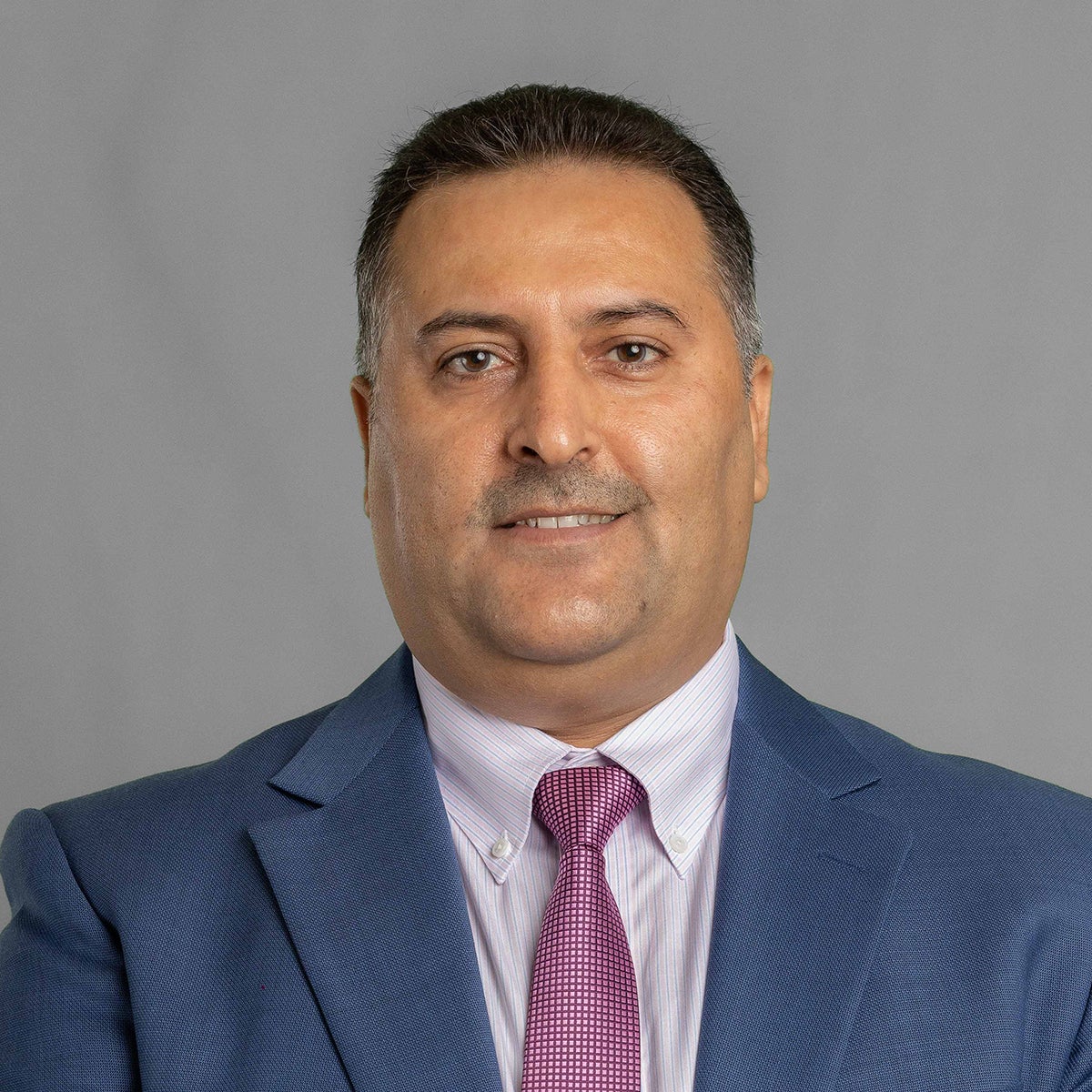
Dr. Rashad Ahmed Hamid Al-Gaashani
Scientist
Dr. Rashad Ahmed Hamid Al-Gaashani
Scientist
Educational Qualifications
PhD Degree on Materials Science
MSc
Entity
Qatar Environment and Energy Research Institute
Biography
Rashad Al-Gaashani obtained his PhD in materials science from UKM, Malaysia, in 2012. He joined QEERI, HBKU, in February 2016 and is currently working as a scientist at the Water Center, serving as the lab focal point for the Water Innovation Lab. He has researched thin-film devices, microwave heaters, and metal oxide nanostructures.
Additionally, Al-Gaashani has extensively researched carbon nanotubes, graphene oxide, activated carbon, biochar, zeolite, and limestone composite materials for wastewater treatment over the past seven years. His research is focused on developing new water filters, particularly high-quality activated carbon from biomass wastes for water treatment. Al-Gaashani has published over 24 peer-reviewed papers, which have been cited by 2703 papers, and has an h-index of 14.
PhD Degree on Materials Science
National University of Malaysia (UKM); (Bangi/Malaysia).
2012
MSc
King Fahd University of Petroleum and Minerals (KFUPM); (Dhahran/Saudi Arabia).
2008
BEd in Physics/Mathematics
IBB University; (IBB/Yemen).
1999
- Nanomaterials and Nanocomposites
- Carbon materials
- Graphene oxide
- Activated carbon from biomass
Assistant Professor
Physics Department, Faculty of Education; Thamar University.
May 2013 to Feb. 2016
Head of Physics Department; Faculty of Education
Thamar University.
May 2014 to Feb. 2016
Tutor (Part-time)
Department of Physics and Astronomy; King Fahd University of Petroleum and Minerals (KFUPM).
Oct. 2005 to Feb. 2008
Demonstrator/Assistant Lecturer
; Physics Department, Faculty of Education; Thamar University.
Sept. 2000 to Sept. 2003
- 2012; Ph.D Degree: Excellent Award; National University of Malaysia (UKM); (Bangi/Malaysia).
- 1999; B.Ed. in Physics/Mathematics, 2nd Class with honors; IBB University; (IBB/Yemen).

Henning F. Horn
Associate Professor
Educational Qualifications
PhD in Cell and Molecular Biology
BA in Biology
Entity
College of Health and Life Sciences
Biography
Dr. Henning F. Horn is an Associate Professor at Hamad Bin Khalifa University’s College of Health and Life Sciences. Dr. Horn received his PhD in Cell and Molecular Biology from the University of Cincinnati. After a postdoctoral fellowship with Professor Karen Vousden at the Beatson Institute for Cancer Research in Glasgow, United Kingdom, he joined the Institute of Medical Biology in Singapore, working with Professors Colin Stewart and Brian Burke.
In 2014, Dr. Henning F. Horn joined Hamad Bin Khalifa University and helped build the College of Health and Life Sciences research and teaching framework. He leads a research group focusing on two areas of health research; novel variants in male infertility to determine the cellular mechanisms leading to and the roles of several nuclear envelope proteins in cancer.
PhD in Cell and Molecular Biology
University of Cincinnati, United States
2003
BA in Biology
Wittenberg University, United States
1997
- Male infertility
- Nuclear envelope proteins
- Mechanobiology
- Cancer progression
Associate Professor
College of Health and Life Sciences, Hamad Bin Khalifa University
2023 - Present
Assistant Professor
College of Health and Life Sciences, Hamad Bin Khalifa University
2014 - 2023
Senior Research Fellow
Institute of Medical Biology, A*STAR, Singapore
2008 - 2014
Postdoctoral Fellow
The Beatson Institute for Cancer Research, Cancer Research, United Kingdom
2003 - 2008
- 2018; Best Teacher Award, College of Science and Engineering, Hamad Bin Khalifa University.
- 2013; Outstanding Paper Award, the European Microscopy Society; category “Life Sciences”.
- 2013; Young Investigator Fellowship, European Cytoskeletal Forum.

Dr. Amal Mohammed Al Malki
Associate Professor and Founding Dean (2016-2023)
Phone
+974 44542577Office location
C.01.006, First Floor, Minaretein Building
Dr. Amal Mohammed Al Malki
Associate Professor and Founding Dean (2016-2023)
Educational Qualifications
PhD in Comparative Literature
MA in English/Arabic Applied Linguistics/Translation
Entity
College of Humanities and Social Sciences
Division
Middle Eastern Studies Department (MESD)
Biography
Dr. Amal Mohammed Al-Malki is the Founding Dean of the College of Humanities and Social Sciences at Hamad Bin Khalifa University, Qatar Foundation. Before that, she was the Executive Director of the Translation and Interpreting Institute, which she founded in 2011. She also was an Associate Professor at Carnegie Mellon University in Qatar where she taught courses in writing composition, postcolonial literature, theories of translation, and Islamic feminism. Dr. Al-Malki holds a PhD in Comparative Literature from the University of London-SOAS, where she also earned a master’s degree in English-Arabic Applied Linguistics and Translation.
Dr. Al-Malki’s research interests include the negotiation of identity between East and West, media representations of Arab women, and postcolonial literature. She has published numerous articles in academic journals in the United States and the UK. Her book, Arab Women in Arab News: Old Stereotypes and New Media (2012) is published by Bloomsbury Qatar Foundation and Bloomsbury Academic, UK. It was lauded as the first comprehensive study of the topic in the world. She also edited The Writer’s Craft: Teaching Creative Writing in Qatar, published as a part of an initiative honoring Doha as the Arab Capital of Culture in 2010.
Dr. Al-Malki is a sought-after public speaker and social commentator. She has been invited to speak at conferences and forums throughout the Middle East, United States, and the UK. Dr. Al-Malki was recognized as a QF Achiever in Qatar Foundation’s global campaign in 2011 and was featured in regional and international news and TV outlets, for example, CNN. She was the first Arab and Muslim to be invited as a Keynote Speaker at City University in New York after 9/11. She was also the first Qatari to be invited to address the Cheltenham Literature Festival. She has lectured at Durham University, SOAS, and Maryland University among others. In 2018, Dr. Al-Malki was selected by the Ministry for Europe and Foreign Affairs in Paris as “Personnalite d’Avenir Genre” (Future Personality for Gender Equality). Focusing on women's rights and Arab identity, Dr. Al-Malki strives to help deepen international understanding of Qatar and its evolving place in the world.
PhD in Comparative Literature
School of Oriental and African Studies (SOAS) University of London. Thesis title: “Tradition and Modernity in Post-Colonial Novels: A Comparative Study of Chinua Achebe and Al- Tayyib Salih”
2003
MA in English/Arabic Applied Linguistics/Translation
School of Oriental and African Studies (SOAS) University of London
1997
BEd in English and Education
Qatar University
1996
- The negotiation of identity between East and West
- Media representations of Arab women
- Postcolonial literature
- Gender politics
- Arab women's rights
- Change of cultural dynamics in the Gulf
Founding Dean
College of Humanities and Social Sciences, Hamad bin Khalifa University, Qatar Foundation
2016 - 2023
Executive Director
Translation and Interpreting Institute, Hamad bin Khalifa University, Qatar Foundation
2011 - 2015
Associate Professor
Carnegie Mellon University, Qatar. On Public Service leave AY 2012-13 to AY 2015-16
2012- 2016
Assistant Professor
Carnegie Mellon University, Qatar
2005-2012
The Case of Qatar (London: Palgrave Macmillan, 2016), 241-269.
Old Stereotypes and New Media. (March 2012: Bloomsbury Academic, UK and Bloomsbury Qatar Foundation Publishing).
Teaching Creative Writing in Qatar. (Doha: Ministry of Culture, Arts, and Heritage, 2010).
Cross-Institutional Experiences and Best Practices, eds. Nagwa Kassabgy and Amani Elshimi (Newcastle: Cambridge Scholars Publishing, 2007), 111-126.
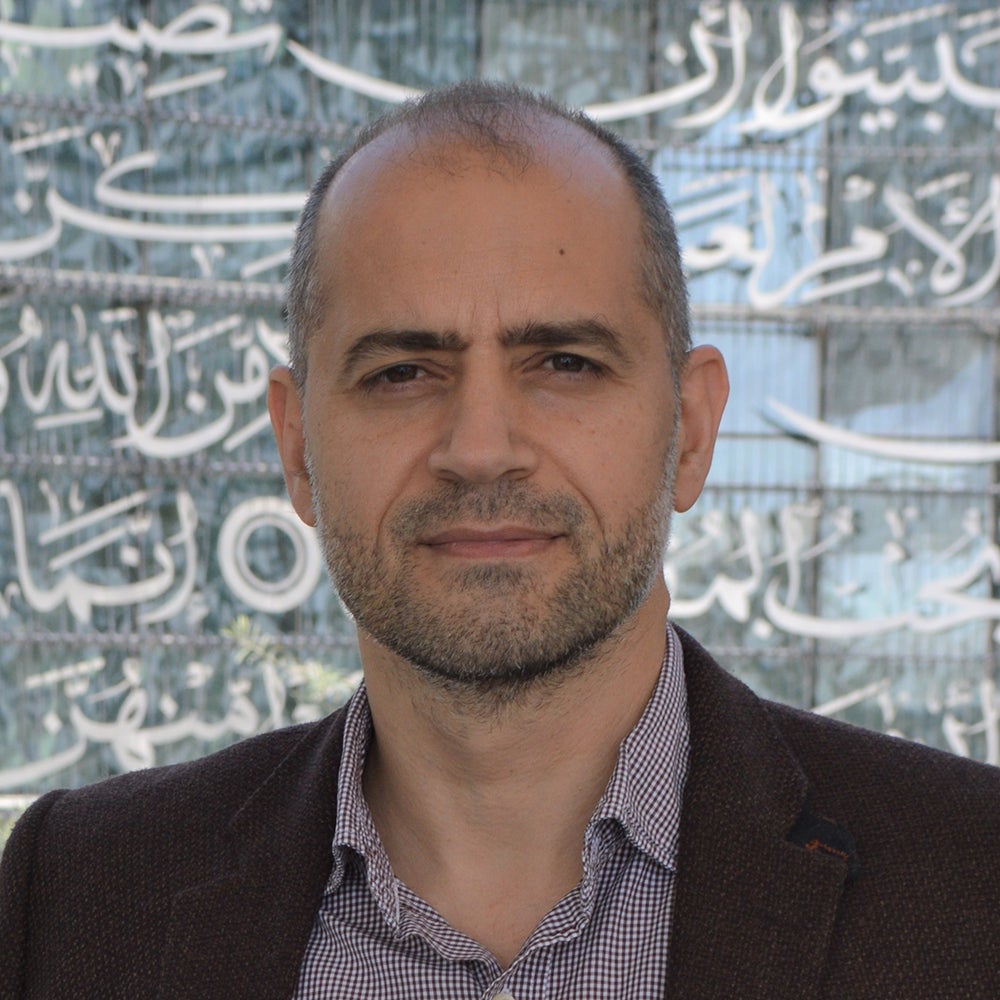
Dr. Abdulazeem Abozaid
Professor of Islamic Finance
Dr. Abdulazeem Abozaid
Professor of Islamic Finance
Educational Qualifications
Postgraduate Diploma in Human Sciences
BA in English Literature
Entity
College of Islamic Studies
Division
Islamic Finance
Biography
Dr. Abdulazeem holds a PhD and a master's degree in Islamic Financial Law; three BAs in Islamic Law, Arabic Language and English Literature; and two higher studies diplomas in Islamic Law and Human Sciences. He has worked at universities as well as Islamic banks. He is currently a Professor of Islamic Finance at HBKU.
Postgraduate Diploma in Human Sciences
Faculty of Islamic Revealed Knowledge and Human Sciences, International Islamic University Malaysia
2007
BA in English Literature
Damascus University
2004
PhD in Islamic Law and its Principles (Islamic Law of Financial Transactions)
Damascus University
2001
BA in Arabic Language and Literature
Al-Azhar University, Cairo
1999
MA in Islamic Law and its Principles
Damascus University
1998
Postgraduate Diploma in Islamic Law and its Principles
Damascus University
1995
BA in Islamic Law
Damascus University
1994
- Islamic law
- Islamic finance
- Islamic banking
- Islamic studies
- Arabic language studies
Professor of Islamic Law & Finance
College of Islamic Studies, Hamad Bin Khalifa University
June 2021 – Present
Associate Professor of Islamic Law & Finance
College of Islamic Studies, Hamad Bin Khalifa University
May 2013 – May 2021
BOOKS
Vol. 2 of Islamic Finance Encyclopedia. Dubai: Aafaq Center for Research in Islamic Economy (ACRIE). http://www.acrie.ae/Default.aspx?topic=encyclovol2
Lambert Academic Publishing. ISBN: 978-3-659-54642-6. https://www.lap-publishing.com.
International Shariah Research Academy for Islamic Finance (ISRA), No. 64.
Beirut, Lebanon. 632 p
Damascus: Dar Al-Fiker.