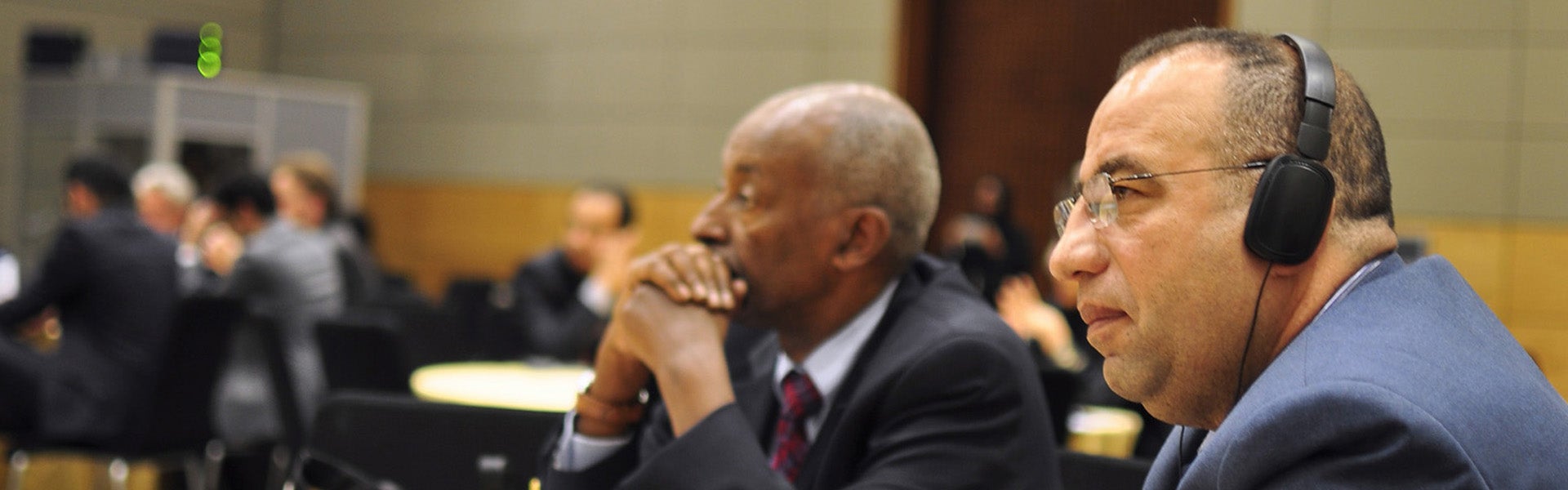
Lolwa Al Maadid
Software Engineer
Lolwa Al Maadid
Software Engineer
Entity
Qatar Computing Research Institute
Division
Qatar Center for Artificial Intelligence
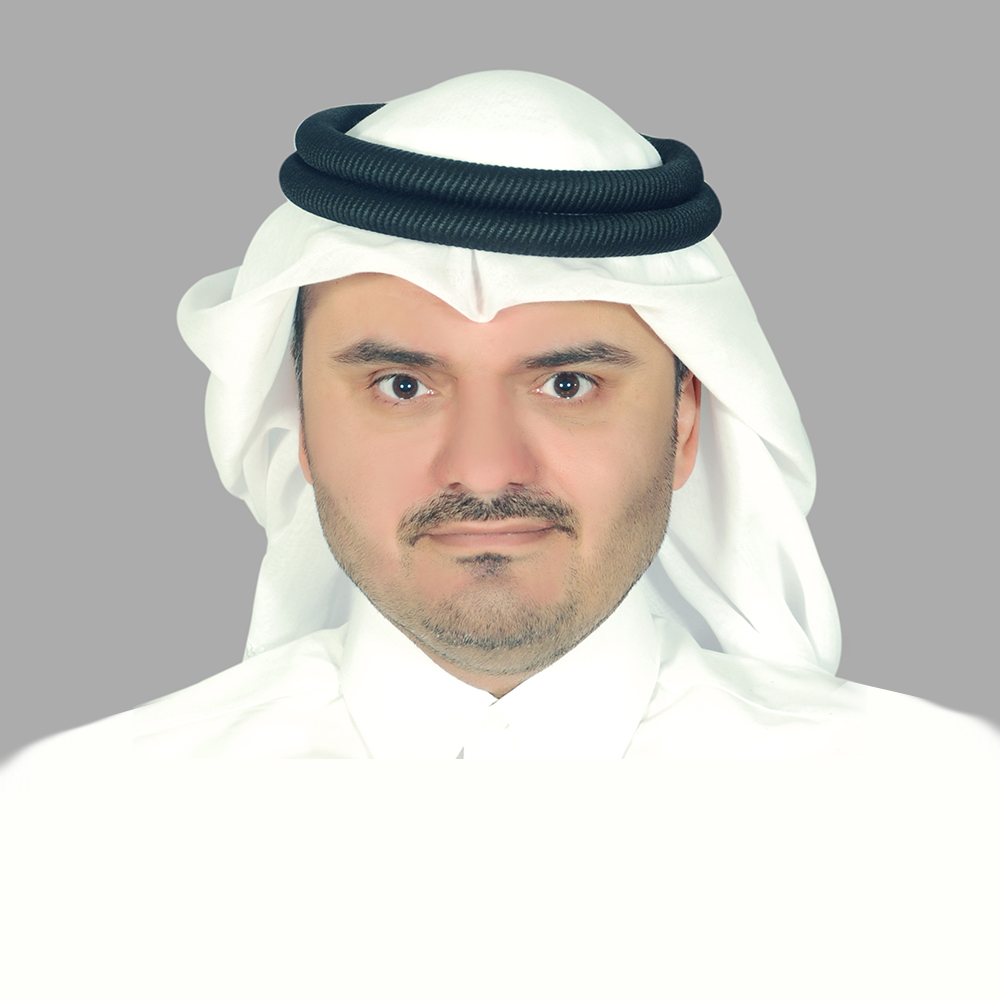
Aref Al Tamimi
Software Engineer
Aref Al Tamimi
Software Engineer
Entity
Qatar Computing Research Institute
Division
Cybersecurity
Mr Ahmed Al Saadi
Software Engineer
Mr Ahmed Al Saadi
Software Engineer
Entity
Qatar Computing Research Institute
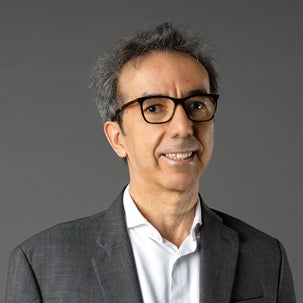
Dr. Abdellatif Saoudi
Managing Director
Dr. Abdellatif Saoudi
Managing Director
Entity
Qatar Computing Research Institute
Division
Management

Soon-gyo Jung
Software Engineer
Soon-gyo Jung
Software Engineer
Educational Qualifications
Master of Science in Engineering
Bachelor of Engineering
Entity
Qatar Computing Research Institute
Division
Qatar Center for Artificial Intelligence
Biography
Soon-gyo Jung is an accomplished software engineer currently working at Qatar Computing Research Institute (QCRI) at Hamad Bin Khalifa University. With a solid background in computer science, data science, and analytics, he specializes in developing data-driven and data-intensive systems using research-oriented software engineering techniques.
In addition to software engineering, Soon-gyo Jung also possesses expertise in a range of roles including software architecture, full-stack web development, data architecture, data engineering, AI engineering, prompt engineering, and prototyping. This diverse skill set allows him to deliver holistic solutions that effectively address complex problems.
Soon-gyo Jung holds an MS. degree from Sungkyunkwan University, Korea, where he conducted research on IoT and WSN, with a particular focus on routing and clustering using swarm intelligence techniques such as ant/bee behavior and bird-flocking.
Master of Science in Engineering
Electrical and Computer Engineering, SungKyunKwan University, Suwon, Korea
Aug 2016
Bachelor of Engineering
Computer Software, Kwangwoon University, Seoul, Korea
Feb 2014
- AI Engineering
- Software Engineering
- Computational Social Science
- Data Science
Software Engineer
Qatar Computing Research Institute, Doha, Qatar
2018 - Present
Research Associate
Qatar Computing Research Institute, Doha, Qatar
2017 - 2018
Research Assistant
Qatar Computing Research Institute, Doha, Qatar - Design and implement social data based real-time web system, full-stack development - Data analysis using python data analysis toolkit called Pandas - Related Skills: Python, Flask, Celery, Redis, SQLAlchemy, Pandas, Bootstrap, RESTful, SNS APIs
2016 - 2017
Web Application Developer (Freelance)
JAJAECOOP, Suwon, Korea - Designed and implemented a web-based apartment management system, full-stack development - Related Skills: Java/JSP, Spring 4, Hibernate/JPA, SiteMesh, Bootstrap, RESTful, JSON, Maria DB
2015 - 2016
Web Application Developer (Freelance)
MainIT, Seoul, Korea - Designed and implemented an online fax service system - Related Skills: Java/JSP, Spring 3, Mybatis, Tiles, Jquery, RESTful, JSON, MSSQL, Tomcat
2013 - 2013
Web Application Developer
Xeogen, Seoul, Korea - Maintained, designed and implemented various web applications - Related Skills: Java/JSP, Spring 3, Struts 2, Mybatis, Jquery, JSON, MySQL, Oracle, Tomcat
2011
Web Application Developer
NowOnPlay, Seoul, Korea - Maintained, designed and implemented various web applications - Related Skills: Java/JSP, ASP, Spring 3, Struts 1&2, I/Mybatis, Tiles, Jquery, JSON, MSSQL, MySQL, Oracle, DB2, IIS, Tomcat, Resin, WebSphere, WebLogic
2009 - 2010
"Automatically Conceptualizing Social Media Analytics Data via Personas," 12th International AAAI Conference on Weblogs and Social Media (ICWSM-18), June 2018
"Automatic Persona Generation (APG): A Rationale and Demonstration," ACM SIGIR Conference on Human Information Interaction and Retrieval (CHIIR2018), March 2018
"Persona Generation from Aggregated Social Media Data," ACM Conference on Human Factors in Computing Systems 2017 (CHI2017), May 2017
"Trail-Using Ant Behavior Based Energy Efficient Routing Protocol in Wireless Sensor Networks," International Journal of Distributed Sensor Networks, March 2016
"Clustering Wireless Sensor Networks Based on Bird Flocking Behavior," International Conference on Computational Science and its Applications (ICCSA), June 2015
- Best researchers award in the 2016 graduation ceremony of the Sungkyunkwan University
- Best paper award in the 2016 fall conference of the Korea Information Processing Society
- Best paper award in the 2015 International Conference on Computational Science and its Applications
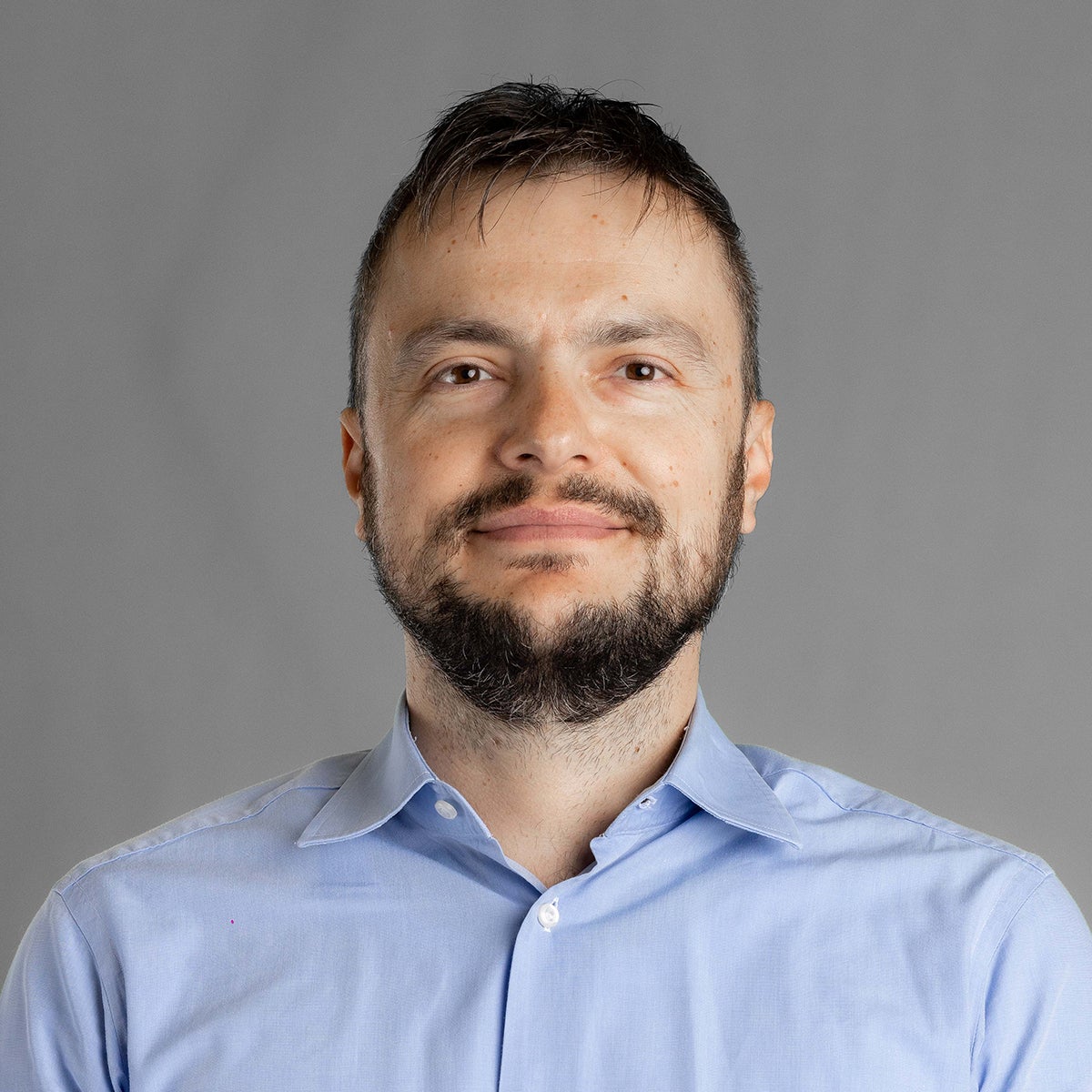
Christos Fountoukis
Senior Scientist
Educational Qualifications
PhD in Chemical Engineering
MS in Chemical Engineering
Entity
Qatar Environment and Energy Research Institute
Division
Sustainable Development
Biography
Christos Fountoukis received his PhD from the School of Chemical & Biomolecular Engineering of the Georgia Institute of Technology, in Atlanta, U.S. in 2007. He has been a Marie Curie Postdoctoral Fellow from 2008-2012 and a Project Scientist from 2012-2015 with the University of Patras and the FORTH research institute in Greece. Over the last 20 years he has participated in 15 large-scale integrated projects of the EU and the USA. He has more than 50 journal publications, h-index=30 and 4,304 citations (as of August 2022).
At QEERI, Christos is a Technical Team Leader for the atmospheric research modeling team within the Air Quality & Climate Change research program under the Environment and Sustainability Center. His research focuses on the application of air quality and climate models in the greater region of the Middle East with a special focus on the State of Qatar. He is also interested in atmospheric dust and solar energy forecasting and their effects on PV systems and solar power generation potential. Working closely with the measurement groups, the goal is to better understand the local and regional atmospheric conditions in order to identify efficient mitigation strategies toward a sustainable environment.
PhD in Chemical Engineering
School of Chemical and Biomolecular Engineering, Georgia Institute of Technology, Atlanta, USA
2007
MS in Chemical Engineering
School of Chemical and Biomolecular Engineering, Georgia Institute of Technology, Atlanta, USA
2005
BS (Diploma) in Chemical Engineering
Department of Chemical Engineering, Aristotle University of Thessaloniki, Greece.
2002
- Atmospheric chemistry
- air quality modeling and forecasting - early warning systems
- Climate modeling in the greater area of Middle East
- Dust storm modeling and operational forecasting in the greater area of Middle East
- Energy-Meteorology
- aerosol – radiation interactions
- prediction and forecasting of solar radiation for solar energy applications
- atmospheric particle deposition on photovoltaic plants
- UV index forecasting
- Atmospheric dispersion of radionuclides from nuclear power plant accidents - early warning systems
Senior Scientist
Qatar Environment and Energy Research Institute, Hamad Bin Khalifa University, Qatar Foundation, Doha, Qatar
2015 - Present
Adj. Professor (Joint Appointment)
Division of Sustainable Development, College of Science & Engineering, Hamad Bin Khalifa University (HBKU), Doha, Qatar.
2017 - 2018
Instructor
Massive Online Open Course (MOOC) on edX platform: Solar Resource Assessment in Desert Climates.
2019 – Present
Project Scientist
Laboratory of Air Quality Studies, School of Chemical Engineering, University of Patras, Patras, Greece.
2012 - 2015
Visiting Scientist - IASS Fellow
Institute for Advanced Sustainability Studies (JASS), Cluster: Sustainable Interactions with the Atmosphere, Potsdam, Germany.
2012
Post-doctoral (Marie Curie) Research Fellow
Institute of Chemical Engineering Sciences, Foundation for Research and Technology-Hellas, Patras, Greece.
2008 - 2012
Graduate Research/Teaching Assistant
School of Chemical & Biomolecular Engineering and School of Earth & Atmospheric Sciences, Georgia Institute of Technology, Atlanta, GA, USA.
2003 - 2007
Fountoukis, C., Y. Mohieldeen, L. Pomares, I. Gladich, A. Siddique, A. Skillern, M.A. Ayoub, Assessment of High-resolution Local Emissions and Land-use in Air Quality Forecasting at an Urban, Coastal, Desert Environment, Aerosol and Air Quality Research, 22 (6), 2022.
Roshan, D.R., M. Koc, A. Abdallah, L. Martin-Pomares, R. Isaifan, C. Fountoukis, UV-Index Forecasting under the Influence of Desert Dust: Evaluation against Surface and Satellite-Retrieved Data, Atmosphere, 11 (1), 96, 2020.
Fountoukis, C., H. Harshvardhan, I. Gladich, L. Ackermann, M.A. Ayoub, Anatomy of a severe dust storm in the Middle East: Impacts on aerosol optical properties and radiation budget, Aerosol and Air Quality Research, 20, 155-165, 2020.
Al-Thani, H., M. Koç, C. Fountoukis, R.J. Isaifan, Evaluation of particulate matter emissions from non-passenger diesel vehicles in Qatar, Journal of the Air & Waste Management Association, 70 (2), 228-242, 2020
Roshan, D.R., M. Koc, R. Isaifan, M.Z. Shahid, C. Fountoukis, Aerosol Optical Thickness over Large Urban Environments of the Arabian Peninsula—Speciation, Variability, and Distributions, Atmosphere, 10 (5), 228, 2019.
Fountoukis, C., B. Figgis, M.A. Ayoub, L. Ackermann, Effects of atmospheric dust deposition on solar PV energy production in a desert environment, Solar Energy, 164, 94–100, 2018.
Fountoukis, C., L. Pomares, D. Perez-Astudillo, D. Bachour, and I. Gladich, Simulating global horizontal irradiance in the Arabian Peninsula: Sensitivity to explicit treatment of aerosols, Solar Energy, 163, 347–355, 2018.
Fountoukis, C., M.A. Ayoub, L. Ackermann, D. Perez-Astudillo, D. Bachour, I. Gladich and R.D. Hoehn, Vertical ozone concentration profiles in the Arabian Gulf region during summer and winter: Sensitivity of WRF-Chem to planetary boundary layer schemes, Aerosol and Air Quality Research, 18: 1183–1197, 2018.
Fountoukis, C., L. Ackermann, M.A. Ayoub, I. Gladich, R. D. Hoehn, and A. Skillern, Impact of atmospheric dust emission schemes on dust production and concentration over the Arabian Peninsula, Modeling Earth Systems and Environment, 2:115, 2016.
- 2008 - 2012, Marie Curie International Reintegration Grant (FP7-PEOPLE-2007-4-3-IRG).
- 2003 - 2007, Graduate Research/Teaching Assistantship for Ph.D studies in the School of Chemical & Biomolecular Engineering, Georgia Institute of Technology, Atlanta, GA, U.S.A.
- 2007, Honorable mention in the AICHE (American Institute for Chemical Engineers) graduate student paper contest for outstanding graduate student contributions to environmental protection through chemical engineering.
- 2004, Recipient of a graduate studies scholarship from the Gerondelis Foundation, MA, USA for outstanding MS thesis.

Dr. Monem H. Beitelmal
Principal Scientist
Dr. Monem H. Beitelmal
Principal Scientist
Educational Qualifications
Doctorate of Philosophy in Mechanical Engineering
Master of Science in Mechanical Engineering
Entity
Qatar Environment and Energy Research Institute
Biography
Dr. Monem Beitelmal is a Principal Scientist at the Qatar Environment and Energy Research Institute. Dr. Monem previously served as an associate professor of mechanical engineering with the Department of Mechanical Engineering at Santa Clara University (SCU) from January 2009 till December 2013. Before joining SCU, Dr. Beitelmal spent eight years at Hewlett-Packard Laboratories in Palo Alto California. As a member of the HP Labs Smart Data Center research team, his research work covered various areas in energy and sustainability from smart thermal control in systems and data centers to district cooling systems. At SCU, Dr. Beitelmal taught several undergraduate and graduate courses such as thermodynamics, fluid mechanics, heat transfer, modern instrumentation, thermal systems design, energy conversion, equilibrium thermodynamics and gas dynamics.
Doctorate of Philosophy in Mechanical Engineering
Santa Clara University, Santa Clara, California PhD Thesis: “Effects of Surface Roughness and Nozzle Inclination on Jet Impingement Heat Transfer.”
Master of Science in Mechanical Engineering
University of California, Davis, California M. S. Thesis: “Theoretical Modeling of the Effects of Small Gravitational Levels on Droplet Gasification.”.
Bachelor of Science in Mechanical Engineering
University of Portland, Portland, Oregon
- Energy Efficiency
- Thermal Management and Control
- Data centers power and cooling
- Thermal sciences
- Heat transfer
Energy Efficiency and Value-Added Products Portfolio Lead
Leading a number of research and development projects in system integration and energy efficiency in built environment. Current Projects (LPI) • (SMART) Energy Efficient Thermostat, • District cooling energy performance optimization • Solar-powered hybrid (membrane/thermal) water desalination system.
2014 – Now
Associate Professor
Department of Mechanical Engineering, Santa Clara University, Santa Clara, California This is a full-time faculty non-tenure track position with responsibilities that include teaching undergraduate and graduate courses in Mechanical Engineering, developing new courses, designing and teaching laboratory experiments, advising and mentoring engineering students, participating in School of Engineering activities and developing research proposals for external funding. • Water Desalination Project The goal of this senior design project was to build a scalable water purification system that is fully powered by solar energy. This project is partially funded by the Center of Science, Technology and Society and the School of Engineering at SCU. • New Server and Data Center Energy Efficiency Metrics Developed new energy efficiency metrics to facilitate proper evaluation of data centers power consumption. These metrics can be used to help reduce the cost of operation and to provision data centers power and cooling resources. • Waste-to-Energy Processes This project is conducted in collaboration with a start-up company (Enventix Inc). The goal of this research was to develop a novel reactor that uses bio-waste as a fuel for power generation.
2008 – 12/2013
Research Scientist
Hewlett Packard Research Laboratories, Palo Alto, California A lead researcher in the Sustainable IT Ecosystem Laboratory with responsibilities that include research and development of new cooling technologies at the chip, system and rack levels, development of new research areas and patentable inventions in thermal cooling solutions. Other responsibilities included providing thermal/mechanical technologies roadmap consultation to various HP business units. Key projects • Feasibility study and analysis of fuel cells and PV hybrid system that would be required to power an HPL data center. • Static smart cooling development (CFD modeling and analysis). • Dynamic Smart Cooling (flexible infrastructure distributed sensing and control). • Smart data center robot demonstration (navigating sensors platform). • Design and building of two-phase Loop Thermosyphon system. • Design of single-phase cooling loop system and rack levels. • Refrigeration (combined) cycle design for system, rack and data center level analysis. • Impinging air jet solution designed for system and rack levels integration. • Developed the training program and chaired the training workshops for the first and only HP Dynamic Smart Cooling technology transfer. • Developed the quick assessment calculator (an analytical tool for expedient energy analysis) currently used by Hewlett-Packard Services and marketing teams to estimate potential energy savings and carbon footprint reduction.
08/2000 – 12/2008
“Energy performance investigation of a district cooling system,” WIT Transaction on Ecology and the Environment, Vol 205
“Numerical investigation of data center raised-floor plenum,” ASME/IMECE,
Off-the grid solar-powered portable desalination system,” Applied Thermal Engineering Journal,
“Servers and Data Centers Energy Performance Metrics,” Energy and Buildings Journal,
Kiriu, R., “Solar-Powered Water Distillation System,” ASME/IMECE 2013 San Diego, CA
- 2007 HP Award for outstanding efforts to train and educate important HP customers.
- 2007 HP Award for outstanding efforts to the initial Dynamic Smart Cooling company-wide training and providing the background for the birth of DSC.
- 2007 HP Award for expedient, exacting and execution on Dynamic Smart Cooling train the trainers program.
- 2006 HP Award for business impact.
- 2006 HP Award for an outstanding effort in organizing/training product division partners.
- 2005 HP Award for expedient, exacting and execution on Smart Data Center.
- 2004 HP Award for technical help with strategic customer project.
- 2004 HP Award for chairing the first HP high density data center workshop and heightened awareness of HP Labs research and technology.
- 2004 HP Award for expedient, exacting and execution.
- 2003 HP Award for contribution to the HP technical summer camp.
- 2003 HP Outstanding achievement award.
- 2002 HP Award for spirit of HP Labs.
- Graduated with distinction, SCU, 2000

Dr. Othmane Bouhali
Professor
Educational Qualifications
PhD in Sciences
Advanced MSc in Theoretical Physics
Entity
College of Science and Engineering
Biography
Dr. Bouhali received his PhD in Science from the Universite Libre de Bruxelles in 1999. Since 1994 he has participated in the Compact Muon Solenoid (CMS) experiment program at the Large Hadron Collider Project (LHC) at the European Organization for Nuclear and Particle Physics (CERN). He was also a member of the fixed target experiment HERMES at the Deutsches Electronen Synchrotron (DESY) and a member of the AMANDA/ICECUBE neutrino telescopes at the South Pole. His field of expertise includes: charged particle detectors, high energy and medical physics and high performance computing. He is Director of Research Computing and Research Associate Professor at Texas A&M University at Qatar.
He is the founder of the TAMU-Q Advanced Scientific Computing (TASC) Center. He is affiliated with the Qatar Computing Research Institute (QCRI) in the computational Science and Engineering group. He also chairs the HPC committee at Education City. He has served on many national and international committees, chaired conferences and workshops. In 2015 he received the Faculty Dean’s Distinguished Achievement Award.
PhD in Sciences
University of Brussels
1999
Advanced MSc in Theoretical Physics
University of Brussels
1994
MSc in Physics
University of Abdelmalek Essaadi, Morocco.
1992
His field of expertise includes:
- Charged particle detectors
- High energy and medical physics
- High performance computing
Research Professor
Director of Research Computing Texas A&M University at Qatar
Research Associate Professor, Director of Research Computing
Texas A&M University at Qatar
Director of Research Computing
Texas A&M University at Qatar
Head of the Computing group IIHE
University of Brussels, Belgium.
Researcher
University of Brussels
Researcher
The National Institute for Nuclear and High Energy Physics (NIKHEF), Amsterdam.
“Diffusion properties of Fe–C systems studied by using kinetic activation–relaxation technique”, J. Comp. Mat. Science, 112 (2016) 96
Application of GPU processing for Brownian particle simulation, Computer Physics Communications, Volume 186(2015), p. 39-47. CMS Collaboration, “A search for pair production of new light bosons decaying into muons”, Phys. Lett. B 752 (2016) 146,
“Advanced Computation of a Sparse Precision Matrix, HADAP: A Hadamard-Dantzig Estimation of a Sparse Precision Matrix”, proceedings of the COMPUTATION TOOLS 2015: The Sixth International Conference on Computational Logics, Algebras, Programming, Tools, an
“Search for supersymmetry in the vector-boson fusion topology in proton-proton collisions”, JHEP 11 (2015) 189,
- 2015 Faculty Dean’s Distinguished Achievement Award: Texas A&M Qatar
- 2016 Best UREP project, QNRF.
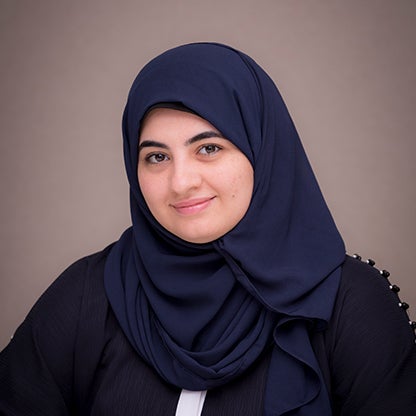
Dr. Nassma Salim Mohandes
Research Associate
Educational Qualifications
MSc, Master of Science in computing
BSc, Computer Engineering
Entity
Qatar Environment and Energy Research Institute
Biography
Eng. Nassma Mohandes received her BSc degree with honors in Computer Engineering and her MSc degree in Computing 2013 from Qatar University. She is a Research Associate at Qatar Environmental and Energy Research Institute. Her current research interests include information systems, data mining, GIS, big data storage, and energy data analytics. Prior to joining QEERI she worked with the Qatar National Research Fund for three years where she provided all levels of technical and user support, maintenance, and resolution of software applications issues, and performed timely and regular back-up operations for QNRF's database and SQL DB administration. She is now a PhD student at Texas A&M university. The topic of her PhD research is modelling residential adoption of solar energy in Qatar and the Gulf area.
MSc, Master of Science in computing
Qatar University, Qatar
2013
BSc, Computer Engineering
Qatar University, Qatar
2008
PhD Electrical and Computer Engineering
Texas A &M University ,College station
2015-now
ITC Assistant
QNRF, Qatar Foundation
2008-2012
Research Associate
QEERI, Qatar Foundation
2014-Now
Modeling Residential Adoption of Solar PV in Qatar. Advances in Complex Systems: A Multidisciplinary Journal.
In Computer Design and Applications (ICCDA), 2010 International Conference On (Vol. 1, pp. V1-550).
An Adaptive Multi-Modeling Approach to Solar Nowcasting. Solar Energy, 125, 77-85.
Optimal Selection of Training Datasets for Solar Nowcasting Models. Proceedings of the 32nd European Photovoltaic Solar Energy Conference and Exhibition, 20 - 24 June 2016, Munich, Germany.
Modeling Residential Adoption of Solar PV in Qatar. Lecture Notes in Economics and Mathematical Systems, Springer.
- Thenaa Award from the Director of Qatar National Research Fund, 2011
- Golden Medal of Excellence from Qatar University, 2008
- First prize at UREP Second Competition, 2010
- Study Scholarship by Emir of Qatar, 2004
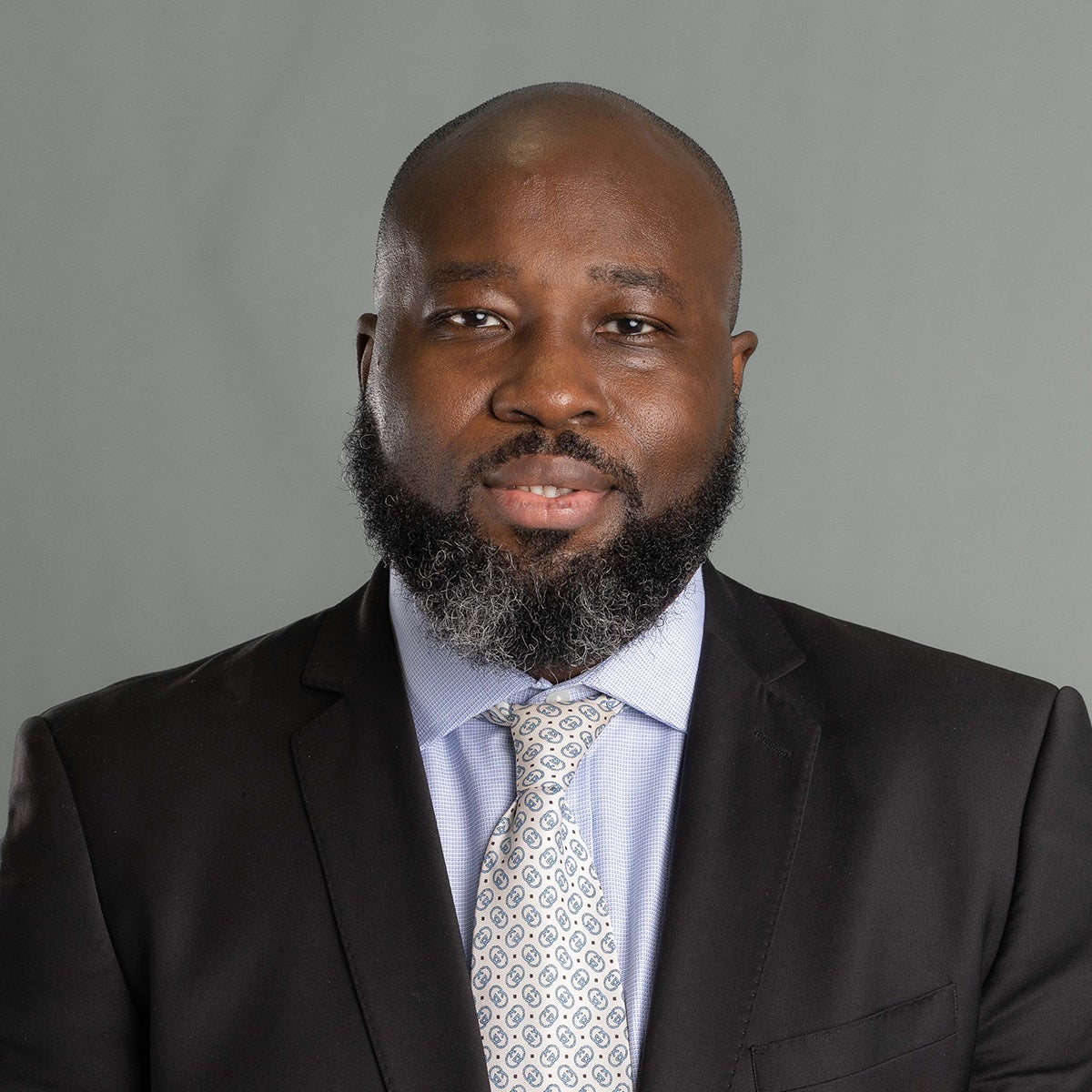
Dr. Oluwaseun Ogunbiyi
Scientist
Dr. Oluwaseun Ogunbiyi
Scientist
Educational Qualifications
PhD Chemical Engineering
MSc (HONS) Environmental Engineering
Entity
Qatar Environment and Energy Research Institute
Biography
Oluwaseun Ogunbiyi is a chartered chemical engineer with IChemE and is currently a research scientist at QEERI (Qatar Environment and Energy Research Institute), Hamad Bin Khalifa University (HBKU), a member of the Qatar Foundation. He completed his doctorate research in chemical engineering at the University of Nottingham in 2007. He has nine years of core Industrial experience as a senior process engineer at Wessex Water and GENeco and technical consultant at CH2M within the water and wastewater sector in the United Kingdom. He was actively involved as lead process consultant in the design, construction and operation of several sewage treatment works in the south west region of the UK. He has extensive knowledge of outline and detailed design as well as process optimization of existing and start-up wastewater treatment processes. His research interests include membrane-based treatment technologies, domestic and industrial wastewater reuse applications and process optimizations and improvements. He has publications related to his work in peer-reviewed journals including Chem. Eng Research and Design, Journal of Membrane Science and Desalination.
PhD Chemical Engineering
University of Nottingham, UK,
2004 – 2007
MSc (HONS) Environmental Engineering
University of Nottingham, UK
2002 – 2003
BEng (HONS) Chemical Engineering with management
University of Bradford, UK
1998 - 2002
- My research field is focused on water and wastewater treatment
- membrane separation science and application and water desalination and my current research activities include water and wastewater treatment using various membrane-based technology and other advanced technologies to improve the quality of wastewater
- treated wastewater and water desalination.
- The membrane separation applications I have experience with include MF
- UF
- NF and RO based treatment of various wastewater including municipal and industrial. Integration and application of membrane technology based processes in advanced water and wastewater treatment processes coupled with physical/chemical/biological processes.
- My research field and activities also encompass fundamental and dynamic studies to investigate membrane fouling
- biofouling and impact of colloidal particles on flux recovery. The performance of various types of membranes and their efficiency and abilities to separate various contaminants in different wastewater sources are also of interest in my field of research.
- The fouling control of membrane systems including MF
- UF and NF and optimization of flux for industrial applications and optimization of these systems to improve the quality of wastewater and treated wastewater are also a part of my research field.
- Develop novel methods for the use of treated wastewater for beneficial reuse to improve water sustainability through understanding the microbial safety concerns related to wastewater reuse
- and using a pilot plant to optimize and improve quality of treated wastewater.
- Advanced treatment for oil-field produced water and gas field produced water using bench scale preassembled membrane bench systems including UF/MF and RO SEPA CELL systems and pilot plant systems after consolidating bench scale results. Membrane filtration is used for separating oil from water and treating waste metal-working fluids and other industrial effluents.
Scientist
Qatar Environment and Energy Research Institute (QEERI), Hamad Bin Khalifa University (HBKU) Involved in key research activities within QEERI to investigate new technologies for treated sewage effluent reuse in Qatar and also investigating advances in produced water treatment using advanced membrane technologies for the benefit of Qatar. Involved in scientific research using membrane technology for improving water and wastewater treatment and quality within Qatar and the GCC. Working with major stakeholders on projects to improve water quality and wastewater reuse to improve water sustainability in Qatar
Nov 2015 – Present
Process Engineer/Project Manager
GENeco Wessex Water Project managing the optimization of all the sludge treatment processes on site at Avonmouth STW including Centrifuges, Belt presses and Gravity Belt Thickeners. Carried out optimization of the chemical consumption of polymers and polymer usage to achieve cost benefits and achieve high %DS of the processed cake and clean centrate. Carried out analysis on the anaerobic digesters and the Acid Phase Digesters on site to determine VFA content and bio-gas yield. Project managed new initiatives for the business via feasibility studies and drafting business cases for submission and board approval. Involved in the design and trial of the new gas to grid plant at Avonmouth STW, a time advanced technology to treat methane, which will produce high quality bio-methane suitable for use in homes and in vehicles. Food waste and sewage waste will be used to produce up to 2000m3 of bio-methane an hour, enough to fuel over 8,000 homes a year. Successfully operated and maintained the Gas to Grid plant at Avonmouth with record gas yields and exports to the National Grid.
Apr 2014 – Oct 2015
Wessex Water, Process/Commissioning/Site Engineer
Project managed and coordinated the installation and trial of new Sinap and Kubota flat-sheet membranes across the membrane plants in the Wessex Water Region. Carried out optimization studies to determine the best configuration for the new membrane cartridge units at the existing membrane plants treating water and sewage across the Wessex region in the south west of England. Carried out extensive process reviews for different sewage treatment plants across the region and prepared process spreadsheets to review capacity of the existing assets on site and design new assets to cater for development within the catchment.
Jun 2013 – Apr 2014
Wessex Water, Process/Commissioning/Site Engineer
Commissioned and project-managed the upgrade of Weston-super-Mare STW to treat a population equivalent of 800,000 to include new activated sludge lanes, new storm tanks and new final tanks. I was the commissioning engineer and carried out analysis of all the on-site processes to ensure that compliance is achieved. Carried out commissioning on a new Inlet Works at Somerton STW and installed two screens and its associated process control and instrumentation. Carried out commissioning of various municipal sites and installation of package units for the treatment of sewage from households.
Jul 2012 – Jun 2013
Wessex Water & CH2M, Process/Commissioning/Site Engineer
Involved in outline and detailed design for wastewater treatment projects; process appraisals; flows and loads analysis & process flow diagrams; designing, installing and commissioning new production plant and optimization of processing equipment, monitoring developments and troubleshooting; Process engineering support for outline and detailed design and capital maintenance projects in AMP4 & AMP5, including advanced digestion schemes. Preparing process reviews & process survey reports; managing sampling surveys. Preparing specifications for odor modeling and asbestos surveys on various treatment works; preparing technical reports; Carrying out process reviews for existing treatment processes and equipment to determine level of improvements needed to meet required treatment levels and consent levels Preparing spreadsheets for equipment sizing and design specifications of wastewater treatment projects Lead Process Engineer in the outline and detailed design of Taunton STW Advanced Digestion (£5.1M) [Scope of Works: 1no. new standby strain press, 2no. new sludge thickeners, amendments to existing thickener polymer plant, 1no. new odor control plant with feed ductwork and 14m exhaust stack, design of cake reception facilities, design and provision of third digester], Taunton (Ham) STW Dry Weather Flow Improvements £14M [Scope of Works: Construction of 1nr aerated sludge plant (ASP), construction of 3nr final settlement tanks (FSTs), Interconnecting pipework, existing pipework diversions, HV/LV infrastructure upgrade and construction of new access road] and Advanced Digestion project at Trowbridge STW (£10M).
Aug 2010 – Jul 2012
Wessex Water, Process//Site Engineer
Commissioning drum thickeners, centrifuges and sludge processing facilities on wastewater treatment plants; tertiary aerated sand filters, ferric dosing systems among others. Optimization of sludge dewatering processes and management of sludge treatment sites. Project managed the installation and trial of new Sinap and Kubota membranes across the membrane plants in the Wessex Water Region.
Aug 2007 – Aug 2010
A comprehensive review N Hilal, OO Ogunbiyi, NJ Miles, R Nigmatullin (2005) Separation Science and Technology 40 (10), 1957-2005
Chemical Engineering Research and Design 84 (4), 282-292
Desalination 228 (1-3), 175-182
Desalination 185 (1-3), 185-202
OO Ogunbiyi, NJ Miles, N Hilal Desalination 220 (1-3), 273-289
Separation Science and Technology 43 (2), 286-309
Separation Science and Technology 42 (9), 1945-1963
Journal of Water Process Engineering 11, 174-182
QScience Proceedings 2016 (4), 40
Conference Accepted Abstract and Manuscript PhD Thesis
PhD Thesis University of Nottingham, United Kingdom.
- 2013 Chartered Chemical Engineer - MIChemE CEng
- Institute of Chemical Engineers (IChemE) United Kingdom