Ahmed Al-Saadi
Research Assistant
Educational Qualifications
Bachelor of Engineering (B.Eng.), Electrical Engineering
Entity
Qatar Environment and Energy Research Institute
Biography
Ahmed Al-Saadi is a Research Assistant (Software Engineer) in the Energy Management program at QEERI. He is a graduate of Concordia University in Montréal with a Bachelor of Engineering (B.Eng.) in Electrical Engineering. He has over 15 years of experience in a variety of domains, including web engineering, concurrent systems, fault-tolerant systems, application security, network security, among others. Ahmed believes in applying software engineering principles that are grounded in academic research to solve real-world, practical problems.
Bachelor of Engineering (B.Eng.), Electrical Engineering
Concordia University, Montréal, Québec, Canada
2007
- Blockchain
- Systems Engineering
Research Assistant
QEERI
2021 - Present
Software Engineer
QCRI
Apr 2016 - 2021
Senior Software Developer (DDoS)
Security Compass
Apr 2015 - Apr 2016
Security Software Developer
Security Compass
Oct 2014 - Apr 2015
Senior Web Developer
Kinetic Social
Sep 2012 - Oct 2014
Principal Software Consultant
Solea Research
Mar 2010 - Dec 2012
Dr. Muhammad Imran
Principal Scientist
Dr. Muhammad Imran
Principal Scientist
Educational Qualifications
PhD in Computer Science
MSc. Computer Science
Entity
Qatar Computing Research Institute
Division
Social Computing
Biography
Dr. Muhammad Imran is a Senior Scientist and Lead of the Crisis Computing team at Qatar Computing Research Institute. Dr. Imran received his Ph.D. in computer science from the University of Trento in 2013. He then worked as a Research Scientist at QCRI from 2015-2020.
Dr. Imran has published over 80 research papers in top-tier international conferences and journals, including ACL, SIGIR, ICDM, ICWSM, and WWW. Four of his papers received the "Best Paper Award" and two "Best Paper Runner-up Award." He has been serving as a co-chair of the Social Media Studies track of the ISCRAM international conference since 2014 and has served as Program Committee for many major conferences and workshops.
PhD in Computer Science
University of Trento; Trento, Italy
2013
MSc. Computer Science
Mohammad Ali Jinnah University; Islamabad, Pakistan
2007
BS Computer Science
Allama Iqbal Open University; Islamabad, Pakistan
2003
Senior Scientist
Qatar Computing Research Institute
Apr 2021 - Present
Scientist
Qatar Computing Research Institute
Dec 2014 - Apr 2021
Postdoc
Qatar Computing Research Institute
Apr 2013 - Dec 2014
Research Associate
Qatar Computing Research Institute
Jun 2012 - Sep 2012
Database Administrator & Developer
National Uniersity of Science and Technology, Pakistan
Jul 2007 - Aug 2008
Processing Social Media Messages in Mass Emergency: A Survey; ACM Computing Surveys; https://dl.acm.org/citation.cfm?id=2771588
Processing Social Media Images by Combining Human and Machine Computing During Crises; In the International Journal of Human-Computer Interaction (IJHCI); https://www.tandfonline.com/doi/abs/10.1080/10447318.2018.1427831?journalCode=hihc20
Humanitarian Health Computing using Artificial Intelligence and Social Media: A Narrative Literature Review; In the International Journal of Medical Informatics (IJMI); https://www.sciencedirect.com/science/article/pii/S1386505618300212
Classifying and Summarizing Information from Microblogs during Epidemics; Journal of Information Systems Frontiers; https://link.springer.com/article/10.1007/s10796-018-9844-9
Domain Adaptation with Adversarial Training and Graph Embeddings; 56th Annual Meeting of the Association for Computational Linguistics (ACL); https://www.aclweb.org/anthology/P18-1099
Identifying Sub-events and Summarizing Information during Disasters; 41st International ACM SIGIR Conference on Research and Development in Information Retrieval (SIGIR), https://dl.acm.org/citation.cfm?id=3210030
From Situational Awareness to Actionability: Towards Improving the Utility of Social Media Data for Crisis Response; 21st ACM Conference on Computer-Supported Cooperative Work and Social Computing (CSCW); https://dl.acm.org/citation.cfm?id=3274464
Using AI and Social Media Multimodal Content for Disaster Response and Management: Opportunities, Challenges, and Future Directions. In the Information Processing and Management (IPM) journal, 2020. DOI: https://doi.org/10.1016/j.ipm.2020.102261
Non-Traditional Data Sources: Providing Insights into Sustainable Development. Communications of the ACM (CACM), 2021. DOI: https://doi.org/10.1145/3447739.
Deep Learning Benchmarks and Datasets for Social Media Image Classification for Disaster Response. In Proceedings of the IEEE/ACM International Conference on Advances in Social Network Analysis and Mining (ASONAM), 2020. DOI: https://doi.org/10.1109/ASONAM49781.2020.9381294
Are We Ready for this Disaster? Towards Location Mention Recognition from Crisis Tweets. In Proceedings of the 28th International Conference on Computational Linguistics (COLING), 2020. DOI: https://doi.org/10.18653/v1/2020.coling-main.550
Detecting Natural Disasters, Damage, and Incidents in the Wild. In Proceedings of the 16th European Conference on Computer Vision (ECCV), 2020. DOI: https://doi.org/10.1007/978-3-030-58529-7_20
GeoCoV19: A Dataset of Hundreds of Millions of Multilingual COVID-19 Tweets with Location Information. ACM SIGSPATIAL Special, May, 2020. DOI: https://doi.org/10.1145/3404111.3404114
Rapid Damage Assessment Using Social Media Images by Combining Human and Machine Intelligence. In Proceedings of the 17th International Conference on Information Systems for Crisis Response and Management (ISCRAM), Virginia, USA, 2020. DOI: https://arxiv.org/abs/2004.06675
Automatic Identification of Eyewitness Messages on Twitter During Disasters. In the Journal of Information Processing and Management (IP&M), 2020. DOI: https://doi.org/10.1016/j.ipm.2019.102107
Summarizing Situational Tweets in Crisis Scenarios: An Extractive-Abstractive Approach. In IEEE Transactions on Computational Social Systems Journal (IEEE TCSS), 2019. DOI: https://doi.org/10.1109/TCSS.2019.2937899
- 2016; Best Paper Award; International Conference on Information Systems for Crisis Response and Management; Rio de Janeiro/Brazil
- 2013; Best Paper Award; International Conference on Information Systems for Crisis Response and Management; Baden-Baden/Germany
- 2017; Runner-up Best Paper Award; International Conference on Information Systems for Crisis Response and Management; Albi/France
- 2015; Grand Prize at the Open Source World Challenge; South Korea ICT ministry; South Korea
- 2016; WISH Innovation Competition; WISH organizers; Doha/Qatar
- 2017; World Intellectual Property Day award; The Ministry of Economy and Commerce Qatar; Doha/Qatar
- 2007; Distinguished Position holder in MSc; Mohammed Ali Jinnah University; Islamabad/Pakistan
Dr. Mohamad Saad
Research Scientist
Dr. Mohamad Saad
Research Scientist
Educational Qualifications
PhD in Statistical Genetics/Biostatistics
MSc in Statistics/Biostatistics
Entity
Qatar Computing Research Institute
Division
Qatar Center for Artificial Intelligence
Biography
Dr. Mohamad Saad is a Research Scientist in the Data Analytics group at Qatar Computing Research Institute. He joined QCRI in February 2017 and works on topics in Statistical Genetics, Biostatistics, and Bioinformatics. Dr. Saad has a background in applied mathematics and statistics. He obtained his bachelor's degree in Applied Mathematics (Majoring in Statistics) at the Lebanese University in 2006, before he moved to France where he obtained his master's degree in Statistics/Biostatistics from the University of Montpellier II, Monpellier in 2007, and his PhD in Statistical Genetics/Biostatistics/Bioinformatics from the University of Paul Sabatier III, Toulouse, in 2012. In Summer 2012, he moved to the United States for a Postdoctoral Senior Fellow position at the Department of Biostatistics at the University of Washington, Seattle, as a Postdoctoral Senior Fellow and stayed until Fall 2016. Dr. Saad has many peer-reviewed articles in top-tier journals including Nature Genetics, The Lancet, and Genome Research.
PhD in Statistical Genetics/Biostatistics
University of Paul Sabatier III & National Institute of Health and Medical Research, Toulouse, France.
2009 - 2012
MSc in Statistics/Biostatistics
Montpellier, France.
2006 - 2007
BSc in Applied Mathematics
Major in Statistics, Beirut, Lebanon.
2002 - 2006
Research Scientist
Qatar Computing Research Institute, Hamad Bin Khalifa University, Doha, Qatar.
2017 - Present
Postdoctoral Senior Fellow
Department of Biostatistics, University of Washington, Seattle, USA.
2012 - 2016
Adjunct Assistant Professor
Faculty of Medical Sciences, Lebanese University, Beirut, Lebanon.
2014 - Present
Large Scale Meta Analysis of Genome-wide Association Data in Parkinson’s Disease Reveals 28 Distinct Risk Loci. Nature Genetics, 46(9):989-93
Wood NW, Imputation of sequence variants for identification of genetic risks for Parkinson’s disease: a meta-analysis of genome-wide association studies. Lancet, 377(976, 2011
Comparison and assessment of family- and population-based genotype imputation methods in large pedigrees, Genome Research, 125-134, 10.1101/gr.236315.118.
GIGI-Quick: a fast approach to impute missing genotypes in genome-wide association family data. Bioinformatics, 1;34(9):1591-1593, 10.1093/bioinformatics/btx782.
Association score testing for rare variants and binary traits in family data with shared controls. Briefings in Bioinformatics, 18;20(1):245-253, 10.1093/bib/bbx107.
Power of Family-Based Association Designs To Detect Rare Variants in Large Pedigrees Using Imputed Genotypes. Genet Epidemiol, 38(1):1-9.
Genome-wide association study confirms BST1 and suggests a locus on 12q24 as the risk loci for Parkinson’s disease in the European population. Hum Mol Genet, 20(3):615-27.
Use of Support Vector Machines for disease risk prediction in genome-wide association studies: concerns and opportunities. Human Mutation, 33 (12), 1708-1718.
2014: James V. Neel Young Investigator Award for the Best Presentation by a Young Investigator at the International Genetic Epidemiology Society, Vienna, Austria, August 2014.
Husrev Taha Sencar
Principal Scientist
Husrev Taha Sencar
Principal Scientist
Educational Qualifications
PhD
Entity
Qatar Computing Research Institute
Division
Cybersecurity
Biography
Dr. Husrev Taha Sencar is a principal scientist at QCRI's cybersecurity group. Previously, he was an Associate Professor at TOBB University, Ankara, Turkey. During 2012-2015, he served as the local director of the Center for Cyber Security at NYU Abu Dhabi. Taha is a renowned digital forensics expert specializing in source attribution and forensic data recovery. His research at QCRI focuses on building AI-powered solutions to address security challenges and improving the robustness of AI models. He earned his PhD from the New Jersey Institute of Technology in 2004.
PhD
New Jersey Institute of Technology, NJ, USA
2004
- Forensic data recovery
- Data Provenance
- Threat intelligence
- Robustness of AI models
Associate Professor
Computer Engineering, TOBB University, Ankara, Turkey
2015 - Present
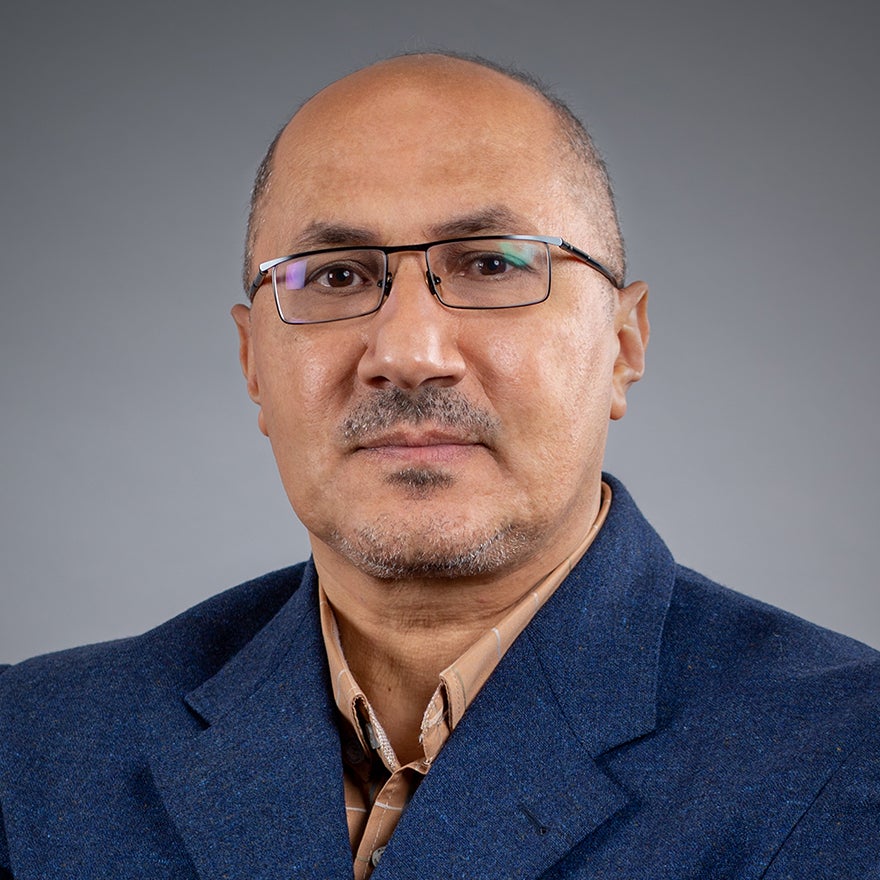
Dr. Hamdy Mubarak Hussien
Principal Software Engineer
Dr. Hamdy Mubarak Hussien
Principal Software Engineer
Educational Qualifications
BSc in Computer Science
Entity
Qatar Computing Research Institute
Division
Arabic Language Technologies
Biography
Hamdy Mubarak Hussien is a Principal Software Engineer at the Qatar Computing Research Institute of Hamad Bin Khalifa University. He joined QCRI in 2014 and has participated in building state-of-the-art tools for processing the standard, classical, and dialectal varieties of Arabic (farasa.qcri.org), QATS Speech Transcription and Translation (qats.qcri.org and st.qcri.org), IYAS Question Answering, and Fake News Detection (tanbih.org) projects in addition to leading the efforts in analyzing social media texts (asad.qcri.org). He works on different aspects of the Arabic LLM, Fanar.
Before joining Qatar Computing Research Institute, Hamdy Mubarak was the Arabic NLP R&D manager at Sakhr Software from 1994 to 2013 working on morphological, syntactic, and semantic analysis of Arabic and building commercial NLP applications for governments. He has published 120+ papers in top-tier conferences on computational linguistics, speech, and social computing.
BSc in Computer Science
Alexandria University, Egypt
1992
- Arabic natural language processing
- Social media analysis
- AI for social good
- LLMs
Principal Software Engineer
Qatar Computing Research Institute, Hamad Bin Khalifa University
2014 - Present
Arabic R&D Manager
Arabic Language, Sakhr Software, Egypt
2003 - 2013
Software Manager
Digital Communication, Ellipsis Digital Systems, United States
2001 - 2003
Senior Project Manager
Arabic Language, Sakhr Software, Egypt
1994 - 2001
Complete Publication Listing(s): Google Scholar
- Best of Gitex, 1996, Best Arabic Diacritizer.
- Best of Gitex, 1999, Best Arabic Spell and Grammar Checker.
- NIST09 Open Machine Translation A2E Human Assessment (1st Rank), Ottawa, Canada.
- Best Innovation Award (QATS), Annual Research Conference 2018, Qatar Foundation
- King Salman Global Academy Award for Best Arabic NLP Institute (Saudi Arabia, 2023)
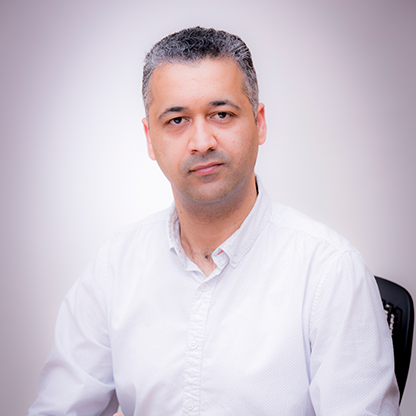
Dr. Issam Hmila
Postdoctoral Researcher
Educational Qualifications
PhD in Biology
MSc in Biochemistry
Entity
Qatar Biomedical Research Institute
Division
Neurological Disorders Research Center
Biography
Dr. Issam Hmila obtained his PhD in Biology between the Vrije Universiteit Brussel, Belgium, and the University of Tunis El Manar, Tunisia in 2010. He obtained an interuniversity diploma in advanced bioinformatics knowledge from the University-Paris Cité, France. He has also completed various courses in biostatistics, immunology, drug design, and discovery from international institutes.
His projects focus on the construction of combinatory libraries, phage display screening, and the engineering of nanobodies for immunotherapy. He was hired as an assistant professor at the Pasteur Institute in 2012, where he developed aptamers and new tools for detecting respiratory viruses of clinical importance in collaboration with the University of Minnesota, USA, and Uppsala University, Sweden.
In 2017, he joined the Neurological Disorders Research Center at Qatar Biomedical Research Institute, where he conducted his research to develop new tools for therapy against Parkinson's and Alzheimer's diseases based on nanobodies and aptamers. His work focuses on the generation of cortical neurons from induced pluripotent stem cells and the evaluation by global transcriptomic, proteomic, and integrated omics, environmental pollutants, and new drugs with potential Alzheimer's disease modulation.
PhD in Biology
University of Tunis-El Manar, Tunisia
2010
MSc in Biochemistry
University of Tunis-El Manar, Tunisia
2004
- Drug design and discovery
- Nanobody and aptamer development and engineering
- Evaluating the impact of pollutants on brain health
- Develop diagnostic and therapeutic tools
Postdoctoral Researcher
Qatar Biomedical Research Institute, Hamad bin Khalifa University
2017 - Present
Invited Scientist
College of Veterinary Medicine, University of Minnesota, United States
2014 - 2015
Assistant Professor
Institute Pasteur of Tunis, University of Tunis-El Manar, Tunisia
2012 - 2017
Postdoctoral Researcher
Institute Pasteur of Tunis, University of Tunis-El Manar, Tunisia
2010 - 2012
- First place in 2023 QBRI/HBKU research in Focus Day.
- Intern collaborative project, by Institute Pasteur of Tunis (Tunisia).
- 2013 early career MENA scientists research grant project (USA).
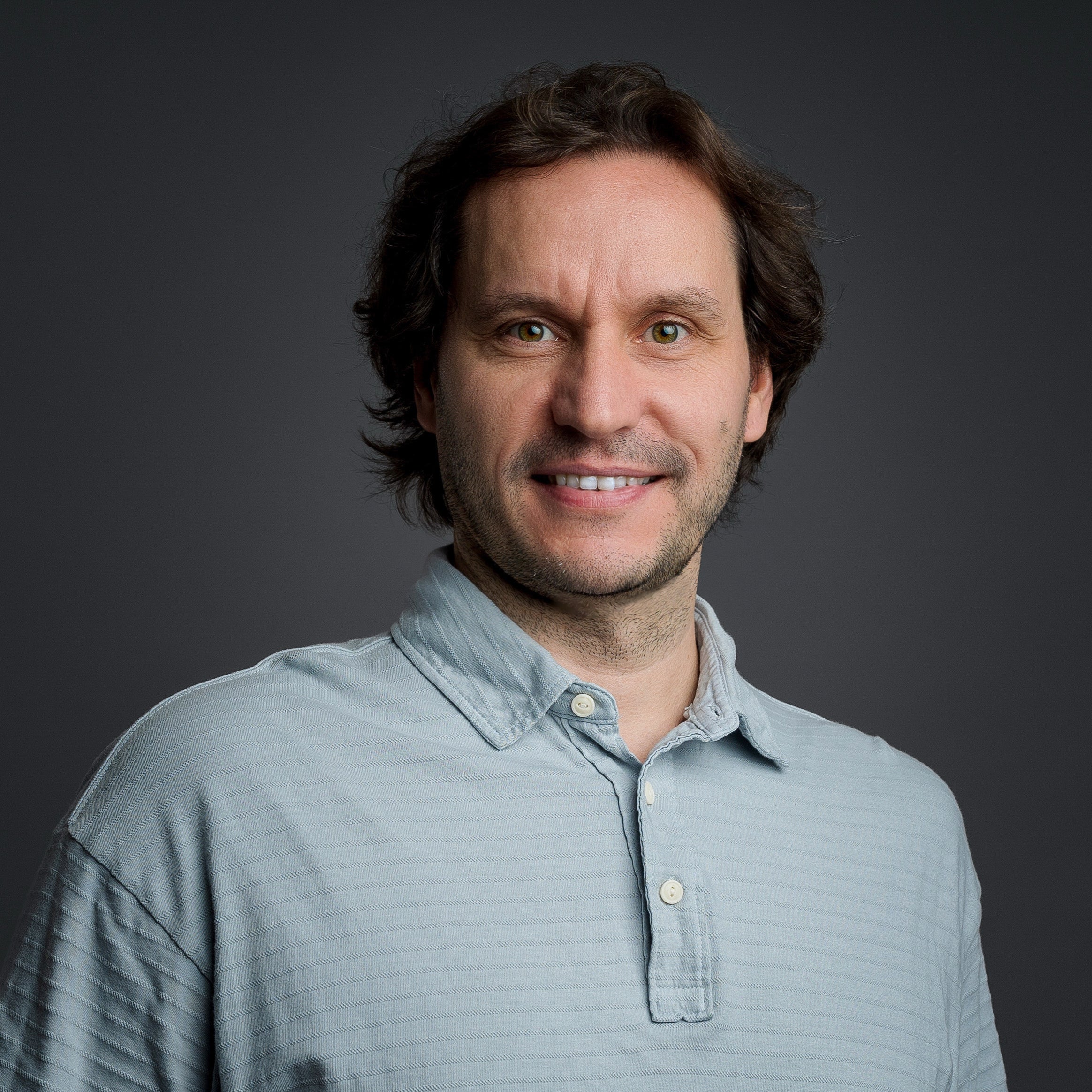
Dr. Ferda Ofli
Principal Scientist
Dr. Ferda Ofli
Principal Scientist
Educational Qualifications
PhD in Electrical and Electronics Engineering
BSc in Electrical and Electronics Engineering
Entity
Qatar Computing Research Institute
Division
Qatar Center for Artificial Intelligence
Biography
Dr. Ferda Ofli is a Principal Scientist at Qatar Computing Research Institute. Before joining QCRI, he was a postdoctoral researcher at the University of California, Berkeley, CA, USA, from 2010 to 2014. He received BSc degrees both in Electrical and Electronics Engineering and Computer Engineering, and a PhD degree in Electrical Engineering from Koc University, Istanbul, Turkey, in 2005 and 2010, respectively.
Dr. Ofli's research interests span computer vision, machine learning, remote sensing, and multimedia signal processing. In recent years, his work has focused on applying deep learning techniques to image data from diverse sources, including the Internet, UAVs, and satellites, to enhance object recognition and scene understanding in real-world conditions. His research is particularly driven by applications in the social good domain, including disaster response, crisis management, and sustainable development. To tackle the challenges posed by real-world distribution shifts, he leverages domain adaptation, domain generalization, open-set/open-world recognition, and zero-shot and few-shot learning techniques.
Dr. Ofli is a Senior Member of IEEE and ACM, with over 80 publications in top-tier conferences and journals, including CVPR, ECCV, WWW, AAAI, IJCV, and PAMI. His contributions have been recognized with several awards, including the AAAI Deployed Application Award (2024), Best Paper Awards at ISCRAM (2019–2020), the Elsevier JVCI Best Paper Award (2015), and the IEEE SIU Best Student Paper Award (2011). He has also received multiple Outstanding Reviewer Awards from CVPR (2020, 2021, 2025) and SIU (2023). Beyond academia, his work has been featured in the BBC, New Scientist, Wired, and other mainstream media outlets.
PhD in Electrical and Electronics Engineering
Koc University; Istanbul, Turkey
2010
BSc in Electrical and Electronics Engineering
Koc University; Istanbul, Turkey
2005
BSc in Computer Engineering
Koc University; Istanbul, Turkey
2005
Dr. Ofli's research interests span computer vision, machine learning and multimedia signal processing. His current research focuses on using deep learning techniques on Internet image data, created and annotated by online communities, to improve object recognition and scene understanding. Specific areas of interest include (i) understanding health habits from profile pictures and food photos, and (ii) extracting actionable information from imagery content for crisis response and management.
- Computer vision
- Machine learning
- Remote sensing
- Multimedia signal processing
Principal Scientist
Qatar Computing Research Institute, Hamad Bin Khalifa University
2025 – Present
Senior Scientist
Qatar Computing Research Institute, Hamad Bin Khalifa University
2019 - 2025
Scientist
Qatar Computing Research Institute, Hamad Bin Khalifa University
2014 - 2019
Postdoctoral Researcher
Department of Electrical Engineering and Computer Sciences; University of California, Berkeley, CA, USA.
2010 - 2014
Teaching Assistant
College of Engineering; Koc University, Istanbul, Turkey.
2005 - 2010
Complete Publication Listing(s): Google Scholar
- 2020/2021/2025: Outstanding reviewer award; CVPR
- 2024: Deployed application award; AAAI'
- 2019/2020: Best paper award; ISCRAM
- 2015: Best paper award; JVCI
- 2010: Graduate Studies Excellence Award; Koç University, Istanbul, Turkey

Dr. Johan Ericsson
Associate Professor
Dr. Johan Ericsson
Associate Professor
Educational Qualifications
Postdoctoral Fellow
PhD
Entity
College of Health and Life Sciences
Biography
Dr. Ericsson attended both Uppsala and Stockholm University and obtained his PhD from Stockholm University in 1992. He then moved to the University of California-Los Angeles (UCLA), where he worked on the transcriptional regulation of cholesterol metabolism.
Dr. Ericsson established his own independent research group in 1998 at the Ludwig Institute for Cancer Research, focusing on the post-translational regulation of a family of transcription factors critical for cholesterol and lipid metabolism, i.e. the SREBP family of proteins. In 2009, Dr. Ericsson became an SFI Stokes Professor at University College Dublin, where his group continued their work on the transcriptional and post-translational regulation of lipid metabolism. Dr. Ericsson has been an Associate Professor at HBKU since May 2019.
Postdoctoral Fellow
Departments of Biological Chemistry and Medicine, University of California, Los Angeles, USA.
1993 - 1995
PhD
Stockholm University, Department of Biochemistry.
1992
Associate Professor
Hamad Bin Khalifa University, College of Medical and Life Sciences.
2019
SFI Stokes Professor
UCD Conway Institute, School of Medicine and Medical Science, University College Dublin.
2009 - 2019
Associate Member & Group Leader
Gene Expression Laboratory, Ludwig Institute for Cancer Research, Uppsala, Sweden.
2004 - 2008
Research Fellow
Royal Swedish Academy of Sciences.
2002 - 2007
Assistant Member & Group Leader
Gene Expression Laboratory, Ludwig Institute for Cancer Research, Uppsala, Sweden.
1998 - 2003
Assistant Research Professor
Department of Medicine, University of California, Los Angeles, USA.
1997 - 1998
Assistant Research Cardiologist
Department of Medicine, University of California, Los Angeles, USA.
1995 - 1997
Postdoctoral Fellow
Departments of Biological Chemistry and Medicine, University of California, Los Angeles, USA.
1993 - 1995
The phosphorylation-dependent regulation of nuclear SREBP1 during mitosis links lipid metabolism and cell growth. Cell Cycle. 15: 2753-2765.
Fbw7 dimerization determines the specificity and robustness of substrate degradation. Genes Dev. 27: 2531-2536.
The ubiquitin ligase Fbxw7 controls adipocyte differentiation by targeting C/EBPalpha for degradation. Proc. Natl. Acad. Sci. U.S.A. 107, 11817-22.
The tumor suppressor Fbxw7 regulates TGFβ signaling by targeting TGIF1 for degradation. Oncogene 29, 5322-8.
A phosphorylation cascade controls the degradation of active SREBP1. (2009) J. Biol. Chem. 284, 5885-5895.
Hyperphosphorylation regulates the activity of SREBP1 during mitosis. Proc. Natl. Acad. Sci. U.S.A. 102, 11681–11686.
Control of lipid metabolism by phosphorylation-dependent degradation of the SREBP family of transcription factors by SCFFbw7. Cell Metabolism 1, 379-391.
- 2009 - 2014 SFI Stokes Professor (salary support).
- 2002 - 2007 Research Fellow of the Royal Swedish Academy of Sciences (salary support).
- 2004 - Fernström Award for Young Scientists
- 1994 & 1995 - Named "The George and Edna Lievre Family Research Fellow" by the American Heart Association.
- 1995 - Named "The Wilfried Mommaerts Research Fellow" by the American Heart Association.
- 1994 - 1996 Postdoctoral Research Fellowship from the American Heart Association.
Dr. Mourad Ouzzani
Research Director
Dr. Mourad Ouzzani
Research Director
Educational Qualifications
Ph.D. in Computer Science
M.S. in Computer Science
Entity
Qatar Computing Research Institute
Biography
Mourad Ouzzani is the Research Director of the Research Engineering Group whose mission is to productize QCRI's research. The group has produced several products some of which have been commercialized through different channels. These include SIHA, a system for integrated health analytics, QARTA, an AI-enabled map engine, Zaman, a smart bilingual news app for the Arab world, SAQR a social media analytics platform with a focus on Arabic, Fehris, a powerful personal content management system, and NxPalin, a system for explainable, transparent, and Fair AI.
Mourad conducts research in data management and analytics with a focus on data integration, data cleaning, and more recently data-centric AI. Mourad has played a key role in establishing the data analytics group (now QCAI) within QCRI. He was the project lead of Rayyan, the leading systematic reviews web and mobile app, which is being used by more than 250K users worldwide. Rayyan has since graduated from QCRI to a startup, Rayyan Systems Inc. Mourad’s research work has led to numerous publications in top tier venues including PVLDB, TKDE, SIGMOD, and ICDE. Mourad has been PI or CoPI in more than 15 grant proposals funded by NSF, NIH, DHS, and other funding agencies.
Ph.D. in Computer Science
Virginia Tech; Virginia, USA
2004
M.S. in Computer Science
USTHB, Algiers, Algeria
1995
B.S. in Computer Science (summa cum laude)
USTHB, Algiers, Algeria
1991
- Data Management
- Data Integration
- Data Cleaning
- Data-Centric AI
Research Director
Qatar Computing Research Institute, HBKU
2022 - Present
Principal Scientist
Qatar Computing Research Institute
2015 - 2022
Senior Scientist
Qatar Computing Research Institute
2011 - 2015
Research Associate Professor
Cyber Center, Purdue University
2010 - 2011
Research Assistant Professor
Cyber Center, Purdue University
2006 - 2010
- VLDB Distinguished Reviewer Award 2020 and 2021.
- ACM SIGMOD 2020 Reproducibility Award.
- Best Demo Award (ICDE 2019 and SIGMOD 2015).
- Senior Member of the IEEE, 2019.
- Best of VLDB, Lightning Fast and Space E cient Inequality Joins, 2015.
- Best Paper Award, 7th Int’l Conf. on Similarity Search and Applications, 2014.
- Purdue Seeds of Success Award in 2009 and 2012
- Senior Member of the ACM, 2009.
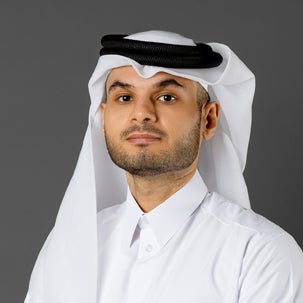
Abdulaziz Al-Homaid
Software Engineer
Abdulaziz Al-Homaid
Software Engineer
Educational Qualifications
MS in Data Science and Engineering
BS in Computer Science
Entity
Qatar Computing Research Institute
Biography
Abdulaziz Al-Homaid is a Software Engineer at Qatar Computing Research Institute of Hamad Bin Khalifa University. He has been working on leveraging insights from hospital health data. Specifically, he applied signal processing algorithms to detect abnormalities in electrocardiogram data during vigorous activity. He also worked on analyzing the relationship between exercise and glucose levels. He is experienced in utilizing libraries for large language models and training them on multi-GPU machines.
MS in Data Science and Engineering
Hamad Bin Khalifa University
2016 - 2018
BS in Computer Science
Carnegie Mellon University in Qatar
2010 - 2014
- Data Science
- Applied Machine Learning
- Software Engineering
Software Engineer
Qatar Computing Research Institute, Hamad Bin Khalifa University
2020 - Present
Research Associate
Qatar Computing Research Institute, Hamad Bin Khalifa University
2020 - 2018
Teaching Assistant
College of Science and Engineering, Hamad Bin Khalifa University
2017
Portal Analyst
Ooredoo
2014 - 2016