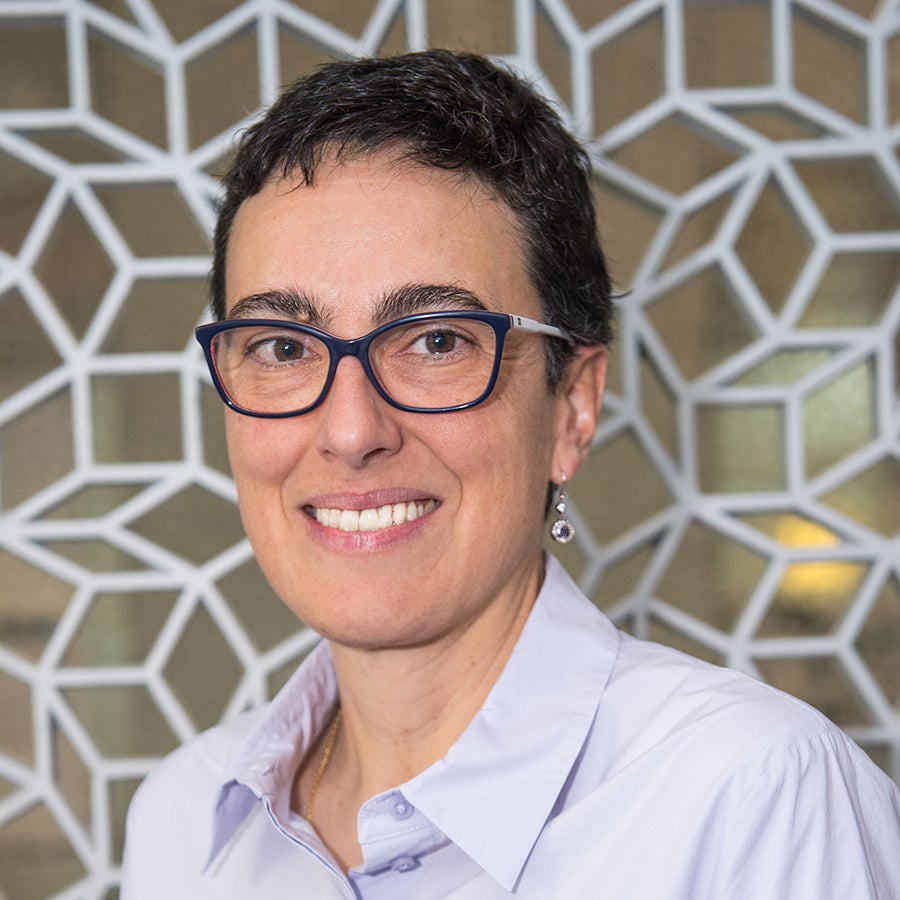
Dr. Maria teresa B Alonso
Postdoc
Dr. Maria teresa B Alonso
Postdoc
Educational Qualifications
PhD
Entity
College of Health and Life Sciences
PhD
Universidad de Navarra, Pamplona, Spain
1999
- Cancer Metabolism
- Transcriptional Regulation
- Lipid Metabolism
- Diabetes and Metabolic Disease
Research Fellow
UCD Conway Institute, School of Medicine and Medical Science, University College Dublin
2009 - 2018
Post-doctoral fellow
Ludwig Institute for Cancer Research Uppsala, Sweden
2002 - 2009
Post-doctoral fellow
University of Missouri-Kansas City, Kansas City, Missouri, USA
1999 - 2002
The phosphorylation-dependent regulation of nuclear SREBP1 during mitosis links lipid metabolism and cell growth. Cell Cycle. 15(20):2753-65.
The ubiquitin ligase Fbxw7 controls adipocyte differentiation by targeting C/EBPalpha for degradation. Proc. Natl. Acad. Sci. U.S.A. 107, 11817–11822.
A phosphorylation cascade controls the degradation of active SREBP1. J. Biol. Chem. 284(9): 5885-5895.
CDK1/Cyclin B-mediated phosphorylation stabilizes SREBP1 during mitosis. Cell Cycle. 5(15):1708-18.
Phosphorylation and ubiquitination of the transcription factor sterol regulatory element-binding protein-1 in response to DNA binding. J. Biol. Chem. 281(35): 25278-86.
Hyperphosphorylation regulates the activity of SREBP1 during mitosis. Proc. Natl. Acad. Sci. U.S.A. 102(33):11681-6
Control of lipid metabolism by phosphorylation-dependent degradation of the SREBP family of transcription factors by SCF(Fbw7). Cell Metab. 1(6):379-91. #These authors contributed equally to this work.

Dr. Ehsan Pourkarimi Daryakenari
Assistant Professor
Dr. Ehsan Pourkarimi Daryakenari
Assistant Professor
Educational Qualifications
Ph.D in Genetics
M.Sc. in Genetics
Entity
College of Health and Life Sciences
Biography
Dr. Ehsan Pourkarimi obtained his undergraduate degree from Eötvös Loránd University (ELTE) in Budapest, Hungary.
After receiving a Cancer Research Fellowship, he moved to the United Kingdom to join Professor Anton Gartner at the Wellcome Trust Center for Gene Regulation and Expression at the University of Dundee. During his post-doctoral work, Dr. Pourkarimi focused his research on understanding the effect of chromatin modifiers in cellular response during acute stress conditions. He then moved to New York City and worked as a Research Associate in the lab of Dr. Iestyn Whitehouse at Memorial Sloan Kettering Cancer Center where he studied DNA replication.
Ph.D in Genetics
Wellcome Trust Center For Gene Regulation and Expression, University of Dundee, United Kingdom
2007 - 2012
M.Sc. in Genetics
Eötvös Loránd University, Budapest, Hungary
2001 - 2007
- Transgenerational Inheritance of Epigenetic Information
- Establishing an all-in-one Toolkit for Epigenome Editing
- Understanding the Role of Histone Modification in DNA Damage-Induced Apoptosis
Research Associate
Memorial Sloan Kettering Cancer Center, New York, USA
2016 - 2018
Post Doctoral Fellow
Memorial Sloan Kettering Cancer Center, New York, USA
2013 - 2016
Post Doctoral Fellow
University of Dundee, UK
2012 - 2013
Ehsan Pourkarimi, James M Bellush, Iestyn Whitehouse
Vikram Narayan, Tony Ly, Ehsan Pourkarimi, Alejandro Brenes Murillo, Anton Gartner, Angus I. Lamond, and Cynthia Kenyon
Mark Larance*, Ehsan Pourkarimi*, Bin Wang, Alejandro Brenes Murillo, Robert Kent, Angus I. Lamond and Anton Gartner
Federico Pelisch, Remi Sonneville, Ehsan Pourkarimi, Ana Agostinho, J. Julian Blow, Anton Gartner & Ronald T. Hay
Luca Fancsalszky, Eszter Monostori, Zsolt Farkas, Ehsan Pourkarimi, Neda Masoudi, Balázs Hargitai, Maja Herak Bosnar, Martina Deželjin, Annamária Zsákai, Tibor Vellai, Anil Mehta, Krisztina Takács-Vellai
Alper Akay , Ashley Craig , Nicolas Lehrbach , Mark Larance , Ehsan Pourkarimi , Jane E. Wright , Angus Lamond , Eric Miska and Anton Gartner
Neda Masoudi*, Luca Fancsalszky*, Ehsan Pourkarimi*, Tibor Vellai, Anita Alexa, Attila Reményi, Anton Gartner, Anil Mehta, Krisztina Takács-Vellai.
Ehsan Pourkarimi & Anton Gartner
Ehsan Pourkarimi, Sebastian Greiss & Anton Gartner
Sarah L. Murdoch, Katharina Trunk, Grant English, Maximilian J. Fritsch, Ehsan Pourkarimi, Sarah J. Coulthurst
Mark Larance, Aymeric P Bailly, Ehsan Pourkarimi, Ronald T Hay, Grant Buchanan, Sarah Coulthurst, Dimitris P Xirodimas, Anton Gartner & Angus I Lamond
- Best science image award. Visions of discovery.
- Cancer research UK PhD scholarships, UK
- Overseas Research Students Awards Scheme (ORSAS) award, UK
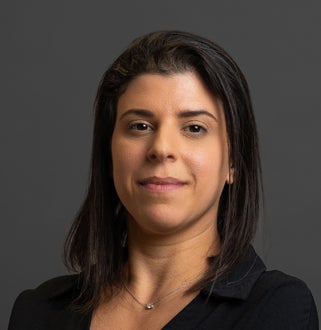
Dr. Lina Majed
Assistant Professor
Dr. Lina Majed
Assistant Professor
Educational Qualifications
PhD in Human Movement Science
MSc in Motor Control and Perception
Entity
College of Health and Life Sciences
Biography
Dr. Lina Majed is an Assistant Professor at the College of Health and Life Sciences at Hamad Bin Khalifa University. She obtained her Master's and PhD degrees in Human Movement Science from Paris-Saclay University. Her research area focuses on a multidisciplinary approach to preferred motor behaviors. She is currently examining characteristics of gait patterns as related to health and the influences of culture and environments on gait.
She has a keen interest in understanding the interplays between physical activity, preferred motor behaviors, health, and well-being. Dr. Lina is the leader of the national task force on the Qatar ‘Active Healthy Kids Report Card’ (part of a Global Alliance) in collaboration with several governmental and academic institutions. She has contributed to the National Physical Activity Guidelines for Qatar. With more than 10 years of academic experience, she has published several high-impact journal publications with direct relevance to Qatar and its population's health.
PhD in Human Movement Science
Paris-Saclay University, France
2013
MSc in Motor Control and Perception
Paris-Saclay University, France
2008
BA in Physical Education
University of Balamand, Lebanon
2006
- Preferred motor behaviors
- Gait analysis
- Physical activity and health
- Exercise and fitness
Assistant Professor
College of Health and Life Sciences, Hamad Bin Khalifa University
2023 - Present
Associate Professor of Exercise and Fitness
College of Education, Qatar University
2021 - 2023
Adjunct Faculty
College of Health and Life Sciences, Hamad Bin Khalifa University
2021
Visiting Faculty
College of Health and Life Sciences, Hamad Bin Khalifa University
2020
Assistant Professor of Exercise and Fitness
College of Health and Life Sciences, Qatar University
2013 - 2021
Complete Publication Listing(s): Google Scholar
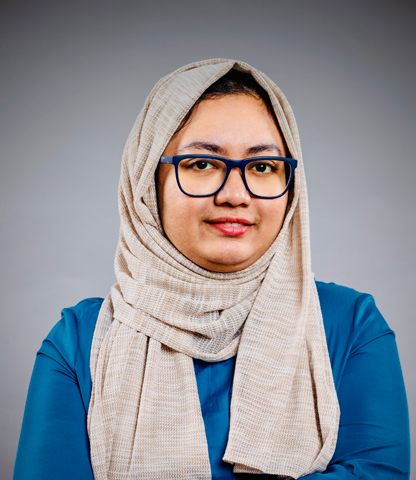
Dr. Shammur Absar Chowdhury
Scientist
Educational Qualifications
PhD in Computer Science
Bachelor of Science in Electronics and Communication Engineering, with 2nd major in Bachelor of Science in Computer Science
Entity
Qatar Computing Research Institute
Division
Arabic Language Technologies
Biography
Dr. Chowdhury specializes in designing Conversational AI models, primarily addressing complex challenges such as multispeaker interactions, nuanced multilingual and dialect variations, and code-switching, among various other intricate conversational dynamics. She is currently the leading (PI) on the QVoice project, which empowers speakers—both native and non-native of all ages alike—to learn spoken Arabic. The QVoice project leverages adaptive speech technologies and multimodal feedback modules as its underlying technologies. Dr. Chowdhury has received numerous awards and grants, including the NVIDIA Academic Hardware Grant for her research in simulating human language learning capabilities using DNN-based language models, a study that was also conducted as a part of the TRAILs project, funded by PRIN MIUR. As a key contributor to the EU-funded projects SENSEI and PortDial, Dr. Chowdhury developed conversational models adept at understanding human conversation, facilitating automatic summarization and mental health screening. She authored over 60 peer-reviewed publications in top-tier conferences and journals and played an active role in the research community by organizing shared tasks, challenges, and workshops, as well as serving on the committees of top-tier conferences and special interest groups. She co-founded the Bangla Language Processing Community and MyVoice, a crowdsourced platform, designed to bridge the gaps between standard and dialectal Arabic resources.
PhD in Computer Science
ICT Doctoral School, University of Trento, Italy
Nov-2012 to April-2017
Bachelor of Science in Electronics and Communication Engineering, with 2nd major in Bachelor of Science in Computer Science
BRAC University, Bangladesh
Jan-2007 to Dec-2010
- Multilingual and multi-view representation learning
- Conversational AI
- Non-Verbal Communication
- Spoken Language Processing
- Natural Language Processing
Scientist
Qatar Computing Research Institute (QCRI)
October 2021 - Present
Postdoctoral Researcher
Qatar Computing Research Institute (QCRI)
May 2019 - September 2021
Postdoctoral Researcher
Center for Mind/Brain Sciences (CIMEC), University of Trento
June 2017 - April 2019
PhD Researcher Signals and Interactive Systems Lab (SIS Lab)
University of Trento
November 2012 - April 2017
Research Assistant
Signals and Interactive Systems Lab (SIS Lab), University of Trento
March 2012 - October 2012
Lecturer
Department of Computer Science and Engineering, BRAC University
January 2011 - February 2012
Senior Research Assistant
Center for Research on Bangla Language Processing (CRBLP), BRAC University
October 2010 - February 2012
Chowdhury, S. A., Durrani, N., & Ali, A. (2023). What do end-to-end speech models learn about speaker, language and channel information? A layer-wise and neuron-level analysis. Computer Speech & Language, 83, 101539.
Kheir, Y. E., Chowdhury, S. A., & Ali, A. (2023). Multi-View Multi-Task Representation Learning for Mispronunciation Detection. Speech and Language Processing Tools in Education.
Chowdhury, S. A., Hussein, A., Abdelali, A., & Ali, A. (2021). Towards one model to rule all: Multilingual strategy for dialectal code-switching Arabic ASR. arXiv preprint arXiv:2105.14779.
Chowdhury, S. A., Stepanov, E. A., Danieli, M., & Riccardi, G. (2019). Automatic classification of speech overlaps: feature representation and algorithms. Computer Speech & Language, 55, 145-167.
Chowdhury, S. A., Stepanov, E. A., & Riccardi, G. (2016). Predicting User Satisfaction from Turn-Taking in Spoken Conversations. In Interspeech (pp. 2910-2914).
Complete Publication Listing(s): Google Scholar
Dr. Mashael Al-Sabah
Senior Scientist
Dr. Mashael Al-Sabah
Senior Scientist
Educational Qualifications
Visiting Scientist at CSAIL
Ph.D. ("Dissertation Title: \Network Performance Improvements for Low-Latency Anonymity Networks")
Entity
Qatar Computing Research Institute
Division
Cybersecurity
Biography
Dr. Mashael Al-Sabah is a Senior Scientist at the Qatar Computing Research Institute. Before that, Dr. Al-Sabah was an Assistant Professor at the computer science and engineering department at Qatar University. Her research interests lie in the areas of network security and privacy enhancing technologies, cryptocurrency, and blockchain technology. She has published papers that were featured in various magazines such as Wired and New Scientist, and was awarded the Education Excellence Day Platinum Award for PhD holders in Qatar in 2014. Dr. Al-Sabah obtained her PhD from the University of Waterloo, Canada in 2013 and later spent 16 months at MIT as a visiting scientist.
Visiting Scientist at CSAIL
Massachusetts Institute of Technology (MIT), Cambridge, MA, USA
March 2014 - June 2015
Ph.D. ("Dissertation Title: \Network Performance Improvements for Low-Latency Anonymity Networks")
University of Waterloo, Waterloo, ON, Canada
June 2013
M.A.Sc., Computer Networks
Ryerson University, Toronto, ON, Canada
May 2007
B.S., Computer Science
American University in Cairo, Egypt
June 2004
- Network Security
- Privacy Enhancing Technologies
- Cryptocurrency
- Blockchain
Senior Scientist
QCRI (cyber security)
May 2019 - present
Scientist
QCRI (cyber security)
Mar 2018 - May 2019
Assistant Prof
Qatar University (Computer science and engineering department)
Sept 2013 - Feb 2018
Lecturer
Qatar University (Computer science and engineering department)
2007 - 2013
Teaching Assistant
Qatar University (Computer science and engineering department)
2005 - 2007
Accepted to appear in 34th International Conference on ICT Systems Security and Privacy Protection,
Elsevier Computers and Security,
Elsevier Computers and Security,
Impact: CSUR has a high impact factor. An earlier version of this paper has been used as assigned reading in a Computer Security course at University of California, Berkeley
24th USENIX Security Symposium, August 2015. [Impact: This paper received significant media attention, and was featured in more 15 news articles. This paper has also been used as an assigned reading in various computer security courses in various leading universities such as John Hopkins University, University of Waterloo, and University of California, Berkeley]
20th ACM Conference on Computer and Communications Security,
13th Privacy Enhancing Technologies Symposium, July 2013. [Impact: This paper received Andreas Ptzmann Best Student Paper Award at the Privacy Enhancing Technologies Symposium, 2013.]
19th ACM Conference on Computer and Communications Security, October 2012.
11th ACM Workshop on Privacy in the Electronic Society,
DefenestraTor: Throwing Out Windows in Tor. 11th Privacy Enhancing Technologies Symposium, July 2011.
Conextaware RAON Middleware for Opportunistic Networks. Elsevier Pervasive and Mobile Computing,
- Third prize in the Regular Poster Presentation Category under the ICT pillar. Qatar Foundation
- Annual Research Conference Proceedings 2016 (QF ARC 2016).
- Qatar University Publication Award, 2016.
- Platinum Education Excellence Day Award for PhD holders by HH the Emir Sheikh Tamim bin Hamad Al Thani, 2014.
- Andreas Ptzmann Best Student Paper Award. 13th Privacy Enhancing Technologies Symposium, July 2013.
- Qatar University PhD Fellowship (2008-2013).
- Qatar University M.S. Fellowship (2005-2007).
- Outstanding academic achievement in Computer Science, American University in Cairo, 2003
- Outstanding academic achievement in Computer Science, American University in Cairo, 2004
- Qatar Ministry of Education B.S. Scholarship (1999-2004)
- Her Highness Sheikha Moza bint Nasser award - Second Top National High School
- Student (science division) 1999.

Dr. Rashid Yahiaoui
Associate Professor
Phone
+974 44542305Office location
C.01.043, First Floor, Minaretein Building
Dr. Rashid Yahiaoui
Associate Professor
Educational Qualifications
PhD
M.A (with distinction)
Entity
College of Humanities and Social Sciences
Program
Master of Arts in Audiovisual Translation
Division
Department of Language, Culture and Communication
Biography
Dr. Rashid Yahiaoui is currently an Associate Professor and Director of the Department of Language, Culture and Communication at the College of Humanities and Social Sciences of Hamad bin Khalifa University, Qatar. He has a PhD in Translation Studies from London Metropolitan University, UK, and a Master in Translation and Interpreting from the University of Salford, UK. Dr. Yahiaoui has a wealth of experience lecturing in translation and interpreting, EFL, and academic writing. He also has extensive experience as a professional interpreter, working for the Foreign Office and National Health Service in the UK for over 10 years.
PhD
Translation Studies, London Metropolitan University, UK
2014
M.A (with distinction)
Translation and Interpreting, Salford University, UK
2005
BA
Translation and Interpreting, University of Algiers, Algeria
1990
CELTA
Cambridge Certificate of English Language Teaching for Adults
2009
- Audiovisual Translation
- Ideology
- Critical Discourse Analysis and Media Texts
- Political Discourse Analysis
- Translation Pedagogy and Curriculum Development
Assistant Professor
College of Humanities and Social Sciences, HBKU (Qatar)
2014 to present
Lecturer
University College Yanbu (KSA)
2006-2014
Instructor
Interlingua Language Centre, Manchester (UK)
1991-1996
- 2005: M.A (with distinction) Salford University, UK.
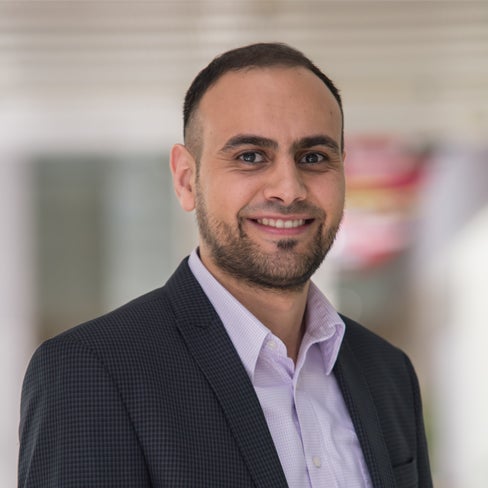
Dr. Amer Al-Adwan
Associate Professor
Phone
+974 44546937Office location
C.01.033, First Floor, Minaretein Building
Dr. Amer Al-Adwan
Associate Professor
Educational Qualifications
PhD Translation and Intercultural Studies
MA Applied Translation
Entity
College of Humanities and Social Sciences
Program
Master of Arts in Audiovisual Translation
Division
Department of Language, Culture and Communication
Biography
Dr. Amer Al-Adwan is currently an associate professor of audiovisual translation in the Department of Language, Culture and Communication at Hamad Bin Khalifa University (HBKU). He received his BA in English Language and Literature from Yarmouk University, Jordan in 2003, and his MA in Applied Translation in 2005 from the University of Exeter, UK. He also obtained his doctorate in Translation and Intercultural Studies from the University of Manchester in 2009. Before joining HBKU in 2014, he worked as an assistant professor at Jordan University and Applied Science University, Jordan, where he taught several courses in translation and intercultural studies. He also worked for a few international institutions, including BBC Arabic and Aljazeera English, as a translator and a subtitler.
PhD Translation and Intercultural Studies
University of Manchester, UK
2009
MA Applied Translation
University of Exeter, UK
2005
BA English Language and Literature
Yarmouk University, Jordan
2003
- Audiovisual translation
- Subtitling
- Intercultural studies
- Politeness theory
- Discourse analysis
- Humour and media translation
- Censorship
Associate Professor in the Master program of Audiovisual Translation
HBKU
2021 - Present
Assistant Professor in the Master program of Audiovisual Translation
HBKU
2014 - 2021
Assistant Professor of Translation Studies and Intercultural Studies (full time)
The Applied Science University/Jordan
2009 - 2014
Assistant professor of Translation and Intercultural Studies (part time)
Jordan University/Jordan
2009 - 2014
Freelance Subtitler and Translator
BBC Arabic
2010 - 2011
Freelance Subtitler and Translator
Aljazeera English
2005 - 2006
Al-Adwan, Amer, Aljaberi, Hanan. (2023). “The dilemma of subtitling Arabic metaphors into English: Pedagogical and practical perspectives”. Ampersand.
Haider, Ahmad., Abu Rayyash, Hussien., Al-Adwan, Amer. (2023). “Strategies of Translating Swear Words into Arabic: A Case Study of a Parallel Corpus of Netflix English-Arabic Movie Subtitles”. Humanities and Social Sciences Communications.
Al-Ajarmeh, Osama, Al-Adwan, Amer. (2022). Insights into Blending Game Localisation in the Arab World: Arafiesta as a Case Study. The Journal of Internationalization and Localization. 9(1): 61-84.
Al-Adwan, Amer, Althawabteh, Mohammad. (2021). Framing Arabic Metaphorical expressions in English Subtitles: The case of Noom Eltalat. In Almanna, Ali, Gu, Chonglong (Eds.). Translation and Interpreting as a Set of Frames: Ideology, Power, Discourse, Identity & Representation. ‘Routledge Studies in Language and Identity’. London: Routledge. 165-179.
Al-Adwan, Amer. (2019). Mapping Arabic Subtitling Conventions: The Case of Dubai one and MBC 2. In Said Faiq (Ed.). Arabic Translation Across Discourses. London: Routledge. 63-78.
Khitam Award for Faculty Excellence for the year 2017-2018. Hamad Bin Khalifa University.
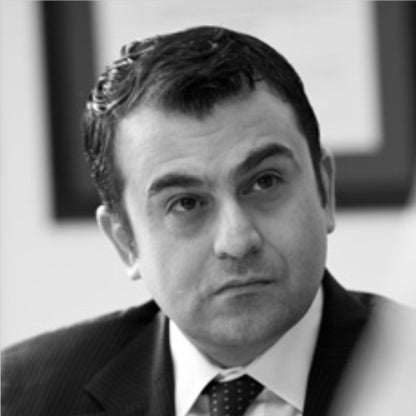
Ali Soufan
Ali Soufan
Entity
Student Affairs
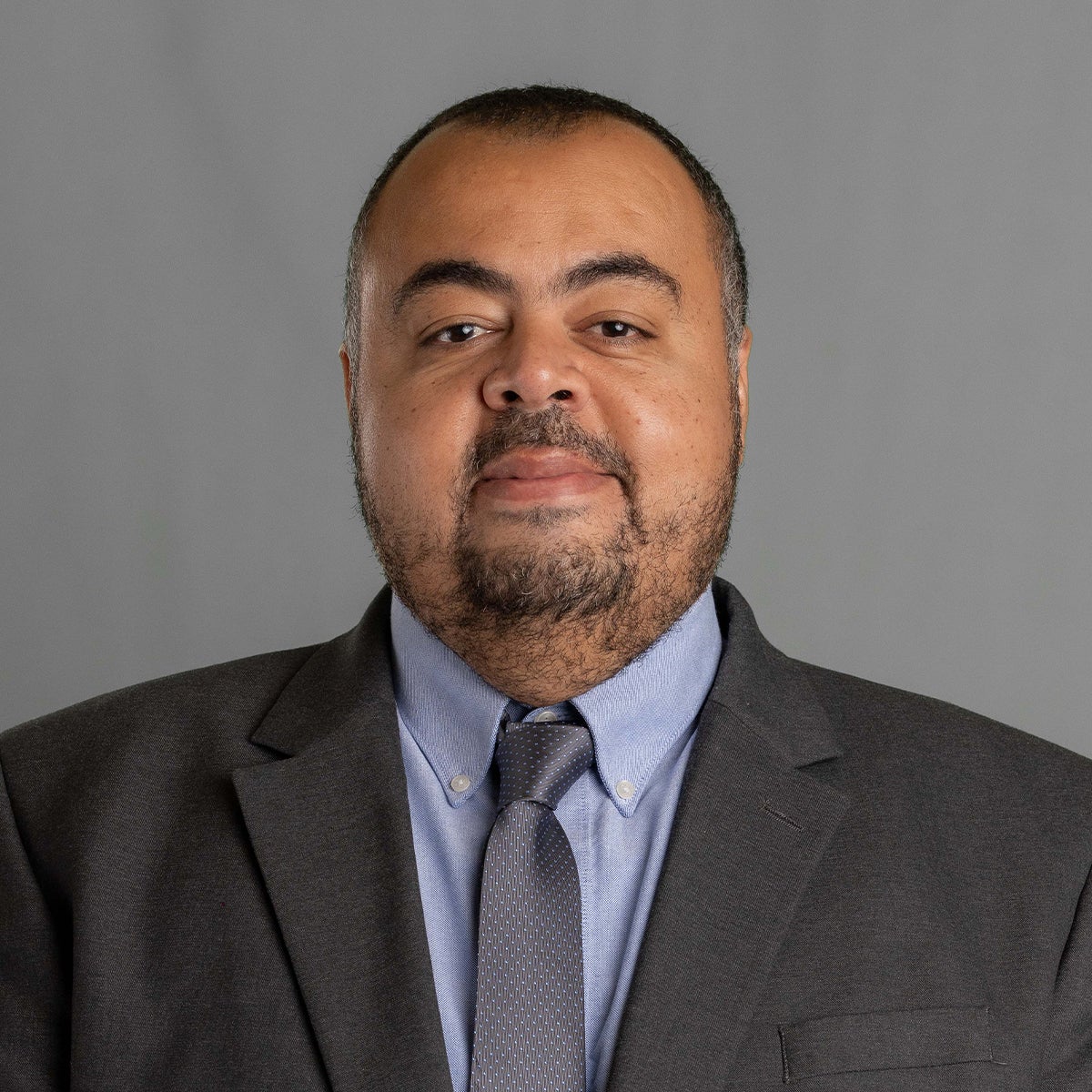
Dr. Mohamed Mahmoud Abdallah
Professor and Associate Dean of Undergraduate Studies and Quality Assurance
Dr. Mohamed Mahmoud Abdallah
Professor and Associate Dean of Undergraduate Studies and Quality Assurance
Educational Qualifications
PhD in Electrical and Computer Engineering
MS in Electrical and Computer Engineering
Entity
College of Science and Engineering
Division
Information & Computing Technology
Biography
Dr. Mohamed Mahmoud Abdallah is a Professor and founding faculty member at the College of Science and Engineering and serves as the Associate Dean of Undergraduate Studies and Quality Assurance at Hamad Bin Khalifa University. Dr. Abdallah earned his BSc. from Cairo University in 1996, followed by his MSc and PhD from the University of Maryland, College Park, in 2001 and 2006, respectively. From 2006 to 2016, he held academic positions at Cairo University and Texas A&M University at Qatar.
Dr. Abdallah’s research focuses on leveraging AI in smart cities, wireless networks, and smart grids, with a particular emphasis on network optimization and security. He has received several awards, including the Research Fellow Excellence Award from Texas A&M University at Qatar and multiple Best Paper Awards at IEEE conferences. He also received the Nortel Networks Industrial Fellowship for five consecutive years (1999-2003). Dr. Abdallah has served in key editorial roles for top IEEE journals, such as IEEE Transactions on Communications, and in leadership positions for several major IEEE conferences. He has authored over 220 papers, co-authored four book chapters, and holds four patents.
PhD in Electrical and Computer Engineering
University of Maryland at College Park, United States
2006
MS in Electrical and Computer Engineering
University of Maryland at College Park, United States
2001
BS in Electrical and Computer Engineering
Cairo University, Egypt
1996
- AI for smart cities
- Wireless networks
- Smart grids
- Autonomous vehicles
Professor
College of Science and Engineering, Hamad Bin Khalifa University
2023 - Present
Associate Professor
College of Science and Engineering, Hamad Bin Khalifa University
2019 - 2023
Assistant Professor
College of Science and Engineering, Hamad Bin Khalifa University
2016 - 2019
Associate Research Scientist
Electrical and Computer Engineering Department, Texas A&M University at Qatar
2012 - 2016
- 2020; Best Paper Awards: IEEE International Conference on Informatics, IoT, and Enabling Technologies (ICIoT).
- 2019; Best Paper Award: IEEE International Black Sea Conference on Communications and Networking (BlackSeaCom) Conference.
- 2016; Research Fellow Excellence Award, Texas A&M University at Qatar.
- 2015; Best Paper Award: IEEE First Workshop On Smart Grid And Renewable Energy.
Anastasios Fragopoulos
Systems Engineer (Research Computing IT)
Anastasios Fragopoulos
Systems Engineer (Research Computing IT)
Educational Qualifications
PhD Researcher
Diploma in Physics
Entity
Qatar Computing Research Institute
Division
Management
Biography
Since August 2015, Anastasios has been working at the Qatar Computing Research Institute as a systems engineer under the division of the Research Computing IT Infrastructure team. He mainly works on supporting, configuring and administering QCRI’s Private Cloud and Azure Public Cloud, back-end IT infrastructure systems, while coping with researchers’ requirements for IT infrastructure provisioning and services design and deployment.
QCRI has made great strides in the utilization of Private & Public Clouds, allowing researchers to self-provision IaaS, PaaS and other IT services, and Anastasios has contributed to this success. He is working extensively in the area of performance optimization of QCRI’s back-end systems, in the building of monitoring tools for the core systems of QCRI’s Private Cloud, and in helping researchers efficiently utilize resources and build services and applications, on top of our virtualized environment.
Anastasios is a focal point for designing and deploying services and applications, providing Linux-based servers (as virtual machines) to researchers, on top of our virtualized private cloud. He acts as a liaison between QCRI and vendors (VMware, EMC, DC services provider), for any support cases and escalation. He also documents architectural and functional specifications of QCRI's core internal systems, applications and infrastructure.
PhD Researcher
University of Patras, Department of Electrical & Computing Engineering, Computing Systems Lab
2004 - 2015
Diploma in Physics
University of Patras, School of Theoretical Sciences and Scientific Disciplines, Physics Department
1999
- Virtualization technologies
- Automation of IT services (IaaS
- PaaS) provisioning
- Software Defined Networking using VMware NSX
- Software Defined Storage
- Infrastructure as Code
- Computing Systems Security
Senior IT Systems Engineer
Qatar Computing Research Institute, (QCRI), Qatar Foundation, Qatar
2015-present
Researcher
Qatar Computing Research Institute, (QCRI), Qatar Foundation, Qatar
2014 - 2015
Group Head of IT
Security, Systems & Operations, VIVERE Group, Greece
2010 - 2014
Manager
Systems & Operations, IT & Telecoms Division, Theros International Gaming Inc., Greece
2009 - 2010
Administrative Assistant
The Director of Operations, Theros International Gaming Inc., Greece
2003 - 2009
Software Analyst & Developer
INTRACOM S.A. (Patras Section) – ERICSSON, Greece
2001 - 2003