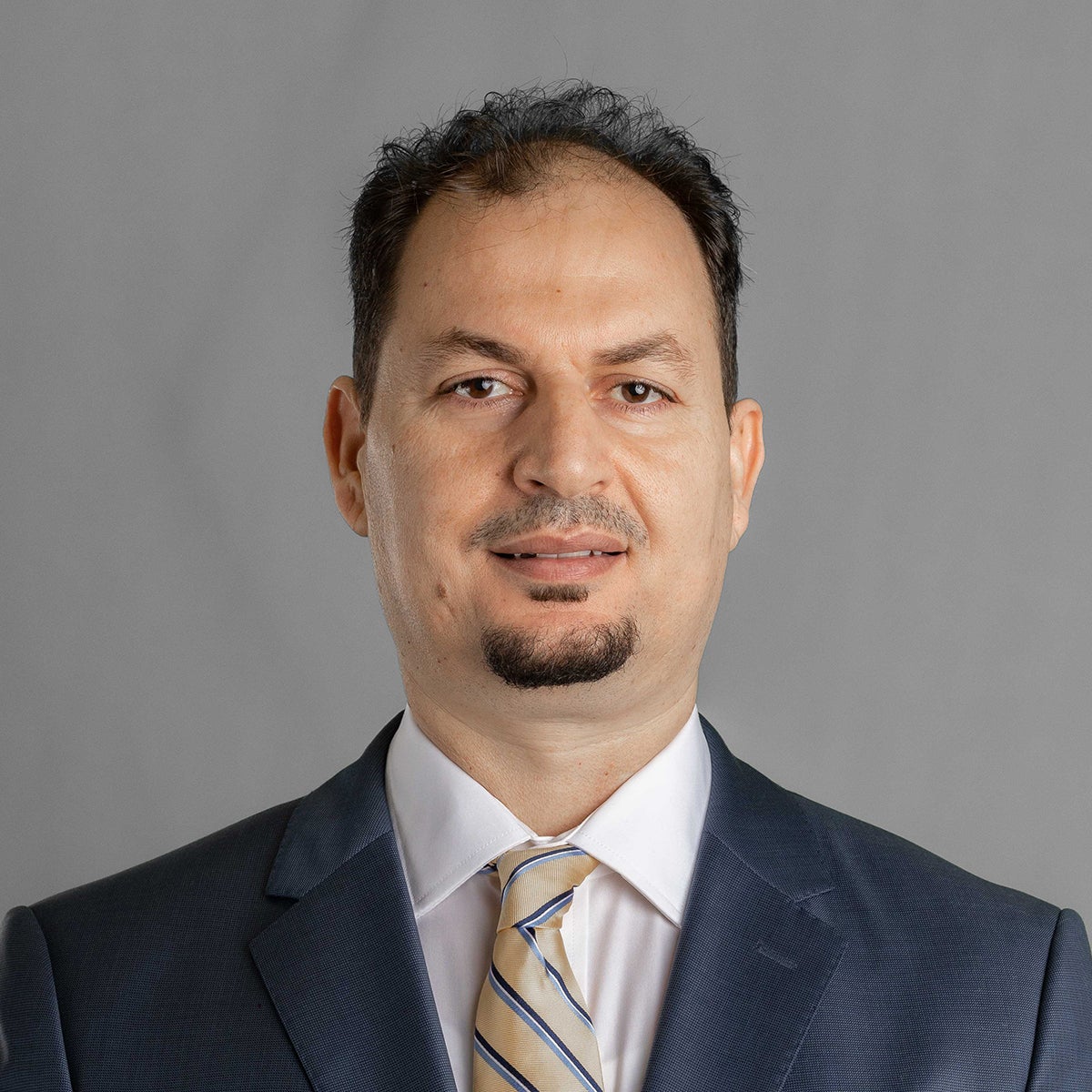
Dr. Abdulkarem Amhamed
Senior Scientist and CCUS Cluster Program Director
Dr. Abdulkarem Amhamed
Senior Scientist and CCUS Cluster Program Director
Educational Qualifications
PhD in Chemical Engineering
MS in Gas Engineering and Management
Entity
Qatar Environment and Energy Research Institute
Biography
Dr. Abdulkarem Amhamed is a Senior Scientist, CO2 Cluster Program Director, and a Chartered Chemical Engineer by training with 22 years of experience in the oil and gas industry sector including Industry 4.0 and sustainable processes design. Dr. Amhamed earned his PhD and MS degrees in Chemical Engineering from Bradford University, UK, and from University of Salford, UK, respectively. He introduced the Carbon Capture, Utilisation and Storage (CCUS) research and technology development to QEERI.
Dr Amhamed has previously held many senior research and management positions, including serving as Strategic Research Project Lead between QP and UOP Honeywell (7.5 Million USD) and Engineering & Projects General Manager-ESSO, Libya. He has a solid experience in CO2 capturing and utilization, LNG, NGL and sour gas purification. His research and industrial experience has attracted more than $10M in external funding. Recently, he obtained the highest grant ($6,4 Million) in HBKU/Qatar Foundation (CO2 Cluster Project). As program director for the grant, he leads more than 29 researchers including PIs, students, and postdoctoral researchers. Dr. Amhamed was an adjunct professor in Benghazi University, where he taught several undergraduate and graduate courses such as chemical reactions, mass transfer, CCUS course, plant process design, and gas sweetening processes.
PhD in Chemical Engineering
University of Bradford/UK
2005 - 2009
MS in Gas Engineering and Management
University of Salford/UK
2002 - 2004
BS in Chemical Engineering
Bright Star University of Technology, Libya
1990 - 1994
- Carbon Capture
- Utilisation and Storage (CCUS)
- Direct Air Capture
- Gas Processing
- Industry 4.0
- Sustainable Fuel
- Process Design and Integration
- Heat Harvesting and Heat Integration
- Food-Water-Energy Nexus
- Energy Efficiency
Senior Scientist
Senior Scientist & CCUS Program Director, QEERI, HBKU
2016 - Present
Senior Scientist
Research & Technology, Qatar Energy
2013 - 2016
General Manager
Engineering and Project Sirte Oil and Gas Company (Esso)
2012 - 2013
Adjunct professor
Benghazi University
2010 - 2013
Lead Process Engineer
Sirte Oil and Gas Company (Esso)
2009 - 2012
Senior Process Engineer
Sirte Oil and Gas Company (Esso)
2003 - 2009
Engineering Specialist-I
Sirte Oil and Gas Company (Esso)
2002 - 2003
Operation Engineer
Sirte Oil and Gas Company (Esso)
1997 - 2002
Ahmed Abotaleb, Dema Almasri, Ali Elrayyah, Mohammed Al-Kuwari, Abdulkarem Amhamed;Sustainable Energy Harvesting System for Roads in Desert Climate; book; Springer, Cham; 2022
Shaima A Al‐Tamreh, Mohamed H Ibrahim, Muftah H El‐Naas, Jan Vaes, Deepak Pant, Abdelbaki Benamor, Abdulkarem Amhamed; Electroreduction of carbon dioxide into formate: a comprehensive review, ChemElectroChem, 2021,9,1 , 3207-3220.
A Sodiq, MA Khan, M Naas, A Amhamed; Addressing COVID-19 contagion through the HVAC systems by reviewing indoor airborne nature of infectious microbes: Will an innovative air recirculation concept provide a practical solution? ; Environmental Research; 2021,8,1
Essehli. R, Sabri. S, El-Mellouhi. F, Aïssa. B, Yahia. H, Altamash.T, Khraisheh, M. Amhamed* A;Single crystal structure, vibrational spectroscopy, gas sorption and antimicrobial properties of a new inorganic acidic diphosphates material (NH4)2Mg(H2P2O7)2•2H2O; Scientific Reports, Nature, 2020,10, 1, 1-14
- 2017, Most Valuable Research Portfolio Member, Qatar Environment and Energy Research Institute.
- 2012, Best Professional General Manager, Engineering & Projects, Oil and Gas Ministry, ( Esso)Sirte Oil and Gas Company, Libya.
- 2002, Engineering Excellence Award, (Esso) Sirte Oil and Gas Company, Libya: Saved ($3Millions) solving catalyst problem in Reformer Reactor in Methanol Plant.
- 2021, Qatar Thermal Comfort Standard (QTCS): Maximizing comfort to minimize overcooling and energy waste Project” NPRP13S-0203-200243”, Qatar Environment and Energy Research Institute, Qatar, Lead Principal investigator.
- 2020, Highest Award, CO2 Cluster Project, ($ 6.5 Million), Development of a highly Efficient and Practical Carbon Management System for Improving Qatar’s Sustainability: A holistic approach “NPRP12C-0821-190017”, Qatar Environment and Energy Research Institute , Qatar, Program Director.
- 2018, First project for formulating sustainable urban FWE strategy by optimizing the synergetic effects among food, water and energy sectors ($1,700,255 ), MME, Qatar, Technical Lead and Principal investigator.
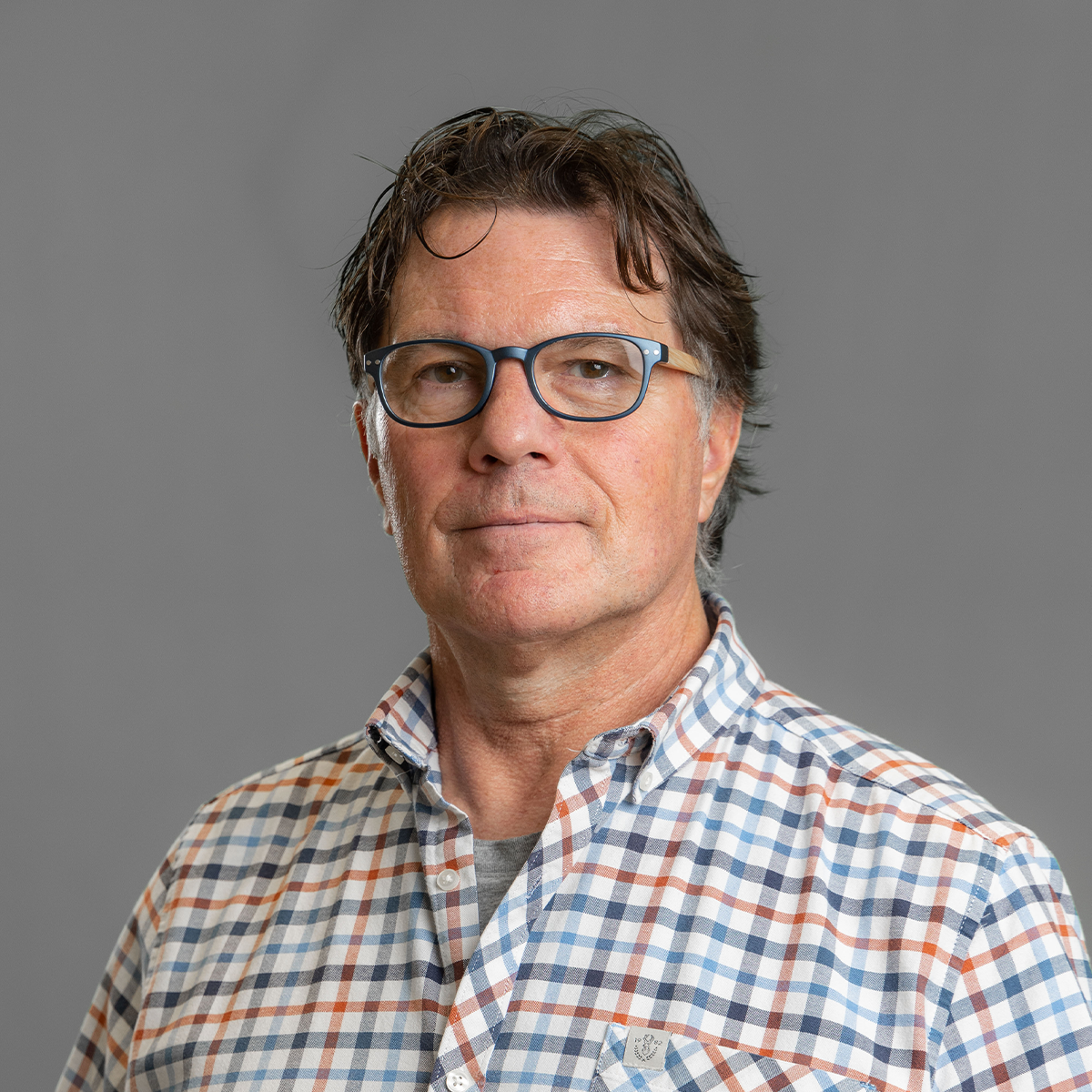
Dr. Paul Grimshaw
Associate Professor
Dr. Paul Grimshaw
Associate Professor
Educational Qualifications
PhD in Biomedical Engineering
BA Hons. in Human Movement Science
Entity
College of Health and Life Sciences
Program
Master of Science in Exercise Science
Biography
Dr. Paul Grimshaw is an Associate Professor in Exercise Science at the College of Health and Life Sciences at Hamad Bin Khalifa University. Following a PhD in biomedical engineering in 1987 from the University of Salford, UK, he has lectured in biomechanics, anatomy, and research methods for the past 36 years. He has worked at three Universities in the UK (Brunel, Edinburgh, and Exeter) and two in Australia (School of Health Sciences, University of South Australia and School of Mechanical Engineering, University of Adelaide (UoA)) before joining HBKU in 2021. He has also worked at Halmstad University in Sweden.
His research interests include injury prevention/mechanism of injury and sports performance/technology in golf and athletics; low back pain; gait analysis in children and adults and quantitative assessment of human knee instability. At the University of Adelaide, he was the School's Director of Research (2015), Director of Learning and Teaching (2017), Director of Engagement (2018-2020), and the Program Coordinator for the Bachelor of Engineering (mechanical and sports) 4-year undergraduate professional degree (2009-2018), which was the first of its kind within Australia (established in 2008). To date, he has been involved in the authorship of 141 refereed research articles and has successfully graduated with 15 higher degrees by research students (PhD and MS by research).
PhD in Biomedical Engineering
University of Salford, United Kingdom
1989
BA Hons. in Human Movement Science
Carnegie College, Leeds, United Kingdom
1984
ONC & HNC Mechanical Engineering
Science Technician Education Council, United Kingdom
1981
- Injury prevention/mechanism of injury and sports performance/technology
- Lower back pain
- Gait analysis in children and adults
- Quantitative assessment of human knee instability
Associate Professor
College of Health and Life Sciences, Hamad Bin Khalifa University
2021 - Present
Associate Professor
School of Mechanical Engineering, University of Adelaide, Australia
2009 - 2021
Senior Lecturer
School of Health Sciences, University of South Australia, Australia
1999 - 2009
Lecturer
School of Education, University of Exeter, United Kingdom
1996 - 1999
- 2024 - 2027 Adjunct Professor, Allied Health and Human Performance, University of South Australia, AUS
- 2021 - 2027 Adjunct Associate Professor, School of Electrical and Mechanical Engineering, University of Adelaide, AUS
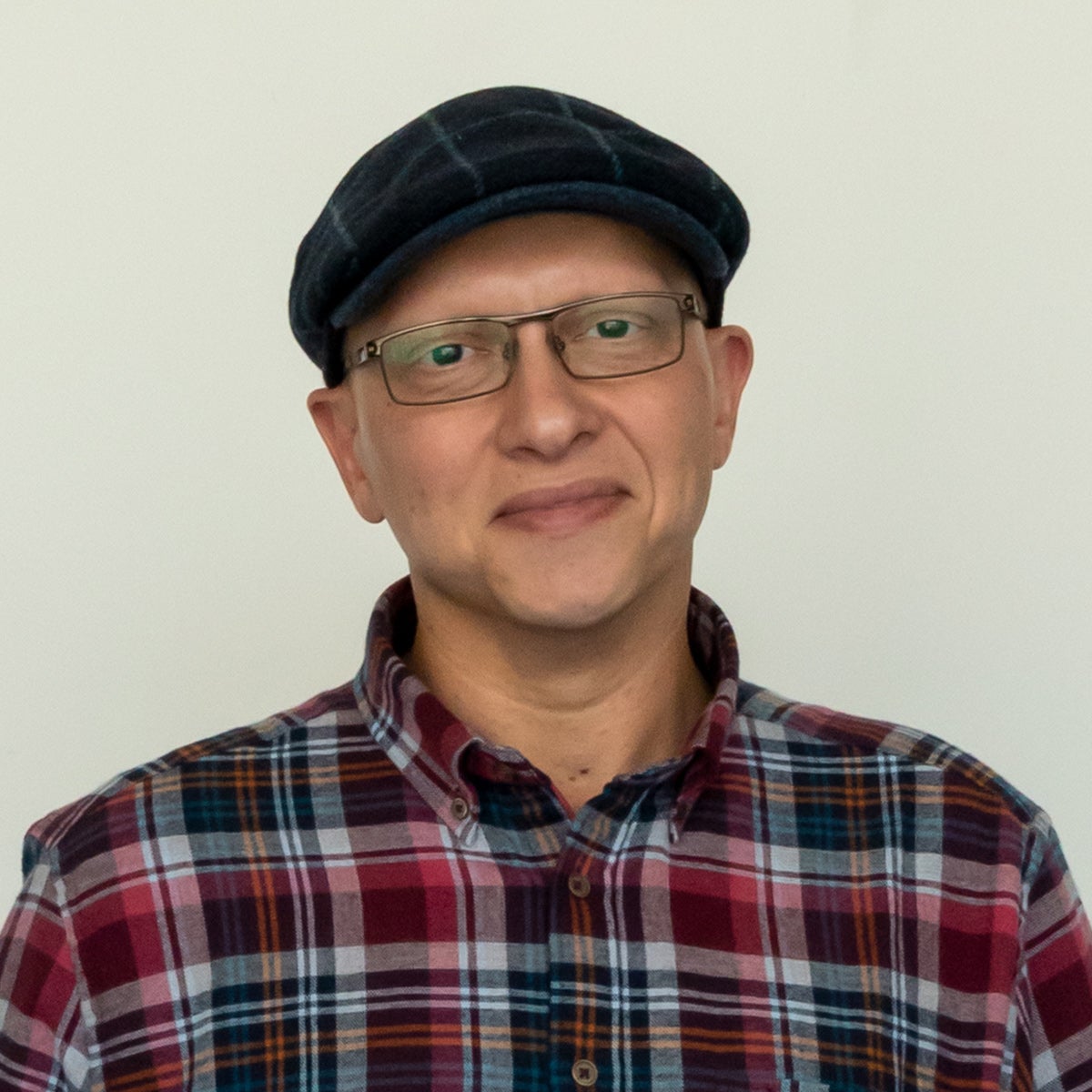
Dr. Wisam Abdul-Jabbar
Assistant Professor and Assistant Dean of Student Affairs
Dr. Wisam Abdul-Jabbar
Assistant Professor and Assistant Dean of Student Affairs
Educational Qualifications
Postdoctoral Fellowship in Intercultural Education
PhD in Multicultural Education
Entity
College of Humanities and Social Sciences
Program
Master of Arts in Intercultural Communication
Division
Department of Language, Culture and Communication
Biography
Dr. Wisam Kh. Abdul-Jabbar is an Assistant Professor and Assistant Dean of Student Affairs at the College of Humanities and Social Sciences. He holds a PhD (funded by the Social Sciences and Humanities Research Council of Canada) from the University of Alberta, where he was awarded The Bacchus Graduate Research Prize for scholarly excellence in international and multicultural education. He was also awarded the University of Alberta President’s Doctoral Prize of Distinction, among other awards such as the JDH McFetridge Graduate Scholarship and the Andrew Stewart Memorial Graduate Prize for outstanding accomplishment and potential in pursuit of new knowledge. He has a master’s degree from the University of Baghdad. He also received a master’s degree from California State University in Humanities. His third master's degree was from Lakehead University in English literature, Canada. Dr. Abdul-Jabbar held a postdoctoral fellowship (also funded by the Social Sciences and Humanities Research Council of Canada) at the University of Calgary. His research considers how intercultural communication resonates with educational practices; it explores the convergences of seemingly differing cultures to infuse intercultural dialogue into educational discourse. Prior to joining Hamad Bin Khalifa University (HBKU), he was a faculty member at Yorkville University and an adjunct professor at the University of Alberta, Canada. He is the author of Negotiating Diasporic Identity in Arab-Canadian Students - Double Consciousness, Belonging, and Radicalization (Palgrave, 2019) and Medieval Muslim Philosophers and Intercultural Communication: Towards a Dialogical Paradigm in Education (Routledge, 2023).
Postdoctoral Fellowship in Intercultural Education
University of Calgary, Canada
2018
PhD in Multicultural Education
University of Alberta, Canada
2016
MA in English Literature
Lakehead University, Canada
2011
MA in Humanities and Interdisciplinarity
California State University, Canada
2008
MA in English Literature
University of Baghdad, Iraq
2000
- Intercultural dialogue
- Diasporic Identity
- Cross-Cultural Studies
- Intercultural Education
Assistant Professor
College of Humanities and Social Sciences, Hamad Bin Khalifa University
2024 – Present
Visiting Professor
College of Humanities and Social Sciences, Hamad Bin Khalifa University
2022 – 2024
Faculty Member
College of Education, Yorkville University, Canada
2021 – 2024
Adjunct Professor
College of Education, University of Alberta
2018 - 2022
Sessional Lecturer
College of Education, Thompson Rivers University
2021
Sessional Lecturer
School of Continuing Education, MacEwan University
2018 - 2019
Postdoctoral Fellow
Werklund School of Education, University of Calgary
2016 - 2018
Sessional Lecturer
Department of Secondary Ed., University of Alberta
2014 - 2018
Abdul-Jabbar, W. K. (2022). Medieval Muslim philosophers and intercultural communication: Towards a dialogical paradigm in education. Routledge.
- 2021, Support of Scholarly Activity Funding; Yorkville University, Canada
- 2019, Banting Postdoctoral Fellowship Letter of Endorsement; University of Calgary, Canada
- 2018, SSHRC Postdoctoral Scholarship, Federal (Social Sciences and Humanities Research Council of Canada)
- 2017, The Bacchus Graduate Research Prize, University of Alberta, Canada
- 2015, Andrew Stewart Memorial Graduate Prize, University of Alberta, Canada
- 2013, The University President’s Doctoral Prize of Distinction, University of Alberta, Canada
- 2012, SSHRC Doctoral Scholarship, Federal (Social Sciences and Humanities Research Council of Canada)
- 2012, JDH McFetridge Graduate Scholarship/University of Alberta, Canada
- 2011, Department Doctoral Prize of Academic Distinction, University of Alberta, Canada
Atef Zekri
Scientist
Educational Qualifications
Doctor of Natural Sciences PhD
Master of Science
Entity
Qatar Environment and Energy Research Institute
Biography
Dr. Atef Zekri graduated with a PhD in Physics in 2017 from the University of Oldenburg (Germany). Before joining QEERI as a Post-Doc in April 2018 and then as a Scientist in July 2019, he worked as a Post-Doctoral Research Fellow in the Energy and Semiconductor research group within the Institute of Physics in the University of Oldenburg (Germany). Atef obtained his Master of Science in Materials Science from Saarland University (Germany) and his Bachelor of Science from Saarland University (Germany) as well as a Bachelor of Engineering from EEIGM (École Européenne D'ingénieurs en Génie des Matériaux, France). His current research interests focus on state-of-the-art electron microscopy across a wide range of materials such as the Scanning and Transmission Electron Microscopy (SEM/TEM), Atomic Force Microscopy (AFM), Energy-Dispersive X-ray Spectroscopy (EDS), and Focused Ion Beam (FIB).
Doctor of Natural Sciences PhD
Carl von Ossietzky University of Oldenburg, Oldenburg/Germany
2017
Master of Science
Saarland University, Saarbrücken/Germany
2014
Bachelor of Science
Saarland University, Saarbrücken/Germany
2013
Bachelor of Engineering
École Européenne d'Ingénieurs en Génie des Matériaux: Nancy, France
2011
- Structural characterization of functional materials using high-end electron microscopy
- Developing new analysis methodologies in the microscopy
- Materials characterization in micro and nanoscale
- Renewable energy sources including batteries and fuel cells
- Failure analysis: methodology
- techniques and case studies
Post Doc
Energy and Semiconductor Research Laboratory: Institute of Physics University of Oldenburg, Germany
2017 - 2018
Research Fellow
Energy and Semiconductor Research Laboratory: Institute of Physics University of Oldenburg, Germany
2015 - 2017
Ali Sadek Kadari, Abdelkader Nebatti Ech-Chergui, Brahim Aïssa, Sanat Kumar Mukherjee, Nourddine Benaioun, Yahya Zakaria, Atef Zekri, Chellali Mohemed Reda, Adjdir Mehdi, Rahmani Rabea, Kouider Driss-Khodja & Bouhalouane Amrani : Growth and characterization of transparent vanadium doped zinc oxide thin films by means of a spray pyrolysis process for TCO application: Journal of Sol-Gel Science and Technology
Ismail W. Almanassra, Yahya Zakaria, Viktor Kochkodan, Kamal Mroue, Atef Zekri, Muataz Ali Atieh & Tareq Al-Ansari: XPS and material properties of raw and oxidized carbide-derived carbon and their application in antifreeze thermal fluids/nanofluids: Journal of Thermal Analysis and Calorimetry
Sara I. Ahmad Hicham Hamoudi Atef Zekri Khaled M.Youssef: Investigating the thermal stability of nanocrystalline aluminum-lithium alloy by combining different mechanisms: Reinforcing with graphene and alloying with Sr: Journal of Alloys and Compounds
Hicham Hamoudi, Golibjon R. Berdiyorov, Atef Zekri, Yongfeng Tong, Said Mansour, Vladimir A. Esaulov & Kamal Youcef-Toumi: Building block 3D printing based on molecular self-assembly monolayer with self-healing properties: Scientific Reports
Yehia Manawi Muataz Hussien Anita Buekenhoudt Atef Zekri Huda Al-Sulaiti Jenny Lawler Viktor Kochkodan: New ceramic membrane for Phosphate and oil removal: Journal of Environmental Chemical Engineering
Brahim Aïssa; Atef Zekri; Yahya Zakaria; Ayman Samara; Cedric Broussillou: Tuning the Structural and Optoelectronic Properties of Sub-stoichiometric Molybdenum Trioxide (MoOx, x < 3) Thin Films through the Oxygen Flow During the Reactive Magnetron Sputtering Deposition: 2021 IEEE 48th Photovoltaic Specialists Conference (PVSC)
B.Aïssa A.Sinopolia A.Ali Y.Zakaria A.Zekri M.Helal M.Nedi F.Rosei S.Mansour K.A.Mahmoud: Nanoelectromagnetic of a highly conductive 2D transition metal carbide (MXene)/Graphene nanoplatelets composite in the EHF Mband frequency: Carbon
Abdel-Aziz El Mel, Said A. Mansour, Mujaheed Pasha, Atef Zekri, Janarthanan Ponraj, Akshath Shetty and Yousef Haik: Oxidation of Au/Ag films by oxygen plasma: phase separation and generation of nanoporosity: Beilstein Journal of Nanotechnology
Dana E. Al-Ansari ,Nura A. Mohamed ,Isra Marei , Atef Zekri ,Yu Kameno ,Robert P. Davies ,Paul D. Lickiss ,Md Mizanur Rahman and Haissam Abou-Saleh: Internalization of Metal-Organic Framework Nanoparticles in Human Vascular Cells: Implications for Cardiovascular Disease Therapy: Journal of Nanomaterials
Nagla Kamal ,Viktor Kochkodan , Atef Zekri and Said Ahzi: Polysulfone Membranes Embedded with Halloysites Nanotubes: Preparation and Properties: Membranes
M. I. Hossain, Y. Zakaria, A. Zekri, A. Samara, B. Aissa, F. El-Mellouhi, N. S. Hasan, A. Belaidi, A. Mahmood, S. Mansour: E-beam evaporated hydrophobic metal oxide thin films as carrier transport materials for large scale perovskite solar cells: Materials Technology
Sehrish Habib , Adnan Khan , Muddasir Nawaz , Mostafa H Sliem , Rana A Shakoor , Ramazan Kahraman , Aboubakr M Abdullah , Atef Zekri: Self-Healing Performance of Multifunctional Polymeric Smart Coatings: Polymers
Fareeha Ubaid Nazal Naeem R.A.Shakoor Ramazan Kahraman Said Mansour Atef Zekri: Effect of concentration of DOC loaded TiO 2 nanotubes on the corrosion behavior of smart coatings: Ceramics International
M. Riegraf, A. Zekri, M. Knipper, R. Costa, G. Schiller, K. Friedric: Sulfur poisoning of Ni/Gadolinium-doped ceria anodes: A long-term study outlining stable solid oxide fuel cell operation: Journal of Power Sources
Atef Zekri, Bernhard Schnetger, Mohamed Amine Essafi, Thorsten Plaggenborg, Jürgen Parisi and Martin Knipper: Microstructure Degradation of LSM/YSZ Cathodes for Solid Oxide Fuel Cells Aged in Stack after Long Operation Time: Journal of The Electrochemical Society
A. Zekri,K. Herbrig,M. Knipper,J. Parisi,T. Plaggenborg: Nickel Depletion and Agglomeration in SOFC Anodes During Long-Term Operation: Fuel Cells
Atef Zekri, Martin Knipper, Jürgen Parisi and Thorsten Plaggenborg: Microstructure Degradation of Solid Oxide Fuel Cells Aged in Stack after Long Operation Time up to 20 000h Using 3D Reconstructions by FIB Tomography: The Electrochemical Society
Atef Zekri, Martin Knipper, Jürgen Parisia and Thorsten Plaggenborg: Microstructure degradation of Ni/CGO anodes for solid oxide fuel cells after long operation time using 3D reconstructions by FIB tomography: Atef Zekri, Martin Knipper, Jürgen Parisia and Thorsten Plaggenborg
Matthias Riegraf, Atef Zekri, Vitaliy Yurkiv, Rémi Costa, Guenter Schiller and K. Andreas Friedrich: Assessment of Sulfur Poisoning of Ni/CGO-Based SOFC Anodes: The Electrochemical Society
- Best Presentation Award in the European Materials Research Society (E-MRS) meeting
- Award of the DFH scholarship
Dr. Hibah Shaath
Senior Research Associate
Educational Qualifications
PhD Biomedical and Biological Sciences
MRes Genetic Medicine
Entity
Qatar Biomedical Research Institute
Division
Translational Oncology Research Center
Biography
Dr. Hibah Shaath obtained her Bachelor of Science (Hons) and Master of Research (MRes) degrees in Genetics and Genetic Medicine from the University of Manchester. The focus of her MRes was the biomolecular characterization of Keratoconic corneas associated with transplant rejection. In 2013 she moved to Qatar and joined Shafallah Medical Genetics Center, where her main focus was identifying candidate genes with novel mutations associated with both Mendelian hereditary disease and ASD, through homozygosity mapping and family screening, presented in several posters at ARC’13 and ARC’14. In 2014, Dr. Shaath joined QBRI to work as a Research Associate in the Translational Oncology Research Center. In 2022, she completed her PhD in Biomedical and Biological Sciences from the College of Health and Life Sciences (CHLS) at HBKU under the supervision of Dr. Nehad Alajez. Her research focus is on the transcriptional landscape of colorectal cancer and breast cancer for novel biomarker discovery and targeted therapy. Her research was selected for oral presentation at the first Advances in Precision Medicine (APM 2021) conference at HBKU, and in 2022; her poster was selected for Best Poster Award in the student category as the third place winner at HBKU Research Day.
PhD Biomedical and Biological Sciences
College of Health and Life Sciences
September 2017 - June 2022
MRes Genetic Medicine
The University of Manchester
September 2011 - September 2012
BSc (Honors) Genetics
The University of Manchester
September 2007 - June 2010
Research Associate
Qatar Biomedical Research Institute (QBRI) - Doha, Qatar
June 2014 - Present
Research Associate
Shafallah Medical Genetics Center- Doha, Qatar
January 2013 - June 2014
- HBKU Research Day: Best Poster Award, Student Category; third place winner for poster on Therapeutic targeting for Colorectal Cancer: Toward Precision Medicine
- Abstract chosen for oral presentation at the first Advances in Precision Medicine (APM 2021) conference at HBKU: Single-cell long noncoding RNA (lncRNA) transcriptome implicates MALAT1 in triple-negative breast cancer (TNBC) resistance to neoadjuvant chemotherapy

Dr. Bakhita Meqbel
Research Fellow
Educational Qualifications
PhD in Biological and Biomedical Sciences
MSc in Biomedical Sciences
Entity
Qatar Biomedical Research Institute
Division
Diabetes Research Center
Biography
Bakhita Rashid Meqbel is a Research Fellow at the Diabetes Research Center, Qatar Biomedical Research Institute at Hamad Bin Khalifa University. She received her bachelor's degree in biomedical science and masters in master’s in biomedical science with a major in health management from Qatar University. She got her PhD in biological and biomedical sciences from Hamad Bin Khalifa University in 2022.
She has worked as a Senior Lab Technologist for 10 years at Hamad Medical Corporation in the Department of Medicine and Pathology - Microbiology lab. She then pursued PhD degree working in the cancer field. After obtaining her PhD, she joined QBRI as a Senior Research Associate and was later promoted to Research Fellow.
PhD in Biological and Biomedical Sciences
Hamad Bin Khalifa University
2022
MSc in Biomedical Sciences
Qatar University
2014
BSc in Biomedical Sciences
Qatar University
2004
- Microbiology
- Oncology
- Immunology
- Molecular Biology
Research Fellow
Qatar Biomedical Research Institute, Hamad Bin Khalifa University
2024 - Present
Senior Research Associate
Qatar Biomedical Research Institute, Hamad Bin Khalifa University
2022 - 2024
Sr. Lab Tech.
DLMP, Hamad Medical Corporation
2010 - 2016
Lab Tech.
DLMP, Hamad Medical Corporation
2006 - 2010
Trainee
DLMP, Hamad Medical Corporation
2004 - 2006
- 2015; Recognition of academic performance, Qatar National Research Fund - Talent development team, Qatar
- 2016; Recognition of academic performance, Qatar National Research Fund - Talent development team, Qatar
Dr. Omar Albagha
Professor
Dr. Omar Albagha
Professor
Educational Qualifications
PhD
MSc
Entity
College of Health and Life Sciences
Biography
Dr. Omar Albagha received his PhD scholarship to investigate genetic susceptibility to osteoporosis at the University of Aberdeen. After completing his PhD degree in 2001, he worked as a postdoctoral researcher until 2002, when he was appointed as an Arthritis Research UK lecturer (Assistant Professor) in Genetics of Bone disease at the Institute of Medical Sciences, University of Aberdeen, UK. In 2005, he moved to the University of Edinburgh as a Principal Investigator/Group Leader at the Centre for Genomic and Experimental Medicine (CGEM). In 2014, he was appointed the Associate Director of the Paget’s Association Centre of Excellence, Edinburgh.
In early 2017, Dr. Albagha joined Hamad Bin Khalifa University (HBKU) as a Principal Investigator at the Qatar Biomedical Research Institute (QBRI), and in 2019 he joined the College of Health and Life Sciences at HBKU as a Professor of Genomic and Precision Medicine. His current research focuses on Genomic Medicine, aiming at understanding the genetic determinants of complex diseases with emphasis on Type 2 Diabetes and cardiovascular diseases. He has active collaborations with Qatar Genome Project to investigate genetics of disease-related traits in Qatar. He has published in high impact journals (Nature Genetics, JAMA, Cell Reports) and his work has been featured in news outlets such as the BBC and other international media. Dr. Albagha has received many awards from international organizations, including the European Calcified Tissue Society (ECTS) and the American Society for Bone and Mineral Research (ASBMR). He has obtained multiple research grants totaling over US$ 10 million, including the highly prestigious European Research Council (ERC) Consolidator fellowship.
PhD
University of Aberdeen, U.K.; Genetics (Medical Sciences)
2001
MSc
University of Aberdeen, U.K. Medical Molecular Genetics
1997
BSc
University of Jordan, Jordan Medical Technology (Distinction)
1996
- The genetic architecture of health-related traits in the Qatari population.
- Identification of genetic and epigenetic factors conferring susceptibility to Type 2 diabetes
- Personalized care for Qatari patients with genetic predisposition to hypercholesterolemia
- Identification of genetic and epigenetic factors contributing to Autism Spectrum Disorder
Professor
Hamad Bin Khalifa University
2019 - Present
Principle Investigator
Qatar Biomedical Research Institute
2017 - 2019
Principal Investigator in Genetics and Functional Genomics
Institute of Genetics and Molecular Medicine, University of Edinburgh, U.K. (on Leave of Absence)
2005 - present
Lecturer (Assistant Professor)
Institute of Medical Sciences, University of Aberdeen, UK
2002 - 2005
Postdoctoral Research Fellow
Institute of Medical Sciences, University of Aberdeen, UK
2001 - 2002
Front Genet. 2020 Oct 2;11:578523. doi: 10.3389/fgene.2020.578523. #Corresponding author.
Metabolic GWAS of elite athletes reveals novel genetically-influenced metabolites associated with athletic performance. Sci Rep. 2019 Dec 27;9(1):19889. doi: 10.1038/s41598-019-56496-7.
Ann Rheum Dis 2018 Mar;77(3):378-385
Targeted sequencing of the Paget's disease-associated 14q32 locus identifies several missense coding variants in RIN3 that predispose to Paget's disease of bone. Hum Mol Genet. 2015, 24(11):3286-95
Association between telomere length and risk of cancer and non-neoplastic diseases. JAMA Oncology. 2017; 3(5):636-651.
(The Telomeres Mendelian Randomisation Collaboration). Association between telomere length and risk of cancer and non-neoplastic diseases. JAMA Oncology. 2017; 3(5):636-651.
Optineurin negatively regulates osteoclast differentiation by modulating NFκB and Interferon signalling: implications for Paget's disease. Cell Reports 2015, 13:1-7.
Targeted sequencing of the Paget's disease associated 14q32 locus identifies several missense coding variants in RIN3 that predispose to Paget's disease of bone. Hum Mol Genet. 2015, 24(11):3286-95
New Genome-wide meta-analysis identifies 56 bone mineral density loci and reveals 14 loci associated with risk of fracture. Nature Genetics, 2012, 44(5):491-501.
Nature Genetics. 2011, 43(7):685-689. Selected by F1000 Prime, #Corresponding author.
Nature Genetics. 2010, 42(6):520-4. Selected by F1000 Prime.
Active Grants:
- QNRF-PPM3: (LPI); Personalized care for Qatari patients with genetic predisposition to hypercholesterolemia: better prediction, diagnosis and management. (US$ 573,228)
- QNRF-C: (LPI); Genetic Risk Factors in Diabetes; a project in the Qatar Diabetes prevention program Cluster grant. (US$ 640,500)
- QNRF-PPM4: (PI); Pharmacogenomics of TNF inhibitors in autoimmune diseases
- QNRF-PPM2: (PI); Qatar Epigenome: Profiling of epigenetic modifications and identification of epigenome-wide predictors of Type 2 Diabetes and Obesity in Qataris from the QGP pilot study. (US$ 471,412)
- QBRI-IDRP: (PI); An integrated omic approach to identify biomarkers for Type 2 diabetes-associated complications and comorbidities. (US$1,621,950)
Honors:
- Received multiple awards from the European Calcified Tissue Society (ECTS), American Society for Bone and Mineral Research (ASBMR), and International Biobanking conference.
Dr. Sultan Barakat
Professor
Office location
C.03.031
Dr. Sultan Barakat
Professor
Educational Qualifications
Diploma, peacekeeping mediation, and negotiation
PhD in Philosophy
Entity
College of Public Policy
Biography
Sultan Barakat is a Professor at the College of Public Policy at Hamad Bin Khalifa University. He is a renowned scholar in the study of war-torn societies and their recovery. He has supervised over 20 PhDs in politics and post-war recovery and graduated a generation of MA peacebuilders and reconstruction specialists. Professor Barakat founded and directed the Center for Conflict and Humanitarian Studies at the Doha Institute from 2016 to 2022 and previously led the post-war reconstruction unit at the University of York from 1993 to 2019.
He has published extensively, with recent books including Russia’s Approach to Post-Conflict Reconstruction and Shelter and Reconstruction after War and Disaster, both released in 2023. With over 30 years of experience, Barakat has worked on conflict management, humanitarian response, and post-conflict recovery, influencing global practices through his publications and advisory roles with organizations like the UN, World Bank, and EU.
He has led evaluations and peace initiatives in various conflict zones, demonstrating his commitment to stability and resilience. His involvement in mediation efforts in Yemen, Syria, and Afghanistan highlights his contributions to peacebuilding. Barakat continues to shape discourse in conflict resolution, earning recognition as a leading authority in the field.
Diploma, peacekeeping mediation, and negotiation
The Lester B. Pearson Canadian International Peacekeeping Center, Canada
1995
PhD in Philosophy
University of York, England
1993
Diploma, Disaster Management Certificate
Oxford Polytechnic, England
1989
MA in Urban Conservation
University of York, England
1989
BSc in Architectural Engineering
University of Jordan, Jordan
1988
- Mediation and conflict resolution
- Localization and the humanitarian-development-peace nexus
- Post-conflict reconstruction
- Post-war recovery of cultural heritage
Professor
College of Public Policy, Hamad Bin Khalifa University
2022 - Present
Professor and Founding Director
Centre for Conflict and Humanitarian Studies, Doha Institute for Graduate Studies
2016 - 2022
Professor, Special Advisor and University Vice-chancellor
Department of Politics and International Relations, University of York, England
2014 - 2019
Senior Fellow
Brookings Doha Center, The Brookings Institution, Washington D.C), United States
2014 - 2016
Barakat, S. (2023). Shelter and reconstruction after war and disasters (Arabic ed.). Doha: Hamad Bin Khalifa University Press. ISBN 978-9-927-16412-5.
Barakat, S. (2023). Russia’s approach to post-conflict reconstruction. London: Palgrave Macmillan. ISBN 978-3-031-34521-0.
Barakat, S, et al. (2014). The influence of state building research on British policy in fragile states. London: Ashgate. ISBN 978-1-4724-2757-1.
Barakat, S. (Ed.). (2008). Reconstructing post-Saddam Iraq. New York: Routledge. ISBN 978-1-1367-6371-7.
Barakat, S. (Ed.). (2005). After the conflict: Reconstruction and development in the aftermath of war (2nd ed., republished 2010). London: I.B. Tauris. ISBN 978-1-8488-5417-8.
- 2024; Fellow of the Geneva center of humanitarian studies at the University of Geneva.
- 2022; Senior associate fellow of the Royal United Services Institute (RUSI).
- 2019; Honorary professor at the University of York.
- 2019; Fellow of the Economists for peace and security.
- Advisory board member of the Humanitarian policy group at the Overseas Development Institute in London.
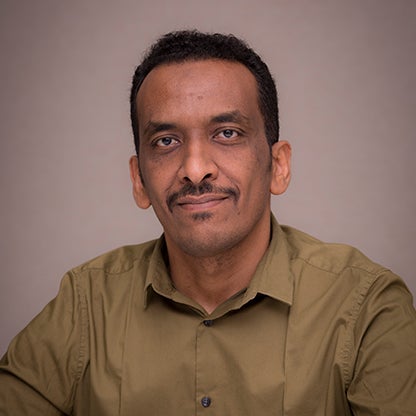
Dr. Amir Abdallah
Scientist
Dr. Amir Abdallah
Scientist
Educational Qualifications
PhD
MSc
Entity
Qatar Environment and Energy Research Institute
Biography
Dr. Amir Abdallah has academic and industrial experience in the development of solar cell efficiency and PV module technology. This includes fabrication of silicon solar cells, e.g., various process optimization and characterization to improve solar cell efficiency and PV module fabrication. At QEERI, Dr. Abdallah has contributed to the establishment and accreditation of the PV reliability lab. Further, as Lead Principle Investigator (LPI), he has secured two external funds with international collaborators - first project is to improve passivated contacts for PERC solar cell, and the second project is on technology development for PV module for desert climate.
PhD
Eindhoven University of Technology (Eindhoven, Netherlands)
2007
MSc
Delft University of Technology (Delft, Netherlands)
2002
- Improvement of solar cell and module efficiency
- PV module performance and reliability
- Standard testing of PV module
- Mechanical integrity of multi-material structures
Scientist
Qatar Environment and Energy Research Institute (QEERI), Doha, Qatar
2014 - present
Design Engineer
ASML, Eindhoven, Netherlands
2014
Process Engineer
Sulzer Turbo Services, Lomm, Netherlands
2011 - 2013
Research Engineer III
King Fahd University of Petroleum and Minerals, Dhahran, Saudi Arabia
2008 - 2011
Process Development Engineer
OTB Solar, Eindhoven, Netherlands
2007 - 2008
“Doped Nickel Oxide Carrier-Selective Contact for Silicon Solar Cells” IEEE JOURNAL OF PHOTOVOLTAICS (2021); doi: 10.1109/JPHOTOV.2021.3095458
“Optimized Ni1−xAlxO hole transport layer for silicon solar cells” RSC Advances 38 (2020) 22377-22386; doi.10.1039/d0ra02982c
“Record Efficiency N-type and High-efficiency P-type Mono-like Silicon Heterojunction Solar Cells with High Temperature Gettering Process” ACS Appl. Energy Mater. (2019) 4900-4906; doi.org/10.1021/acsaem.9b00608
“Annealing of silicon heterojunction solar cells: Interplay of solar cell and Indium-Tin-Oxide properties” IEEE Journal of Photovoltaics, Volume: 9, Issue: 5 (2019) 1202 - 1207; doi.10.1109/JPHOTOV.2019.2924389
Atomic layer deposited ZnxNi1-xO: A thermally stable hole selective contact for silicon solar cells, Appl. Phys. Lett. 113, 262102 (2018), doi.org/10.1063/1.5056223
Delamination of CIGS thin film photovoltaic module in desert climate. 35th European Photovoltaic Solar Energy Conference and Exhibition (2018), doi: 10.4229/35thEUPVSEC20182018-5BO.12.6
Performance of Silicon Heterojunction Photovoltaic modules in Qatar climatic conditions, Renewable Energy 97 (2016) 860-865, doi.org/10.1016/j.renene.2016.06.044
Structural origins of intrinsic stress in amorphous silicon thin films, PHYSICAL REVIEW B 85, (2012) 075202, doi: 10.1103/PhysRevB.85.075202
Buckle initiation of patterned ITO structures on a polymer substrate, Engineering Fracture Mechanics 78 (2011) 877–889, doi.org/10.1016/j.engfracmech.2011.01.013
Buckle initiation and delamination of patterned ITO layers on a polymer substrate, Surface & Coatings Technology 205 (2011) 3103–3111, doi.org/10.1016/j.surfcoat.2010.11.025
The impact of silicon solar cell architecture and cell interconnection on energy yield in hot & sunny climates, Energy Environ. Sci. (2017)
Performance of Silicon Heterojunction Photovoltaic modules in Qatar climatic conditions, Renewable Energy 97 (2016) 860-865
Structural and physical properties of the dust particles in Qatar and their influence on the PV panel performance, Nature Scientific Reports (2016).
Emerging frontiers of N-Type silicon material for photovoltaic applications: The impurity-defect interactions. Front Nanosci Nanotech, Volume 1 (2015) 2-12.
Performance improvement techniques for photovoltaic systems in Qatar: Results of first year of outdoor exposure, Energy Procedia 77 (2015) 386 – 396.
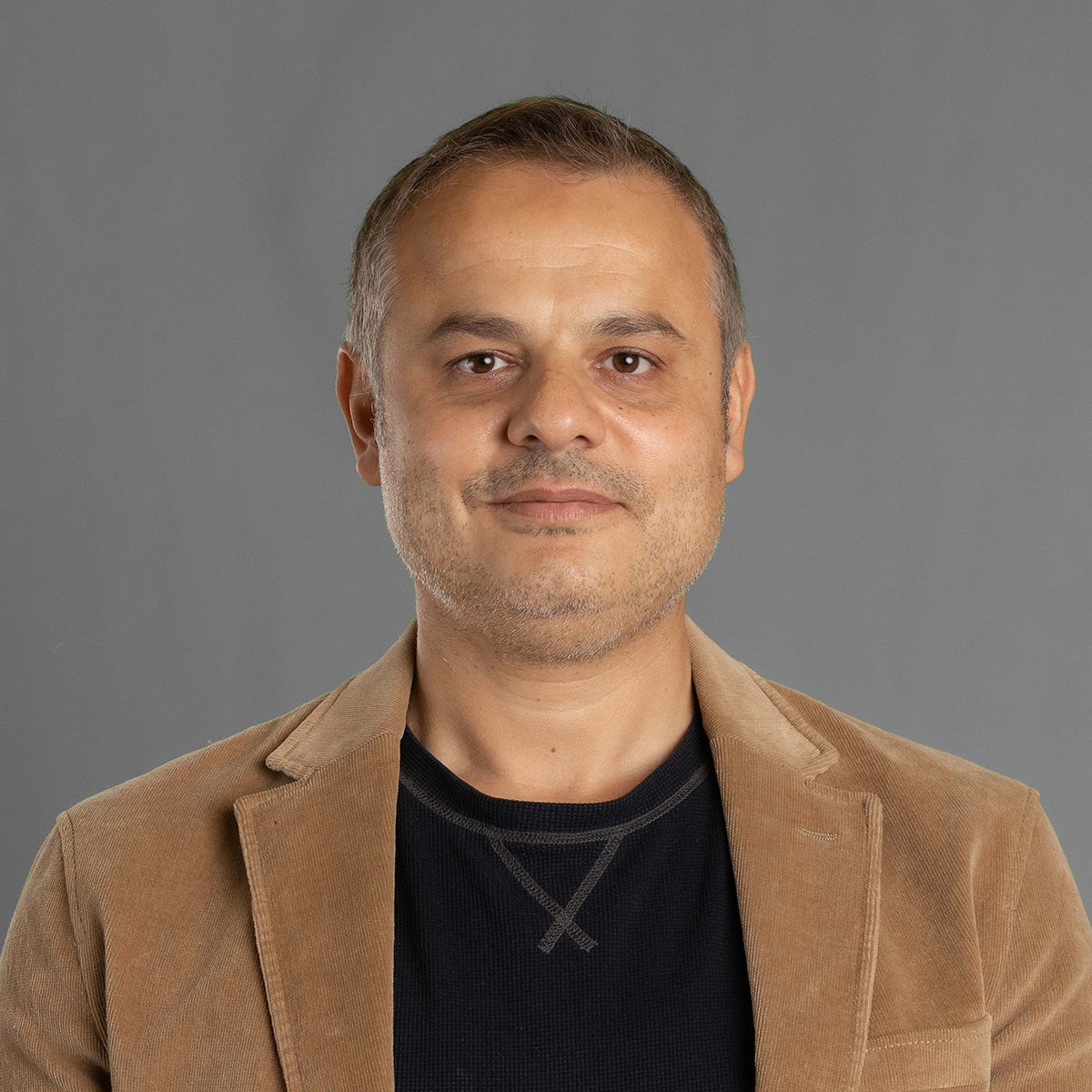
Ayman Samara
Senior Scientist
Educational Qualifications
PhD in Optical Science and Engineering
MSc in Applied Optics
Entity
Qatar Environment and Energy Research Institute
Biography
Dr. Ayman Samara joined Qatar Environment and Energy Research Institute (QEERI) Core Labs in 2015 as a Senior Scientist to help establish the optical microscopy lab, profilometry lab, thermal analysis lab, and thin film characterization. Dr. Samara is currently leading all analysis activities and manages the operations of these labs, supporting research at HBKU, local and global companies and educational institutes in Qatar. He obtained his MSc and PhD degrees in Optical Engineering and Science from the Center for Optoelectronics and Optical Communications at the University of North Carolina – Charlotte, and his BSc in Electrical Engineering from the University of Jordan. Dr. Samara started his career in the semiconductor industry in 2005 at Intel Corporation’s D1D Fab in Portland, OR, USA, as a Senior Process Development Engineer leading the development of metrology and defect detection capabilities for the Lithography process supporting manufacturing of the 65-32nm technology nodes. In 2009, Dr. Samara served as the Manager of the Dimensional Metrology and Defect Analysis facility in the assembly materials characterization division of Intel Corporation. Prior to Joining HBKU, Dr. Samara served as an Assistant Professor of Electrical Engineering at the American University of the Middle East in Kuwait, where he established the Optics Engineering lab and taught multiple EE courses.
PhD in Optical Science and Engineering
University of North Carolina - Charlotte; North Carolina, USA
2005
MSc in Applied Optics
University of North Carolina - Charlotte; North Carolina, USA
2002
BSc in Electrical Engineering
University of Jordan; Amman, Jordan
1999
- Material Characterization
- Metrology and Profilometry
- Optical Microscopy and Interferometry
- Thermal Analysis
- Thin Film Characterization
Assistant Professor of Electrical Engineering
College of Engineering, American University of the Middle East - Kuwait
2014 - 2015
Metrology Development and Operations Manager
Assembly Material Characterization Lab; Intel Corporation - Phoenix, AZ, USA
2009 - 2014
Senior Lithography Process Development Engineer
D1D Fab; Intel Corporation - Portland, OR, USA
2005 - 2009
A new approach for an ultra-thin piezoresistive sensor based on solidified carbon ink film; Journal of Materials Science
Controlling the biocorrosion of sulfate-reducing bacteria (SRB) on carbon steel using ZnO/chitosan nanocomposite as an eco-friendly biocide; Corrosion Science
Improved self-cleaning properties of an efficient and easy to scale up TiO2 thin films prepared by adsorptive self-assembly; Scientific reports
Aerial wetting contact angle measurement using confocal microscopy; Measurement Science and Technology
Three-dimensional inline inspection for substrate warpage and ball grid array coplanarity using stereo vision; Applied optics
Dynamic range enhancing technique for form, waviness and roughness measurements using fringe projection; Recent Developments in Traceable Dimensional Measurements
Traceable Radius Measurements of Micro-lensesTraceable Radius Measurements of Micro-lenses; Optical Fabrication and Testing
- 2007; Manufacturing Sustainability Excellence Award; Intel Corporation; Portland, OR, USA
- 2013; 6 Sigma Green Belt; Intel Corporation; Phoenix, AZ, USA