Abubaker Abdelmagid
Lab Technician
Educational Qualifications
Electrical engineering B.Sc.
Instrumentation and Process Automation Engineering Technology
Entity
Qatar Environment and Energy Research Institute
Biography
Abubaker Abdelmagid received his diploma in Instrumentation and Process Automation Engineering Technology from the College of the North Atlantic-Qatar (CNA-Q) in 2015. He has participated and contributed to a number of research projects related to corrosion and material science as part of CNA-Q’s students’ and alumni recruitment program. He joined Qatar Environment and Energy Research Institute (QEERI) in early 2020 as a lab technician. His main role at the corrosion center is conducting electrochemical corrosion tests and corrosion inhibitor evaluation.
Electrical engineering B.Sc.
Qatar University Qatar
Ongoing
Instrumentation and Process Automation Engineering Technology
College of the North Atlantic Qatar (CNAQ); Qatar
2014
- Electrochemical Corrosion Testing
- Root Cause Failure Analysis
Lab Technician
Corrosion Center; Qatar Environment and Energy Research Institute
2020 - Present
Instrumentation and Electrical Technologist
CNAQ students’ and Alumni recruitment program; College of the North Atlantic Qatar
2013 - 2019
- 2014; First place winner in Skills Competition - Electrical Engineer; College of the North Atlantic Qatar; Qatar
- 2013; First place winner in Skills Competition - Process Automation; College of the North Atlantic Qatar; Qatar
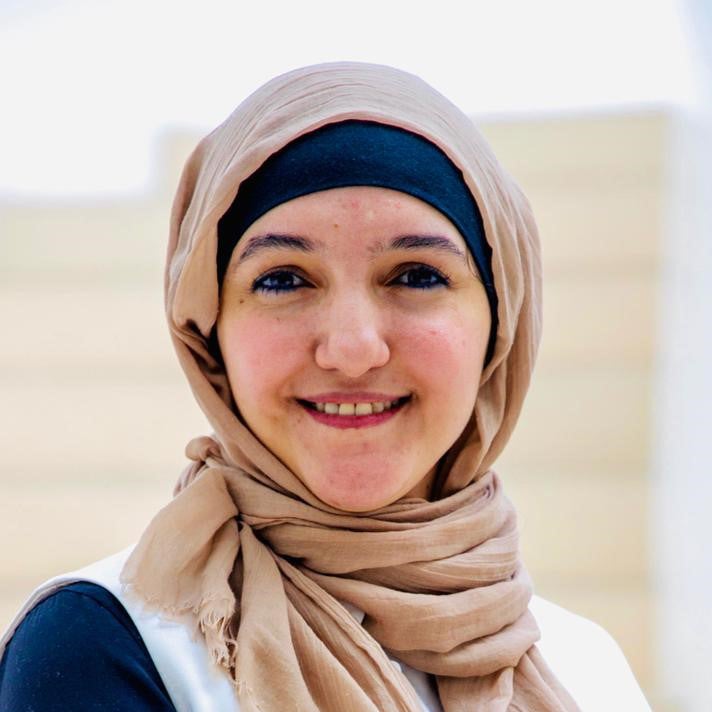
Ayah Deif
Project Manager
Educational Qualifications
BSc in Commerce
Entity
College of Public Policy
College of Public Policy
Biography
Ayah Deif is a Project Manager at the College of Public Policy at Hamad Bin Khalifa University. She has over 18 years of extensive experience across various domains, including operations, marketing, financial and general administration, HR, and project management. She has had a dynamic career, transitioning from operations management and PMO consultancy to recruitment operations, and excelling in communications and event management.
BSc in Commerce
Cairo University, Egypt
2006
Project Manager
College of Public Policy, Hamad Bin Khalifa University
2020 - Present
Senior Consultant
Project Management Office (PMO), Job Master, Egypt
2019
Recruitment Operations Specialist
HR, Sidra Medicine, Qatar Foundation
2017 - 2018
Training and Operations Manager
Training and Development, Educare Training & Consulting
2013 - 2017
Operations – Training Specialist
Training and Development, LOGIC Management Consulting, Egypt
2006 - 2012
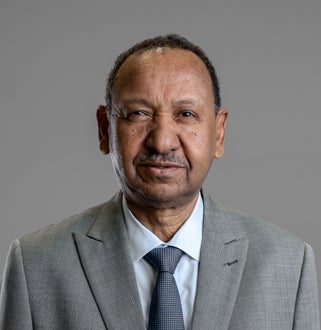
Dr. Mustafa Osman Ismail Elamin
Program Director and Professor of Islam and Global Affairs
Dr. Mustafa Osman Ismail Elamin
Program Director and Professor of Islam and Global Affairs
Educational Qualifications
PhD in International Relations
Diploma in Teaching Methods
Entity
College of Islamic Studies
Program
Master of Arts in Islam and Global Affairs
Division
Islam and Global Affairs
Biography
Dr. Mustafa Osman Ismail Elamin specializes in biochemistry and international relations. His work experience includes being a lecturer in multiple universities, and he has also worked as the Foreign Minister of Sudan and the Ambassador of Sudan to the United Nations (UN) and to Switzerland. He was a special envoy of the Arab League to Iraq, Lebanon, and Palestine. He is now a Senior Advisor to the Director-General of the UN-DNCD partnership, a member of the Arab Crisis Team (ACT) in Jordan and Oman, and a member of the executive board of the Global Forum for Moderation.
Dr. Elamin has participated in and chaired many national, regional, and international conferences; and has published 15 books, mainly in global affairs.
PhD in International Relations
Omdurman Islamic University, Sudan
2010
Diploma in Teaching Methods
University of Khartoum, Sudan
1990
PhD in Immunological Biochemistry
University of Bristol, UK
1988
Master’s Degree in Periodontology
University of Bristol, UK
1985
Bachelor’s Degree in Biochemistry
University of Khartoum, Sudan
1981
Bachelor’s Degree in Dentistry
University of Khartoum, Sudan
1978
- Artificial Intelligence and its role in modern life from an Islamic perspective
- Arab-Israeli conflict
- Qatar’s response to the blockade (lessons and values)
- Strategic leadership theory, practice, and visionary leaders
- The impact of Islamophobia on Muslim minorities
Program Director of MA in Islam and Global Affairs
College of Islamic Studies, Hamad Bin Khalifa Univeristy
2021 – Present
Professor of Islam and Global Affairs
College of Islamic Studies, Hamad Bin Khalifa Univeristy
2020 – Present
Associate Fellow
United Nations Institute for Training and Research (UNITAR)
2020 – Present
Ambassador of Sudan to the United Nations
Republic of the Sudan
2016 – 2019
Ambassador of Sudan to Switzerland
Republic of the Sudan
2016 – 2019
Lecturer of Political Science
International University of Africa, Sudan
2014 – 2016
Minister
Ministry of Investment, Sudan
2012 – 2014
Lecturer of International Relations
Omdurman Islamic University, Sudan
2011 – 2014
Minister
Ministry of Foreign Affairs, Sudan
1998 – 2005
Minister of State
Ministry of Foreign Affairs, Sudan
1996 – 1998
Secretary General
Council for International People’s Friendship, Sudan
1991 – 1995
Lecturer
University of Bristol, UK
1986 – 1988
Lecturer
Faculty of Medicine, University of Khartoum, Sudan
1988 – 1991
Teaching Assistant
University of Khartoum, Sudan
1980 – 1988
General Medical Practitioner
Ministry of Health, Republic of the Sudan
1978 – 1980
Elamin, M.O.I. (2024). African Union strategy for peace and conflict resolution. Generis Publishing.
Complete Publication Listing(s): ORCID
- Outstanding Researcher Award for Foreign Students, UK Universities Award (ORS) (1985)
- Medal of The First of September Revolution Libya 1999
- Medal of Achievement from Presidency of the Republic of the Sudan (2005)
- Alnielin Medal-First Class from the presidency of the Republic of Sudan. Oct 2018
Tricia Anne Alcantara Gomez
Lab Technician
Tricia Anne Alcantara Gomez
Lab Technician
Educational Qualifications
Diploma in Environmental Health
Entity
Qatar Environment and Energy Research Institute
Biography
Tricia Anne Alcantara Gomez holds a diploma from College of the North Atlantic, Qatar (CAN-Q), where she majored in Environmental Health. Tricia previously worked with Dr. Khaled Mahmoud in the Qatar Environment and Energy Research Institute’s (QEERI) Water Center lab through a service contract with CNA-Q, and she has now joined QEERI as a lab technician to support the Water Quality Program in the Environment and Sustainability Center.
Diploma in Environmental Health
College of the North Atlantic-Qatar; Doha, Qatar
2017
- Water Chemistry
- Microbiology
- Nanomaterials
- MXenes
Laboratory Technician
Environment and Sustainability Center; Qatar Environment and Energy Research Institute
2018 - Present
Intern
Water Center; Qatar Environment and Energy Research Institute
2017 - 2018
Undergraduate Researcher
College of the North Atlantic-Qatar; Qatar Environment and Energy Research Institute
2017
Joel A. Malek, Laith J. Abu Raddad, Andrew Jeremijenko, Hussein A. Abu Halaweh, Jenny Lawler, Khaled A. Mahmoud; COVID-19 (SARS-CoV-2) outbreak monitoring using wastewater-based epidemiology in Qatar; Science of The Total Environment; https://doi.org/10.1016/j.scitotenv.2021.145608
One-step synthesis of an antimicrobial framework based on covalently cross-linked chitosan/lignosulfonate (CS@LS) nanospheres; Green Chemistry; https://doi.org/10.1039/C9GC03461G
A fouling-resistant mixed-matrix nanofiltration membrane based on covalently cross-linked Ti3C2TX (MXene)/cellulose acetate; Journal of Membrane Science; https://doi.org/10.1016/j.memsci.2020.118139
Large interlayer spacing Nb4C3Tx (MXene) promotes the ultrasensitive electrochemical detection of Pb2+ on glassy carbon electrodes; Royal Society of Chemistry; DOI: 10.1039/D0RA04377J
Nb-based MXenes for efficient electrochemical sensing of small biomolecules in the anodic potential; Electrochemistry Communications; https://doi.org/10.1016/j.elecom.2020.106811
Effect of Sheet Size and Atomic Structure on the Antibacterial Activity of Nb-MXene Nanosheets; ACS Publications; https://doi.org/10.1021/acsanm.0c02463
Large interlayer spacing Nb₄C₃Tₓ (MXene) promotes the ultrasensitive electrochemical detection of Pb²⁺ on glassy carbon electrodes; RSC Advances; DOI:10.1039/d0ra04377j
- 2015; School of Health Sciences Highest Achiever; College of the North Atlantic-Qatar; Doha, Qatar
- 2016; School of Health Sciences Merit Award; College of the North Atlantic-Qatar; Doha, Qatar
- 2017; President’s Medal Award for Academic Excellence; College of the North Atlantic-Qatar; Doha, Qatar
- 2015-2017; Member of Honor Society; College of the North Atlantic-Qatar; Doha, Qatar

Mohammad Tariq
Lab Technician
Mohammad Tariq
Lab Technician
Educational Qualifications
Mechanical Engineering Technology
Entity
Qatar Environment and Energy Research Institute
Biography
Mohammad Tariq received his diploma in Mechanical Engineering Technology from the College of the North Atlantic, Qatar (CNA-Q).
He joined Qatar Environment and Energy Research Institute (QEERI) as a laboratory technician and has been involved primarily in providing lab support for research and development projects and root cause failure analysis. His secondary responsibilities include equipment procurement, maintenance/calibration, managing laboratory workflow, and IMS and LAP accreditation of the Corrosion Center.
Mechanical Engineering Technology
College of the North Atlantic; Doha/Qatar
- Materials and Corrosion
Lab Technician
Qatar Environment & Energy Research Institute; Qatar Foundation
2020 - Present
Failure Analysis Technician / Corrosion and Materials
Research Department; College of the North Atlantic - Qatar
2016 - 2019
- President's Medal for Academic Excellence; ORYX GTL; Doha/Qatar
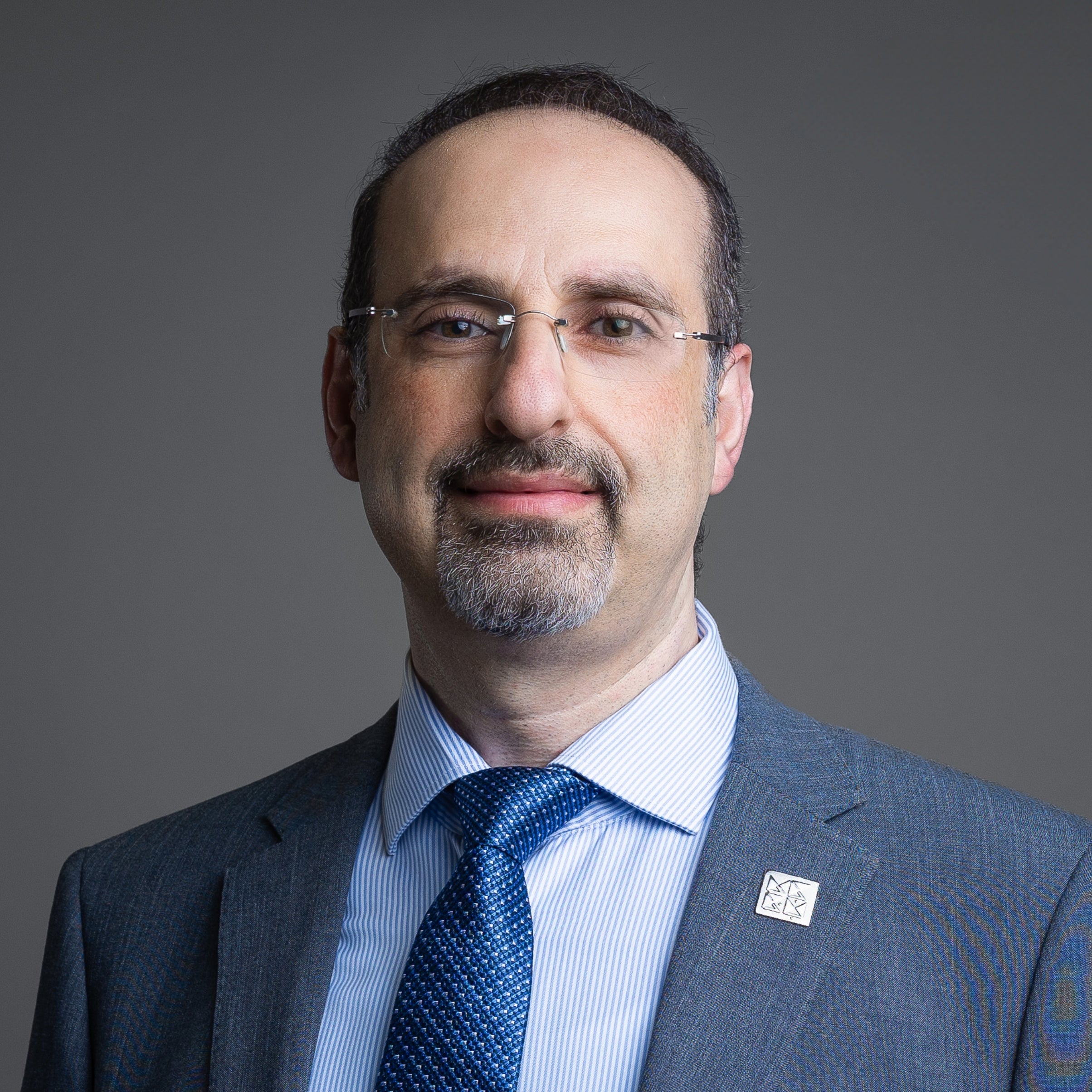
Dr. Raian Ali
Professor and UNESCO Chair
Dr. Raian Ali
Professor and UNESCO Chair
Educational Qualifications
PhD in Computer Science
BSc in Informatics Engineering
Entity
College of Science and Engineering
Division
Information & Computing Technology
Biography
Raian Ali has been a Professor at Hamad Bin Khalifa University (HBKU) and a UNESCO chair in digital technologies and human behaviour (June 2025–June 2029). He obtained his PhD from the University of Trento, Italy, in 2010, and has previously worked at the University of Limerick in Ireland and Bournemouth University in the UK. His undergraduate degree is from the University of Latakia (formerly Tishreen University), Syria.
His research primarily focuses on technology and human behaviour, encompassing topics such as digital addiction, responsible technology use, and the impact of technology design on human well-being. He is a member of the steering committee for the Society of Persuasive Systems, and of the steering committee of the Behaviour and Social Computing community.
He has led projects with academic and industry partners, resulting in significant impact, outreach, policy change, and scientific publications. Notably, he leads the $3.8 million cluster on digital citizenship in Qatar (2022–2027), supervising six projects, collaborating with over 15 national and international partners, and managing a team of 50 personnel. Raian also provides consultancy both nationally and internationally.
PhD in Computer Science
University of Trento, Italy
2010
BSc in Informatics Engineering
University of Latakia, Syria
2003
- Technology and human behaviour
- Designing for digital wellbeing
- Digital addiction
- Human factors in AI
Professor
College of Science and Engineering, Hamad Bin Khalifa University
2020 - Present
Lecturer to Professor
Faculty of Science and Technology, Bournemouth University, UK
2012 - 2020
Post-Doctoral Researcher
LERO – The Irish Software Engineering Research Centre, University of Limerick, Ireland
2011 - 2012
Post-Doctoral Researcher
Department of information engineering and computer science, University of Trento, Italy
2010 - 2011
Assistant Lecturer / Lecturer
College of Informatics Engineering, University of Latakia, Syria
2003 - 2005
Complete Publication Listing(s): Google Scholar | Scopus
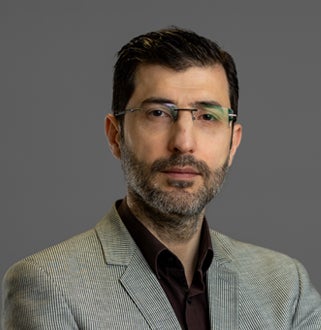
Dr. Samer Rashwani
Senior Researcher and Lecturer in Scriptural Ethics
Dr. Samer Rashwani
Senior Researcher and Lecturer in Scriptural Ethics
Educational Qualifications
PhD in Qurʾānic studies
MA in Qurʾānic studies
Entity
College of Islamic Studies
Division
Research Center for Islamic Legislation and Ethics (CILE)
Applied Islamic Ethics
Biography
Dr. Samer Rashwani is a senior researcher at the Research Center for Islamic Legislation and Ethics (CILE) at the College of Islamic Studies (CIS). He pursued his BA in Islamic Studies from the Faculty of Sharia at Damascus University in 1998. In 2003, he earned his MA in Qurʾanic Studies from Cairo University, followed by a PhD from the same university in 2007.
Between 2007 and 2011, Dr. Rashwani was a faculty member at the Faculty of Sharīʿa at Damascus and Aleppo Universities. From 2011 to 2013, he was a postdoctoral research fellow at the Berlin-based Forum Transregionale Studien. Since 2013, he has served as a research fellow and lecturer at the Center for Islamic Theology at the University of Tübingen, Germany.
During his academic career, Rashwani developed a wide range of research interests and academic publications within the field of Islamic studies, including tafsīr, hermeneutics, Islamic theology, and Islamic ethics. In addition to his book Manhadj al-Tafsīr al-Mawḍūʿī [The Methodology of Thematic Interpretation of the Qurʾān: a Critical Approach] (Aleppo 2009), he has edited several volumes on Qurʾanic studies and modern Muslim thought.
PhD in Qurʾānic studies
Cairo University, Egypt
2007
MA in Qurʾānic studies
Cairo University, Egypt
2003
Dip in Islamic Jurisprudence
Damascus University, Syria
1998
BA Islamic Theology
Damascus University, Syria
1997
- Quranic studies
- Islamic ethics
- Islamic intellectual history
- Modern Islamic thought
- Comparative religious studies
Senior Researcher
College of Islamic Studies, Hamad Bin Khalifa University
2022 – Present
Guest Lecturer
Freie Universitat Berlin, Germany
2020 – 2021
Visiting Professor
College of Islamic Studies, Hamad Bin Khalifa University
2019 – 2020
Postdoctoral Research Fellow
Center for Islamic Theology, University of Tübingen, Germany
2013 – 2019
Postdoctoral Research Fellow
Berlin-based Forum Transregionale Studien, Germany
2011 – 2013
Lecturer
Faculty of Sharīʿa, Aleppo University, Syria
2009 – 2011
Lecturer
Faculty of Sharīʿa, Damascus University, Syria
2007 – 2009
Teaching staff
Faculty of Sharīʿa, Damascus University, Syria
1998 – 2006
Rashwani, S. (Ed.). (2024). Behind the story: Ethical readings of Qurʾānic narratives. Brill.
Rashwani, S. (2012). Mina al-Ak̲h̲lāq ila al-Thawra: Murādjaʿa Naqdiyya [From ethics to revolution: Critical review]. In S. Arslān (Ed.), Limādhā taʼakhkhara al-Muslimūn, wa limādhā taqaddama ghayruhum? (pp. xx-xx). Dār al-Kitāb al-Miṣrī & Dār al-Kitāb al-Lubnānī.
Rashwani, S. (Ed.). (2011). Al-Manāhidj al-Ḥaditha fi al-Dars al-Qurʾānī [The modern approaches to the Qurʾān]. Dār Madārik.
Rashwani, S. (2009). Manhadj al-Tafsīr al-Mawḍūʿī [The methodology of thematic interpretation of the Qurʾān: A critical approach]. Dār al-Multaḳā.
Rashwani, S. (Ed.). (2004). K̲h̲iṭāb al-Tadjdīd al-Islāmī: al-ʾZminah wa al-Asʼilah [The reformation discourse: The times and questions]. Dār al-Fikr.
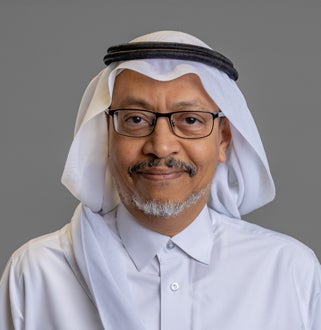
Dr. Abdulfatah Said Mohamed
Assistant Professor of Islam and Global Affairs
Dr. Abdulfatah Said Mohamed
Assistant Professor of Islam and Global Affairs
Educational Qualifications
PhD in Middle East Politics and International Studies
MA in Management Sciences
Entity
College of Islamic Studies
Division
Islam and Global Affairs
Biography
Dr. Abdulfatah Mohamed is an assistant professor of Islam and Global Affairs at the College of Islamic Studies (CIS) in Hamad Bin Khalifa University (HBKU), and a former senior research fellow at the Center for Conflict and Humanitarian Studies, Doha Institute for Graduate Studies. He was also a senior advisor for the Minister of State for Foreign Affairs in Qatar and a consultant for the World Humanitarian Summit at the UN Office for Humanitarian Affairs. He is a visiting professor at the Graduate Institute in Geneva. He combines both corporate sector and non-profit NGO experience, having worked for numerous corporations, including Saudi Basic Industries (SABIC), Dallah Al Baraka Group in Islamic Finance, and Savola Edible Oils in Saudi Arabia and the Middle East. He has worked as Director General for Al-Muntada Trust in London, supervising all operations in London and Africa.
Dr. Mohamed has also acted as a consultant for several government institutions in Qatar, including advisor for the Minister of Labour in Qatar, advisor for the International Cooperation Strategy of Qatar 2024–2030, and a consultant for the Islamic Development Bank, Organization of Islamic Cooperation (OIC), among many other NGOs and philanthropic institutions. He has organized and participated in several international and regional conferences.
PhD in Middle East Politics and International Studies
University of Exeter, UK
2018
MA in Management Sciences
Sheffield Hallam University, UK
1999
BS in Industrial Engineering and Applied Mathematics
King Fahd University of Petroleum and Minerals, Saudi Arabia
1992
- Muslim societies in a globalized world
- Peace mediation, conflict transformation, and humanitarian action
- Global inequalities and Sustainable Development Goals
- Islamic charities, NGOs, and Islamic social finance
- Artificial Intelligence and ethics
Assistant Professor of Islam and Global Affairs
College of Islamic Studies, Hamad Bin Khalifa University
2023 – Present
Adjunct Professor
College of Islamic Studies, Hamad Bin Khalifa University
2021 – 2023
Adjunct Professor
College of Public Policy and Economic Development, Doha Institute for Graduate Studies
2020 – 2021
Adjunct Professor
College of Public Policy, Hamad Bin Khalifa University
2019 – 2020
Adjunct Professor
College of Islamic Studies, Hamad Bin Khalifa University
2018 – 2019
- Community Services Leadership Award, Al Munata Al Islami Trust, London (2010)
- Letters of Appreciation, Ministry of Foreign Affairs and the Office of Coordination of Humanitarian Affairs, Qatar
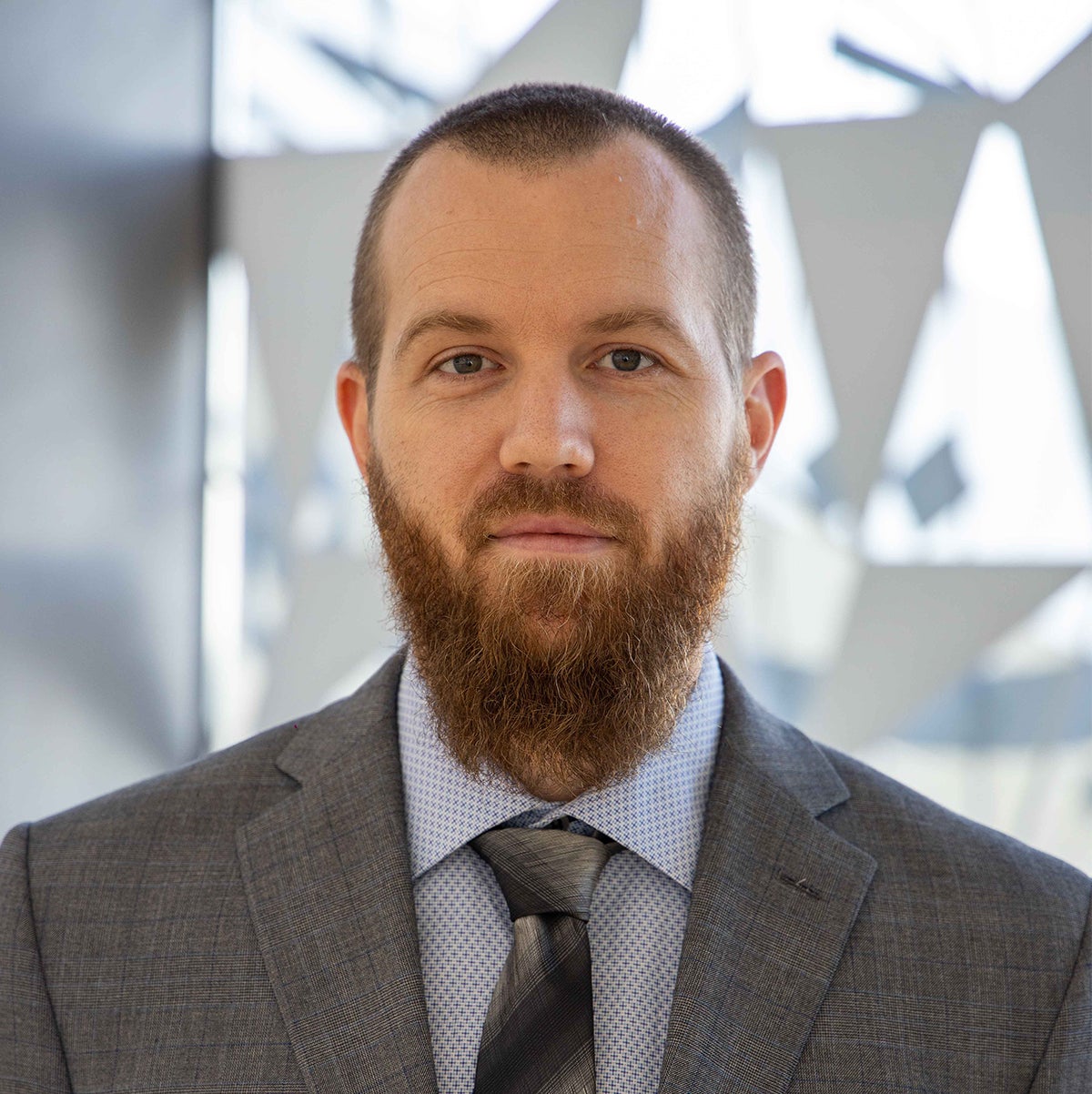
Dr. Logan Cochrane
Acting Dean of the College of Public Policy and Professor
Professor in Public Policy
Dr. Logan Cochrane
Acting Dean of the College of Public Policy and Professor
Professor in Public Policy
Educational Qualifications
PhD
MA
Entity
College of Public Policy
School of Economics and Management
Biography
Logan is a Professor in the College of Public Policy at HBKU. His research includes diverse geographic and disciplinary foci, covering broad thematic areas of food security, climate change, social justice and governance. For the last 15 years, he has worked in non-governmental organizations internationally, including in Afghanistan, Benin, Burundi, the Democratic Republic of the Congo, Egypt, Ethiopia, Qatar, Saudi Arabia, South Africa, South Sudan, Tanzania and Uganda. Logan has served as a director for two non-governmental organizations, and worked as a consultant with clients such as Global Affairs Canada, International Development Research Centre, Save the Children, Management Sciences for Health, the Liaison Office, UNICEF and UNAIDS.
PhD
University of British Columbia, Canada
MA
Staffordshire University, UK
BA
University of Victoria, Canada
- Public Policy
- Food Security
- Rural Development
- Climate Change
- Social Justice
- Governance
- Ethics
Assistant Professor
Carleton University, Canada
Associate Professor
Hawassa University, Ethiopia
Fellow, CLEAR
University of the Witwatersrand, South Africa
What We Know, How We Know It, and Future Options. Tsehai: Los Angeles and Addis Ababa.
The Transnational Land Rush in Africa: A Decade After the Spike. Palgrave: New York.
Ethiopia: Social and Political Issues. Nova: New York.
Lessons Learned for Engagement in Fragile and Conflict-Affected States. Journal of Humanitarian Affairs 2: 21-34.
Using Farmer-Based Metrics to Analyze the Amount, Seasonality, Variability and Spatial Patterns of Rainfall Amidst Climate Change in Southern Ethiopia. Journal of Arid Environments.
What We Know and What We Are Missing. Land 9(5): 167 (1-13).
Assessing the Landscape of Participatory Mapping Research Using Google Scholar and Web of Science. International Journal of E-Planning Research 9(4): 23-39.
Client Households' Perceived Enablers and Constrainers of the Productive Safety Net Program. Societies 10(3): 69 (1-14).
What the Development and Expansion of Canadian INGOs Tells Us. Social Sciences 9: 140 (1-14).
The Impact of Small- and Medium-Scale Irrigation. Journal of Rural Social Sciences 35: 1-22.
- Banting Fellow, Carleton University, Canada
- Vanier Scholar, University of British Columbia, Canada
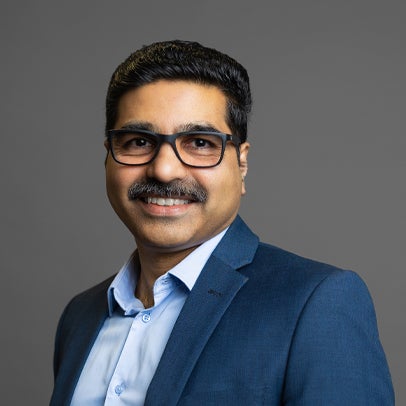
Dr. Puthen Veettil Jithesh
Associate Dean for Education/Student Affairs
Phone
50 632 102Office location
B-137, First Floor, LAS (Penrose) Building
Dr. Puthen Veettil Jithesh
Associate Dean for Education/Student Affairs
Educational Qualifications
Doctor of Philosophy (PhD), Bioinformatics
Advanced Diploma in Bioinformatics
Entity
College of Health and Life Sciences
Biography
Dr. Puthen Veettil Jithesh holds a Master’s degree in Microbiology, an Advanced Diploma in Bioinformatics, and received his PhD in Bioinformatics from Queen’s University Belfast, UK. He has over 20 years of research and development experience in Bioinformatics and Computational Biology at several prestigious institutes in India, Qatar, and Russell Group research universities in the UK.
Before moving to Qatar, he was the Head of Bioinformatics for the Oxford Translational Molecular Diagnostic Centre at the University of Oxford and held honorary appointments with the Wellcome Centre for Human Genetics and the Oxford University Hospitals NHS Trust.
Doctor of Philosophy (PhD), Bioinformatics
Queen’s University Belfast; Northern Ireland, United Kingdom
2010
Advanced Diploma in Bioinformatics
University of Pune (Now Savitribai Phule Pune University); Maharashtra, India
1999
Master of Science (MSc)
Microbiology; Mahatma Gandhi University; Kerala, India
1994
Bachelor of Science (BSc)
Botany; University of Calicut; Kerala, India
1992
- Bioinformatics and computational biology tool development and applications in translational research
- Pharmacogenomics for the prediction of response and toxicity to drugs
- Identification of causal variants in rare genetic diseases
- Machine learning and data science toward the implementation of precision medicine
Associate Professor
College of Health and Life Sciences; Hamad Bin Khalifa University, Doha, Qatar
2020 - Present
Associate Professor (Adjunct)
College of Health and Life Sciences; Hamad Bin Khalifa University, Doha, Qatar
2018 - 2020
Principal Investigator
Translational Bioinformatics; Sidra Medicine, Doha, Qatar
2015 – 2019
Head of Bioinformatics
Translational Molecular Diagnostic Centre; University of Oxford, United Kingdom
2014 – 2015
Senior Bioinformatician (Bioinformatics Lead)
Institute of Translational Medicine; University of Liverpool, United Kingdom
2010 – 2014
Co-Founder & Director
HealthIntec Limited, Belfast, United Kingdom
2008 – 2012
Senior Research Fellow (Bioinformatics)
Centre for Cancer Research & Cell Biology; Queen’s University, Belfast, United Kingdom
2006 – 2010
Bioinformatician; Belfast e-Science Centre
Queen’s University, Belfast, United Kingdom
2003 – 2005
Member Technical Staff (MTS) Bioinformatics
Centre for Development of Advanced Computing (C-DAC), Pune, India
1999 – 2003
Senior Project Assistant (Bioinformatics)
Bioinformatics Centre; Indian Institute of Technology (IIT), Kharagpur, India
1999 - 1999
Lecturer in Microbiology
School of Medical Education; Mahatma Gandhi University, Kerala, India
1996 - 1998
Clinical Characteristics and Genomics of Permanent Neonatal Diabetes in The State of Qatar; Molecular Genetics & Genomic Medicine; 2019 (https://doi.org/10.1002/mgg3.753)
Integrated Omics Profiling Reveals Novel Patterns of Epigenetic Programming in Cancer-Associated Myofibroblasts; Carcinogenesis 2019, 40(4):500–512 (doi:10.1093/carcin/bgz001)
Allen WL, Dunne PD, McDade S, Scanlon E, Loughrey M, Coleman H, McCann C, McLaughlin K, Nemeth Z, Syed N, Jithesh PV, Arthur K, Wilson R, Coyle V, McArt D, Murray G, Samuel L, Nuciforo P, Jimenez J, Argiles G, Dienstmann R, Tabernero J, Messerini L, Nobili S, Mini E, Sheahan K, Ryan E, Johnston PG, Van Schaeybroeck S, Lawler M, Longley DB
From Genomes to Genomic Medicine - Enabling Personalised and Precision Medicine in the Middle East; Personalized Medicine; 1 Sep 2017 (doi:10.2217/pme-2017-0048)
Accelerating next generation sequencing data analysis with system level optimizations; Scientific Reports 2017, 7:9058 (doi:10.1038/s41598-017-09089-1)
Depletion of human DNA in clinical specimens for detection of pathogens by shotgun metagenomic sequencing; Journal of Clinical Microbiology 2016, 54(4):919-27
Temple-Baraitser Syndrome and Zimmermann-Laband Syndrome: one clinical entity?;BMC Medical Genetics; 2016, 17(1):42
ADAM17-Dependent c-MET-STAT3 Signaling Mediates Resistance to MEK Inhibitors in KRAS Mutant Colorectal Cancer; Cell Reports; 2014, 7(6):1940-55
The Epigenetic Landscape of Oral Squamous Cell Carcinoma; British Journal of Cancer; 2013, 108:370-379
GeneGrid: architecture, implementation and application; Journal of Grid Computing; 2006, 4:209-222
Three copies of four interferon receptor genes underlie mucocutaneous candidiasis and auto-immune thyroiditis in patients with Down Syndrome. Journal of Clinical Immunology (https://doi.org/10.1007/s10875-020-00803-9)
Genome sequencing unveils mutational landscape of the familial Mediterranean fever: Potential implications of IL33/ST2 signalling. Journal of Cellular and Molecular Medicine (https://doi.org/10.1111/jcmm.15701)
- 2014-2015; Member of Congregation; University of Oxford, UK
- 2010; Best Poster Award; Irish Association for Cancer Research (IACR); Galway, Republic of Ireland
- 2006-2010; PhD Scholarship; Queen's University Belfast; Belfast, UK
- 2001; Best Poster Award; Symposium on Perspectives in Genome Analysis; Hyderabad, India
- 1998-1999; Merit scholarship for Advanced Diploma in Bioinformatics; Government of India; India