Dr. Dalal Aassouli
Assistant Professor of Islamic and Sustainable Finance
Assistant Professor in Islamic Finance
Dr. Dalal Aassouli
Assistant Professor of Islamic and Sustainable Finance
Assistant Professor in Islamic Finance
Educational Qualifications
Doctor of Philosophy (PhD)
Executive Masters in Islamic Finance
Entity
College of Islamic Studies
School of Economics and Management
Program
Master of Science in Islamic Finance
Division
Islamic Finance
Biography
Dr. Dalal Aassouli is a distinguished academic and development finance leader with extensive international experience across Europe, Southeast Asia, the Middle East, and North Africa. Renowned for pioneering innovative solutions in SME finance, humanitarian finance, sustainable food systems, Islamic and sustainable finance, and digital transformation, she specializes in leveraging emerging technologies such as blockchain and artificial intelligence to drive systemic financial innovation.
Throughout her career, Dr. Aassouli has advised global organizations, including multilateral agencies, governments, charities, and financial institutions, on designing and implementing advanced Islamic and sustainable finance strategies. Her work focuses on integrating market-based solutions, expanding financial inclusion, and utilizing digital financial services to efficiently empower vulnerable communities, refugees, and host populations. She is an authority in sustainable capital markets, digital sustainable finance, social and humanitarian finance, and AI-driven solutions critical to supporting robust humanitarian responses.
In addition to her advisory roles, Dr. Aassouli has led large-scale research initiatives on food security, SME finance, generative AI, and humanitarian and development finance, advancing capacity building and executive education for both public and private sectors. Her strategic vision, cross-sector leadership, and unwavering commitment to financial innovation have established her as a trusted advisor in forging more inclusive, resilient, and sustainable financial ecosystems worldwide.
Dr. Dalal Aassouli holds master’s degrees from NEOMA Business School and Paris Dauphine University, as well as a PhD from ENS de Lyon in France.
In addition, Dr. Aassouli is a respected invited speaker at international sustainable and Islamic finance conferences and events, regularly sharing insights and consultancy expertise with global audiences. Her involvement at conferences, workshops, and industry gatherings further highlights her role as a thought leader and recognized authority in the fields of sustainable and Islamic finance.
Doctor of Philosophy (PhD)
ENS de Lyon, France
2017
Executive Masters in Islamic Finance
Paris Dauphine University, France
2011
MSc in Management
NEOMA Business School, France
2008
- Islamic finance
- Sustainable finance
- Food security
- Humanitarian and development finance
- Artificial intelligence
Financial Reporting and Modeling Senior Associate
Aperam, France
2009 – 2011
Associate Dean of Academic Affairs
College of Islamic Studies, Hamad Bin Khalifa University
2021 – 2022
Program Coordinator of the MS program in Islamic Finance
College of Islamic Studies, Hamad Bin Khalifa University
2019 – 2021
Assistant Professor of Islamic and Sustainable Finance
College of Islamic Studies, Hamad Bin Khalifa University
2018 – Present
Visiting Academic
Durham University Business School, UK
2016 – 2017
Origination and Structuring Assistant Vice President
International Islamic Liquidity Management Corporation, Malaysia
2011 – 2015
Jureidini, R., Hassan, S. F., & Aassouli, D. (Eds.). (2025). Food security and Islamic ethics: Rights, policies and vulnerable groups. Edward Elgar Publishing.
- Best Paper Award at the Financial Education Network (FEN)’s National Financial Literacy Symposium 2022 (NFLS2022) held in Kuala Lumpur, Malaysia, 2022
- Best Paper Award at the 12th International Shari’ah Scholars Forum (ISSF2017) held in Kuala Lumpur, Malaysia, 2017
- MENA Director and Working Group Co-chair, Global Impact Fintech (GIFT) Forum
Dr. Nasim Shah Shirazi
Program Director and Professor of Economics and Finance
Professor in Economics and Islamic Finance
Dr. Nasim Shah Shirazi
Program Director and Professor of Economics and Finance
Professor in Economics and Islamic Finance
Educational Qualifications
Diploma in Islamic Revealed Knowledge
PhD in Economics
Entity
College of Islamic Studies
School of Economics and Management
Program
Master of Science in Islamic Finance
Division
Islamic Finance
Biography
Dr. Nasim Shah Shirazi is a Professor at the College of Islamic Studies (CIS), Hamad Bin Khalifa University (HBKU. Before joining CIS, he served as Lead Economist and Acting Manager of the Islamic Economics and Finance Research Division at the Islamic Research and Training Institute (IRTI), Islamic Development Bank. He previously held key academic and administrative positions, including Deputy Dean at Suleyman Demirel University (Almaty) and Dean, Director of Research, and Director General of the International Institute of Islamic Economics (IIIE) at the International Islamic University Islamabad (IIUI), Pakistan. He also taught as a Professor at the International Islamic University Malaysia (IIUM).
Dr. Shirazi has designed, developed, and taught graduate and postgraduate courses in Economics, Finance, Islamic Economics, and Decision Sciences at leading national and international universities. He is widely recognized for his contributions to development economics, public finance, and Islamic social finance. He has supervised numerous PhD, M.Phil., and Master’s theses and has undertaken consulting assignments for the World Bank, Asian Development Bank, PPAF, and various private organizations.
Diploma in Islamic Revealed Knowledge
International Islamic University Malaysia (IIUM)
2004
PhD in Economics
International Islamic University Islamabad (IIUI), Pakistan
1994
Certificate in Islamic Economics
Ummul Qurra University, Saudi Arabia
1991
MA in Economics
University of Peshawar, Pakistan
1980
- Development economics
- Public finance
- Islamic economics
- Islamic social finance
Program Director of PhD in Islamic Finance and Economy
College of Islamic Studies, Hamad Bin Khalifa University
2023 – Present
Professor of Economics and Finance
College of Islamic Studies, Hamad Bin Khalifa University
2018 – Present
Acting Manager
Islamic Economics and Finance Research Division, Islamic Research and Training Institute (IRTI), Islamic Development Bank (IDB), Saudi Arabia
2017
Lead Economist
Islamic Research and Training Institute (IRTI), Islamic Development Bank (IDB), Saudi Arabia
2015 – 2017
Senior Economist
Islamic Research and Training Institute (IRTI), Islamic Development Bank (IDB), Saudi Arabia
2011 – 2015
Professor
International Islamic University Malaysia (IIUM)
2009 – 2011
Director General
International Institute of Islamic Economics, International Islamic University Islamabad (IIUI)
2007 – 2009
Dean of Student Affairs
International Islamic University Islamabad (IIUI)
2007 – 2009
Professor
International Islamic University Islamabad (IIUI)
2006 – 2009
Director of Research
International Islamic University Islamabad (IIUI)
2005 – 2006
Associate Professor
International Islamic University Islamabad (IIUI)
2005 – 2006
Associate Professor
International Islamic University Islamabad (IIUI)
2001 – 2005
Associate Dean and Associate Professor
Faculty of Economics & Management Sciences, Süleyman Demirel University, Kazakhstan
2000 – 2001
Assistant Vice President
Women Campus, International Islamic University Malaysia (IIUM)
1999
Deputy Dean
Faculty of Economics & Management Sciences, Women Campus, International Islamic University Malaysia (IIUM)
1999 – 2000
Visiting Faculty
Bahria University, Pakistan
1998 – 1999
Student Advisor
International Islamic University Islamabad (IIUI)
1996 – 1998
Director of Research
International Institute of Islamic Economics, International Islamic University Islamabad (IIUI)
1996 – 1997
Associate Professor
International Islamic University Islamabad (IIUI)
1995 – 2000
Visiting Faculty
Quaid-e-Azam University, Pakistan
1995 – 2000
Graduate Program Coordinator
International Institute of Islamic Economics, International Islamic University Islamabad (IIUI)
1993 – 1995
Assistant Professor
International Islamic University Islamabad (IIUI)
1989 – 1995
Lecturer
International Islamic University Islamabad (IIUI)
1984 – 1989
Lecturer
Allama Iqbal Open University, Pakistan
1981 – 1984
Dr. Mustafa Disli
Associate Dean of Academic Affairs and Associate Professor of Economics and Finance
Associate Professor in Economics and Islamic Finance
Dr. Mustafa Disli
Associate Dean of Academic Affairs and Associate Professor of Economics and Finance
Associate Professor in Economics and Islamic Finance
Educational Qualifications
PhD in Economics
MA in Banking and Finance
Entity
College of Islamic Studies
School of Economics and Management
Program
Master of Science in Islamic Finance
Division
Islamic Finance
Biography
Dr. Mustafa Disli serves as the Associate Dean for Academic Affairs and is an Associate Professor of Economics and Finance at the College of Islamic Studies, Hamad Bin Khalifa University. He received a BA in Economics, an MA in Economics, an MA in Banking and Finance, and a PhD from Ghent University in Belgium. His research interests are Islamic banking and finance, energy and sustainable economics, and behavioral economics and finance. His scholarship examines Islamic banking and financial intermediation, the links between energy markets, credit, and investment, and behavioral drivers in Islamic finance that shape household and institutional financial choices.
At HBKU, he teaches Islamic Banking and Financial Markets, Behavioural Islamic Economics & Finance, and Advanced Topics in Islamic and Sustainable Finance. His work has appeared, among others, in Economic Modelling; Emerging Markets Review; Energy Economics; Finance Research Letters; Journal of Comparative Economics; Journal of Financial Services Research; Journal of Financial Stability; Journal of International Financial Markets, Institutions and Money; Renewable and Sustainable Energy Reviews; and The World Economy. He supervises master’s and doctoral students, contributes to curriculum design and the college’s research and impact agenda, and collaborates with industry and public institutions to translate research into practice.
PhD in Economics
Ghent University
2013
MA in Banking and Finance
Ghent University
2004
MA in Economics
Ghent University
2003
BA in Economics
Ghent University
2002
- Islamic and sustainable finance
- Empirical banking
- Empirical finance
- Behavioral economics
- Corporate finance
Associate Dean of Academic Affairs
College of Islamic Studies, Hamad Bin Khalifa University
2024 – Present
Associate Professor of Economics and Finance
College of Islamic Studies, Hamad Bin Khalifa University
2022 – Present
Assistant Professor of Economics and Finance
College of Islamic Studies, Hamad Bin Khalifa University
2019 – 2022
Houda Yasmine Ali Moussa
Research Associate
Educational Qualifications
Master of Science in Clinical Neurology
Bachelor of Science in Biomedical Sciences
Entity
Qatar Biomedical Research Institute
Division
Neurological Disorders Research Center
Biography
Houda Yasmine Ali Moussa obtained her Bachelor’s degree in Biomedical Science from Qatar University in 2015. Her graduation project on Water Cooling Systems in Qatar was the first study of its kind in the country. It was held under the supervision of Dr. Gheyath Nasrallah.
Moussa pursued her Master’s degree in Clinical Neurology at the Sheffield Institute for Translational Neuroscience, UK. During her master’s research project, she investigated the effects of vagal nerve stimulation on mitochondrial bioenergetics in individuals with epilepsy.
Moussa joined Qatar Biomedical Research Institute's Neurological Disorders Research Center in 2018.
Master of Science in Clinical Neurology
The University of Sheffield
September 2015 – 2016
Bachelor of Science in Biomedical Sciences
Qatar University
September 2010 – May 2015
Research Associate
Neurological Disorders Research Center, Qatar Biomedical Research Institute
March 2020 - Present
Research Assistant
Neurological Disorders Research Center, Qatar Biomedical Research Institute
December 2018 - February 2020

Dr. Alberto de la Fuente van Bentem
Postdoctoral Researcher
Dr. Alberto de la Fuente van Bentem
Postdoctoral Researcher
Educational Qualifications
PhD. Bioinformatics and Systems Biology
MSc. General Biology
Entity
Qatar Biomedical Research Institute
Division
Diabetes Research Center
Biography
Dr. Alberto de la Fuente van Bentem obtained his Bachelor of Science in Biotechnology at the Hogeschool van Amsterdam, Netherlands. He went on to earn his Master’s degree in General Biology at the University of Amsterdam , and a PhD in Systems Biology at the Free University of Amsterdam, Netherlands. He undertook post-doctoral research at the Virginia Bioinformatics Institute, USA, and was a researcher at CRS4 Bioinformatica in Sardinia, Italy, and at the Leibniz Institute in Germany. He has published over 30 peer-reviewed articles and chapters in books – including Nature Biotechnology, Bioinformatics and Diabetes. Dr. van Bentem is currently a postdoctoral researcher at QBRI, HBKU.
PhD. Bioinformatics and Systems Biology
ree University of Amsterdam, Netherlands, 03 July Thesis: Deciphering living networks: perturbation strategies for functional genomics. Advisors: Prof. Dr. Hans V. Westerhoff and Prof. Dr. Jacky L. Snoep. Supervisor: Dr. Pedro Mendes
2006
MSc. General Biology
University of Amsterdam, Netherlands
1998
BSc. Biotechnology
Hogeschool van Amsterdam, Netherlands
1996
- Mathematical modeling of sugar metabolism in diabetes.
- Machine learning for disease classification.
- Multivariate analysis of genomics
- transcriptomics
- proteomics
- metabolomics and phenomics data.
Researcher
Department of Biomathematics and Bioinformatics, Leibniz Institute for Farm Animal Biology (FBN Dummerstorf)
August 2013 – January 2016
Researcher
CRS4 Bioinformatica, Pula, Italy
October 2006 – August 2013
Research Associate
Virginia Bioinformatics Institute, Blacksburg, VA, USA, with Dr. Ina Hoeschele, statistical genetics group
October 2004 – September 2006
Research Associate
Virginia Bioinformatics Institute, Blacksburg, VA, USA, with Dr. Pedro Mendes, biochemical network modeling group
September 2000 – September 2004
Scientist
National Center for Genome Resources, Santa Fe, NM, USA
May 2000 – August 2000
Silence on the relevant literature and errors in implementation. Nat Biotechnol. 33(4):336-9 (IF 39.1)
Alterations of a Cellular Cholesterol Metabolism Network is a Molecular Feature of Obesity-Related Type 2 Diabetes and Cardiovascular Disease. Diabetes 64(10):3464-74
identification of dysfunctional regulatory networks in diseases. Trends in Genetics, 26(7) 326–333
Discovery of meaningful associations in genomic data using partial correlation coefficients. Bioinformatics, 20(18):3565-3574
Linking the genes: Inferring quantitative gene networks from microarray data. Trends in Genetics, Aug; 18(8): 395-398
Dr. Nathan Townsend
Assistant Professor
Dr. Nathan Townsend
Assistant Professor
Educational Qualifications
PhD (Sport & Exercise Physiology)
BSc (Hons)
Entity
College of Health and Life Sciences
Biography
Dr. Nathan Townsend is an applied exercise physiologist with extensive industry, research and academic teaching experience, with over 40 research publications and international conference presentations. He obtained his PhD from the Australian Institute of Sport and the University of Sydney. He has held positions at the New South Wales Institute of Sport, Deakin University and Aspetar Orthopaedic & Sports Medicine Hospital, Qatar. Dr. Townsend has worked with several world championship gold medalists in his career.
PhD (Sport & Exercise Physiology)
University of Sydney, Australia
BSc (Hons)
University of Wollongong, Australia
- Physiological responses to exercise in hypoxia
- Adaptation to chronic altitude or hypoxic exposure
- Control of breathing during exercise and sleep
- Oxygen uptake kinetics in health and disease
- Interaction of central vs peripheral mechanisms of fatigue
- Mathematical modelling of high-intensity intermittent exercise
Scientific Researcher
Athlete Health and Performance, Aspetar Orthopaedic & Sport Medicine Hospital
Lecturer (Exercise Physiology)
School of Health and Nutrition, Deakin University, Geelong, Australia
Senior Sport Physiologist
NSW Institute of Sport, Olympic Park, Sydney, Australia
A novel mixed Living High Training Low intervention and the hematological module of the Athletes Biological Passport. Drug Testing & Analysis. Mar;12(3):323-330
The Critical Power Model as a Potential Tool for Anti-doping. Front Physiol, 9:643
Prediction of Critical Power and W′ in Hypoxia: Application to Work-Balance Modelling. Frontiers in physiology, 8: 180
Ventilatory acclimatisation is beneficial for high intensity exercise at altitude in elite cyclists. Eur J Sport Sci, Nov;16(8):895-902
Modeling intermittent cycling performance in hypoxia using the critical power concept. Medicine & Science in Sports & Exercise, 48(3), pp.527-535.
Dr. Mounir Hamdi
Founding Dean of the College of Science and Engineering
Dr. Mounir Hamdi
Founding Dean of the College of Science and Engineering
Educational Qualifications
Ph.D. in Electrical Engineering
M.S. in Electrical Engineering
Entity
College of Science and Engineering
Biography
Mounir Hamdi is the founding Dean of the College of Science and Engineering at Hamad Bin Khalifa University (HBKU). He is an IEEE Fellow for contributions to design and analysis of high-speed packet switching, which is the highest research distinction bestowed by IEEE.
As founding Dean of the College of Science and Engineering, Dr. Hamdi led the foundation of 15 graduate programs and 1 undergraduate program and all the associated research labs and activities. In particular, 6 of these programs are the first PhD programs in HBKU. Currently, the College has more than 350 students including 150 PhD students, and has already graduated MS and PhD students.
Before joining HBKU, he was Chair Professor at the Hong Kong University of Science and Technology (HKUST), and the Head of the Department of Computer Science and Engineering.
He received the B.S. degree in Electrical Engineering - Computer Engineering minor (with distinction) from the University of Louisiana in 1985, and the MS and the PhD degrees in Electrical Engineering from the University of Pittsburgh in 1987 and 1991, respectively.
He was a faculty member in the Department of Computer Science and Engineering at the Hong Kong University of Science and Technology since 1991, where he was a founding member of the University. He became the Head and Chair Professor of the Department. Under his Headship tenure, his Department was ranked 13th in the world by QS World Ranking (2013) and 21st in the world by the Academic Ranking of World Universities (ARWU) in 2013. He was the Director of the Computer Engineering Program, Director of the Master of Science in Information Technology, and Director of the Computer Networking Research Lab. He was involved with HKUST administration such as the University Senate, University Council, and University Administration Committee. In 1999 to 2000 he held visiting professor positions at Stanford University, USA, and the Swiss Federal Institute of Technology, Lausanne, Switzerland as well as Honorary Professor in various Chinese Universities such Nanjing University and Chinese Southeast University. His general area of research is in high-speed wired/wireless networking in which he has published more than 350 research publications, received numerous research grants, and graduated more 50 MS/PhD students. In addition, he has frequently consulted for companies and governmental organizations in the USA, Europe and Asia. He is also a frequent keynote speaker in International Conferences and Forums on matters related to cutting-edge research and education.
Prof. Hamdi is/was on the Editorial Board of various prestigious journals and magazines including IEEE Transactions on Communications, IEEE Communication Magazine, Computer Networks, Wireless Communications and Mobile Computing, and Parallel Computing as well as a guest editor of IEEE Communications Magazine, guest editor-in-chief of two special issues of IEEE Journal on Selected Areas of Communications, and a guest editor of Optical Networks Magazine. He has chaired more than 20 international conferences and workshops including The IEEE International High Performance Switching and Routing Conference, the IEEE GLOBECOM/ICC Optical networking workshop, and the IEEE ICC High-speed Access Workshop, and has been on the program committees of more than 200 international conferences and workshops. He was the Chair of IEEE Communications Society Technical Committee on Transmissions, Access and Optical Systems, and Vice-Chair of the Optical Networking Technical Committee, as well as member of the ComSoc technical activities council. He received the best paper award at the IEEE International Conference on Communications in 2009 and the IEEE International Conference on Information and Networking in 1998. He also supervised the best PhD paper award amongst all universities in Hong Kong.
In addition to his commitment to research and professional service, he is also a dedicated teacher and renowned quality-assurance educator. He received the best 10 lecturers award (through university-wide student voting for all university faculty held once a year), the distinguished engineering teaching appreciation award from the Hong Kong University of Science and Technology, and various grants targeted towards the improvement of teaching methodologies, delivery and technology. He is frequently involved in higher education quality assurance activities as well as engineering programs accreditation all over the world.
Ph.D. in Electrical Engineering
University of Pittsburgh, USA
1991
M.S. in Electrical Engineering
University of Pittsburgh, USA
1987
B.S. in Electrical Engineering with Distinction (Computer Engineering Minor)
University of Louisiana, USA
1985
- Data Centers and Cloud Computing: Design and analysis of interconnection networks for data centers; protocols
- load balancing and scheduling for cloud computing applications.
- High-Speed Switching/Routing: Architectures
- analysis and design of high-performance switches and Internet routers
- scheduling algorithms
- traffic management
- memory architectures
- and quality of service guarantees.
- Optical Networks: Management
- resource allocation
- and service provisioning in multi-hop wavelength division multiplexing networks
- MAC protocols for single-hop WDM networks
- GMPLS
- IP over WDM
- quality of service guarantees
- and modeling.
- Wireless Networking: Design and analysis of wireless access schemes
- multimedia transmission over wireless channels
- IEEE 802.11 and IEEE 802.16 (rate adaptation and contention window adjustment)
- and wireless TCP.
- Parallel Computing Architectures and Algorithms: Design and analysis of communication networks for parallel comput¬ing
- application design and embedding
- topological properties
- routing
- and hardware analysis.
Founding Dean
College of Science and Engineering, Hamad Bin Khalifa University, Qatar
2013 – Present
Emeritus Professor
Department of Computer Science and Engineering, Hong Kong University of Science and Technology; Clear Water Bay, Kowloon, Hong Kong
2015 – Present
Head, Department of Computer Science and Engineering
Hong Kong University of Science and Technology; Clear Water Bay, Kowloon, Hong Kong
2008 – 2013
Chair Professor
Department of Computer Science and Engineering, Hong Kong University of Science and Technology; Clear Water Bay, Kowloon, Hong Kong
2010 – 2015
Full Professor
Department of Computer Science and Engineering, Hong Kong University of Science and Technology; Clear Water Bay, Kowloon, Hong Kong
2003 - 2010
Associate Professor
Department of Computer Science and Engineering, Hong Kong University of Science and Technology; Clear Water Bay, Kowloon, Hong Kong
1996 - 2003
Assistant Professor
Department of Computer Science and Engineering, Hong Kong University of Science and Technology; Clear Water Bay, Kowloon, Hong Kong
1991 - 1996
Visiting Professor
Department of Electrical Engineering and Computer Science, Stanford University, USA
1999 – 2000
Visiting Professor
Department of Computer Science, The Swiss Federal Institute of Technology, Switzerland
1999
Honorary Professor
Southeast University, Nanjing – China
2009 – Present
Honorary Professor
Nanjing University, Nanjing – China
2009 – Present
Director
Computer Engineering Program, HKUST, Clear Water Bay, Kowloon, Hong Kong
1998 - 2006
Director
Master of Science in Information Technology, HKUST, Clear Water Bay, Kowloon, Hong Kong
2005 - 2008
Director
Computer Engineering Lab, CSE Department, HKUST, Clear Water Bay, Kowloon, Hong Kong
1994 - 2013
Chair
Hong Kong Institute of Engineers Accreditation Council of Computer Science Programs
2011 - 2013
Member of HKUST University Council
2006 – 2008
Member of HKUST University Senate (member-at-large)
2002 – 2008
Chair
IEEE Communications Society Technical Committee on “Transmissions, Access, and Optical Systems”
2002 - 2004
Vice-Chair
IEEE Communications Society Technical Committee on “Optical, Networking”
2002 - 2003
“Unified Statistical Channel Model for Turbulence-Induced Fading in Underwater Wireless Optical Communication Systems”, IEEE Transactions on Communications
“Achieving Energy Efficiency in Data Centers Using an Artificial Intelligence Abstraction Model”, IEEE Transactions on Cloud Computing, Vol. PP, No. 99
"Exploring Smart Pilot for Wireless Rate Adaptation" IEEE Transactions on Wireless Communications, Vol. 15, No. 7
“Rethinking the Data Center Networking: Architecture, Network Protocols, and Resource Sharing”, Journal of IEEE Access
“Attachment-Learning for Multi-Channel Allocation in Distributed OFDMA-Based Networks”, IEEE Transactions on Wireless Communications, Vol. 12, No. 4, pp. 1712-1721
“Practical Rate Adaptation for Very High Throughput WLANs”, IEEE Transactions on Wireless Communications, Vol. 12, No. 2, pp. 908-916
“Attached-RTS: Eliminating Exposed Terminal Problem in Wireless Networks”, IEEE Transactions on Parallel and Distributed Systems, Vol. 24, No. 7
“Combating Hidden and Exposed Terminal Problems in Wireless Networks”, IEEE Transactions on Wireless Communications, Vol. 11, No. 11, pp. 4204-4213
“Revenue Improvement for Wireless Service Provider in Hybrid Macrocell-Femtocell Networks”, IEEE Transactions on Vehicular Technology, Vol. 61, No. 9, pp. 4109-4117
"Dynamic Spectrum Sharing with Multiple Primary and Secondary Users", IEEE Transactions on Vehicular Technology. Vol. 60, No. 4, pp. 1756-1765
Teaching
- Best Ten Lecturers Award (out of almost 500 faculty members) at The Hong Kong University of Science and Technology, 1999. This award is given once a year, and is done through University-wide voting by all students to elect the best 10 teachers of the whole University. Less than 8% of the faculty have received this prestigious award since its introduction in 1996.
- Teaching Excellence Appreciation Award from the School of Engineering at The Hong Kong University of Science and Technology, 1998.
Research
- Major Research Award
Fellow of IEEE for research contributions to design and analysis of high-speed packet switching (The highest honor bestowed by IEEE. This honor is given to less than 0.1% of IEEE members). - Best Paper Awards
- Best Paper Award at the 2012 IEEE International Conference on Globecom, Los Angeles, USA, 2012.
- Best Paper Award at the 2009 IEEE International Conference on Communications, Dresden, Germany, 2009.
- Best Paper Award (out of 152 papers) at The 12th IEEE International Conference on Information Networking, 1998.
- Best PhD Paper Award with my PhD student within all Universities in Hong Kong, 2003.
- Best Paper Award for excellent UG student paper contest, IEEE Hong Kong, 1994.
- Keynote Presentations
- 25 Keynote presentations in International Conferences and Forums.
- Others
- Founding Faculty of the Hong Kong University of Science and Engineering, Hong Kong (Ranked 30th overall in the world and 2nd in the world for universities under 50 years old).
- Total number of research grants: 48
- General-Chair or TPC Chair of 22 International Conferences/Symposiums/Workshops
- Visiting Professor, Department of Electrical Engineering and Computer Science, Stanford University, USA.
December 1999 – July 2000 - Visiting Professor, Department of Computer Science, The Swiss Federal Institute of Technology, Switzerland.
June 1999 – Dec. 1999 - Honorary Professor, Southeast University, Nanjing – China.
2009 – Present - Honorary Professor, Nanjing University, Nanjing – China.
2009 – Present
Dr. Georges Nemer
Associate Dean for Research
Dr. Georges Nemer
Associate Dean for Research
Educational Qualifications
Ph.D. Pharmacology
M.Sc. Pharmacology (direct passage to Ph.D.)
Entity
College of Health and Life Sciences
Biography
Dr. Georges Nemer is a Professor of genomics and translational biomedicine and the Associate Dean for Research at the College of Health and Life Sciences at Hamad Bin Khalifa University. With a PhD in Pharmacology from the Université de Montréal, Dr. Nemer has an extensive academic and research background, particularly in genomics and molecular genetics. Before his current role, he served as the Interim Dean of the College of Health and Life Sciences and led the Genomics and Translational Biomedicine division at HBKU.
Dr. Nemer's research is highly regarded, with numerous publications in prestigious journals. His work spans genetic determinants of diseases, including congenital heart disease, hypercholesterolemia, cardio-cutaneous diseases, and Vitamin D deficiency. He has been recognized with several awards, including the Paul Dudley White International Scholar Award and the Wayne G. Watson Award for Biologic or Experimental Research.
In addition to his research, Dr. Nemer has contributed significantly to academic administration and faculty mentoring. He has held pivotal roles at the American University of Beirut, where he directed the Molecular Core Facility and co-directed the Congenital Heart Disease Genetic Program. Dr. Nemer's commitment to advancing scientific knowledge and education is reflected in his numerous editorial activities and service on various academic and governmental committees.
Ph.D. Pharmacology
Université de Montréal, Montreal, CANADA
1996 - 2002
M.Sc. Pharmacology (direct passage to Ph.D.)
Université de Montréal, Montreal, CANADA
1994 - 1996
B.Sc. Biology
American University of Beirut (AUB), Beirut, LEBANON
1989 - 1992
French Baccalaureate (mention)
Mont-La-Salle, Aïn Saadé, Lebanon
1989
- Congenital heart disease
- Familial hypercholesterolemia and cardiomyopathies
- Cardio-cutaneous diseases
- Vitamin D deficiency
Director of the Basic Science Research Faculty Affairs
American University of Beirut, Lebanon
2011 - 2019
Professor
Department of Biochemistry and Molecular Genetics, American University of Beirut, Lebanon
2015 - 2019
Associate Professor
Department of Biochemistry, American University of Beirut, Lebanon
2008 - 2015
Assistant Professor
Department of Biochemistry, American University of Beirut, Lebanon
2002 - 2008
- Duly elected to be a full member of Qualifications and Membership of the Society by the committee of Sigma Xi The Scientific Research Honor Society. NC, USA: 2023
- Farouq Jabre Research Award, Beirut, Lebanon: 2015
- AUB Dean of Medicine Research Award, Beirut, Lebanon: 2013
- Marquis Who’s who in the world: 2013
- Farouq Jabre Research Award, Beirut, Lebanon: 2012
- European Society for Cardiology Travel Award. Amsterdam, Netherlands: 2011
- Pfizer Canada Best Student Oral Presentation Award, Montreal, Canada: 2000
- Roger Boucher Best Student Oral Presentation Award, Montreal, Canada: 1998
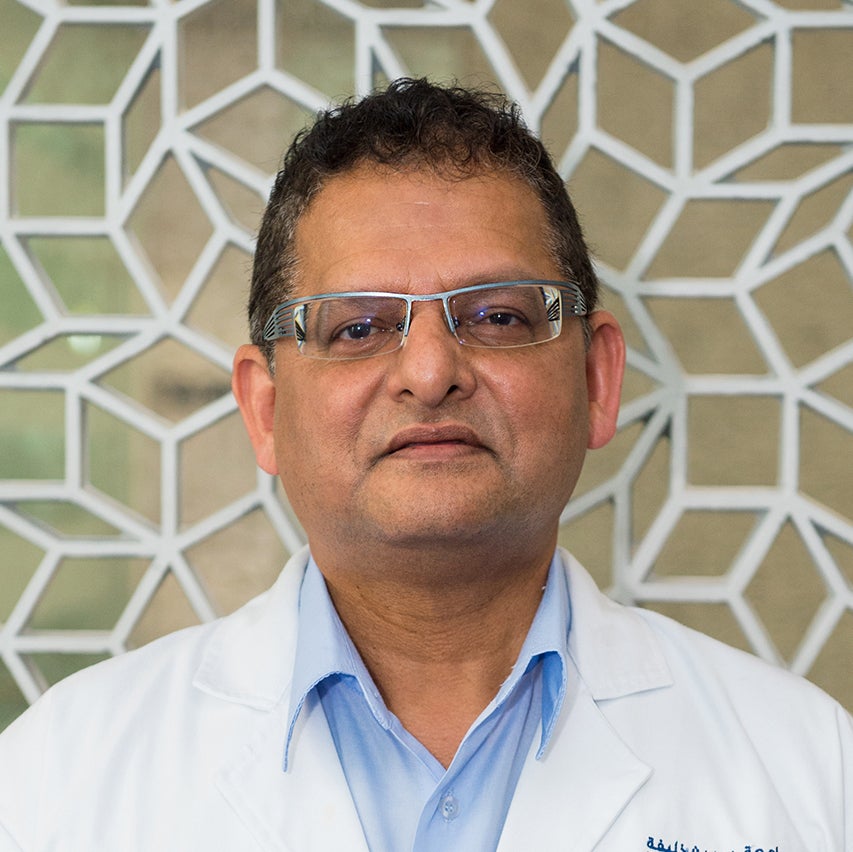
Dr. Dindial Ramotar
Professor
Dr. Dindial Ramotar
Professor
Educational Qualifications
B.Sc
M.Sc
Entity
College of Health and Life Sciences
B.Sc
McGill University, Montreal, Canada
1982
M.Sc
Concordia University, Montreal, Canada
1984
Ph.D
McGill University, Montreal, Canada
1989
Post-Doctoral training
Harvard University, Cambridge, MA, USA
1992
Senior Scientist
Universite de Montreal, Maisonneuve-Rosemont Hospital Research Institute.
1997-2019
Full professor
Universite de Montreal, Department of Medicine.
1997 - 2019
Assistant Professor
Laval University, Quebec, Canada.
1993 - 1996
Post-doctoral training
Harvard University, Boston, MA, USA.
1989 - 1992
Drug Metab Rev. 2019 Sep 28:1-19. doi: 10.1080/03602532.2019.1670204. PMID: 31564168.
Gene. 2018 Nov 30;677:361-369. doi: 10.1016/j.gene.2018.08.066. PMID: 30153484
Sci Rep. 2018 May 1;8(1):6860. doi: 10.1038/s41598-018-25124-1. PMID: 29717169
CUX1 stimulates APE1 enzymatic activity and increases the resistance of glioblastoma cells to the mono-alkylating agent temozolomide; Neuro Oncol. 2018 Mar 27;20(4):484-493. doi: 10.1093/neuonc/nox178. PMID: 29036362.
The human organic cation transporter OCT1 mediates high affinity uptake of the anticancer drug daunorubicin; Sci Rep. 2016 Feb 10;6:20508. doi: 10.1038/srep20508. PMID: 26861753.
DNA Repair (Amst). 2014 Oct;22:53-66. doi: 10.1016/j.dnarep.2014.07.010. Epub 2014 Aug 9. PMID: 25108836.
DNA Repair (Amst). 2012 Oct 1;11(10):811-22. doi: 10.1016/j.dnarep.2012.06.009. Epub 2012 Jul 20. PMID: 22819077.
PLoS One. 2011;6(8):e23159. doi10.1371/journal.pone.0023159. PMID: 21887235.
Biochem Biophys Res Commun. 2011 Sep 23;413(2):248-53. doi: 10.1016/j.bbrc.2011.08.079. PMID: 21884683.
J Biol Chem. 2010 Feb 26;285(9):6275-84. doi: 10.1074/jbc.M109.046151. PMID: 20037140
- 1994-1996; Junior I, Fonds de la Recherche en Sante du Quebec, Scholarship, Montreal, Canada.
- 1996-2000; Junior II, Fonds de la Recherche en Sante du Quebec, Scholarship, Montreal, Canada.
- 1996-2002; Career Scientist Award, National Cancer Institute of Canada, Toronto, Canada.
- 2002-2005; Senior Award, Fonds de la Recherche en Sante du Quebec, Montreal, Canada.
- 2010; Special Achievements Award, Toronto, Canada
- 2011; Award for excellence, Department of medicine, University of Montreal, Montreal, Canada.
- 2017; Honor lecturer, International School on Radiation Research, Annamalai University, Annamalai Nagar, Chidambaram, Tamil Nadu, India.
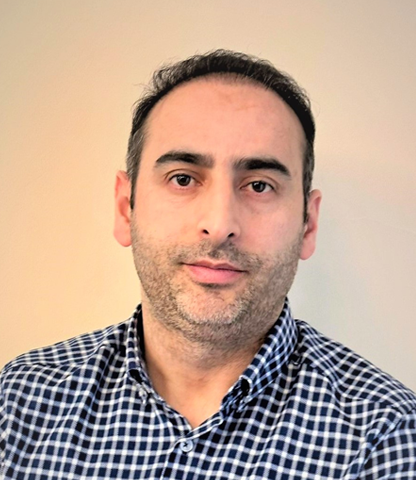
Dr. Ozcan Ozturk
Associate Professor
Associate Professor in Economics and Public Policy
Dr. Ozcan Ozturk
Associate Professor
Associate Professor in Economics and Public Policy
Educational Qualifications
Ph.D. Applied Economics
MA Applied Economics
Entity
College of Public Policy
School of Economics and Management
Biography
Dr. Ozturk obtained his Ph.D. in Applied Economics, with a minor in Statistics, from Auburn University, following his completion of a Master of Arts in Applied Economics at Western Michigan University. He also holds an LLM in Law and Economics from Michigan State University.
Dr. Ozturk regularly teaches courses on topics such as economics for public policy, cost-benefit analysis, research methods, microeconomics, macroeconomics, statistics for social sciences, and econometrics. His research primarily focuses on international trade, economic development, and food and agriculture, showcasing a broad interest in these critical areas.
Throughout his career, Dr. Ozturk has been actively involved in numerous multidisciplinary projects of both national and international scope across Europe, North America, Turkey, and Qatar.
Ph.D. Applied Economics
Auburn University
2017
MA Applied Economics
Western Michigan University
2013
LLM -Master in Law (Law and Economics)
Michigan State University
2011
BA Business Administration
Ataturk University
2008
- Applied economics
- International trade
- Economic development
- Food and agriculture
Assistant Professor
College of Public Policy, HBKU
2019 – Present
Assistant Professor
Department of Economics, Ataturk University, Turkey
2018 - 2019
Adjunct Faculty
Department of Economics, Auburn University at Montgomery, USA
2016 – 2017
Research and Teaching Assistant
Auburn University, USA
2014 – 2016
Research Assistant
Western Michigan University, USA
2012 - 2013
Ozcan, O., Ergun, A., and Sena, G. (2023). An empirical examination of trade policy and food security in MENA countries: Evidence from quantile regressions. Glob. Bus. Econ. Rev. Inderscience. DOI:10.1504/GBER.2024.10056913
Peter Chow, Ozcan Ozturk & Henry Thompson (2023) Short-Run Adjustments in Taiwan to Free Trade in a Multisector Specific Factors Model, The International Trade Journal, 37:6, 595-607. DOI: 10.1080/08853908.2022.2090463
Logan Cochrane, Ozcan Ozturk, Hanieh Khataee, Reem Al-Hababi, Fatema Al-Malki & Hisham Nourin (2022) Fostering a reading culture: evidence from Qatar Reads, Development Studies Research, 9:1, 82-94. DOI: 10.1080/21665095.2022.2050774
Ozcan Ozturk (2020) Market integration and spatial price transmission in grain markets of Turkey, Applied Economics, 52:18, 1936-1948. DOI: 10.1080/00036846.2020.1726862
- Project Investigator, “COVID-19 Policy Tracker: MENA Government Responses to the Crisis” Funded by QNRF.