 Apply Now

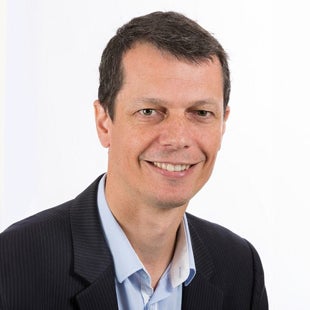
Dr. Dominique Rossin
Provost at École Polytechnique, FranceDr. Dominique Rossin
Dominique Rossin is a computer scientist. He currently serves as the provost of École Polytechnique and is a senior researcher at the CNRS, the French National Center for Scientific Research.
He graduated from École Polytechnique in 1994, and he holds a PhD in Computer Science. Also, he is a specialist in algorithms and combinatorics.
Dominique Rossin spent ten years as a CNRS researcher at Université Paris Cité as a combinatorics and algorithmic team leader, before joining the Computer Science Laboratory of École Polytechnique (LIX) in 2010. He was also a professor in several institutions like École Polytechnique, EPITA, and Université Paris Cité.
He held different leadership positions at the national and university levels. In 2004, he was a member of the CNRS’s computer science scientific committee. In 2012, he worked for the French Ministry of Higher Education and Research as deputy delegate for research and technology in the Paris region. From 2015 to 2022, Dominique Rossin served as vice provost of education at École Polytechnique, and since its creation in 2019 till May 2025, he served as vice president for education at the Institut Polytechnique de Paris. In 2020, he was appointed as the French dean of the EuroteQ European University, of which he is one of the founding architects. In 2023, he became the provost of École Polytechnique.
Dominique Rossin has led several major projects for École Polytechnique as vice-provost for education, including the creation of the bachelor program, the establishment of Master of Science and technology programs, the development of executive education, and the creation of the executive masters. Dominique Rossin also played a key role in the evolution of teaching practices and in the development of e-learning and MOOCs (Massive Open Online Courses). He has a major commitment to international cooperation and development in Asia, Middle East, Africa, and Europe.
In 2024, he co-led the creation of “HI! PARIS” cluster in artificial intelligence, one of the 3 major AI clusters in France. He is also deeply committed to ensuring equal opportunities in science, guided by the conviction that diversity and inclusion are essential to scientific progress.