 Apply Now
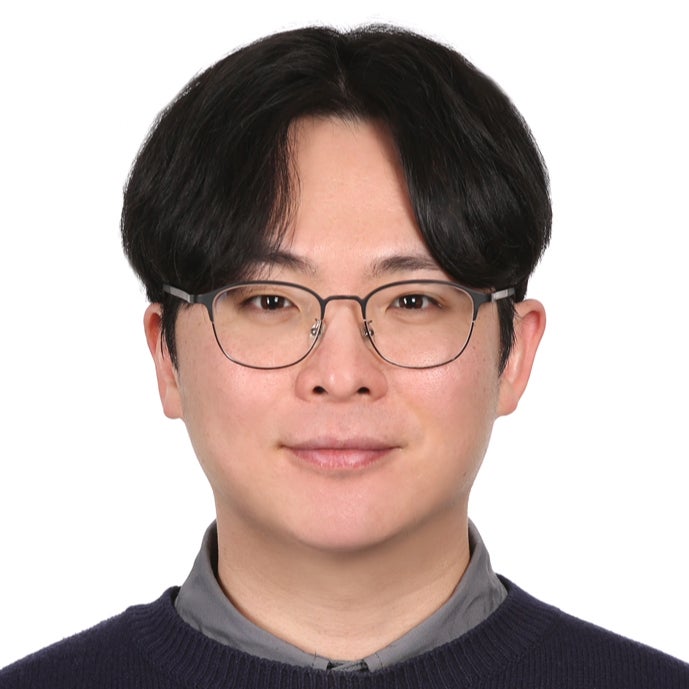
Dr. Myoung-Hyoun Song
Postdoctoral researcher
Educational Qualifications
Ph.D. in Medical Science (Integrated M.S.–Ph.D. Program)
B.S. in Biomedical Sciences
Entity
Qatar Biomedical Research Institute
Division
Neurological Disorders Research Center
Biography
Dr. Myoung-Hyoun Song is a Postdoctoral Researcher at the Qatar Biomedical Research Institute (QBRI), Hamad Bin Khalifa University. He obtained his Ph.D. in Medical Science through an integrated M.S.–Ph.D. program from the College of Medicine, Seoul National University, South Korea, in August 2025. Since 2016, he has conducted extensive research on the establishment, long-term culture, and characterization of human organoid models, which formed the foundation of his doctoral work. His research focused on integrative genomic and transcriptomic analyses, primarily whole-exome sequencing (WES) and bulk RNA sequencing, using advanced organoid-based disease models to investigate intra-tumor heterogeneity, host–microbiome interactions, and disease-associated molecular signatures.
Dr. Song has hands-on experience directing the differentiation of human induced pluripotent stem cells (iPSCs) into vascular lineages, as well as generating intestinal organoids for functional and translational studies. He also has substantial experience with high-throughput screening (HTS) platforms combined with image-based quantitative analysis to assess cellular phenotypes and drug responses, with an emphasis on reproducible and scalable analytical workflows. Building on his expertise in multi-omics integration, organoid biology, stem cell–derived model systems, and image-based phenotyping, he is expanding his research interests toward the brain-gut axis.
At QBRI, he aims to integrate patient-specific iPSC-derived neuronal cell models with omics- and imaging-driven approaches to study neurodevelopmental and neurological disorders, including autism spectrum disorder (ASD), and to advance biomarker discovery and precision disease modeling through interdisciplinary collaboration.
Ph.D. in Medical Science (Integrated M.S.–Ph.D. Program)
Seoul National University College of Medicine, South Korea
2025
B.S. in Biomedical Sciences
CHA University of Life Sciences, South Korea
2016
- Brain-Gut axis modeling using patient-derived iPSCs.
- Extracellular vesicles and exosome biology in Neuro diseases.
- Advanced imaging and image-based high-throughput screening.
- Multi-omics data integration and analysis.
Postdoctoral Researcher
Neurological Disorders Research Center, Qatar Biomedical Research Institute, Hamad Bin Khalifa University
2026 – Present
Visiting Researcher
Department of Plastic Surgery, Seoul National University Bundang Hospital, South Korea
Sep 2025 – Nov 2025
Technical Research Personnel (Alternative Military Service)
Department of Biomedical Sciences, College of Medicine, Seoul National University, South Korea
2020 – 2023
Song, M.-H., Kim, M. J., Ji, Y. S., Park, J. W., Shin, Y. K., Kim, S. C., … Jeong, S. Y. (2025). Cell free supernatants of Bifidobacterium adolescentis and Bifidobacterium longum suppress tumor growth in a colorectal cancer organoid model. Scientific Reports, 15(1), 935.
Song, M. H., Park, J. W., Kim, M. J., Shin, Y. K., Kim, S. C., Jeong, S. Y., & Ku, J. L. (2022). Colon cancer organoids using monoclonal organoids established in four different lesions of one cancer patient reveal tumor heterogeneity and different real-time responsiveness to anti-cancer drugs. Biomedicine & Pharmacotherapy, 152, 113260.
- 2022: Brain Korea 21 (BK21) Outstanding Graduate Student Award