 Apply Now
primary
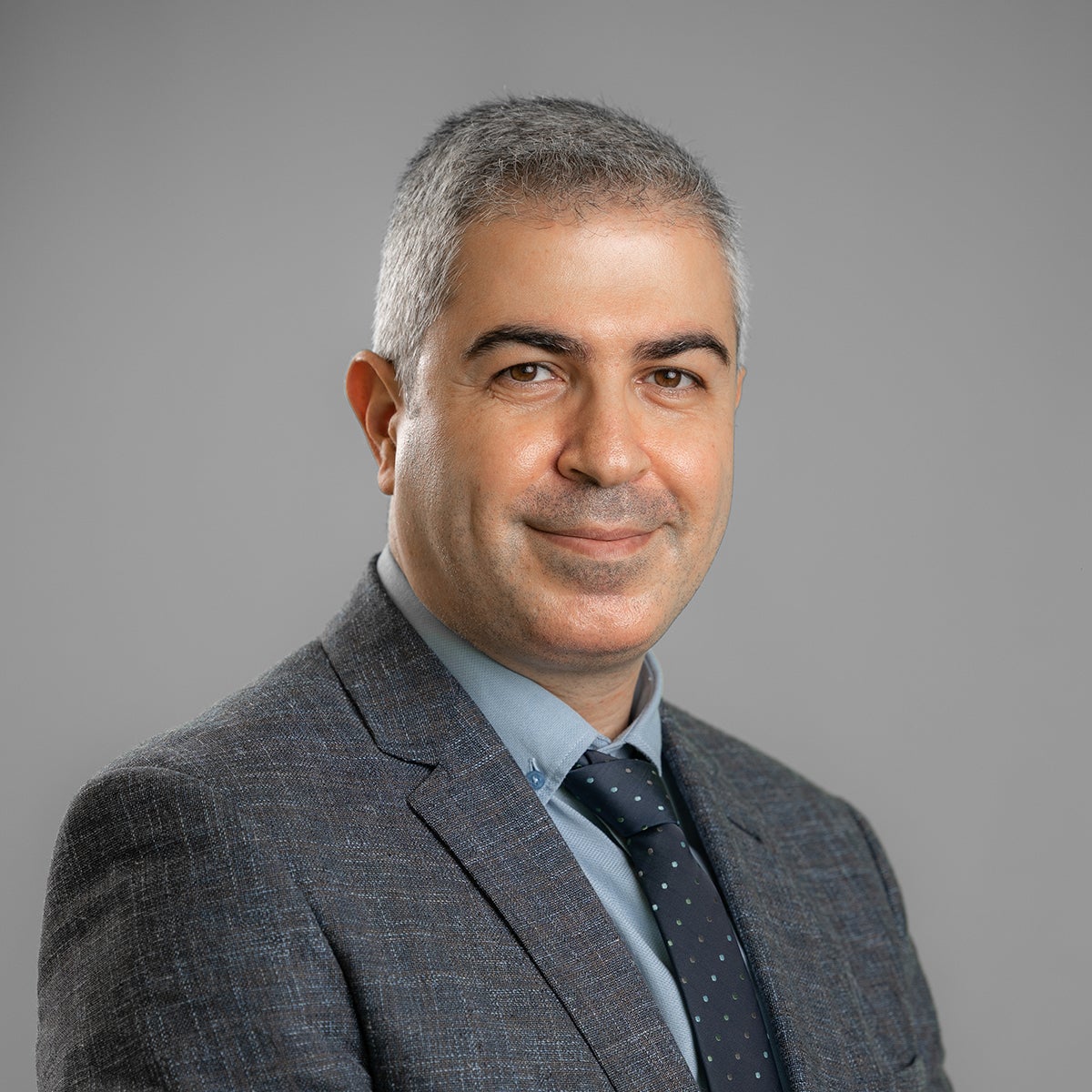
Sertac Bayhan
Research Director
Professor
Educational Qualifications
Ph.D. in Electrical Engineering
M.S. in Electrical Engineering
Entity
Qatar Environment and Energy Research Institute
College of Science and Engineering
Biography
Sertac Bayhan received his MS and PhD degrees in Electrical Engineering from Gazi University, Ankara, Turkey, in 2008 and 2012, respectively. His undergraduate studies had also taken place at the same university and he graduated as valedictorian. In 2008, he joined the Electronics and Automation Department, Gazi University, as a Lecturer, where he was promoted to Associate Professor in 2017. From 2014 to 2018, he worked at Texas A&M University at Qatar as Associate Research Scientist. Dr. Bayhan is currently working in Qatar Environment and Energy Research Institute (QEERI) as a Research Director and he is a faculty member with the rank of Professor in Sustainable Division of College of Science and Engineering at Hamad Bin Khalifa University. His research encompasses power electronics and their applications in next-generation power and energy systems, including renewable energy integration, electrified transportation, and microgrid.
Dr. Bayhan is the recipient of many prestigious international awards, such as the Research Fellow Excellence Award in recognition of his research achievements and exceptional contributions to the Texas A&M University at Qatar in 2018, the Best Paper Presentation Recognition at the 41st and 42nd Annual Conference of the IEEE Industrial Electronics Society in 2015 and 2016, Research Excellence Travel Awards in 2014 and 2015 (Texas A&M University at Qatar), and Researcher Support Awards from the Scientific and Technological Research Council of Turkey (TUBITAK). He has acquired $13M in research funding and published more than 170 papers in mostly prestigious IEEE journals and conferences. He is also the coauthor of two books and five book chapters.
Dr. Bayhan has been an active senior member of IEEE. Because of the visibility of his research, he has been recently elected as Chair of IES Power Electronics Technical Committee. He currently serves as Associate Editor for IEEE transactions on Industrial Electronics, IEEE Journal of Emerging and Selected Topics in Industrial Electronics, IEEE Open Journal of the Industrial Electronics Society, and IEEE Industrial Electronics Technology News, and Guest Editor for the IEEE transactions on Industrial Informatics.
Ph.D. in Electrical Engineering
Gazi University, Ankara-Turkey
M.S. in Electrical Engineering
Gazi University, Ankara-Turkey
B.S. in Electrical Engineering
Gazi University, Ankara-Turkey
- Renewable energy integration (e.g., solar photovoltaic conversion systems and wind energy conversion systems)
- Electric vehicle integration (e.g., impact on the power system, location optimization, charger design including Level 2 and Level 3, and V2G applications)
- Local area power and energy systems (e.g., microgrid and its control, including primary and secondary control, and seamless grid connection)
- Power electronics applications (e.g., DC/DC converters, DC/AC converters, AC/DC converters, and multilevel inverters)
- Advanced control techniques (e.g., model predictive control, sliding mode control, and Lyapunov function-based control)
- Embedded system design (e.g., MCU, DSP, and FPGA)
Associate Professor (joint appointment)
Sustainable Division, College of Science and Engineering, Hamad Bin Khalifa University, Doha, Qatar
2020 – present
Visiting Professor
Electrical and Computer Engineering Department, Texas A&M University at Qatar, Doha, Qatar
2019 – present
Associate Research Scientist
Electrical and Computer Engineering Department, Texas A&M University, Doha, Qatar
2017 – 2018
Assistant Research Scientist
Electrical and Computer Engineering Department, Texas A&M University, Doha, Qatar
2015 – 2017
Lecturer
Electronics and Automation Department, Gazi University, Ankara, Turkey
2009 – 2014
Lecturer
Electronics and Automation Department, Baskent University, Ankara, Turkey
2007 – 2009
IT Specialist
General Directorate of Security, Ministry of Interior, Ankara, Turkey
2006 – 2007
An enhanced finite control set model predictive control method with self-balancing capacitor voltages for three-level t-type rectifiers. IET Power Electronics, 15(6), 504–514. https://doi.org/10.1049/pel2.12245
Grid voltage sensorless model predictive control for a single-phase t-type rectifier with an active power decoupling circuit. IEEE Access, 9, 19161–19174, https://doi.org/10.1109/ACCESS.2021.3054773
Lyapunov-function-based controller for single-phase npc quasi-z-source inverter with 2ω frequency ripple suppression. Energies, 14(1), https://doi.org/10.3390/en14010140
Multi-input multi-output-based sliding-mode controller for single-phase quasi-z-source inverters. IEEE Transactions on Industrial Electronics, 67(8), 6439–6449. https://doi.org/10.1109/tie.2019.2938494
- 2022, Teaching Excellence Award, Texas A&M University at Qatar
- 2022, Best Paper Award, 3rd International Conference on Smart Grid and Renewable Energy, March 20-22, 2022, Doha, Qatar
- 2022, Best Paper Award, 10th International Conference on Renewable Energy Research and Applications, September 26-29, 2021, Istanbul, Turkey
- 2021, Teaching Excellence Award, Texas A&M University at Qatar
- 2018, Research Fellow Excellence Award, Texas A&M University at Qatar
- 2018, Best Research Award, Texas A&M University at Qatar
- 2017, Best Research Excellence Award, Texas A&M University at Qatar
- 2016, Best Presentation Award, IEEE-IECON’16, Florence, Italy
- 2016, Research Excellence Award, Texas A&M University at Qatar
- 2015, Best Presentation Award, IEEE-IECON’15, Yokohama, Japan
- 2015, Research Excellence Travel Award, Texas A&M University at Qatar
- 2006, Honor of Summa Cum Laude, Gazi University
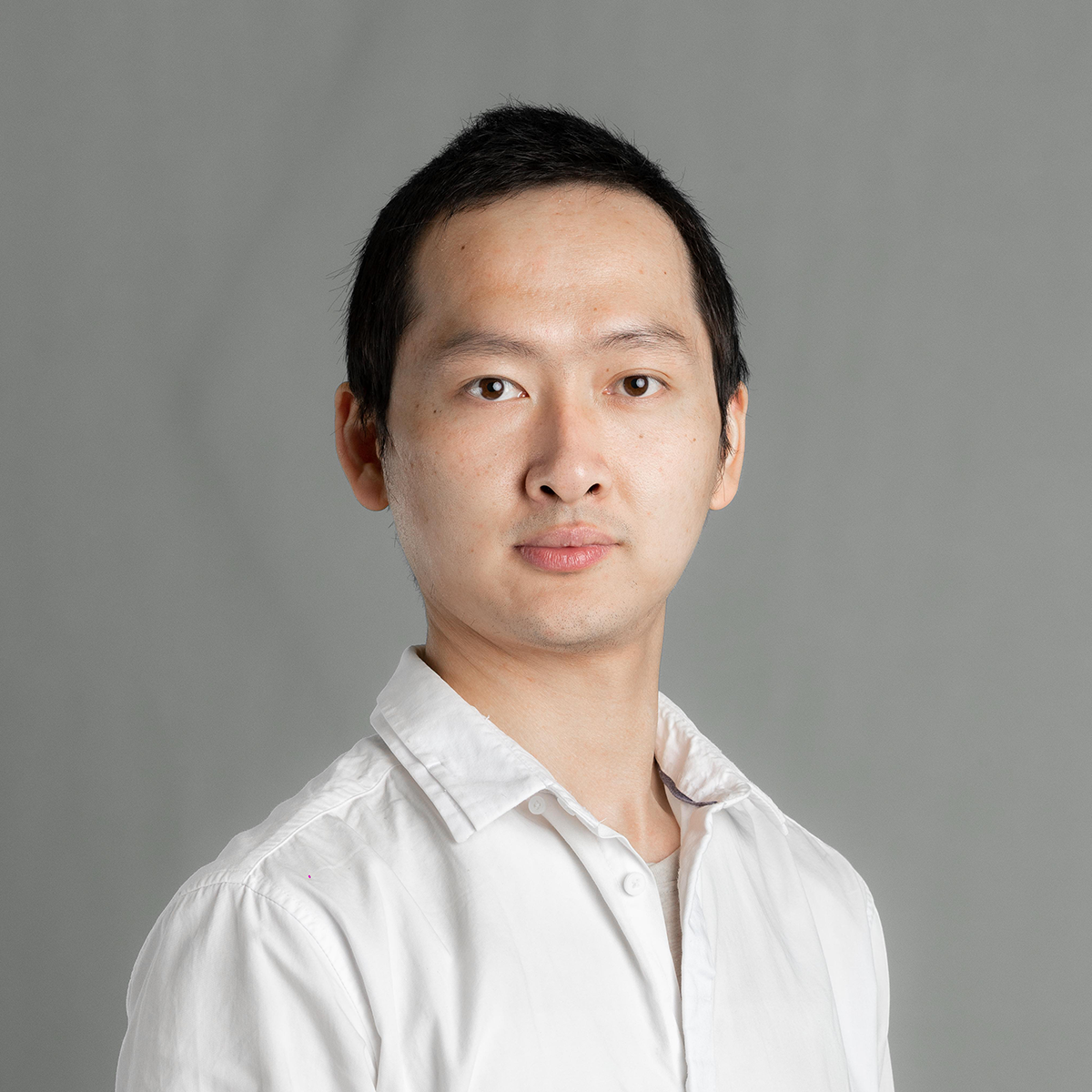
Yongfeng Tong
Scientist
Educational Qualifications
PhD in Physics
Entity
Qatar Environment and Energy Research Institute
Biography
Dr. Yongfeng Tong obtained his PhD diploma at the University of Paris-Sud, France. Before joining the Core Lab of QEERI as a Scientist in September 2019, he was a Postdoc in the Laboratoire Materiaux et Phénomènes Quantiques, University of Paris Diderot, France. He has also been working in Synchrotron SOLEIL for four years and performing the synchrotron-based high resolution surface science techniques on the beamline TEMPO, including X-ray Photoelectron Spectroscopy (XPS), Ultraviolet Photoelectron Spectroscopy(UPS), Angular-Resolved Photoemission Spectroscopy(ARPES), and Near Edge X-ray Absorption Fine Structure (NEXAFS). Currently, he is under the supervision of the core lab director Dr. Said Mansour and takes charge of the XPS/UPS, TOF-SIMS characterization in the core lab QEERI. His current research interest includes organic molecules for Rectenna electronics, thiol/dithiol self-assembled monolayers and 2D novel systems.
PhD in Physics
Synchrotron SOLEIL and University of Paris 11; Paris, France
2018
- X-ray Photoemission (XPS
- UPS
- NEXAFS
- XAS and ARPES)
- Molecular Electronics(Rectenna)
- Self-assembled Monolayer on Metal Electrode
- AFM and STM Characterization
- Surface Science
Postdoctoral Researcher
Laboratoire Materiaux et Phénomènes Quantiques, University of Paris Diderot, France.
2018 - 2019
Postdoctoral Researcher
Synchrotron soleil, Paris, France
2017 - 2018
Scientist
Imaging and Characterization Core Labs, QEERI, Hamad Bin Khalifa University, Doha, Qatar
2019 - present
RSC Nanoscale Advances; 2022, https://doi.org/10.1039/D2NA00040G
An estimation on the mechanical stabilities of SMAs by low energy Ar+ cluster ion collision; Scientific Report; 2021, 11,12772.
Evidence of new 2D material: Cu2Te. 2D Materials 2020, 7 (3), 035010.
Anomalous Light‐Induced Spin‐State Switching for Iron(II) Spin‐Crossover Molecules in Direct Contact with Metal Surfaces. Angew. Chem. Int. Ed. 2020, 59 (32), 13341-13346.
ZnO functionalization: metal-dithiol superstructures on ZnO(0001) by self-assembly. J. Phys. Chem. C 2018, 122 (5), 2880-2889.

Dr. Ka Lok Yip
Assistant Professor
Dr. Ka Lok Yip
Assistant Professor
Educational Qualifications
PhD
BCL
Entity
College of Law
Biography
Dr. Ka Lok Yip holds an interdisciplinary PhD (summa cum laude) in International Law and International Relations from the Graduate Institute of International and Development Studies, Geneva. She also has a Bachelor of Civil Law (distinction) from the University of Oxford and a Bachelor of Laws (first class honors) from King’s College London. Ka Lok focuses her research on peace and conflict. She draws on a wide range of disciplines including international law, international relations, philosophy, psychology, and sociology to study the causes of armed conflicts and strategies for their management, resolution, and prevention. She has published extensively on issues related to peace and conflict and her recent monograph ‘The Use of Force against Individuals in War under International Law – a Social Ontological Approach’ won her the Francis Lieber Book Prize 2023. Ka Lok is also admitted to the practice of law in England and Wales and Hong Kong.
PhD
International Law and International Relations, Graduate Institute of International and Development Studies
BCL
Law, University of Oxford
LLB
Law, King's College London
- Peace and Conflict
- Human Rights
- Social Ontology
- Existential Philosophy
Assistant Professor
Hamad Bin Khalifa University
2021 - Present
Lecturer
University of Hong Kong
2018 - Present
- 2023; Francis Lieber Book Prize

Dr. Dunia Bachour
Senior Scientist
Educational Qualifications
PhD Physics
Qualification Diploma in Medical and Radiological Physics
Entity
Qatar Environment and Energy Research Institute
Biography
Dr. Dunia Bachour is a Senior Scientist at the Qatar Environment & Energy Research Institute (QEERI), part of Hamad Bin Khalifa University in Doha, Qatar. She currently coordinates the Solar Resource Assessment Project under the Energy Management Program in the Energy Center. She received her doctoral degree in Physics from the Autonomous University of Barcelona, Spain. Her research in QEERI focuses on solar resource measurements, assessment and analysis. Prior to joining QEERI, she worked as a Scientific Collaborator in several university hospitals in Switzerland and France with the responsibilities of a radiation physicist in a radiooncology department including the commissioning of equipment for radiation therapy, radiation treatment planning and techniques, quality control, radiation measurements and radiation protection.
PhD Physics
Universitat Autonoma of Barcelona UAB, Barcelona, Spain
2015
Qualification Diploma in Medical and Radiological Physics
National Institute of Nuclear & Technical Sciences, Paris, France
2004
Master of Sciences Imaging & Radiation in Radiological Physics
Paul Sabatier University, Toulouse, France
2003
Bachelor’s Degree General Physics
Lebanese University, Beirut, Lebanon
2001
- Solar Energy With Reference to Solar Resource Assessment
- Solar Radiation Ground Measurements
- Data Analysis
- Solar Climate Trends
- Aerosols Characterization
- Radiometry
Senior Scientist
Qatar Environment & Energy Research Institute, Qatar
2021 - Present
Scientist
Qatar Environment & Energy Research Institute, Qatar
2016 - 2021
Research Associate
Qatar Environment & Energy Research Institute, Qatar
2011 - 2015
Occupational HS Professional
Qatar Foundation, Qatar
2009 - 2011
Scientific Collaborator
Institut de Radiophysique (IRA), Switzerland
2006 - 2008
Radiation Physicist
Institut National des Sciences et Techniques Nucléaires (INSTN), France
2004 - 2006
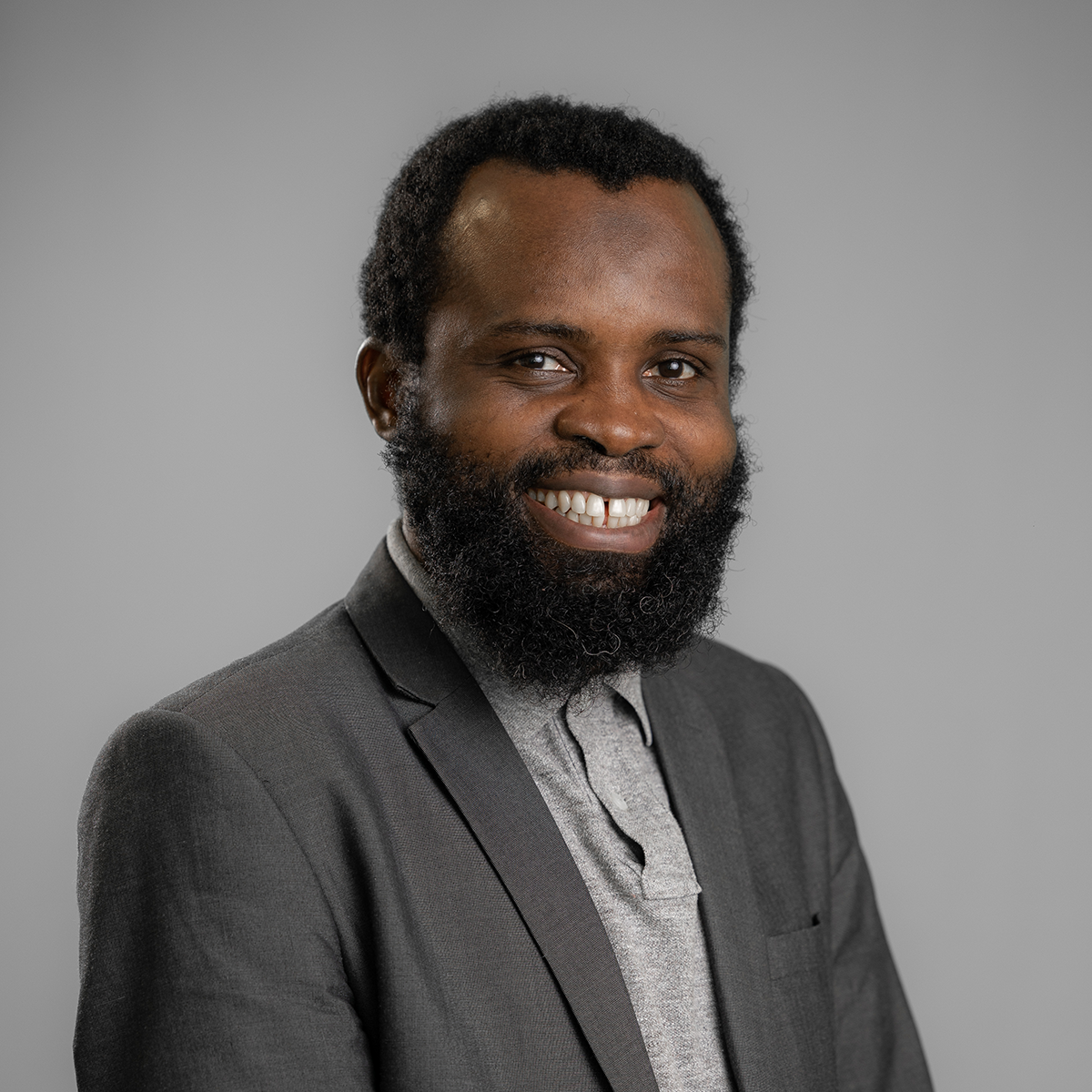
Ahmed Sodiq
Postdoctoral Researcher
Educational Qualifications
Doctor of Philosophy (PhD) Sustainable Energy
Master of Science (MSc.) Chemical Engineering
Entity
Qatar Environment and Energy Research Institute
Biography
Ahmed Sodiq did his Bachelor of Science degree in Chemical Engineering at Obafemi Awolowo University in Nigeria in 2012 with a research focus on Carbon Capture, Storage and Utilization. He completed his master’s degree in Chemical Engineering at Masdar Institute of Science and Engineering in the United Arab Emirates in 2015 with a research focus on Carbon Capture and Storage. He then joined Hamad Bin Khalifa University in 2015 where he completed his PhD program in Sustainable Energy in 2020 with a research focus on Flow Batteries for Large Scale Electrical Energy Storage Applications. Ahmed joined Qatar Environment and Energy Research Institute (QEERI) as a Research Associate in 2019 under Energy Efficiency program and his research focused on Cooling Efficiency in Buildings, especially in addressing overcooling in commercial buildings in Qatar. He is currently a postdoctoral researcher at QEERI with a research focus on Direct Air Capture of CO2 using the HVAC systems, especially the air conditioning systems. Ahmed has published 13 peer-reviewed articles in reputable international journals, one book chapter, a number of conference proceedings and six patent applications in different fields, such as carbon capture, sustainable energy, electrochemistry and HVAC systems.
Doctor of Philosophy (PhD) Sustainable Energy
Hamad Bin Khalifa University, Doha, Qatar
2020
Master of Science (MSc.) Chemical Engineering
Masdar Institute of Science and Technology, Masdar City, Abu Dhabi, UAE in collaboration with Massachusetts Institute of Technology, Cambridge, USA.
2015
Bachelor of Science (BSc.)
Chemical Engineering; Obafemi Awolowo University, Ile-Ife, Nigeria
2012
- Electrochemical Energy Storage (especially on flow batteries for large electrical energy storage)
- Carbon Capture and Utilization
- Carbon Capture and Storage
- Process Design and Modeling
- Cooling Efficiency in Buildings
- Process Optimization and Equipment Fabrication
Postdoctoral Researcher
Qatar Environment and Energy Research Institute (QEERI), Doha, Qatar
2021 - Present
Research Associate
Qatar Environment and Energy Research Institute (QEERI), Doha, Qatar
2019 - 2020
Research Assistant
College of Science and Engineering, Hamad Bin Khalifa University, Doha, Qatar
2015 - 2019
Research Engineer
Masdar Institute of Science and Technology, Masdar City, Abu Dhabi, UAE
2015
Research Assistant
Masdar Institute of Science and Technology, Masdar City, Abu Dhabi, UAE
2013 - 2015
“Addressing COVID-19 contagion through the HVAC systems by reviewing indoor airborne nature of infectious microbes: Will an innovative air recirculation concept provide a practical solution?,” Environmental Research, vol. 199, pp. 111329, 2021
“Enhanced electrochemical performance of modified thin carbon electrodes for all-vanadium redox flow batteries,” Materials Advances, vol. 1, no. 6, pp. 2033-2042, 2020.
“Black pearl carbon as a catalyst for all-vanadium redox flow batteries,” Chemical Communications, vol. 55, no. 69, pp. 10249-10252, 2019.
“Towards modern sustainable cities: Review of sustainability principles and trends,” Journal of Cleaner Production, vol. 227, pp. 972-1001, 2019
"Hybrid air-slurry flow cell battery," Google Patents, 2019
“Reaction kinetics of carbon dioxide (CO2) absorption in sodium salts of taurine and proline using a stopped‐flow technique,” International Journal of Chemical Kinetics, vol. 46, no. 12, pp. 730-745, 2014
- 2019; Best Poster Presentation Award; 8th Global Conference on Global Warming, Doha, Qatar.
- 2019; Student Life Award in Sport; Hamad Bin Khalifa University, Doha, Qatar.
- 2018; Young Scientist Award; European Materials Research Society, Strasbourg, France.
- 2018; Best Poster Award; International Flow Battery Forum, Lausanne, Switzerland.
- 2015; Best Thesis Award in Chemical Engineering; Masdar Institute of Science & Technology Abu Dhabi, UAE.
- 2015; Scholarship Award for a PhD in Sustainable Energy; Qatar Foundation, Doha, Qatar.
- 2010; Presidential Scholarship; Education Scholarship Board Abuja, Nigeria.
- 2007; Scholarship Award to Exceptionally Brilliant Nigerian Students; Petrobras, Lagos, Nigeria.
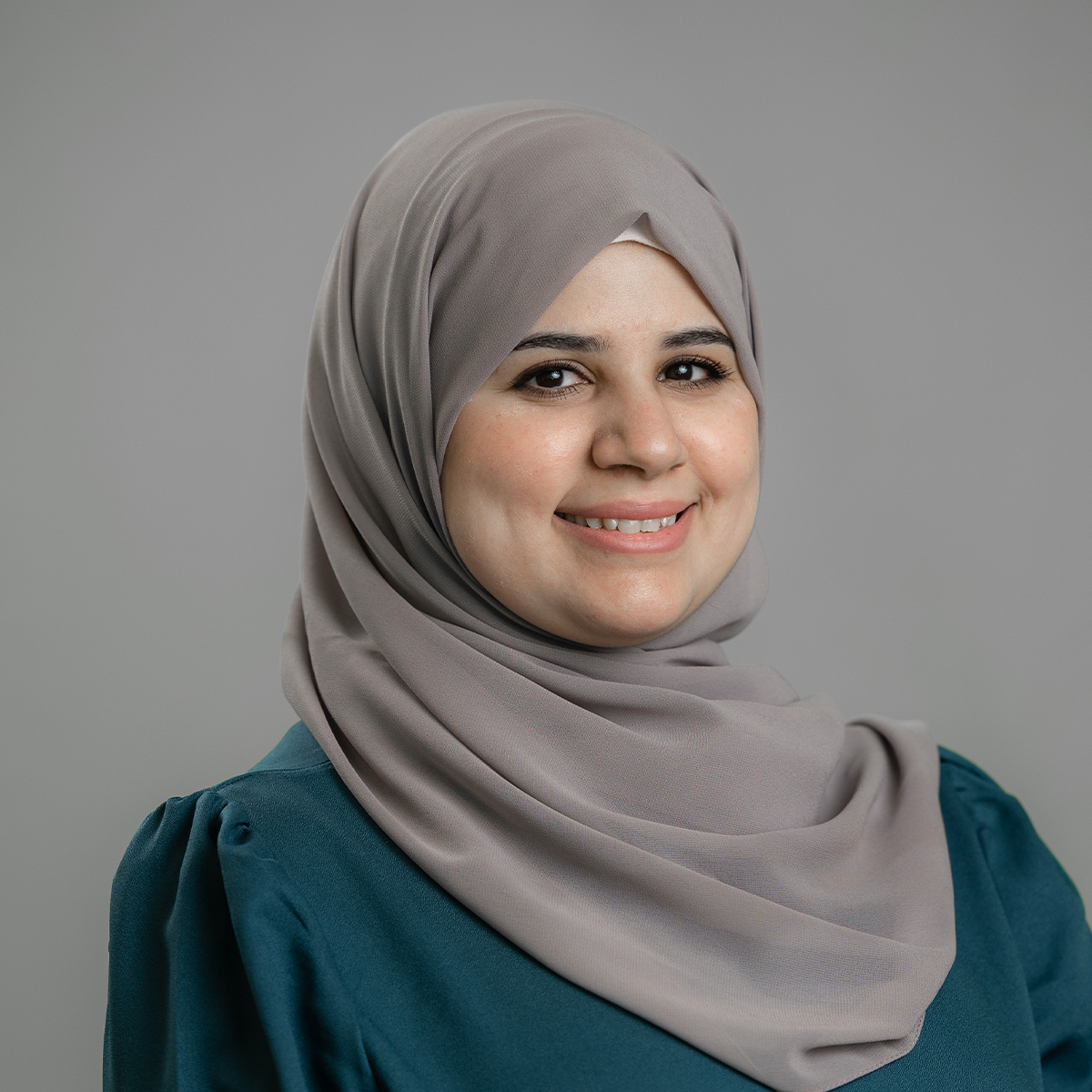
Alaa Alkhateeb
Lab Technician
Educational Qualifications
Bachelor in Chemistry
Entity
Qatar Environment and Energy Research Institute
Biography
Alaa Alkhateeb graduated from Qatar University in 2016 with a Bachelor Degree in Science, and majored in Chemistry and minor Biology. Her favorite fields are Physical Chemistry and Organic Chemistry. During University, she received an academic reward on her Graduation project which was in inorganic field for the following project; “synthesis and characterization of thiosemicarbazones metal complexes as a potential anti-cancer agents”. She joined QEERI in July 2018 as a Lab Technician, and worked with an energy storage group in a NPRP project which dealt with cathodes for sodium-ion batteries. Currently, she is working in the Energy Center with a Catalyst and Process Technology group.
Bachelor in Chemistry
Qatar University; Doha, Qatar
2016
- Organic Chemistry
- Inorganic Chemistry
- Electro Chemistry and Physical Chemistry Fields
Lab Technician
NPRP project at QEERI
2018 - 2019
"Investigation of the Inorganic Compounds NaMV2(PO4)3 (M = Fe, Co, Ni) as Anode Materials for Sodium-Ion Batteries." ACS Omega 5(48): 30799-30807.
"Structural and thermal properties of Na2Mn(SO4)2·4H2O and Na2Ni(SO4)2·10H2O." RSC Advances 10(18): 10420-10430
"NaM2(PO4)(SO4)2 (M= Fe, V, Cr) As Electroactive Materials for Na-Ion Batteries." ECS Meeting Abstracts MA2019-02(6): 584-584
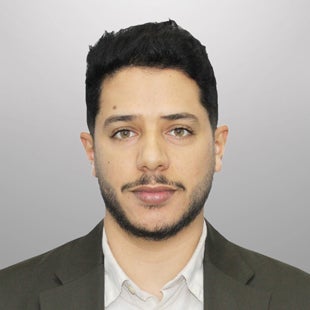
Dr. El Tayeb Bentria
Scientist
Educational Qualifications
Ph.D in Physical Chemistry of Materials
Master in Solid State Physics
Entity
Qatar Environment and Energy Research Institute
Biography
Dr. El Tayeb Bentria is a Scientist within the Materials Unit, leading the Biomimicry‑AI research activities at the Qatar Environment and Energy Research Institute (QEERI). His work applies nature‑inspired principles and artificial intelligence to accelerate materials discovery, prototyping, and design. He has a continued interest in multiscale corrosion modeling for the oil & gas industry. He received his Ph.D. in Physical Chemistry of Materials from the University of Laghouat, Algeria, where he investigated the segregation effects of impurities in nickel‑based superalloys. Dr. Bentria joined QEERI at the end of 2015 as a Research Assistant and has since contributed to several NPRP‑funded projects as a Postdoctoral Researcher. His previous research includes fundamental studies of metal dusting and carbonyl corrosion, and the prediction of energy materials’ properties using density functional theory.
Ph.D in Physical Chemistry of Materials
University of Laghouat, Algeria
2015
Master in Solid State Physics
University of Laghouat, Algeria
2011
- Biomimicry-AI for sustainable materials design
- Multiscale analysis of defects, impurities & heterogeneous catalysis
- Surface microstructure effect on material properties
- Photovoltaic materials & thermoelectric predictions beyond RTA
- Leveraging LLMs for research augmentation, knowledge extraction & hypothesis generation
Scientist
Qatar Environment and Energy Research Institute - Materials Unit, Hamad Bin Khalifa University
2025 - Present
PostDoc
Qatar Environment and Energy Research Institute - Energy Center, Hamad Bin Khalifa University
2018 - 2025
Research Assistant
Qatar Environment and Energy Research Institute - Energy Center, Hamad Bin Khalifa University
2015 - 2017
Bentria, E. T., Shenai, P. M., Sanvito, S., Park, H., Béland, L. K., Laycock, N., & El Mellouhi, F. (2024). Computational demystification of iron carbonyls formation under syngas environment. npj Materials Degradation, 8(1), 19.
Bentria, E. T., Akande, S. O., Ramesh, A., Laycock, N., Hamer, W., Normand, M., ... & El-Mellouhi, F. (2022). Insights on the effect of water content in carburizing gas mixtures on the metal dusting corrosion of iron. Applied Surface Science, 579, 152138.
Bentria, E. T., Akande, S. O., Becquart, C. S., Mousseau, N., Bouhali, O., & El-Mellouhi, F. (2020). Capturing the iron carburization mechanisms from the surface to bulk. The Journal of Physical Chemistry C, 124(52), 28569-28579.
Bentria, E. T., Lefkaier, I. K., Benghia, A., Bentria, B., Kanoun, M. B., & Goumri-Said, S. (2019). Toward a better understanding of the enhancing/embrittling effects of impurities in Nickel grain boundaries. Scientific reports, 9(1), 14024.
Bentria, E. T., N'tsouaglo, G. K., Becquart, C. S., Bouhali, O., Mousseau, N., & El-Mellouhi, F. (2017). The role of emerging grain boundary at iron surface, temperature and hydrogen on metal dusting initiation. Acta Materialia, 135, 340-347.
- Young Investigator Award 1st place in computational science, in the third conference on computational science, hosted by Texas A&M in Qatar.
- Best presentation award in the military polytechnic school conference, Algiers- Algeria. 2014.
Dr. Maulid Mohamed Kivambe
Scientist
Educational Qualifications
Ph.D. in Materials Science and Engineering
M.Sc. in Condensed Matter Physics and Biophysics
Entity
Qatar Environment and Energy Research Institute
Biography
Dr. Kivambe is a Scientist at Qatar Environment & Energy Research Institute (QEERI), where he works on performance and reliability of Photovoltaic (PV) systems. He has over 15 years’ research experience in PV value chain, from crystalline silicon materials to solar cells and modules, including indoor and outdoor testing. He received his M.Sc. in Condensed Matter physics and Biophysics in 2008, and his Ph.D. in Materials Science and Engineering in 2012 from the Norwegian University of Science and Technology (NTNU), in Norway. Before joining QEERI, Dr. Kivambe worked as a postdoctoral associate at the Massachusetts Institute of Technology (MIT), Photovoltaic Research Laboratory, focusing on performance improvement of low-cost silicon for solar cell applications.
Ph.D. in Materials Science and Engineering
Department of Materials Science and Engineering, Norwegian University of Science and Technology (NTNU)
2012
M.Sc. in Condensed Matter Physics and Biophysics
Department of Physics, Norwegian University of Science and Technology (NTNU)
2007
Postgraduate Diploma in Scientific Computing
University of Dar es Salaam
2002
Bachelor of Science with Education
University of Dar es Salaam
1999
- PV System Performance and Reliability
- Bifacial PV
- Defects and Defect Engineering in PV Silicon Materials and Solar Cells
Scientist
Qatar Environment & Energy Research Institute (QEERI)
2015 - Present
Postdoctoral Fellow
Massachusetts Institute of Technology (MIT)
2012 - 2014
Laboratory Scientist
University of Dar es Salaam
1999 - 2012
"Record-Efficiency n-Type and High-Efficiency p-Type Monolike Silicon Heterojunction Solar Cells with a High-Temperature Gettering Process," ACS Applied Energy Materials, vol. 2, pp. 4900-4906, 2019
"Annealing of Silicon Heterojunction Solar Cells: Interplay of Solar Cell and Indium Tin Oxide Properties," IEEE Journal of Photovoltaics, vol. 9, pp. 1202-1207, 2019
"Shape and quality of Si single bulk crystals grown inside Si melts using the noncontact crucible method," Japanese Journal of Applied Physics, vol. 54, p. 015504, 2015
"Minority-carrier lifetime and defect content of n-type silicon grown by the noncontact crucible method," Journal of Crystal Growth, vol. 407, pp. 31-36, 2014
"Growth of dislocation clusters during directional solidification of multicrystalline silicon ingots," Acta Materialia, vol. 59, pp. 7703-7710, 2011
"The microstructure of dislocation clusters in industrial directionally solidified multicrystalline silicon," Journal of Applied Physics, vol. 110, p. 063524, 2011
Manal Alsalama
Research Associate
Educational Qualifications
PhD in Sustainable Energy
Master's Degree in Materials Science and Technology
Entity
Qatar Environment and Energy Research Institute
Biography
Dr. Manal Alsalama is a Research Associate at the Qatar Environment and Energy Research Institute (QEERI). Manal holds a Bachelor’s degree in Physics from King Saud University in Saudi Arabia and a Master’s degree in materials science and technology from Qatar University. She obtained her Ph.D. in sustainable energy from Hamad Bin Khalifa University. Her research focuses on the development of nano-bulk and nanocomposites thermoelectric materials for energy conversion applications. She has experience in nanomaterial synthesis and characterization.
PhD in Sustainable Energy
Hamad Bin Khalifa University, Qatar
Master's Degree in Materials Science and Technology
Qatar University
Bachelor Degree in Physics
King Saud University, Saudi Arabia, Riyadh
- Nano Materials Application in energy conversion applications
- Developing new generation of THz and Infrared detectors based on rectenna principal
- Molecular electronic devices based on self-assembled monolayer
- Surface analysis
Research Associate
QEERI
2021 - Present
Graduate Trainee
QRLP Science track, Qatar Foundation
2012 - 2021
Physics Teacher
Secondary Independent Schools
2008 - 2012
Enhancement of Thermoelectric Properties of Layered Chalcogenide Materials
The effect of graphene structural integrity on the power factor of tin selenide nanocomposite
- Best Poster Award at QU Research Forum in Materials Science category poster competition 2014
- Academic Excellence Award, Education Excellence Day 2006
- University First Class Honors: King Saud University 2005

Dr. Usaama Al-Azami
Assistant Professor of Islamic Studies
Dr. Usaama Al-Azami
Assistant Professor of Islamic Studies
Educational Qualifications
PhD in Near Eastern Studies
MA in Near Eastern Studies
Entity
College of Islamic Studies
Division
Islamic Studies
Biography
Dr. Usaama al-Azami is an Assistant Professor of Islamic Studies at the College of Islamic Studies. He earned his BA in Arabic and Islamic Studies at the University of Oxford, his ʿālimiyya at the Al-Salam Institute, and his MA and PhD in Near Eastern Studies at Princeton University.
His interests lie in Islamic intellectual history, with a particular focus on diachronic transformations in Islamic political thought. His first book, Islam and the Arab Revolutions (Oxford University Press, 2022), examines the way in which influential Islamic scholars responded to the Arab uprisings of 2011 through 2013. He is currently working on a monograph project that explores the question of takfir or excommunication and its diachronic developments from early Islam to modernity.
Dr. Al-Azami's PhD thesis, the chapters of which he is preparing for publication, is entitled "Modern Islamic Political Thought: Islamism in the Arab World from the Late Twentieth to the Early Twenty-first Centuries." In it, he explores how Arab ulama of a mainstream "Islamist" orientation have engaged Western political concepts such as democracy, secularism, and the nation-state, selectively adapting and assimilating aspects of these ideas into their understandings of Islam. Dr. Al-Azami's broader interests extend to a range of disciplines from the Islamic scholarly tradition from the earliest period of Islam up to the present.
PhD in Near Eastern Studies
Princeton University, United States
2018
MA in Near Eastern Studies
Princeton University, United States
2013
BA in Arabic and Islamic Studies
University of Oxford, United Kingdom
2008
- Islamic intellectual history
- Fiqh and legal theory
- Islamic politics and political theory
- Methodological issues in Islamic studies
Assistant Professor
College of Islamic Studies, Hamad Bin Khalifa University
2025 – Present
Assistant Professor
Faculty of Religion and Theology, Vrije Universiteit Amsterdam, The Netherlands
2023 – 2025
Departmental Lecturer
Faculty of Asian and Middle Eastern Studies, University of Oxford, United Kingdom
2019 – 2023
Lecturer
Department of Islamic Studies, Markfield Institute, United Kingdom
2016 – 2019
Complete Publication Listing(s): Google Scholar