 Apply Now
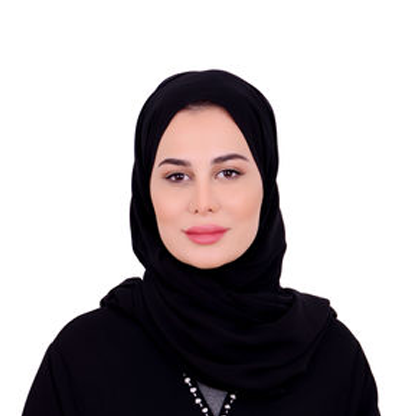
Dr. Sara Al-Khawaga
Adjunct Clinical Associate Professor
Educational Qualifications
Ph.D., Biological and Biomedical Science
Cancer Biology & Therapeutics (CBT) Program
Entity
College of Health and Life Sciences
Biography
Dr. Sara obtained her medical degree with excellence from Weill Cornell Medicine-Qatar, receiving several honors during her studies. She later completed her Ph.D. in Biological and Biomedical Sciences from Hamad bin Khalifa University in 2019. The focus of her Ph.D. was on the use of next-generation sequencing (NGS) and human pluripotent stem cell technologies in monogenic disorders. Dr. Sara has successfully published multiple high-impact publications in the field of pluripotent stem cell technology and NGS. Dr. Sara is an alumna of Harvard Medical School where she completed the Cancer Biology and Therapeutics (CBT) program during her postdoctoral fellowship with a special focus on melanoma, immunotherapy, and immune checkpoint inhibitors.
Dr. Sara further completed a postdoctoral fellowship in the Clinical Research Center in Sidra Medicine-Qatar focusing on mesenchymal stem cells isolated from adipose tissue (2015-2018). Dr. Sara joined the dermatology and venereology residency program at HMC in 2018 and served as the chief resident in 2020. Dr. Al-khawaga is currently leading the GeriDerm (Geriatric Dermatology Service) and the lead for the first National Clinical Practice Guidelines for the management of Stevens-Johnson Syndrome (SJS)/Toxic Epidermal Necrolysis (TEN) in Qatar. Dr. Sara received the National Educational Excellence in Research, an award from His Highness The Amir Shaikh Tamim Bin Hamad Al Thani in 2021, and was awarded the Regional Research award from The Arab Board in 2023, a highly competitive award from the Middle East. Dr. Sarah has recently been appointed as a professor in the College of Health and Life Sciences at Hamad Bin Khalifa University, Qatar Foundation.
Ph.D., Biological and Biomedical Science
College of Health and Life Sciences, Hamad Bin Khalifa University
2019
Cancer Biology & Therapeutics (CBT) Program
Harvard Medical School
2015 - 2016
Medical Doctor (MD)
Weill Cornell Medicine-Qatar
2014
- Metabolic Syndromes Associated with Chronic Inflammatory Skin Diseases
- Stevens-Johnson Syndrome (SJS)/Toxic Epidermal Necrolysis (TEN)
Specialist
Dermatology and Venereology, Hamad Medical Corporation
2022 - Present
Chief Resident
Dermatology and Venereology, Hamad Medical Corporation
2019 - 2020
Post-Doctoral fellow
Clinical Research Center, Translational Medicine, Sidra Medical and Research Center
- March 2021, National Educational Excellence Award, Fourteenth Edition, Ph.D. category. Ministry of Education and Higher Education, Doha, Qatar.
- 2023, Arab Board Best Research Award, Arab Board- Amman, Jordan.
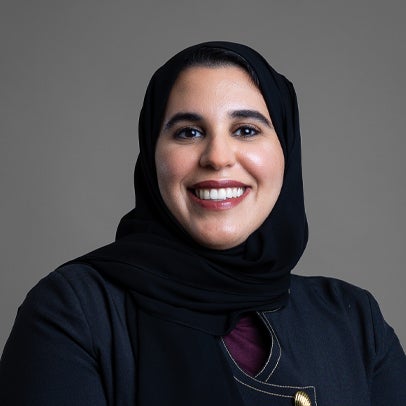
Maha Al-Thani
Research Fellow
Educational Qualifications
PhD in Clinical Neurosciences
MS in Biological and Biomedical Sciences
Entity
Qatar Biomedical Research Institute
Division
Neurological Disorders Research Center
Biography
Maha Al-Thani is a Research Fellow at Qatar Biomedical Research Center. Her primary research focus is human iPSC disease modeling and neurovascular unit co-culture. She received her PhD in Clinical Neurosciences from the University of Cambridge, and her dissertation “hiPSC-Derived Cerebral Small Vessel Disease Models”, published in 2023, was centered around blood-brain barrier modeling that led to novel hiPSC-derived models of the cerebral Small Vessel Disease variants COL4A1/2 and HTRA1. These models were later used in a drug-screening collaboration with AstraZeneca. The project was funded by the British Heart Foundation, Alzheimer’s Association, Stroke Association and Medical Research Foundation.
PhD in Clinical Neurosciences
University of Cambridge, England
2024
MS in Biological and Biomedical Sciences
Hamad Bin Khalifa University
2019
BSc in Biomedical Science
Qatar University
2015
Maha’s research interest is in investigating the role of different post-translational modifications of alpha-synuclein. Her research aims to examining their possible utility as a biomarker target or in developing a vaccine for Parkinson's disease.
- hiPSCs-derived disease models
- Neurovascular unit
- 3D co-culture
- Microfluidic
Research Fellow
Qatar Biomedical Research Center, Hamad Bin Khalifa University
2025 - Present
- Amiri Scholarship Program by Qatar’s Ministry of Education and Higher Education, 2019
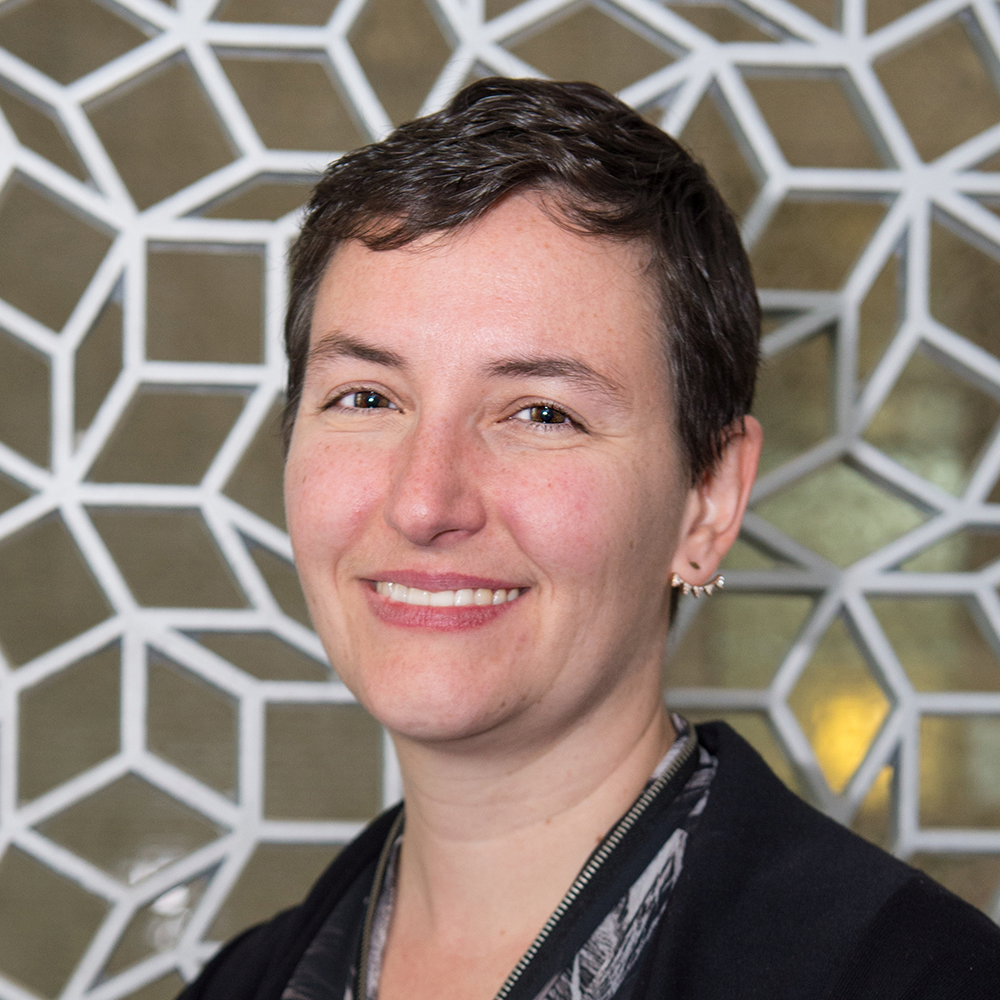
Dr. Borbala Mifsud
Associate Professor
Dr. Borbala Mifsud
Associate Professor
Educational Qualifications
PhD
MSc
Entity
College of Health and Life Sciences
Biography
Dr. Mifsud graduated in biology from Eotvos Lorand University in Budapest in 2006 and obtained her PhD from the Institute of Molecular Pathology in Vienna in 2010. Her work with Thomas Jenuwein involved the epigenetic characterisation of a histone methylation deficient mouse model. After her molecular biology training, she started bioinformatics in the laboratory of Professor Nicholas Luscombe at EMBL European Bioinformatics Institute (EBI) in Cambridge, and subsequently moved to UCL and the Crick Institute in London. In her postdoctoral work she focussed on developing methods for the analysis of Hi-C type data and finding new biological insights into transcriptional regulation, by applying these methods to Hi-C and capture Hi-C data sets. Dr. Mifsud joined the William Harvey Research Insitute in QMUL as an MRC eMedLab Career Development Fellow and Lecturer in 2015, where she used chromatin interaction data to understand the function of regulatory GWAS mutations. Dr. Mifsud has been an Assistant Professor at HBKU since July 2018.
PhD
University of Vienna, Austria
2010
MSc
Eotvos Lorand University, Hungary
2006
- Using chromatin structure information for understanding the effect of GWAS loci
- Uncovering chromatin interactions that change during development
- Identifying the important regulatory interactions in diseases such as leukaemia
MRC Career Development Fellow - Lecturer;
William Harvey Research Institute; Queen Mary University London, UK
2015 - 2018
Postdoctoral Research Fellow
University College London and the Francis Crick Instiute, London, UK
2012 - 2015
Postdoctoral Research Fellow
EBML European Bioinformatics Institute; Cambridge, UK
2010 - 2012
PhD Student
Institute of Molecular Pathology, Vienna, Austria
2006 - 2010
Diploma Student
National Centre for Epidemiology, Budapest, Hungary
2004 - 2006
Student researcher
Department of Plant Taxonomy, Eotvos Lorand University, Budapest, Hungary
2003 - 2004
Nature Genetics; 2018 Sep; doi: 10.1038/s41588-018-0205-x Evangelou E.*, Warren H.R.*, Mosen-Ansorena D.*, Mifsud B.*, Pazoki R.*, He G.*, Ntritsos G.*, Dimou N.* et al
Nature Communications; 2018 May 16;9(1):1947. Ramírez J., Duijvenboden S.V. Ntalla I., Mifsud B., Warren H.R., Tzanis E., Orini M., Tinker A., Lambiase P.D., Munroe P.B.
PLoS One; 2017 Apr 5;12(4):e0174744 Mifsud B.*, Martincorena I.*, Darbo E., Sugar R., Schoenfelder S., Fraser P., Luscombe N.M.
Nature Genetics; 2017 Mar;49(3):403-415 Warren H.R.*, Evangelou E.*, Cabrera C.P.*, Gao H.*, Ren M*., Mifsud B.*, et al
Nature Genetics; 2015 Oct;47(10):1179-86 Schoenfelder S.*, Sugar R.*, Dimond A.*, Javierre B-M.*, Armstrong H.*, Mifsud B., Dimitrova E., Tavares-Cadete F., Furlan-Magaril M., Jurkowski W., Segonds-Pichon A., Wingett S., Tabbada K., Andrews S., Herman B., LeProust E., Osborne C.S., Koseki H., Fraser P., Luscombe N.M., Elderkin S.
Nature Genetics; 2015 Jun;47(6):598-606 Mifsud B.*, Tavares-Cadete F.*, Young A. N.*, Sugar R., Schoenfelder S., Ferreira L., Wingett S. , Andrews S., Grey W., Ewels P.A., Herman B., Happe S., Higgs A., LeProust E., Follows G.A., Fraser P., Luscombe N.M., Osborne C.S.
Genome Research; 2015 Apr;25(4):582-97 Schoenfelder S.*, Furlan-Magaril M.*, Mifsud B.*, Tavares-Cadete F.*, Sugar R., Javierre B-M., Nagano T., Katsman Y., Sakthidevi M., Wingett S. W., Dimitrova E., Dimond A., Edelman L. B., Elderkin S., Tabbada K., Darbo E., Andrews S., Herman B., Higgs A., LeProust E., Osborne C.S., Mitchell J.A., Luscombe N.M., Fraser P.
- 2015 eMedLab Career Development fellowship; Medical Research Council; London/UK
- 2010 Frontiers in Functional Genomics exchange grant; European Science Foundation; Cambridge/UK
- 2009 Travel award; European Union Network of Excellence
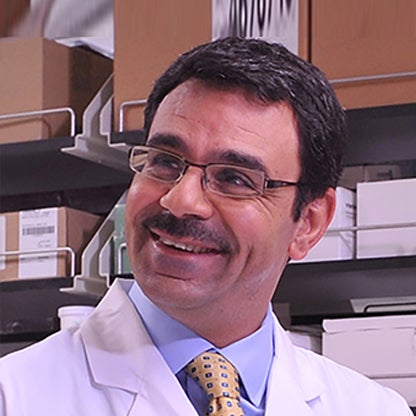
Dr. Khaled Machaca
Joint Professor
Dr. Khaled Machaca
Joint Professor
Educational Qualifications
Ph.D. Cell & Developmental Biology
M.S. Poultry Science
Entity
College of Health and Life Sciences
Biography
Khaled Machaca is Professor of Physiology and Biophysics. He has been training and supervision of Hamad Bin Khalifa University graduate students for the past 5 years. Alongside that, he is a professor at Weill Cornell Medicine and serves as the Senior Associate Dean for Research, Innovation and Commercialization for the Qatar campus. In that capacity he oversees the academic, financial, operational and compliance aspects of the research department, which currently encompasses about 200 researchers. Dr Machaca oversaw the establishment of the administrative and regulatory infrastructure, centralized core laboratories, and faculty recruitment.
The Machaca Lab is interested in intracellular signaling under physiological and pathological conditions with a focus on calcium signaling. Our goal is to better define these signaling pathways at the cellular and molecular levels to identify potential therapeutic targets in various disease states. We are particularly interested in the role of calcium in cancer, cardiovascular and immune disfunction, as well as in oocyte maturation in preparation for fertilization. Work from the Machaca Lab has been published in leading biomedical journals and garnered continuous extramural funding from NIH and the Qatar National Research Fund (QNRF). Khaled serves of several editorial boards, reviews widely for scientific journals and granting agencies, and has an extensive track record of training students and postdoctoral fellows.
Ph.D. Cell & Developmental Biology
Emory University
1992 - 1996
M.S. Poultry Science
University of Georgia
1990 - 1992
B.S. Agriculture & Diplome D’Ingenieur Agricole
American University of Beirut
1986 - 1990
- Signal transduction
- Oocyte maturation
- Ca2+ signaling
- Store operated Ca2+ entry
- Nongenomic progesterone signaling
- Cellular model for rare genetic disorders
Associate Dean of Research
Weill Cornell Medicine Qatar
2009 - Present
Professor
Department of Physiology & Biophysics, Weill Cornell Medicine
2009 - Present
Director Imaging Core
Weill Cornell Medicine Qatar
2009 - Present
Designated Institutional Official
Weill Cornell Medicine Qatar, Animal Research Program, Weill Cornell Medicine Qatar
2009 - Present
Organizational Official
Weill Cornell Medicine Qatar, Human Research Protection Program (HRPP)
2009 - 2017
Adjunct Professor
Hamad Bin Khalifa University
2016 - Present
Associate Dean for Basic Science Research
Weill Cornell Medicine Qatar
2008 - 2009
Associate Professor
Department of Physiology & Biophysics, University of Arkansas for Medical Sciences (UAMS)
2005 - 2008
Assistant Professor
Department of Physiology & Biophysics, University of Arkansas for Medical Sciences (UAMS)
1999 - 2004
- 2018, Named Distinguished Alumnus, Emory University Graduate School, Biological and Biomedical Sciences.
- 2020, Mentoring Award, WCMQ, Excellence in Mentoring in Area of Concentration Medical Student Training.
- 2022, Organizer and Session Chair, Science Summit at United Nations General Assembly 77 (UNGA77). Personalized Medicine, the Omics Revolution, and Effective Accessible Health Care.
- 2022, Member, Accreditation and Quality Assurance Committee. High Level committee officially formed in 2022 by the Prime Minister of Qatar through a formal decree to oversee the higher education sector in Qatar.
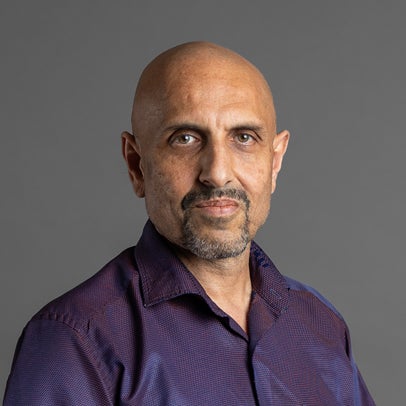
Dr. Prasanna R Kolatkar
Senior Scientist
Educational Qualifications
PhD in Chemistry
BA in Biology
Entity
Qatar Biomedical Research Institute
Division
Diabetes Research Center
Biography
Dr. Prasanna R Kolatkar graduated in structural biology from the University of Texas at Austin in 1991. He has worked in the Michael Rossmann laboratory at Purdue University focusing on virus-receptor relationships. Dr. Kolatkar was also awarded the Jane Coffin Childs Memorial Fund fellowship by Purdue University. He has experience working at the Bioinformatics Center, Institute of Molecular and Cell Biology, and Genome Institute of Singapore.
Dr. Kolatkar's current research involves understanding the molecular details of transcription factor (TF) complexes associated with stem cell biology with pancreatic development. His laboratory employs biochemistry and structural biology to discover how TFs generate function through combinatorial interactions.
PhD in Chemistry
University of Texas at Austin, United States
1991
BA in Biology
Augustana College, Rock Island, IL, United States
1985
BA in Chemistry
Augustana College, Rock Island, IL, United States
1985
- Mechanistic analysis of transcription factor networks
- TFs in pluripotency and their combinatorial code
- TFs in diabetes pathways
- X-ray crystallography
Senior Scientist
Qatar Biomedical Research Institute, Hamad Bin Khalifa University
2013 - Present
Group Leader
Laboratory for Structural Biology, Genome Institute of Singapore, Singapore
2001 - 2013
Adjunct Associate Professor
Department of Biological Sciences, National University of Singapore, Singapore
2001 - 2013
Adjunct Associate Professor
Department of Computer Engineering, Nanyang Technological University, Singapore
2001 - 2013
Principal Investigator
Bioinformatics Centre, Institute of Molecular and Cell Biology, Singapore
2000 - 2001
- 2015; Thanaa Award for Professional Excellence, QBRI/QF
- 1999; Outstanding University Research Award, NUS
- 1992-1995; Jane Coffin Childs Memorial Fund for Medical Research (Post-doc)
- 1991; EAKIN Award for Research Excellence (Graduate Research) UT Austin
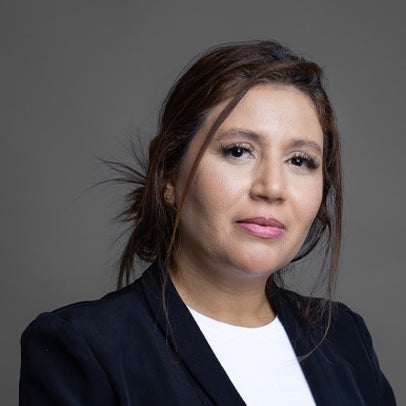
Dr. Ameni Boumaiza
Scientist
Phone
+974 33648053Office location
HBKU Research Complex, South Building B2-RDC-C001
Dr. Ameni Boumaiza
Scientist
Educational Qualifications
PhD in Computer Science (Graduated with honors from the Jury)
MS in Artificial Intelligence and Computer Science (“Awarded Summa cum Laude")
Entity
Qatar Environment and Energy Research Institute
Biography
Dr. Ameni Boumaiza is currently working as a Scientist at Qatar Environment and Energy Research Institute (QEERI), Hamad Bin Khalifa University. She is serving as a Project Lead of the PV Adoption and Trade project under the Energy Management Program and has worked on several projects funded by the Qatar National Research Fund. Her primary research focus is on Solar Energy management and smart systems based on AI. She has completed several studies on solar PV adoption, techno-economic modeling of energy systems and energy trading applications based on the Blockchain technology.
Prior to joining HBKU/QEERI, Dr. Ameni Boumaiza received a full PhD merit-based scholarship from the Ministry of Higher Education and Research in France. She got her PhD in 2013 in Computer Engineering from the French Institute for Research in Computer Science and Automation INRIA and the University of Lorrain, France and from the Computer Vision Center CVC in UAB Barcelona, Spain. She has held various positions in academia and industry in France. She was a part of the French Alternative Energies and Atomic Energy Commission Institute CEA-List and the Vision and Content Engineering Lab LVIC in Saclay, Paris, France. Having benefited from closed interactions with laboratories, companies such as CEA-LVIC, INRIA, Thales, she got a strong background in artificial intelligence, renewable energy systems, computer vision, machine learning and robotics.
Her scientific research focuses on strategies addressing energy systems, artificial intelligence, robotics, image processing data science with an emphasis on data mining and machine learning and evaluative techniques to create solutions to complex challenges. She is specialized in software development modeling, simulation, testing, and quality assurance. She managed complex technical BI projects and collaborated directly with global engineering and research teams to create business intelligence solutions, and identify and assess new technologies prior to the software implementation.
PhD in Computer Science (Graduated with honors from the Jury)
University of Lorrain, the National Institute for Research in Computer Science and Automation INRIA; Nancy FRANCE.
2013
MS in Artificial Intelligence and Computer Science (“Awarded Summa cum Laude")
INRIA the National Institute for Research in Computer Science and Automation University of Lorraine, ENSI; FRANCE.
2009
Engineer Degree in Computer Science (“Awarded Summa cum Laude")
INRIA the National Institute for Research in Computer Science and Automation, University of Lorraine-ENSI; FRANCE.
2009
- Renewable Energy
- Blockchain Technology
- Energy Trading Applications
- Techno-economic Modeling
- Smart Cities
- Techno-economic Modeling
- Artificial Intelligence
- Neurosciences
- Computer Vision
- Image Processing
- Machine Learning
- Software Development
- Data Mining
- Robotics
- Image Processing
- Smart Systems Modelling
- Design and Development
Project lead, Scientist
Qatar Environment and Energy Research Institute, HBKU
Current Position
Software Engineer
Power International Holding, Qatar
2015 - 2017
Computer Vision Engineer/Postdoctoral Researcher
The French Alternative Energies and Atomic Energy Commission (CEA) Paris-France
2013 - 2015
Researcher Engineer
INRIA Grand-Est Nancy-France
2010 - 2013
Assistant Professor
University of Mathematics and Computer Science, UFR France, Master 2 MIAGE, Models Engineering, Data Mining, Information System Analysis
2010 - 2013
Book
“Graphics Recognition and Spotting in Graphical Documents Based on a Galois Lattice Structure”, “French Academic Press (January 1, 2014)”.
Book Chapter
Ameni Boumaiza. Antonio Sanfilippo, “A GIS Agent Based Modeling Environment for Blockchain Based Energy Trading”, Recent advances in Renewable Energy Technologies, Elsevier 2022.
Ameni Boumaiza, M. Sajjad, A. Sanfilippo, N. Mohandes, “Energy Trading Blockchain Framework Agents Modeling Approach”, Springer Special issue, International Conference on Sustainable Energy-Water-Environment Nexus in Desert Climate.
Invention Disclosure
Antonio P. Sanfilippo, Ameni Boumaiza, Nassma Mohandes, 2018 “Method and System for Automating Multi-Criteria Decision Analysis and Multi-Criteria Decision Making”, filed 2 August 2018.
Journals
Ameni Boumaiza, M. Sajjad, A. Sanfilippo, N. Mohandes, 2019 “Energy Trading Blockchain Framework Agents Modeling Approach”, Springer Special issue, International Conference on Sustainable Energy-Water-Environment Nexus in Desert Climate, ICSEWEN 2019.
Ameni Boumaiza, S. Abbar, N. Mohandes and A. Sanfilippo, 2018 "Modeling the Impact of Innovation Diffusion on Solar PV Adoption in City Neighborhoods." International Journal of Renewable Energy Research, vol. 8, no. 3, 2018, p.1749+.
Ameni Boumaiza, 2015 "A survey on sentiment analysis and visualization." Journal of Emerging Technologies in Web Intelligence, vol. 7, no. 1, 2015, p. 35+.
IEEE Conferences
Boumaiza A., Sajjad M., Sanfilippo A., 2020 “Agents-based Modeling for a Transactive Energy Trading Blockchain Framework”. 2020 Proceedings of European Photovoltaic Solar Energy Conference, EUPVSEC 2020.
Sajjad M., Boumaiza A., Sanfilippo A., 2020 “An optimal Agent-based Behaviors Model for Peer-to-Peer Energy Trading linked to Blockchain”. 2020 Proceedings of European Photovoltaic Solar Energy Conference EUPVSEC 2020.
Ameni Boumaiza, M. Sajjad, A. Sanfilippo, N. Mohandes, 2019 “Energy Trading Blockchain Framework Agents Modeling Approach”, International Conference on Sustainable Energy-Water-Environment Nexus in Desert Climate, ICSEWEN 2019.
Ameni Boumaiza, Antonio Sanfilippo, Nassma Mohandes, 2019 Multi-Criteria Decision Analysis for Renewable Energy Applications. The 36th European Photovoltaic Solar Energy Conference and Exhibition in Marseille, France.
Ameni Boumaiza, S. Abbar, N. Mohandes and A. Sanfilippo, 2018 "Innovation diffusion for renewable energy technologies," 2018 IEEE 12th International Conference on Compatibility, Power Electronics and Power Engineering (CPE-POWERENG 2018), Doha, 2018, pp. 1-6.
Ameni. Boumaiza, S. Abbar, N. Mohandes and A. Sanfilippo, 2018 "Modeling innovation diffusion for renewable energy technologies in city neighborhoods," 2018 9th International Renewable Energy Congress (IREC), Ham Mamet, 2018, pp. 1-6.
Antonio Sanfilippo, Ameni Boumaiza and Nassma Mohandes, 2019 Multi-Criteria Decision Analysis in Residential PV Adoption. The International Conference on Innovative Applied Energy (IAPE’19), 14-15 March, 2019, St Cross College, University of Oxford, UK – KEYNOTE TALK
N. Mohandes, Ali Elrayyah, Antonio Sanfilippo, Ameni Boumaiza, 2018 Impact of PV Power Loss/Gain on PV Power Cost and PV Adoption. The 35th European Photovoltaic Solar Energy Conference and Exhibition in Brussels, Belgium.
N. Mohandes, Ali Elrayyah, Antonio Sanfilippo, Ameni Boumaiza , 2018 Impact of PV Power Loss/Gain on PV Power Cost and PV Adoption, IAPE 2018.
Ameni Boumaiza, 2016 A Survey on Sentiment Analysis and Visualization, Qatar Foundation Annual Research Conference ARC 2016.
Ameni Boumaiza, Salvatore Tabbone. 2012 Impact of a Codebook Filtering Step on a Galois Lattice Structure for Graphics Recognition. 21st International Conference on Pattern Recognition, Nov 2012, Tsukuba International Congress Center, Japan. pp.4, 2012.
Ameni Boumaiza, Salvatore Tabbone. 2012 Symbol Recognition using a Galois Lattice of Frequent Graphical Patterns. 10th IAPR International Workshop on Document Analysis Systems, Mar 2012, Gold Coast, Queensland, Australia. 2012.
Ameni Boumaiza, Salvatore Tabbone. 2011 A Novel Approach for Graphics Recognition based on Galois lattice and Bag of Words representation, 10th International Conference on Document Analysis and Recognition - ICDAR 2011, Sep 2011, Pekin, China. IEEE, pp.829-833, 2011.
Ameni Boumaiza, Salvatore Tabbone, 2011 Classification de symboles avec un treillis de Galois et une representation par sac de mots, "ORASIS" International Congress for researchers in computer vision, 2011 France.
Ameni Boumaiza, Salvatore Tabbone. 2011 Symbol Spotting Based on the Galois Lattice Structure, 11th IAPR International Workshop on Document Analysis Systems, DAS 2011.
- 2021; Awarded Project, QNRF (PI-NPRP 13th Cycle, January 2021).
- 2013; Ph. D in Computer Science: Graduated with honors from the Jury; France.
- 2010; Full Ph-D 3-years Scholarship Grant from the Ministry of Higher Education and Research and the National Institute for Research in Computer Science and Automation INRIA, France and the Eureka SCANPLAN Project (Barcelona, Spain).
- 2009; Major in MS in Artificial Intelligence, Data Decision Analytics, Robotics and Computer Science, INRIA the National Institute for Research in Computer Science and Automation INRIA University of Lorraine, ENSI; France.
- 2009; Major in Computer Science Engineering; Tunisia, France.
- 2009; Full Engineer-Internship Abroad Scholarship & Grant from the National School in Computer Science, ENSI-Tunisia and the Ministry of Higher Education and Research, France.
- 2009; Full Master Internship Abroad Scholarship Grant from the National School in Computer Science, ENSI-Tunisia and the Ministry of Higher Education and Research, the National Institute for Research in Computer Science and Automation INRIA France.
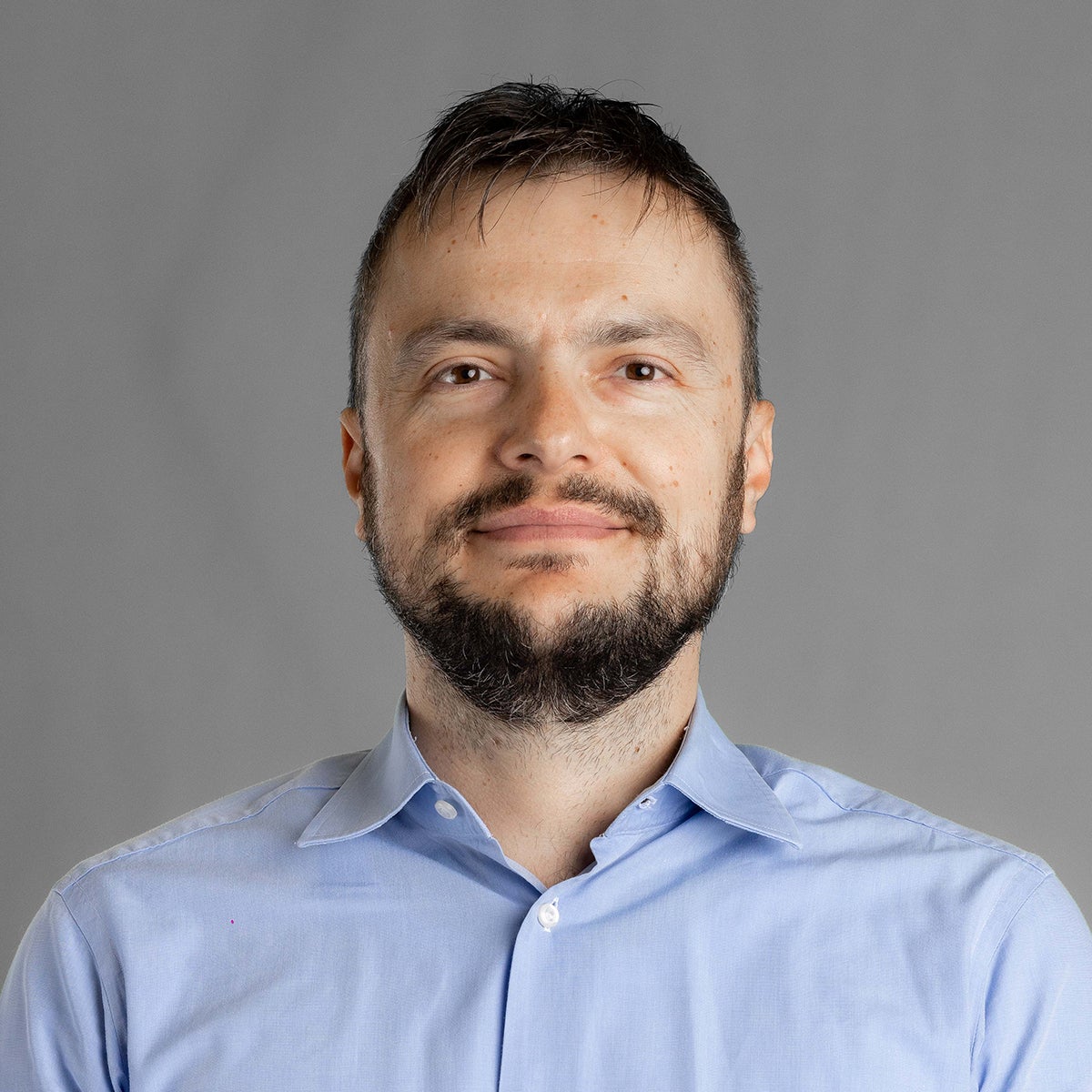
Christos Fountoukis
Senior Scientist
Educational Qualifications
PhD in Chemical Engineering
MS in Chemical Engineering
Entity
Qatar Environment and Energy Research Institute
Division
Sustainable Development
Biography
Christos Fountoukis received his PhD from the School of Chemical & Biomolecular Engineering of the Georgia Institute of Technology, in Atlanta, U.S. in 2007. He has been a Marie Curie Postdoctoral Fellow from 2008-2012 and a Project Scientist from 2012-2015 with the University of Patras and the FORTH research institute in Greece. Over the last 20 years he has participated in 15 large-scale integrated projects of the EU and the USA. He has more than 50 journal publications, h-index=30 and 4,304 citations (as of August 2022).
At QEERI, Christos is a Technical Team Leader for the atmospheric research modeling team within the Air Quality & Climate Change research program under the Environment and Sustainability Center. His research focuses on the application of air quality and climate models in the greater region of the Middle East with a special focus on the State of Qatar. He is also interested in atmospheric dust and solar energy forecasting and their effects on PV systems and solar power generation potential. Working closely with the measurement groups, the goal is to better understand the local and regional atmospheric conditions in order to identify efficient mitigation strategies toward a sustainable environment.
PhD in Chemical Engineering
School of Chemical and Biomolecular Engineering, Georgia Institute of Technology, Atlanta, USA
2007
MS in Chemical Engineering
School of Chemical and Biomolecular Engineering, Georgia Institute of Technology, Atlanta, USA
2005
BS (Diploma) in Chemical Engineering
Department of Chemical Engineering, Aristotle University of Thessaloniki, Greece.
2002
- Atmospheric chemistry
- air quality modeling and forecasting - early warning systems
- Climate modeling in the greater area of Middle East
- Dust storm modeling and operational forecasting in the greater area of Middle East
- Energy-Meteorology
- aerosol – radiation interactions
- prediction and forecasting of solar radiation for solar energy applications
- atmospheric particle deposition on photovoltaic plants
- UV index forecasting
- Atmospheric dispersion of radionuclides from nuclear power plant accidents - early warning systems
Senior Scientist
Qatar Environment and Energy Research Institute, Hamad Bin Khalifa University, Qatar Foundation, Doha, Qatar
2015 - Present
Adj. Professor (Joint Appointment)
Division of Sustainable Development, College of Science & Engineering, Hamad Bin Khalifa University (HBKU), Doha, Qatar.
2017 - 2018
Instructor
Massive Online Open Course (MOOC) on edX platform: Solar Resource Assessment in Desert Climates.
2019 – Present
Project Scientist
Laboratory of Air Quality Studies, School of Chemical Engineering, University of Patras, Patras, Greece.
2012 - 2015
Visiting Scientist - IASS Fellow
Institute for Advanced Sustainability Studies (JASS), Cluster: Sustainable Interactions with the Atmosphere, Potsdam, Germany.
2012
Post-doctoral (Marie Curie) Research Fellow
Institute of Chemical Engineering Sciences, Foundation for Research and Technology-Hellas, Patras, Greece.
2008 - 2012
Graduate Research/Teaching Assistant
School of Chemical & Biomolecular Engineering and School of Earth & Atmospheric Sciences, Georgia Institute of Technology, Atlanta, GA, USA.
2003 - 2007
Fountoukis, C., Y. Mohieldeen, L. Pomares, I. Gladich, A. Siddique, A. Skillern, M.A. Ayoub, Assessment of High-resolution Local Emissions and Land-use in Air Quality Forecasting at an Urban, Coastal, Desert Environment, Aerosol and Air Quality Research, 22 (6), 2022.
Roshan, D.R., M. Koc, A. Abdallah, L. Martin-Pomares, R. Isaifan, C. Fountoukis, UV-Index Forecasting under the Influence of Desert Dust: Evaluation against Surface and Satellite-Retrieved Data, Atmosphere, 11 (1), 96, 2020.
Fountoukis, C., H. Harshvardhan, I. Gladich, L. Ackermann, M.A. Ayoub, Anatomy of a severe dust storm in the Middle East: Impacts on aerosol optical properties and radiation budget, Aerosol and Air Quality Research, 20, 155-165, 2020.
Al-Thani, H., M. Koç, C. Fountoukis, R.J. Isaifan, Evaluation of particulate matter emissions from non-passenger diesel vehicles in Qatar, Journal of the Air & Waste Management Association, 70 (2), 228-242, 2020
Roshan, D.R., M. Koc, R. Isaifan, M.Z. Shahid, C. Fountoukis, Aerosol Optical Thickness over Large Urban Environments of the Arabian Peninsula—Speciation, Variability, and Distributions, Atmosphere, 10 (5), 228, 2019.
Fountoukis, C., B. Figgis, M.A. Ayoub, L. Ackermann, Effects of atmospheric dust deposition on solar PV energy production in a desert environment, Solar Energy, 164, 94–100, 2018.
Fountoukis, C., L. Pomares, D. Perez-Astudillo, D. Bachour, and I. Gladich, Simulating global horizontal irradiance in the Arabian Peninsula: Sensitivity to explicit treatment of aerosols, Solar Energy, 163, 347–355, 2018.
Fountoukis, C., M.A. Ayoub, L. Ackermann, D. Perez-Astudillo, D. Bachour, I. Gladich and R.D. Hoehn, Vertical ozone concentration profiles in the Arabian Gulf region during summer and winter: Sensitivity of WRF-Chem to planetary boundary layer schemes, Aerosol and Air Quality Research, 18: 1183–1197, 2018.
Fountoukis, C., L. Ackermann, M.A. Ayoub, I. Gladich, R. D. Hoehn, and A. Skillern, Impact of atmospheric dust emission schemes on dust production and concentration over the Arabian Peninsula, Modeling Earth Systems and Environment, 2:115, 2016.
- 2008 - 2012, Marie Curie International Reintegration Grant (FP7-PEOPLE-2007-4-3-IRG).
- 2003 - 2007, Graduate Research/Teaching Assistantship for Ph.D studies in the School of Chemical & Biomolecular Engineering, Georgia Institute of Technology, Atlanta, GA, U.S.A.
- 2007, Honorable mention in the AICHE (American Institute for Chemical Engineers) graduate student paper contest for outstanding graduate student contributions to environmental protection through chemical engineering.
- 2004, Recipient of a graduate studies scholarship from the Gerondelis Foundation, MA, USA for outstanding MS thesis.

Dr. Othmane Bouhali
Professor
Educational Qualifications
PhD in Sciences
Advanced MSc in Theoretical Physics
Entity
College of Science and Engineering
Biography
Dr. Bouhali received his PhD in Science from the Universite Libre de Bruxelles in 1999. Since 1994 he has participated in the Compact Muon Solenoid (CMS) experiment program at the Large Hadron Collider Project (LHC) at the European Organization for Nuclear and Particle Physics (CERN). He was also a member of the fixed target experiment HERMES at the Deutsches Electronen Synchrotron (DESY) and a member of the AMANDA/ICECUBE neutrino telescopes at the South Pole. His field of expertise includes: charged particle detectors, high energy and medical physics and high performance computing. He is Director of Research Computing and Research Associate Professor at Texas A&M University at Qatar.
He is the founder of the TAMU-Q Advanced Scientific Computing (TASC) Center. He is affiliated with the Qatar Computing Research Institute (QCRI) in the computational Science and Engineering group. He also chairs the HPC committee at Education City. He has served on many national and international committees, chaired conferences and workshops. In 2015 he received the Faculty Dean’s Distinguished Achievement Award.
PhD in Sciences
University of Brussels
1999
Advanced MSc in Theoretical Physics
University of Brussels
1994
MSc in Physics
University of Abdelmalek Essaadi, Morocco.
1992
His field of expertise includes:
- Charged particle detectors
- High energy and medical physics
- High performance computing
Research Professor
Director of Research Computing Texas A&M University at Qatar
Research Associate Professor, Director of Research Computing
Texas A&M University at Qatar
Director of Research Computing
Texas A&M University at Qatar
Head of the Computing group IIHE
University of Brussels, Belgium.
Researcher
University of Brussels
Researcher
The National Institute for Nuclear and High Energy Physics (NIKHEF), Amsterdam.
“Diffusion properties of Fe–C systems studied by using kinetic activation–relaxation technique”, J. Comp. Mat. Science, 112 (2016) 96
Application of GPU processing for Brownian particle simulation, Computer Physics Communications, Volume 186(2015), p. 39-47. CMS Collaboration, “A search for pair production of new light bosons decaying into muons”, Phys. Lett. B 752 (2016) 146,
“Advanced Computation of a Sparse Precision Matrix, HADAP: A Hadamard-Dantzig Estimation of a Sparse Precision Matrix”, proceedings of the COMPUTATION TOOLS 2015: The Sixth International Conference on Computational Logics, Algebras, Programming, Tools, an
“Search for supersymmetry in the vector-boson fusion topology in proton-proton collisions”, JHEP 11 (2015) 189,
- 2015 Faculty Dean’s Distinguished Achievement Award: Texas A&M Qatar
- 2016 Best UREP project, QNRF.
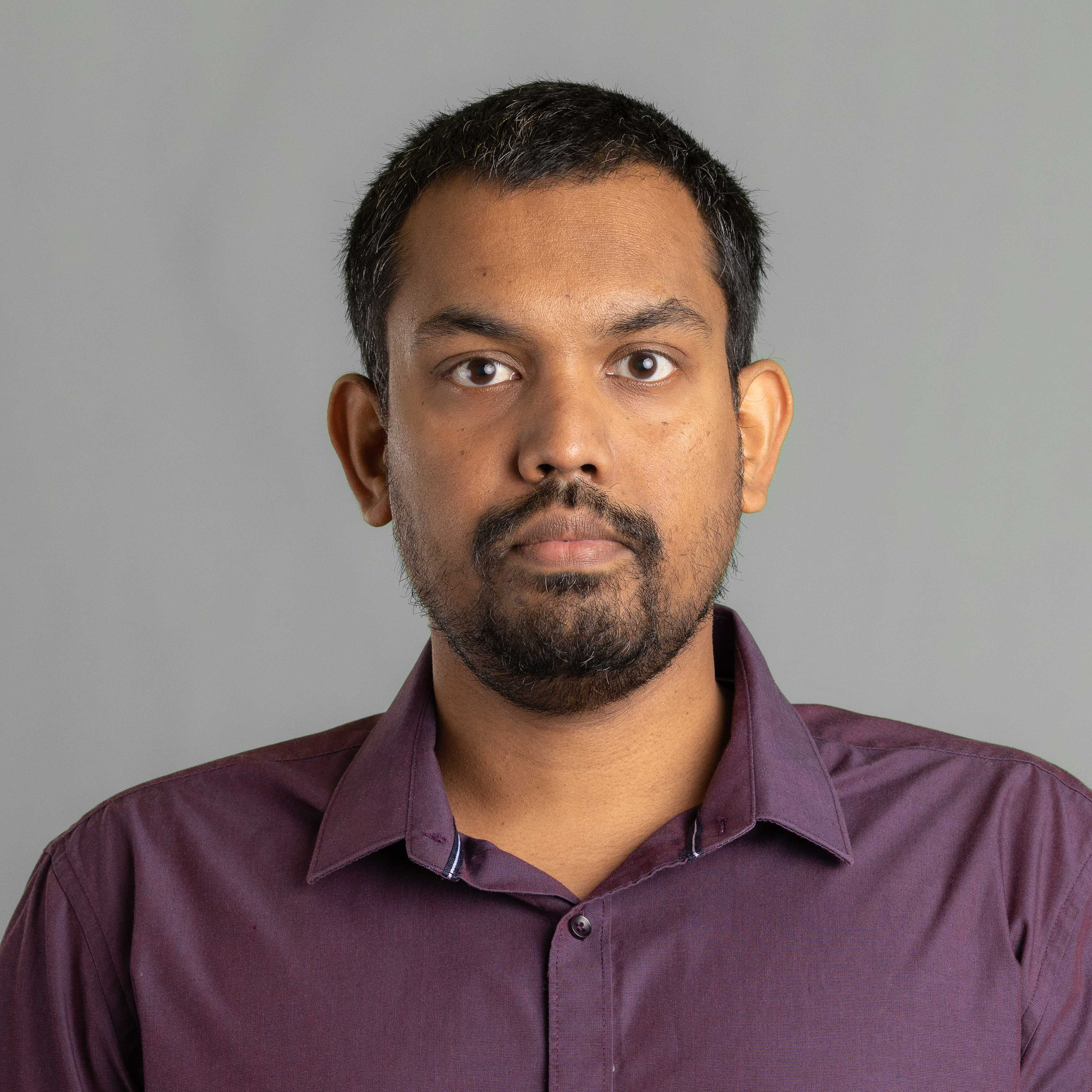
Dr. Jayaprakash Saththasivam
Senior Scientist
Dr. Jayaprakash Saththasivam
Senior Scientist
Educational Qualifications
PhD in Mechanical Engineering
B. Eng in Mechanical - Aeronautical Engineering
Entity
Qatar Environment and Energy Research Institute
Biography
Dr. Jayaprakash Saththasivam is a Senior Scientist at Qatar Environment and Energy Research Institute of Hamad Bin Khalifa University. He graduated with First Class Honors (Mechanical-Aeronautics Engineering) from the University Teknologi Malaysia in 2005 and with a PhD in Mechanical Engineering from the National University of Singapore (2011). Before joining QEERI, Dr. Saththasivam served as a research scientist at the Water Desalination and Reuse Center, KAUST, and the National University of Singapore.
His research focuses on advancing the efficiency and sustainability of water treatment processes. Through the development and implementation of innovative technologies, Dr. Saththasivam strives to bridge the gap between laboratory research and practical applications. His passion lies in validating and scaling up advanced technologies in pilot-scale studies to deliver real-world solutions for water challenges.
PhD in Mechanical Engineering
National University of Singapore, Singapore
2011
B. Eng in Mechanical - Aeronautical Engineering
Universiti Teknologi Malaysia, Malaysia
2005
- Wastewater Treatment and Reuse
- Advanced Oxidation Processes
- Blue-Green Infrastructure
- Pilot-scale Assessment of Water Treatment Technologies
Senior Scientist
Qatar Environment and Energy Research Institute, Hamad Bin Khalifa University
2024 - Present
Scientist
Qatar Environment and Energy Research Institute, Hamad Bin Khalifa University
2014 - 2024
Scientist
Water Desalination and Reuse Centre, King Abdullah University of Science and Technology, Saudi Arabia
2013 - 2014
Post-Doctoral Fellow
Water Desalination and Reuse Centre, King Abdullah University of Science and Technology, Saudi Arabia
2012 - 2013
Research Fellow
Department of Mechanical Engineering, National University of Singapore, Singapore
2010 - 2012
Research Engineer
Centre for Offshore Research and Engineering (CORE), National University of Singapore, Singapore
2008 - 2010
Utilities Engineer
Engineering and Technical Services, Malayawata Steel Bhd, Malaysia
2005 - 2006
- 2015; THANAA Award – Professional Excellence, Qatar Foundation
- 2013; Best Paper Award: Prediction of Chiller Power Consumption: An Entropy Generation, 6th International Meeting on Advanced Thermodynamics
- 2006; Competent International Toastmasters (CTM), Toastmasters International
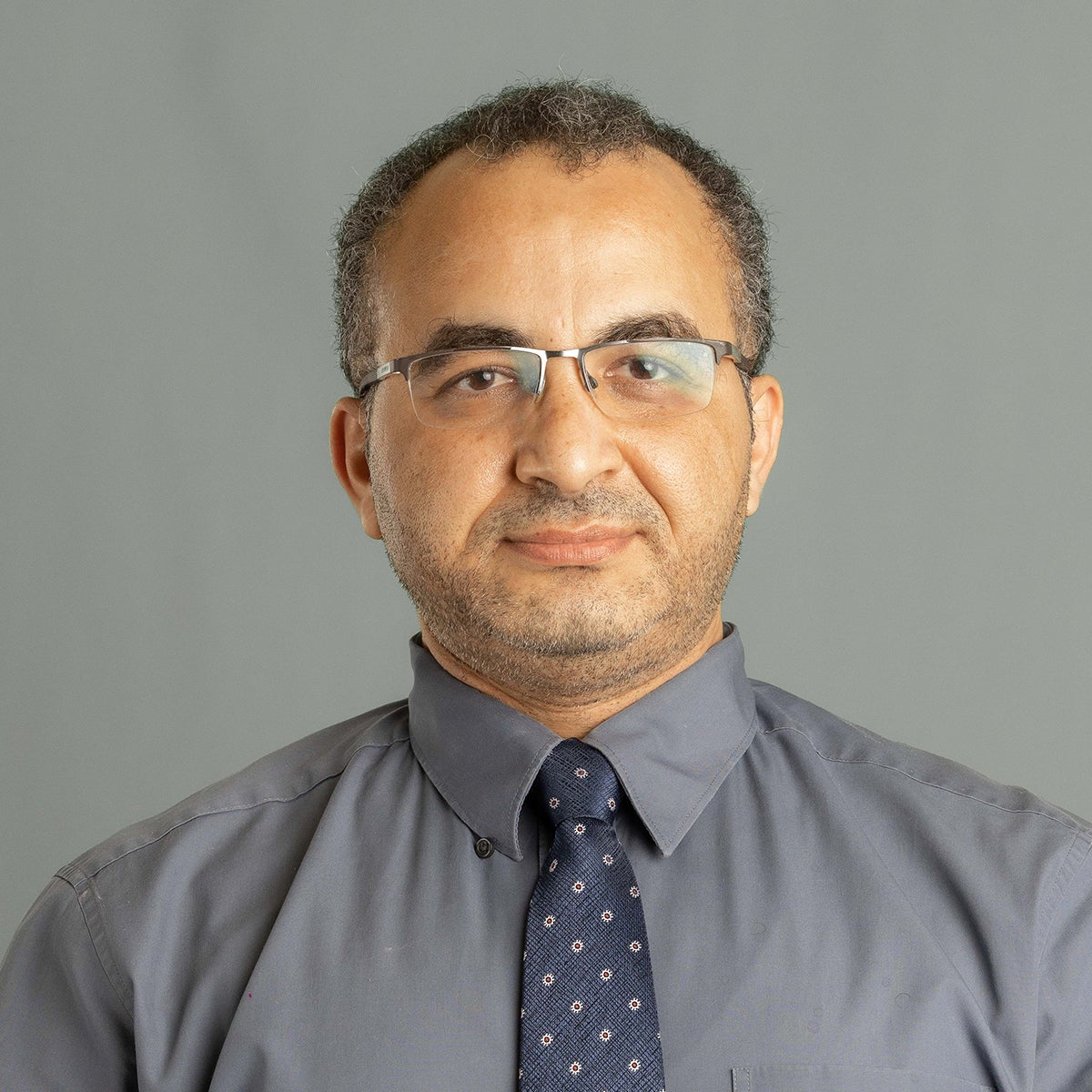
Dr. Khaled Mahmoud
Research Program Director
Phone
+974 4454 1694Office location
B2-0119, HBKU-RC, North Building, Seg. 5
Dr. Khaled Mahmoud
Research Program Director
Educational Qualifications
PhD.in Materials Science;
MSc.; in Analytical Chemistry;
Entity
Qatar Environment and Energy Research Institute
Division
Water science and technology
Biography
Dr. Khaled Mahmoud is Senior Scientist in Water Chemistry and Nanotechnology at the Qatar Environment and Energy Research Institute (QEERI). Prior joining QEERI, he worked as Research Officer in Biosensors and Nanobiotechnology at the Biotechnology Research Institute/National Research Council (CNRC), Montreal, Canada. He was the Director of Science & Technology at Bio Vision Technology Inc., Montreal, and an Assistant Professor at Faculty of Engineering, Port Said University. He obtained his PhD in Materials Science from University of Saskatchewan, Canada (2007) and MSc in Analytical Chemistry from Suez Canal University, Egypt (2003)
Dr Mahmoud research interest focus on the engineering and synthesis of functionalized nanomaterials for multidisciplinary applications including sustainable water treatment, energy storage, solar energy, environmental monitoring, nanocatalysis, and enhanced oil recovery applications. He is specialized in the synthesis and surface functionalization of 2D- carbon nanomaterials including MXene, graphenes, cellulose nanocrystals, and metal oxides.
Dr. Mahmoud is a member of the American Chemical Society (ACS), Canadian Society for Chemistry (CSC), Cellulose and Renewable Materials, ACS Colloids and Surface Sciences. He is co-author of 46 peer-reviewed papers, 5 book chapters, 2 patents, and 3 patent applications. He is recipient of The Excellence Award, NRC Montréal, Canada (2011); NSERC fellow, CNRC Canada.
PhD.in Materials Science;
University of Saskatchewan, Saskatoon, Canada.
2007
MSc.; in Analytical Chemistry;
Suez Canal University, Egypt.
2003
BSc., in Chemistry,
Suez Canal University, Egypt.
1996
- 2D metal carbides (MXenes) and graphene based membranes and adsorbents for water purification;
- Antimicrobial nanocomposites for seawater disinfection and antifouling coatings;
- “Green” biocides for sulphate reducing bacteria (SRB) and anti-microbial influenced corrosion (MIC);
- Nanomaterials for photovoltaic transparent electrodes and Li ion battery anode;
- Nanocomposites for EOR and oil/water separation applications;
- Electrochemical sensors for water pollutants.
Senior Scientist
Qatar Environment and Energy Research Institute (QEERI).
2012-current
Director of Science & Technology;
Bio Vision Technology Inc Montreal, Canada.
2011-2012
Visiting Professor
Énergie, Matériaux et Télécommunications (ÉMT), INRS, Varennes, Canada.
2011-2012
Research Officer
National Research Council (CNRC), Montreal, Canada.
2008-2011
NSERC post-doctoral fellow,
National Research Council (CNRC),Montreal, Canada.
2007-2008
Efficient Antibacterial Membrane based on Two-Dimensional Ti3C2Tx (MXene) Nanosheets” Scientific Reports 7
“Antibacterial Activity of Ti3C2Tx MXene” ACS nano 10, 3674-3684
“Effect of surface termination on ion intercalation selectivity of bilayer Ti3C2Tx (T= F, O and OH) MXene” Applied Surface Science 416, 725-730
S.V. Gaponenko “Nanoplasmonic Raman detection of bromate in water” Optics Express, 24, A174-179
“Transparent and conductive Ti3C2Tx (MXene) thin film fabrication by electrohydrodynamic atomization technique” Journal of Materials Science: Materials in Electronics, 27, 5440-5445
Charge-and size-selective ion sieving through Ti3C2Tx MXene membranes The Journal of Physical Chemistry Letters 6, 4026-4031
“Functional graphene nanosheets: the next generation membranes for water desalination” Desalination 356, 208-225
“Preparation of well-dispersed gold/magnetite nanoparticles embedded on cellulose nanocrystals for efficient immobilization of papain enzyme” ACS applied materials & interfaces 5, 4978-4985
“Fe3O4/Au nanoparticles/lignin modified microspheres as effectual surface enhanced Raman scattering (SERS) substrates for highly selective and sensitive detection of 2,4,6-trinitrotoluene (TNT)” Analyst 138, 2712-2719
“Effect of surface charge on the cellular uptake and cytotoxicity of fluorescent labeled cellulose nanocrystals” ACS applied materials & interfaces 2 (10), 2924-2932
JHT Luong Cellulose nanocrystal/gold nanoparticle composite as a matrix for enzyme immobilization ACS applied materials & interfaces 1, 1383-1386
“Impedance Method for Detecting HIV-1 Protease and Screening For Its Inhibitors Using Ferrocene− Peptide Conjugate/Au Nanoparticle/Single-Walled Carbon Nanotube Modified Electrode” Analytical chemistry 80, 7056-7062
“Picomolar detection of protease using peptide/single walled carbon nanotube/gold nanoparticle-modified electrode” Acs Nano 2, 1051-1057
“A bioorganometallic approach for the electrochemical detection of proteins: a study on the interaction of ferrocene–peptide conjugates with papain in solution and on Au surfaces” Chemistry-a European Journal 13, 5885-5895
- 2011; Excellence in Research Award, National Research Council CNRC Montréal/Canada
- 2007; NSERC Fellow; National Research Council CNRC; Canada.