Apply Now
By combining world-class scientific expertise with advanced arid-environment research, the two institutions aim to elevate the resilience of next-generation high-efficiency solar cells
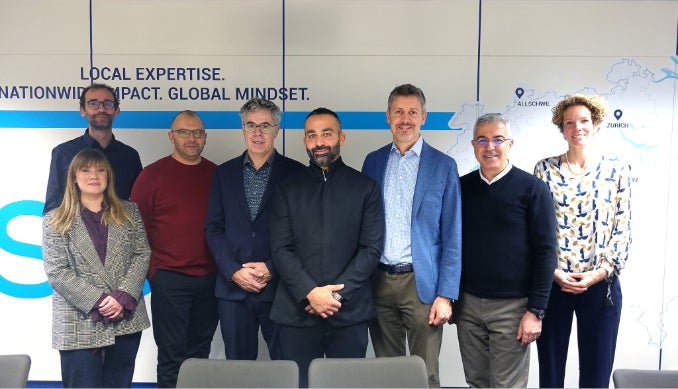
Hamad Bin Khalifa University’s (HBKU) Qatar Environment and Energy Research Institute (QEERI) has signed a landmark research agreement with the Swiss Technology Innovation Center (CSEM) to advance research in advanced materials and design strategies to mitigate performance losses in photovoltaic technologies under harsh environments. This agreement brings together QEERI, which is driven by research for impact by enhancing sustainability and resilience in harsh and arid environments, with CSEM, one of Switzerland’s premier applied research organizations supporting industrial and technological pioneers, from renowned Swiss watchmakers to global electronics leaders and the European Space Agency.
The project will address a key challenge in modern photovoltaics in arid environments, ensuring the long-term durability, reliability, and efficiency of advanced solar technologies such as TOPCon (Tunnel Oxide Passivated Contact), SHJ (Silicon Heterojunction), and back-contact architectures. These next-generation high-efficiency solar cell designs offer superior performance compared to conventional technologies but require enhanced resilience to operate reliably under the extreme climatic conditions of Qatar and the wider Middle East and North Africa (MENA) region.
Commenting on the significance of this agreement, Dr. Tareq Al-Ansari, Executive Director, QEERI, stated: “We are excited by this partnership with CSEM as it reflects our commitment to fostering value-driven partnerships around key national research priorities. We strongly believe that the collaboration with CSEM will be impactful, the results of which will contribute to creating scientific excellence and impact in the field of solar energy for arid climates.”
Through coordinated research facilitated by the exchange of scientists from the two institutions, leading to intellectual property and knowledge development, this partnership seeks to deliver scientific breakthroughs and catalyze commercialization pathways for high-efficiency solar modules tailored to harsh climates. The partnership will contribute to shaping international standards for photovoltaic reliability, ensuring long-term continuity and impact.
Dr. Brahim Aïssa, Research Director, Materials Unit, QEERI, added: “This collaboration with CSEM accelerates the development of high-efficiency solar materials and module designs capable of withstanding Qatar’s extreme climatic conditions. By bringing together Swiss experience and innovation in solar energy, coupled with QEERI’s expertise in arid environments, this partnership advances national renewable-energy priorities and sets new benchmarks for durable, reliable photovoltaic technologies in harsh environments.”
Prof. Christophe Ballif, the departing Head of Sustainable Energy, CSEM, commented: “This collaboration with QEERI addresses a critical need to enhance the reliability and performance of high-efficiency photovoltaic technologies operating in harsh environments.”
The unique collaboration was emphasized by Prof. Tonio Buonassisi, the incoming Head of Sustainable Energy at CSEM, who stated: “By combining CSEM’s applied research strengths with QEERI’s operational experience in arid climates, this partnership will accelerate the deployment of resilient solar technologies.”
The collaboration between QEERI and CSEM will strengthen capacity building and knowledge exchange, where QEERI researchers will gain access to CSEM’s advanced manufacturing and testing facilities, while CSEM will leverage field data gathered under Qatar’s unique environmental conditions.
Share: