 Apply Now
Senior health leaders and policymakers from more than 12 countries took part in a four-day program focused on building health diplomacy, policy capacity and cooperation
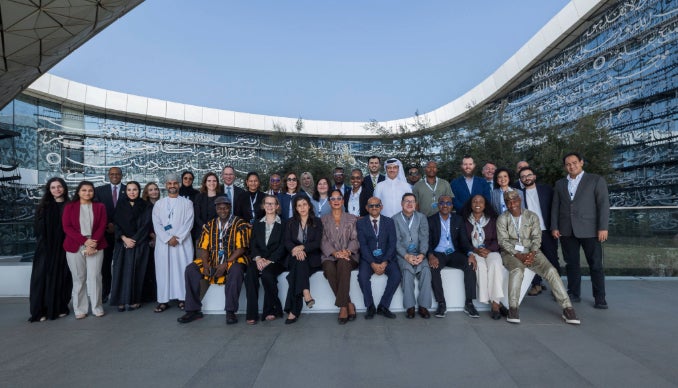
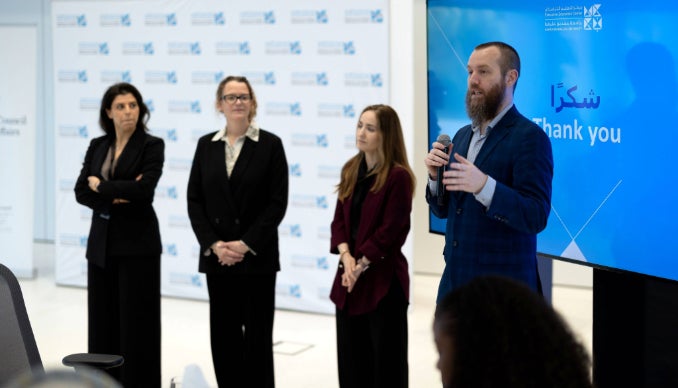
Hamad Bin Khalifa University’s (HBKU) Executive Education Center (EEC), in partnership with the Middle East Council on Global Affairs (ME Council), organized the Executive Program on Global Health Diplomacy and Cooperation, bringing together senior health leaders and policymakers from government institutions and health organizations across more than 12 countries in Africa, the Middle East, including Qatar. Held in Doha from September 14–17, the four-day program concluded with a certificate ceremony recognizing participants.
The program formed part of the ME Council’s Doha Health Initiative for the Global South, in partnership with the Gates Foundation, which seeks to strengthen the policy and diplomatic capacities of health leaders from the Global South and support greater engagement and representation in global health governance and multilateral policy processes.
For HBKU, the program reflects the University’s commitment to developing capacity needed to address complex challenges at the intersection of health, policy and international affairs. By convening expertise from its academic, as well as Qatar’s health and education community, HBKU connects interdisciplinary views to executive learning, inform policy, and reinforce regional capabilities in global health.
Designed specifically for senior public health leaders, the Executive Program addresses the evolving environment in which health policy is shaped not only by medical and scientific considerations, but also by geopolitics, foreign policy, security, financing, trade, innovation, and crises. It further advances participants’ practical skills in health diplomacy, negotiation, and multisectoral engagement.
Faculty from HBKU’s College of Public Policy, College of Health and Life Sciences, and College of Islamic Studies contributed to the program, alongside experts from Sidra Medicine, Hamad Medical Corporation’s ITQAN Clinical Simulation and Innovation Center, Qatar University and the World Innovation Summit for Health (WISH).
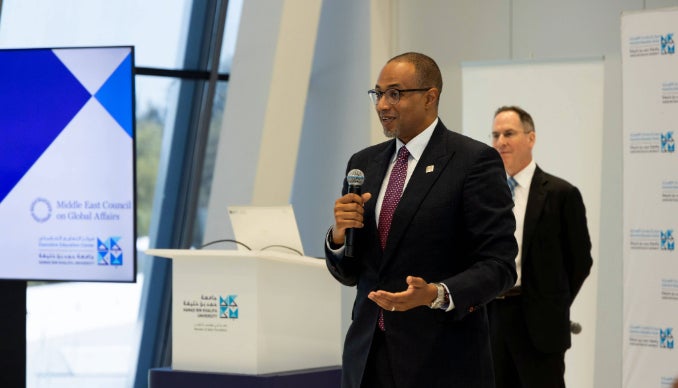
“Global health diplomacy illustrates the increasingly important connection between health, policy and international affairs,” commented Mohamed Abuelgasim, Executive Director, EEC. “We were pleased to welcome senior officials from across the region, whose participation added insightful perspectives and experience to the program. As a national research university, HBKU has a role to play in bringing its expertise to these intersections and developing the capabilities that professionals need to respond to complex challenges. Through executive education and collaboration with stakeholders like the ME Council, we seek to translate our academic excellence into practical learning that supports Qatar’s priorities, strengthens professional capacity, and contributes to lasting prosperity.”
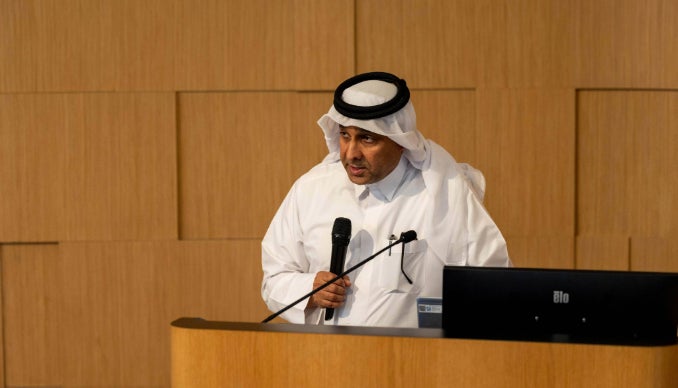
Dr. Khalid Al-Jaber, Executive Director, ME Council, added: “We are living through an exceptionally challenging period for our region and for the world. Conflict, geopolitical competition, economic uncertainty, and pressure on multilateral institutions are making international cooperation more difficult. And yet, these are precisely the moments when cooperation becomes more important, not less. Health reminds us of this very clearly.”
He continued: “Disease does not recognize borders. Pandemics do not distinguish between nationalities. Challenges such as antimicrobial resistance, access to healthcare, health financing, and preparedness cannot be addressed by any country acting alone. As this program has demonstrated, health policy today is connected not only to medicine and science, but also to diplomacy, foreign policy, security, financing, trade, innovation, and international cooperation. This is why health diplomacy matters.”
The participation of officials from health ministries across Africa and the region also provided an opportunity for cross-regional exchange, allowing them to share national experiences and develop professional relationships that can support cooperation beyond the program. The dialogue underscored the ongoing collaboration between HBKU and the ME Council in supporting international health leadership and policymaking.
Share: