 Apply Now
Event Starts in:
Conference Overview
The Center for Islamic Economics and Finance (CIEF) at the College of Islamic Studies, Hamad Bin Khalifa University (HBKU), in collaboration with the Qatar Financial Centre (QFC) Authority, invites scholars, practitioners, policymakers, regulators, development institutions, and industry leaders to submit papers for the 9th International Conference on Islamic Finance and Economy (ICIFE).
The conference explores how Islamic principles, economics and finance can guide decision-making and contribute to peace-oriented development, social resilience, ethical reconstruction and responsible security in a geopolitically unstable world.
Conflict-affected economies often face weakened institutions, damaged infrastructure, limited access to long-term capital and urgent reconstruction needs.
Islamic finance is well positioned to offer both a normative and practical framework for protecting welfare, rebuilding productive capacity, mobilizing ethical capital, and supporting recovery in times of insecurity. The conference, therefore, invites research that moves beyond permissibility and asks how Islamic economics can help build humane, resilient and peace-oriented economic systems.
A central concern of the conference is to avoid normalizing destruction or treating war as an engine of growth. Instead, ICIFE 2026 encourages critical reflection on how Islamic finance and economics can support human protection, responsible public finance, livelihood restoration, institutional rebuilding, and sustainable peace.
The conference will be held in English and Arabic with live interpretation available in both languages.
Conference Objectives
- Develop Islamic economic and financial frameworks for peace, resilience, reconstruction, and responsible security.
- Examine how Maqasid al-Shariah, Adamiyyah, and Islamic jurisprudence on war and peace can guide ethics in conflict-affected contexts.
- Analyze the impact of geopolitical risk on Muslim-majority economies, Islamic banking, Sukuk markets, capital flows, sovereign finance, trade, food security, energy markets, and monetary stability.
- Explore the role of Islamic social finance, Sukuk, blended finance, capital market instruments, and development finance in rebuilding livelihoods, institutions, infrastructure.
- Clarify the ethical boundaries of finance in relation to public security, strategic industries, defense sectors , humanitarian protection, and post-conflict recovery.
- Assess how emerging technologies, including artificial intelligence, cybersecurity, drones, surveillance, fintech, and digital infrastructure, are reshaping war, security, reconstruction, and financial ethics.
- Connect Islamic finance with Conscious Economics, Conscious Futures, foresight, scenario planning, anticipatory governance, social trust, human dignity, and resilience.
- Advance policy dialogue on peace-oriented and humane financial systems.
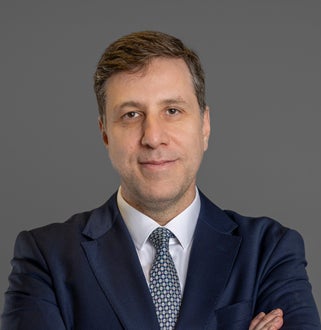
Conference Chair’s Message
It is my pleasure to welcome you to the 9th International Conference on Islamic Finance & Economy (ICIFE). This year’s conference addresses a timely and complex theme: “Islamic Economics Perspectives on Economies of War and Peace: Ethics, Resilience, Reconstruction, and Responsible Security”.
The conference invites critical reflection on how Islamic economics and finance can respond to the realities of geopolitical risk, fragile economies, humanitarian needs, damaged infrastructure, and post-conflict recovery. It also encourages discussion on the ethical boundaries of finance in relation to public security, strategic industries, emerging technologies, and responsible reconstruction.
The selected themes reflect the breadth and relevance of this agenda, bringing together Maqasid al-Shariah, Adamiyyah and human dignity, Islamic social finance, Sukuk and capital markets, food and energy security, digital infrastructure, cybersecurity, AI, and anticipatory governance.
Through these themes, I hope the conference will create a meaningful space for academic inquiry and policy engagement, while encouraging deeper reflection on the role of Islamic economics and finance in times of uncertainty, conflict, and reconstruction.
These discussions extend beyond financial instruments to encompass human protection, institutional resilience, ethical investment, public welfare, and long-term peace. I believe this makes the conference both timely and necessary, as it explores how Islamic economics and finance can contribute to more responsible, humane, and future-oriented economic systems.
I am confident that ICIFE will generate valuable research, constructive dialogue, and new pathways for collaboration among scholars, practitioners, policymakers, regulators, and development institutions. I thank all contributors and participants for their engagement in this important conversation.
Warm regards,
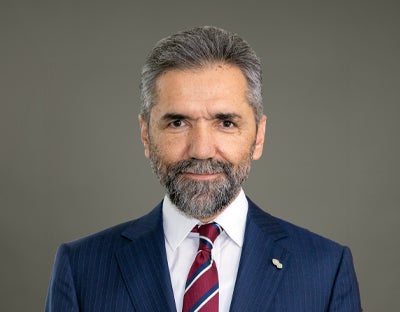
Dean’s Message
I am pleased to welcome you to the 9th International Conference on Islamic Finance & Economy (ICIFE), organized by the Center for Islamic Economics and Finance (CIEF) at the College of Islamic Studies, Hamad Bin Khalifa University, in collaboration with the Qatar Financial Centre (QFC) Authority.
This year’s theme, “Islamic Economics Perspectives on Economies of War and Peace: Ethics, Resilience, Reconstruction, and Responsible Security” explores one of the most urgent questions of our time: how can financial and economic systems respond ethically to conflict, fragility, and reconstruction? In a world increasingly affected by geopolitical instability, disrupted markets, food and energy insecurity, displacement, and fiscal pressures, the need for principled and humane economic thinking has never been more important. I believe Islamic economics and finance offer a valuable framework for this discussion. They are deeply rooted in the principles of human dignity, justice, social solidarity, and public welfare. These principles can guide our approaches to peace-oriented development, livelihood restoration, and responsible public finance. They can also inform the rebuilding of institutions and essential infrastructure. Through this conference, I invite all of you to reflect on the ethical boundaries of finance. This includes finance related to public security, emerging technologies, strategic industries, and post-conflict recovery.
At the College of Islamic Studies, we remain committed to advancing knowledge that is both intellectually rigorous and socially relevant. Through ICIFE, we aim to bring together scholars, policymakers, regulators, practitioners, development institutions, and industry leaders to examine how Islamic values and financial innovation can support more humane, inclusive, resilient, and future-ready economic systems.
I extend my sincere appreciation to our strategic partner, the QFC Authority, and to all speakers, participants, contributors, and members of the organizing committee. I look forward to the meaningful discussions and practical insights that will emerge from this important gathering.
Warm regards,
- Islamic Finance for Peace, Resilience and Reconstruction
- Peace-oriented development.
- Post-conflict recovery, livelihood restoration, and institutional rebuilding.
- Humanitarian response and long-term resilience.
- Risk-sharing, justice and economic recovery.
- Essential infrastructure, housing, health, education and food systems in post-conflict settings.
- Maqasid al-Shariah, Adamiyyah, and the Fiqh of War and Peace
- Maqasid-based approaches to public finance in fragile contexts.
- Adamiyyah, human dignity, humanitarian protection, and the preservation of life.
- Islamic jurisprudence on war, peace, proportionality, public interest and harm prevention
- Ethical limits of profit, investment, and public spending in conflict settings.
- Islamic economic thought on justice, security, social trust, and public welfare.
- Geopolitical Risk and the Future of Muslim Economies
- Regional conflicts, global power shifts, sanctions, and capital-flow disruptions.
- Energy insecurity, food-security pressures, trade-route disruption, and maritime risk.
- Sovereign financing, debt sustainability, fiscal pressure, and monetary stability.
- Migration, displacement, remittances, humanitarian finance, and development policy
- The global economic implications of conflicts affecting Muslim-majority regions.
- Islamic Banking, Sukuk, and Capital Markets in Conflict-Affected Contexts
- Islamic banking stability under geopolitical risk.
- Sukuk for reconstruction, infrastructure, resilience, and public services.
- Capital-market instruments for long-term development in fragile economies.
- Risk management, governance, liquidity, and financial stability in Islamic financial institutions.
- Public-private partnerships, blended finance, and development-bank cooperation
- Technology, Warfare, and Ethical Innovation
- Artificial intelligence, cybersecurity, drones, surveillance, and digital infrastructure.
- Fintech, digital payments, and financial inclusion in fragile and displaced communities.
- Ethical investment and governance standards for security-related technologies.
- Data, privacy, cyber resilience, and the protection of financial infrastructure.
- Innovation that supports recovery, accountability, inclusion, and human welfare.
- Conscious Economics, Conscious Futures, and Anticipatory Governance
- Foresight, scenario planning and anticipatory governance in Islamic finance.
- Conscious Economics and Islamic approaches to responsibility, justice, and social trust.
- Long-term resilience, intergenerational welfare, and ethical public policy.
- Early-warning systems, risk preparedness, and institutional learning.
- Financial systems designed around human dignity, peace and prosperity.
Submission Guidelines
ICIFE 2026 welcomes full papers in English or Arabic from scholars, researchers, practitioners, policymakers, regulators, and experts in Islamic finance, Islamic economics, political economy, development finance, public policy, reconstruction, humanitarian finance, and related fields.
- Full papers should be 8,000-10,000 words, including references, tables, and appendices unless otherwise indicated by the organizers.
- Submissions should follow APA 7th edition citation style.
- Papers should include a title, abstract, keywords, author name, institutional affiliation(s), contact details, and the selected theme and sub-theme.
- Authors should clearly explain the paper’s contribution to Islamic economics and finance and its relevance to the conference theme.
- Authors should clearly indicate under which subtheme and topic the paper title falls.
- Arabic submissions are welcome. Please include, where possible, an English title and abstract.
- Submissions should be original and not under review elsewhere at the time of submission, unless disclosed to the organizers.
- Please submit papers in Word or PDF format through the official submission link below.
Revision and Selection Criteria
Submissions will be reviewed for scholarly quality, originality, policy relevance, methodological rigor, engagement with Shariah principles (if applicable), and relevance to Islamic finance, peace, resilience, reconstruction, and geopolitical risk.
- Relevance to the main theme, subtheme and the selected topic.
- Clarity of the research question, argument, and contribution
- Strength of theoretical, empirical, legal, or policy analysis
- Engagement with Islamic economics, Islamic finance, Maqasid al-Shariah, or related ethical frameworks
- Potential contribution to policy, practice, institutional reform, or future research
Important Dates
| Deadline | Item |
|---|---|
| August 31, 2026 | Full Paper Submission Deadline |
| September 15, 2026 | Notification of Acceptance |
| September 30, 2026 | Final Paper Submission Deadline |
| November 29– 30, 2026 | Conference Dates |
Publication and Presentation Opportunities
Selected papers may be considered for inclusion in an edited volume subject to quality check, thematic fit, peer review, and publisher requirements. Further details will be announced by the organizers.
Accepted authors will be invited to present their papers during the conference. Details regarding that will be communicated upon acceptance.
How to Submit
Please submit your paper through the official submission portal: Submit Here
For inquiries, please contact the organizer: mumohammed@hbku.edu.qa
Suggested email subject line: ICIFE 2026 Paper Submission Query - [Author Name]