 Apply Now
primary
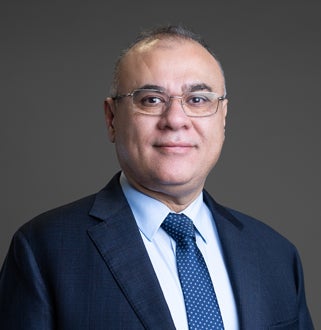
Dr. Eyad Ahmad Masad
Vice President for Research
Educational Qualifications
PhD in Civil Engineering
MSc in Civil Engineering
Entity
College of Science and Engineering
Biography
Dr. Eyad Ahmad Masad currently serves as the Vice President for Research at Hamad Bin Khalifa University, overseeing the continued growth of HBKU’s research ecosystem. Prior to joining HBKU as a Professor at the College of Science and Engineering, he spent 20 years at Texas A&M University and the branch campus in Qatar, where he held key leadership roles. Dr. Masad contributed to establishing the Qatar Foundation as a hub of research excellence. He is a distinguished member of the American Society of Civil Engineers (ASCE) and a fellow of the American Association for the Advancement of Science (AAAS).
Dr. Masad is recognized globally for his work in multi-scale characterization and modeling of infrastructure materials. Dr. Masad served in various leadership roles in professional organizations such as the American Society of Civil Engineers (ASCE), the Transportation Research Board (TRB), and the Academy of Pavement Science and Engineering (APSE).
Dr. Masad is on the editorial boards of many international journals. He is the recipient of several national and international awards in recognition of his leadership, academic, and research achievements, such as the Francis C. Turner Award (2022) from the Transportation and Development Institute of ASCE, the Monismith Lecture Award (2022) from the Geo-Institute of ASCE, and the James Laurie Prize (2019) from ASCE.
PhD in Civil Engineering
Washington State University, United States
1998
MSc in Civil Engineering
Washington State University, United States
1995
BSc in Civil Engineering
University of Jordan, Jordan
1993
- Design of resilient and sustainable infrastructure systems
- Multiscale characterization of infrastructure materials
- Constitutive modeling of materials
- Upcycling of materials
Professor
College of Science and Engineering, Hamad Bin Khalifa University
2024 - Present
Professor
Mechanical Engineering, Texas A&M University at Qatar
2009 - 2024
Professor
Zachry Department of Civil Engineering, Texas A&M University, United States
2009 - 2024
Associate Professor
Mechanical Engineering, Texas A&M University at Qatar
2007 - 2009
Associate Professor
Zachry Dept. of Civil Engineering, Texas A&M University, United States
2005 - 2009
Assistant Professor
Zachry Dept. of Civil Engineering, Texas A&M University, United States
2003 - 2005
Assistant Professor
Civil Engineering, Washington State University, United States
1998 - 2002
Eisenhower Fellow and Highway Research Engineer
Turner Fairbank Highway Research Center, Federal Highway Administration, United States
1997 - 1998
Vajipeyajula, B., Narayan, S. P. A., Masad, E., & Rajagopal, R. (2024). A thermodynamic viscoelastic model to capture the effects of confinement pressure on asphalt mixtures. International Journal of Pavement Engineering, 25(1).
Masoud, L., Hammoud, A., Mortada, Y., & Masad, E. (2024). Rheological, mechanical, and microscopic properties of polypropylene fiber reinforced-geopolymer concrete for additive manufacturing. Construction and Building Materials, 438.
Huang, J., Mohomad, Y., Kogbara, R., Masad, E., Sukhishvili, S., & Little, D. (2023). Stabilization of calcareous subgrade soils with polyelectrolytes: Mechanisms and mechanical properties. International Journal of Pavement Engineering, 24(1), Article 2190976.
Aljarrah, M., Karaki, A., & Masad, E. (2023). Reconstruction of asphalt nanostructures via generative adversarial networks. Journal of Materials in Civil Engineering, 35(8).
Roja, L. K., Masad, E., Krishnamoorthy, S., & Ouderni, M. (2023). Ageing characteristics of polyethylene-modified asphalt binders blended with different compatibilizers. International Journal of Road Materials and Pavement Design, 24.
- Distinguished Member of the American Society of Civil Engineers, 2024.
- Francis C. Turner Award 2022 from the Transportation and Development Institute of the American Society of Civil Engineers.
- Carl L. Monismith Lecture Award 2022 from the Geo-Institute of the American Society of Civil Engineers.
- Fellow of the American Association for the Advancement of Science, November 2019.
- James Laurie Prize 2019 from the Transportation and Development Institute of the American Society of Civil Engineers.

Aldana Al-Sulaiti
PhD Student Quantum Computing
Educational Qualifications
M.S. in Cybersecurity
B.S. in Information Systems
Biography
Aldana Al-Sulaiti is a PhD student in Computer Science and Engineering at Hamad Bin Khalifa University (HBKU). She earned her Bachelor's degree in Information Systems from Carnegie Mellon University in 2019 and her Master's degree in Cybersecurity from HBKU in 2025. Her research interest is in investigating quantum-enhanced approaches to machine learning.
M.S. in Cybersecurity
2025
Hamad Bin Khalifa University
B.S. in Information Systems
Carnegie Mellon University
2019
- Quantum machine learning
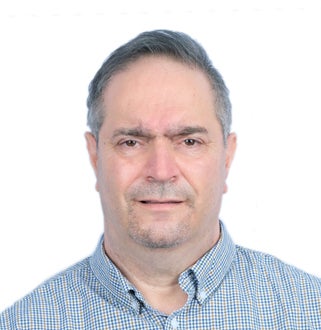
Dr. Sami El-Borgi
Professor
Educational Qualifications
PhD in Applied Mechanics and Structural Engineering
MS in Applied Mechanics and Structural Engineering
Entity
College of Science and Engineering
Biography
Dr. Sami El-Borgi is a Professor of mechanical engineering at the College of Science and Engineering at Hamad Bin Khalifa University. His field of research spans areas of structural health monitoring, continuum mechanics, fracture and contact mechanics, nonlinear vibration, finite element analysis, metamaterials, and smart manufacturing. He has published around 120 papers in high-impact journals in addition to one US patent. Over the last two decades, he has collaborated with well-known and reputable scholars in the fields of nonlinear vibration, fracture mechanics, contact mechanics, and finite element analysis.
Professor El-Borgi has been awarded numerous research grants with funding provided by the Tunisian Ministry of Higher Education, the Qatar National Research Fund, the U.S. National Science Foundation, the U.S. State Department, and the European Commission. In collaboration with Virginia Tech in 2003, he introduced a Master’s program in Computational Mechanics and a PhD program in Applied Mechanics at Tunisia Polytechnic School, University of Carthage, Tunisia. Prof. El-Borgi also serves as a reviewer for more than 60 international journals and is a member of the editorial board of a few engineering journals. In recognition of his services to the higher education sector, the Republic of Tunisia awarded him the Presidential Order of Merit of Education in 2008.
PhD in Applied Mechanics and Structural Engineering
Cornell University, United States
1992
MS in Applied Mechanics and Structural Engineering
Northwestern University, United States
1987
BS in Civil Engineering
Ohio State University, United States
1985
- Nonlinear vibration and structural health monitoring
- Fracture and contact mechanics
- Finite element analysis
- Metamaterials and additive manufacturing
Professor
College of Science and Engineering, Hamad Bin Khalifa University
2024 - Present
Professor
Mechanical Engineering, Texas A&M University at Qatar
2012 - 2024
Chairman and co-founder of the Applied Mechanics and Systems Research Laboratory
Tunisia Polytechnic School, University of Carthage, Tunisia
2009 - 2012
Professor
Department of Mechanics, University of Carthage, Tunisia
2004 - 2012
Founder and Chairman of the Applied Mechanics Doctoral Program
Tunisia Polytechnic School, University of Carthage, Tunisia
2004 - 2012
Founder and Chairman of the Computational Mechanics Master's Program
Tunisia Polytechnic School, University of Carthage, Tunisia
2002 - 2012
Chairman of the Mechanics Department
Tunisia Polytechnic School, University of Carthage, Tunisia
2002 - 2007
Associate Professor
Department of Mechanics, University of Carthage, Tunisia
1999 - 2004
Assistant Professor
Department of Mechanics, University of Carthage, Tunisia
1994 - 1999
Chairman of the Mechanics Department
Tunisia Polytechnic School, University of Carthage, Tunisia
1994 - 1999
Consulting Engineer
Structural Affiliates International, Inc., United States
1993 - 1994
Post-Doctorate Research Associate
School of Civil and Environmental Engineering, Cornell University, United States
1992 - 1993
Graduate Research Assistant and Teaching Assistant
School of Civil and Environmental Engineering, Cornell University, United States
1987 - 1992
Complete Publication Listing(s): Google Scholar
- Presidential Order of Merit of Education, Republic of Tunisia, 2008
- Tau Beta Pi: American National Engineering Honor Society, 1984 to present
- Chi Epsilon: American National Civil Engineering Honor Society, 1984 to present
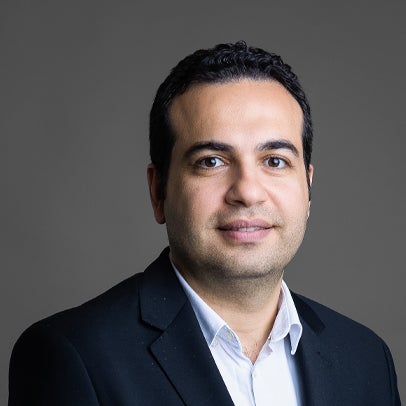
Dr. Mohammed Shaker
Scientist
Dr. Mohammed Shaker
Scientist
Educational Qualifications
PhD in Philosophy
Master of Medical Science (MMedSc)
Entity
Qatar Biomedical Research Institute
Division
Neurological Disorders Research Center
Biography
Dr. Mohammed R. Shaker is a Scientist at the Neurological Disorders Research Center, Qatar Biomedical Research Institute (QBRI) at Hamad Bin Khalifa University. He earned his PhD in Neuroscience from Korea University, Seoul, in 2017, and was subsequently awarded the prestigious Brain Korea 21 Plus Fellowship. He then joined the Australian Institute for Bioengineering & Nanotechnology (AIBN) at The University of Queensland, where he advanced organoid models for the study of human brain and spinal cord development.
Dr. Shaker’s research integrates patient-derived induced pluripotent stem cells (iPSCs) with organoid platforms, focusing on neurological disorders, e.g. white matter diseases and neural tube defects. His work has garnered multiple national and international accolades, such as fellowships from the Children’s Hospital Foundation and the European Leukodystrophy Association. Dr. Shaker continues to explore innovative 3D culture systems and computational approaches to accelerate breakthroughs in neuroregeneration and disease modeling. His pioneering research remains at the forefront of precision medicine and translational neuroscience.
PhD in Philosophy
Korea University, South Korea
2017
Master of Medical Science (MMedSc)
University of Malaya, Malaysia
2013
BSc in Biomedical Science
University of Malaya, Malaysia
2011
- Organoid-based modeling of human brain and spinal cord development to investigate white matter diseases and neural tube defects
- Patient-derived iPSC approaches for studying neurodegeneration and identifying therapeutic targets
- Developing innovative 3D culture systems and computational frameworks to accelerate disease modeling
- Translational applications of stem cell biology to advance regenerative therapies and precision neuroscience
Scientist
Qatar Biomedical Research Institute, Hamad Bin Khalifa University
2024 – Present
Senior Research Fellow
Australian Institute for Bioengineering and Nanotechnology, The University of Queensland, Australia
2022 – 2024
Postdoctoral Research Fellow
Australian Institute for Bioengineering and Nanotechnology, The University of Queensland, Australia
2018 – 2021
Research Professor
College of Medicine, Korea University, South Korea
2017 – 2018
- 2024; Travel Award to South Korea – Awarded by the KSBNS-APSN International Conference Committee.
- 2023; Spatial Pioneers Fellowship – Awarded by Millennium Science Australia.
- 2020; Travel Award to Singapore – Awarded by the APSN Organizing Committee.
- 2019; Travel Award to France – Awarded by the ISN-ASN International Conference Committee.
- 2015; Korea University Achievement Award – Awarded by Korea University.
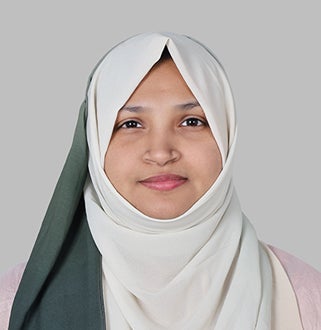
Dr. Jasni Viralippurath Ashraf
Postdoctoral Researcher
Dr. Jasni Viralippurath Ashraf
Postdoctoral Researcher
Educational Qualifications
PhD in Genomics and Precision Medicine
MSc in General Biotechnology
Entity
Qatar Biomedical Research Institute
Division
Translational Oncology Research Center
Biography
Dr. Jasni earned her BSc and MSc in General Biotechnology from the University of Calicut, India. She completed her PhD in Genomics and Precision Medicine from Hamad Bin Khalifa University, Qatar, under the supervision of Dr. Ayman Al Haj Zen. During her PhD, she characterized the functions of coronary artery disease GWAS gene candidates in the human aortic smooth muscle cell phenotype switching model of atherosclerosis.
In 2024, she joined Dr. Julie Decock’s team at QBRI as a Postdoctoral researcher. Her current research focuses on cancer-testis antigens and their role as biomarkers and therapeutic targets in Pediatric Solid Tumors.
PhD in Genomics and Precision Medicine
Hamad Bin Khalifa University
2024
MSc in General Biotechnology
University of Calicut, India
2017
Diploma In Bioinformatics
University of Calicut, India
2014
BSc in General Biotechnology
University of Calicut, India
2013
- Cell and Molecular Biology
- Aseptic cell and tissue culture
- Imaging and microscopy
- Bioinformatics and computational biology
Postdoctoral Researcher
Qatar Biomedical Research Institute, Hamad Bin Khalifa University
2024 - Present
Clinical Biochemist
Laboratory, Aspel Hospital, India
2014 - 2015
Fayed, H. S., Bakleh, M. Z., Howarth, A., Ebner, D., & Al Haj Zen, A. (2023). Selective ROCK Inhibitor Enhances Blood Flow Recovery after Hindlimb Ischemia. International journal of molecular sciences, 24(19), 14410.
Al Haj Zen, A. (2021). Role of Vascular Smooth Muscle Cell Phenotype Switching in Arteriogenesis. International journal of molecular sciences, 22(19), 10585.
Sasidharan Nair, V., Saleh, R., & Elkord, E. (2021). Role of circular RNAs in colorectal tumor microenvironment. Biomedicine & Pharmacotherapy, 137, 111351.
- 2024: Paul Dudley White International Scholar for an abstract submitted to the Vascular Discovery: From Genes to Medicine Scientific Sessions 2024.
- 2024: HBKU Conference Travel grant
- 2019-2024: HBKU scholarship for PhD graduate studies in Genomics and Precision Medicine, Hamad Bin Khalifa University
- 2017: INSPIRE fellowship from the Ministry of Science and Technology, Government of India.
Mahima Aggarwal
Research Assistant
Educational Qualifications
B.Tech in Electronics and Communications Engineering
Entity
Qatar Computing Research Institute
Division
Qatar Center for Artificial Intelligence
Biography
Mahima Aggarwal is a Research Assistant at Qatar Computing Research Institute where she focuses on anticipatory humanitarian actions using AI, particularly Large Language Models (LLMs). Her work involves creating authentic datasets about natural disasters, training models, and generating scenarios for effective anticipatory actions. She is a key contributor to QarSUMO, a parallel, congestion-optimized traffic simulator built on SUMO. Her contributions include improving accuracy, dynamic rerouting, load balancing, and integrating reinforcement learning for dynamic traffic prediction and network repartitioning. Additionally, she contributed to adding features to an end-to-end browser-based simulation/visualization system for local stakeholders.
With a strong foundation in embedded systems and software engineering, Mahima brings over 15 years of expertise in research, development, and system design. Before her current role, Mahima worked as a research assistant at Qatar University’s KINDI Center for Computing Research, focusing on cybersecurity for next-generation healthcare systems. Her career also includes roles as a testing & commissioning engineer at Sony Professional Solutions, as well as software engineering positions at NXP (Freescale Semiconductor) and KritiKal Solutions.
B.Tech in Electronics and Communications Engineering
Kurukshetra University, India
2004
- Anticipatory humanitarian actions using AI
- Traffic simulation and optimization
- Embedded systems and multicore development
Research Assistant
Qatar Computing Research Institute, Hamad Bin Khalifa University
2021 - Present
Research Assistant
KINDI Center for Computing Research, Qatar University
2020 - 2021
Testing and Commissioning Engineer
Sony Professional Solutions Europe, United Kingdom
2014 - 2019
Research Assistant
Qatar University
2013 - 2014
FSL Software Engineer II
Multicore, NXP (Freescale Semiconductor), India
2008 - 2012
FSL Software Engineer I
Boot Firmware, NXP (Freescale Semiconductor), India
2006 - 2008
Development Engineer
Embedded group, KritiKal Solutions, India
2006
Intern
Embedded group, KritiKal Solutions, India
2005
Dr. Ahmed Lekssays
Postdoctoral Researcher
Educational Qualifications
PhD in Computer Science
MSc in Software Engineering
Entity
Qatar Computing Research Institute
Division
Cybersecurity
Biography
Dr. Ahmed Lekssays is a Postdoctoral Researcher at Qatar Computing Research Institute. He obtained his PhD from the University of Insubria in Varese, Italy in 2022 funded by EU's Marie Skłodowska-Curie Actions, and his master’s and bachelor’s degrees from Al Akhawayn University in Ifrane, Morocco. His research interests include malware analysis, software security, and distributed systems.
PhD in Computer Science
Università degli studi dell'Insubria, Italy
2022
MSc in Software Engineering
Al Akhawayn University, Morocco
2019
BSc in Computer Science
Al Akhawayn University, Morocco
2018
- Malware analysis
- Software security
- Distributed systems
- Decentralized learning
Postdoctoral Researcher
Qatar Computing Research Institute, Hamad Bin Khalifa University
2024 - Present
Kumarasinghe, U., Lekssays, A., Sencar, H. T., Boughorbel, S., Elvitigala, C., & Nakov, P. (2024, July). Semantic ranking for automated adversarial technique annotation in security text. In Proceedings of the 19th ACM Asia Conference on Computer and Communications Security (pp. 49-62).
Lekssays, A., Carminati, B., & Ferrari, E. (2023). MalCon: A blockchain-based malware containment framework for Internet of Things. Computer Networks, 233, 109853.
Lekssays, A., Sirigu, G., Carminati, B., & Ferrari, E. (2022, August). MalRec: A blockchain-based malware recovery framework for Internet of Things. In Proceedings of the 17th International Conference on Availability, Reliability and Security (pp. 1-8).
Giaretta, L., Lekssays, A., Carminati, B., Ferrari, E., & Girdzijauskas, Š. (2021, September). LiMNet: Early-stage detection of IoT botnets with lightweight memory networks. In European Symposium on Research in Computer Security (pp. 605-625). Cham: Springer International Publishing.
Lekssays, A., Landa, L., Carminati, B., & Ferrari, E. (2021). PAutoBotCatcher: A blockchain-based privacy-preserving botnet detector for Internet of Things. Computer Networks, 200, 108512.
Complete Publication Listing(s): Google Scholar
Marie Skłodowska-Curie Actions Fellowship
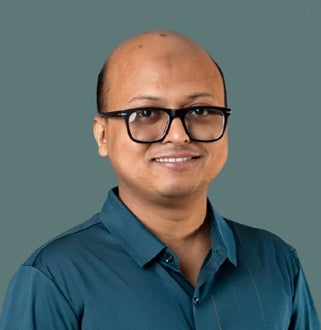
Dr. Tasnim Mohiuddin
Scientist
Educational Qualifications
PhD in Computer Science
BS in Computer Science
Entity
Qatar Computing Research Institute
Division
Arabic Language Technologies
Biography
Dr. Tasnim Mohiuddin is a Scientist in the Arabic Language Technologies group at Qatar Computing Research Institute (QCRI), where he works on pioneering initiatives in the development and enhancement of Large Language Models (LLMs). He is a core contributor to the creation of Fanar, QCRI's flagship LLM. His current research focuses on domain-specific LLM innovations, including specialized areas such as Code LLMs and Multimodal LLMs.
Before joining QCRI, Dr. Tasnim was a researcher at Huawei Research Center in Singapore, where he concentrated on multimodal representation learning, bridging both linguistic and visual modalities. His research contributions have been consistently recognized through publications in leading academic conferences.
Tasnim completed his doctoral studies at the School of Computer Science and Engineering, Nanyang Technological University (NTU), Singapore, receiving his PhD in June 2022 under the mentorship of Professor Shafiq Joty. His doctoral dissertation was honored with the prestigious Outstanding PhD Thesis Award, reflecting the originality and impact of his research. During his doctoral studies, he also gained valuable experience as a research intern at Meta AI Research, working under the guidance of Professor Philipp Koehn.
PhD in Computer Science
Nanyang Technological University, Singapore
2022
BS in Computer Science
Bangladesh University of Engineering and Technology, Bangladesh
2014
- Agents
- tools
- and planning
- Pre-training and post-training strategies for LLMs
- Multimodal language models
- Code language models
Scientist
Qatar Computing Research Institute, Hamad Bin Khalifa University
2024 - Present
Scientist
Poisson Lab, Huawei Research, Singapore
2022 - 2023
Research Intern
NLLB, Meta AI Research, United States
2021
Lecturer
Computer Science, United International University, Bangladesh
2015 - 2017
Software Engineer
SSD-Tech, Bangladesh
2014 - 2015
Mohiuddin, T., Koehn, P., Chaudhary, V., Cross, J., Bhosale, S., & Joty, S. (2022). Data selection curriculum for neural machine translation. Findings of the 2022 Conference on Empirical Methods in Natural Language Processing (EMNLP 2022), Abu Dhabi, UAE.
Bari, M. S., Mohiuddin, T., & Joty, S. (2021). UXLA: A robust unsupervised data augmentation framework for cross-lingual NLP. Proceedings of the Joint Conference of the 59th Annual Meeting of the Association for Computational Linguistics and the 11th International Joint Conference on Natural Language Processing (ACL-IJCNLP 2021), Bangkok, Thailand.
Mohiuddin, T., Bari, M. S., & Joty, S. (2021). AugVic: Exploiting BiText vicinity for low-resource NMT. Findings of the Joint Conference of the 59th Annual Meeting of the Association for Computational Linguistics and the 11th International Joint Conference on Natural Language Processing (ACL-IJCNLP 2021), Bangkok, Thailand.
Mohiuddin, T., Bari, M. S., & Joty, S. (2020). LNMap: Departures from isomorphic assumption in bilingual lexicon induction through non-linear mapping in latent space. Proceedings of the Conference on Empirical Methods in Natural Language Processing (EMNLP 2020).
Mohiuddin, T., Joty, S., & Nguyen, D. (2018). Coherence modeling of asynchronous conversations: A neural entity grid approach. Proceedings of the 56th Annual Meeting of the Association for Computational Linguistics (ACL 2018), Melbourne, Australia.
- Outstanding Ph.D. Thesis Award (2022), Nanyang Technological University (NTU), Singapore: Recognized for exemplary doctoral research demonstrating outstanding scholarly contribution to the field.
- National Graduate Scholarship (2018–2022), Government of Singapore: Prestigious full scholarship awarded in recognition of academic merit and research potential for doctoral studies.
- Dean’s List Award for Academic Performance (2010–2013), Bangladesh University of Engineering and Technology: Consistently recognized for superior academic performance among top-performing students.
- Best Undergraduate Thesis Poster Award (2014), Bangladesh University of Engineering and Technology: Awarded for outstanding research presentation and innovative research work.
- Top National Academic Performer (2008), Chittagong Education Board, Bangladesh: Ranked first among approximately 100,000 students in comprehensive Higher Secondary School Certificate examinations (12th grade), demonstrating exceptional academic prowess.

Dr. Mohamed Elfeky
Principal Software Engineer
Educational Qualifications
PhD in Computer Science
MSc in Computer Science
Entity
Qatar Computing Research Institute
Division
Arabic Language Technologies
Biography
Mohamed Elfeky is a Principal Software Engineer at Qatar Computing Research Institute. Before joining QCRI, he was a Senior Software/Research Engineer at Google, USA. He joined Google in 2005 after receiving his PhD in Computer Science from Purdue University.
At Google, Mohamed worked on many products, including Translate, AdSpam, Transliteration, and Search Query Understanding. More recently, Mohamed joined the Google Speech Recognition team in New York where he launched the Arabic Speech Recognition Model, and later helped the team grow the number of recognized languages to over 100. Mohamed has received two Founders’ awards at Google and he also has two patents under his name.
PhD in Computer Science
Purdue University, United States
2005
MSc in Computer Science
Alexandria University, Egypt
1999
BSc in Computer Science
Alexandria University, Egypt
1996
Principal Software Engineer
Qatar Computing Research Institute, Hamad Bin Khalifa University
2024 - Present
Software Engineering Manager
Applied Innovation Center, Egypt
2023 – 2024
Senior Software Engineer
Google, United States
2005 – 2023
Complete Publication Listing(s): Google Scholar
Basel Mousi
Research Assistant
Educational Qualifications
BE in Electrical and Computer Engineering
Entity
Qatar Computing Research Institute
Division
Arabic Language Technologies
Biography
Basel Mousi is a Research Assistant at the Qatar Computing Research Institute (QCRI), specializing in natural language processing. His research interests include the interpretability of deep language models and machine translation for low-resource languages. He earned a bachelor’s degree in electrical and computer engineering with distinction from the American University of Beirut. Additionally, he has published papers in leading NLP conferences, such as EMNLP, ACL, and COLING.
BE in Electrical and Computer Engineering
American University of Beirut, Lebanon
2022
- Interpretability
- Machine translation for low-resource languages
Research Assistant
Qatar Computing Research Institute, Hamad Bin Khalifa University
2022 - Present