 Apply Now

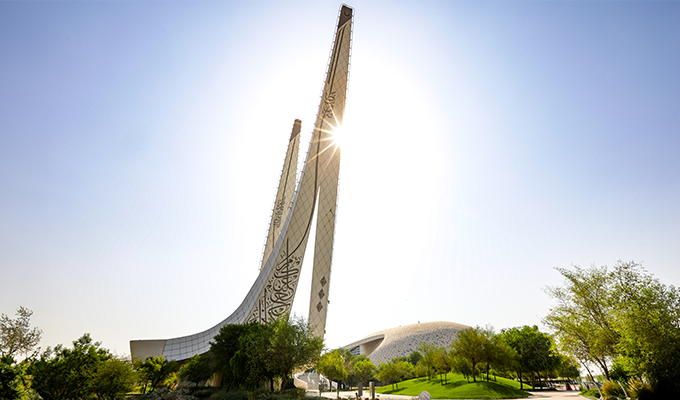
The University's activities underscored the role of research-led institutions in driving practical solutions to urgent environmental challenges
Hamad Bin Khalifa University (HBKU) brought its research expertise and scientific capabilities to the 2026 United Nations Climate Change Conference (COP31) in Antalya, Türkiye, contributing to discussions on climate action, food security, and sustainable energy, and addressing environmental challenges. Through faculty participation in conference sessions and the presentation of its research, the University underscored the role of research-led institutions in driving practical solutions to urgent environmental challenges.
Engaging with global policymakers and stakeholders shaping the future of climate action, the University demonstrated the depth of its research ecosystem in sustainability, which forms a part of its core institutional priorities and further supports Qatar’s ambitions for resource efficiency and sustainable development.
“Global climate frameworks succeed when supported by science that addresses regional realities,” said Dr. Eyad Ahmed Masad, Vice President for Research at HBKU. “Situated in a region facing arid conditions and water scarcity, HBKU is well positioned to address these challenges through research and innovation. At COP31, our faculty and researchers highlighted how interdisciplinary research can deliver practical solutions, from resilient energy grids and circular water systems to carbon utilization and integrated energy solutions. These efforts contribute to Qatar’s economic diversification while offering approaches that can be adapted and scaled across arid regions worldwide.”
During a session titled ‘Resilient Electrification for Hot Climates,’ Dr. Haitham Abu-Rub, Professor at HBKU’s College of Science and Engineering (CSE), explored how emerging technologies can advance clean mobility in countries facing heat-related challenges. His contribution drew on expertise in smart electric power grid technologies, for which he was recently recognized with the Arab Researchers Award.
In the session ‘Circular Solutions for Food and Water Security,’ Dr. Jayaprakash Saththasivam, Senior Scientist at the University’s Qatar Environment and Energy Research Institute (QEERI), presented practical approaches to circular resource management. He discussed how wastewater can be treated and reused, converting agricultural and landscaping waste into soil-enriching biochar, and integrating nature-based green infrastructure to strengthen urban resilience.
HBKU’s decarbonization research was also featured in a showcase led by Dr. Abdulkarem Amhamed, Principal Scientist. The research explores direct air capture (DAC) of carbon dioxide and its potential application in sustainable aviation fuel (SAF) production. The research further analyzes converting captured CO₂ into sustainable fuels using green hydrogen and catalytic processes, including a direct dimethyl ether (DME) route designed to reduce production steps and operational complexity.
Complementing these technology-driven approaches, Dr. Alaa Al-Qassabi, Research Fellow at HBKU, presented the Qatar TIMES project, an energy-systems modeling initiative developed by the Qatar Environment and Energy Research Institute (QEERI) in collaboration with Imperial College London and Kahramaa.
Using the TIMES modelling framework, it assesses emissions mitigation pathways for Qatar by examining how different processes align with national and international climate targets alongside their economic implications. The project provides evidence to inform climate policy recommendations tailored to Qatar’s hydrocarbon-based economy. Its interactive dashboard also offers a platform for sharing Qatar’s optimization capabilities and insights that could inform climate mitigation planning across the region.
In the drive to bridge the gap between climate commitments to implementation, HBKU remains committed to providing evidence-based research and innovative solutions to support sustainable development in Qatar and globally.
Share: