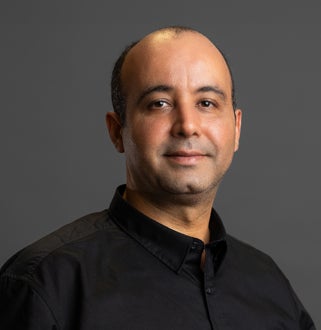
Dr. Houari Boumediene Abdesselem
Lecturer
Core Manager
Educational Qualifications
PhD in Biology
MSc in Cell and Molecular Biology
Entity
College of Health and Life Sciences
Biography
Dr. Abdesselem is a Core Manager at the Office of Vice President for Research and a Lecturer at the College of Health and Life Sciences. He obtained his PhD in Neurobiology from the University of Konstanz, Germany in 2009. His doctoral training in Prof. Stürmer’s lab focused on the function of the NOGO-66 myelin-associated proteins in nervous system regeneration. He then moved to the United States to conduct postdoctoral training at Weill Cornell Medicine (WCM)-New York and the University of Michigan-Ann Arbor, where he investigated the role of neuronal guidance molecules in developing the nervous system.
In 2012, he moved to Qatar to join WCM-Q as a Research Fellow to study the function of SIRT2 in obesity. In 2016, Dr. Abdesselem was offered the position of Laboratory Manager at QBRI to manage the Neurological Disorders Research Center where he worked in El Agnaf’s research group on alpha-synuclein proteins in Parkinson’s disease.
He made very significant contributions to the success of his research group in developing novel tools to understand the molecular pathogenesis of PD. In 2019, he successfully built the new Proteomics Core Facility and transferred new biomarker technologies to HBKU, such as Olink, Sengenics, CDI, and Quanterix. He has successfully led and managed the core facility, which became certified and fully operational in 2020. In addition to his management roles, he has published many peer-reviewed papers in high-impact factor journals.
PhD in Biology
Konstanz University, Germany
2009
MSc in Cell and Molecular Biology
Louis Pasteur University, France
2004
BSc in Cellular and Molecular Biology
Paris 11 Orsay University, France
2003
BSc in Biology
University of Oran, Algeria
2000
- Neurodegenerative diseases
- Proteomics
- immunoproteomics and biomarkers discovery
- Precision medicine
Core Manager
Office of Vice President for Research, Hamad Bin Khalifa University
2023 - Present
Guest Lecturer
College of Health and Life Sciences, Hamad Bin Khalifa University
2023 - Present
Laboratory Manager
Qatar Biomedical Research Institute, Hamad Bin Khalifa University
2016 - 2023
Postdoctoral Associate
Weill Cornell Medicine - Qatar
2012 - 2016
Postdoctoral Associate
University of Michigan, United States
2010 - 2012
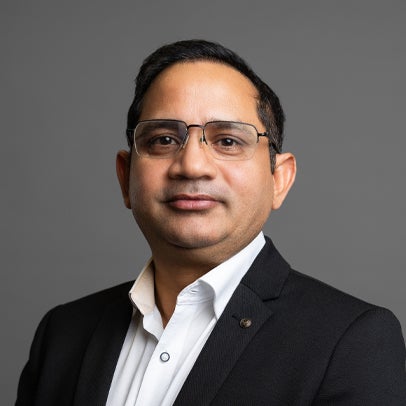
Dr. Mohammad Farhan
Associate Professor
Dr. Mohammad Farhan
Associate Professor
Educational Qualifications
PhD in Biotechnology
MSc in Biotechnology
Entity
College of Health and Life Sciences
Biography
Dr. Mohammad Farhan is an Associate Professor at the College of Health and Life Sciences at Hamad Bin Khalifa University. He leads an innovative research program focused on the genomics and epigenetics of psychiatric and neurological disorders. With a PhD in transcriptomic biomarkers of acquired epilepsy from the Institute of Genomics & Integrative Biology, Delhi, and postdoctoral training at the University of Oxford and A-STAR & Duke-NUS Medical School, he has cultivated a multidisciplinary expertise. At Hamad Bin Khalifa University, Dr. Farhan has established active collaborations with Sidra Medicine and Hamad Medical Corporation, investigating the genetics and biomarkers of mental health disorders in the Qatari population.
Dr. Farhan is a member of several scientific societies and serves as an editor for Translational Medicine Communications and Frontiers in Molecular Neuroscience. His research endeavors are supported by various grants from QNRF, MRC, and HBKU. Dr. Farhan’s research aims to unravel the molecular underpinnings of these conditions and pave the way for precision medicine approaches. Dr. Farhan's contributions to the field have been recognized through publications in high-impact journals such as Nature Methods, Neuron, Current Biology, PLOS Biology, BMC Medicine, etc. He actively engages in scientific outreach, participating in op-eds for newspapers, magazines, and TV shows, both locally and internationally.
PhD in Biotechnology
Savitribai Phule Pune University, India
2009
MSc in Biotechnology
Jamia Hamdard, India
2003
BSc Hons. in Botany
Aligarh Muslim University, India
2001
- Deciphering the genetic and epigenetic basis of Cerebral Palsy in Qatar for precision medicine strategies.
- Establishing a comprehensive precision medicine pipeline for Autism Spectrum Disorder
- spanning variant validation to multi-level phenotyping.
- Pioneering precision psychiatry through peripheral biomarker exploration and targeted therapeutics for Schizophrenia and treatment resistance.
- Leveraging Drosophila models
- in-silico approaches
- and machine learning to advance therapeutic discovery for neurological and psychiatric disorders.
Associate Professor
College of Health & Life Sciences, Hamad Bin Khalifa University
2024 - Present
Assistant Professor
College of Health & Life Sciences, Hamad Bin Khalifa University
2018 - 2024
Postdoctoral & Senior Research Fellow
Neuroscience and Behavioural Disorders, Duke-NUS Medical School, Singapore
2011 - 2018
Postdoctoral Fellow
Institute of Molecular & Cell Biology, The University of Oxford, United Kingdom
2009 - 2010
Complete Publication Listing(s): Google Scholar
- QNRF-NPRP14S: (LPI); A Precision Medicine Initiative To Target Pediatric Cerebral Palsy, A Movement Disorder. (US$ 629,557).
- QNRF-UREP28 (LPI): Exploring neuronal and non-neuronal defects associated with neurodevelopmental disorders. (US$ 10,000)
- QNRF- NPRP13S: (PI); Establishing a precision medicine platform to target colorectal cancer in preclinical models. (US$ 420,000).
- HMC-MRC-2022: (PI); Mechanisms mediating resistance to antipsychotic therapy in schizophrenia: Identifying novel therapeutic targets in the Qatari population. (US$ 100,000).
- HMC-MRC-2023: Role of Inflammatory Biomarkers in the Treatment Efficacy in Patients with Major Depressive Disorder. (US$ 100,000).
Lina Hassna
Programs & Partnership Senior Manager
Entity
Qatar Biomedical Research Institute
Division
Management
Biography
Lina Hassna holds the position of Planning Manager at QBRI. She has a combined technical and management experience. She started her career in 2005 at Hamad Medical Cooperation as a lab technologist. It provided her with a rich knowledge and experience of technical aspects in biomedical science, which helps in her current position. In 2009 she joined Qatar Foundation, specifically Qatar Research Leadership Program (QRLP) with an ambition to lead and actively participate in the development and administration of research and development. As part of this program, she worked in different national and international institutes where she led & participated in different projects, got hands on experience and gained important skills among the projects that she led is the development of market access plan for new drug discovered by Sanofi Aventis in Paris.
After successfully graduating from QRLP, Lina joined QBRI in 2011 as Planning Manager and played an important role in launching the institute. She actively participated in building the infrastructure and attracting highly qualified talents. In QBRI she is mainly in charge of business planning and monitoring, capacity building programs and research partnerships. She led and participated in strategically important projects e.g. QBRI integration with Shafallah Medical Genetic Center and Hamda Bin Khalifa University, the building of first QBRI Research lab, the development of Summer Research Program, the development of QBRI Risk Register, the partnership with Hamad Medical Collaboration ---etc.
Lina has multidimensional educational experiences ranging from a B.Sc. degree in Biomedical Science, Qatar University to a Masters degree in Business Administration (MBA), Qatar University which has enhanced her administration knowledge and ability. She recently focused on project and portfolio management and has been certified as a Project Management Professional (PMP) by the Project Management Institute (PMI), USA.
An assessment of the relationship between the faculty performance in teaching, scholarly endeavor, and service at Qatar University. Research in Higher Education Journal, Volume 10.
The Impact of Diabetes on Pregnancy in Qatar. Qatar Medical Journal, Volume 18.
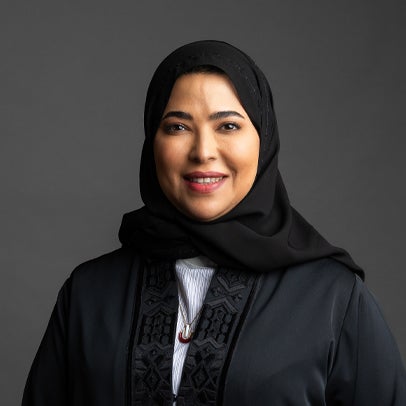
Ghada Al-Khater
Operations Manager
Entity
Qatar Biomedical Research Institute
Division
Management
Biography
Ghada Mohammed Al-Khater has worked in diverse fields gaining relevant experience in the areas of finance, sports, and biomedical science. She began her career working for the Ministry of Economy and Finance as a Researcher of Administrative Affairs in the Public Budget Dept. where she participated in preparing the budget for the State of Qatar (2003 – 2008) . She was a member of Restructuring and Re-engineering of Financial Policies, Systems and Processes of the State of Qatar Ministry of Finance (Singapore) (2007-2008). As the Head of Development & Projects (HR Department) for the Olympic Committee, she led several important projects including HR's strategy implementation and monitoring. One of her greatest achievements is the “Automation of Performance Appraisal System & Integration with Competency Profiling”.
Al-Khater has been working with Qatar Foundation in 2010 to date. She began her stint with the HR department, successfully leading various recruitment-related projects and representing QF both locally and internationally. In 2013 she was nominated for the role of Head of Business Support at Qatar Biobank where she in charge of human resource, finance, planning, facility management and procurement. She has participated in several communication and awareness related activities and was assigned the position of Secretary of the Board of Trustees.
Al Khater served as the Project Manager for the inauguration of Qatar Biobank, which was inaugurated by HH Sheikha Moza Bint Nasser, a responsibility of honor entrusted to her by the higher management. She took over as Operations Manager in QBRI in 2015, joining the leadership team. She mainly manages human resources and procurement and also ensure effective and close working relationship within the three research centers of QBRI and HBKU, as well as the various directorates within Qatar Foundation.
She was among the first batch of graduates from HBKU to receive an Executive Masters in Strategic Business Unit Management from HEC-Paris Qatar Branch Campus (in 2014). Additionally she holds a Bachelor's degree in English Literature from Qatar University.
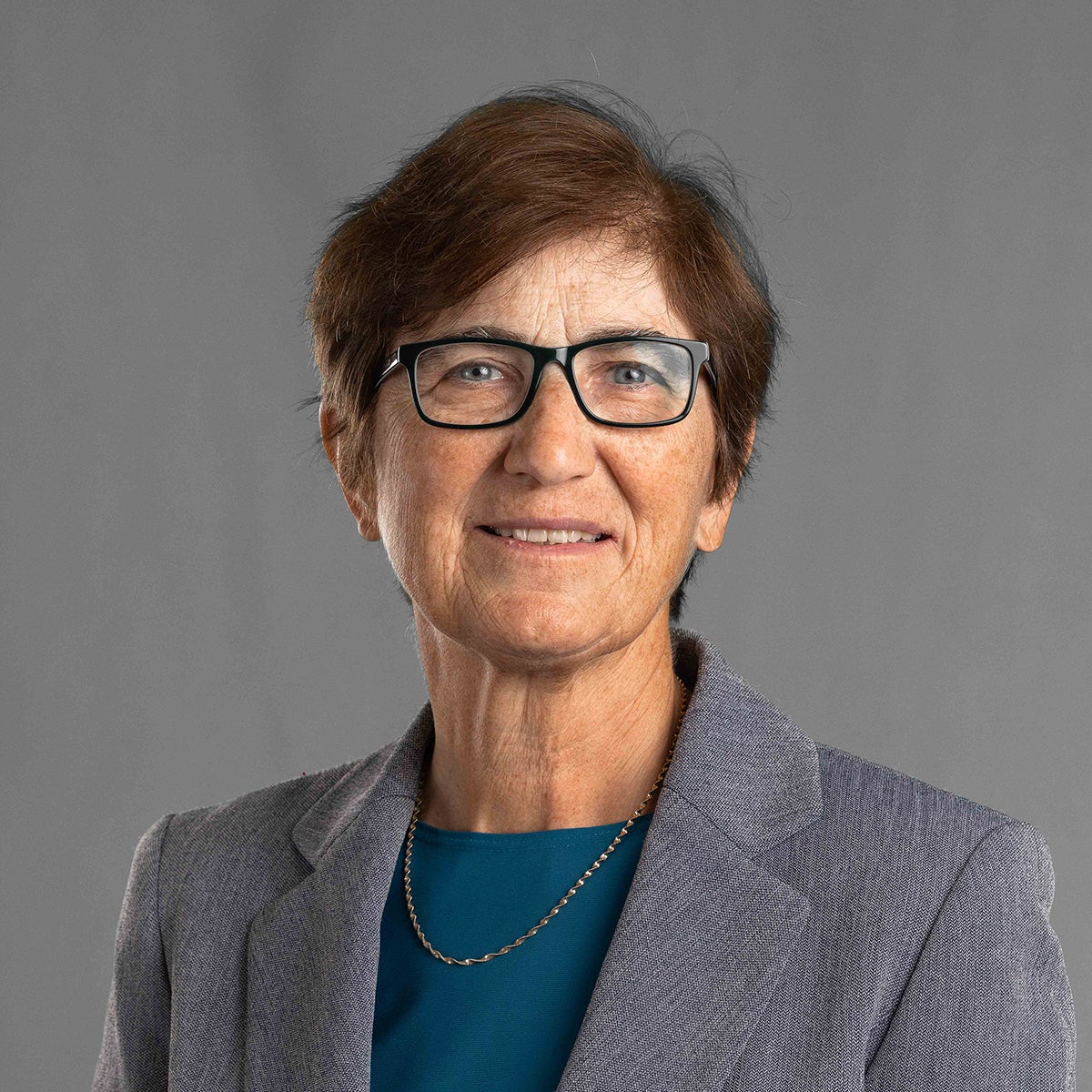
Dr. Susan L. Karamanian
Dean of the College of Law
Dr. Susan L. Karamanian
Dean of the College of Law
Educational Qualifications
JD
B.A. (hons)
Entity
College of Law
Biography
Susan L. Karamanian is Dean of HBKU's College of Law. She previously held leadership positions at the American University of Sharjah and the George Washington University Law School. Susan is a member of the Executive Council of the American Society of International Law (ASIL) and was previously Vice President of ASIL. She was also President of the Washington Foreign Law Society. She has lectured on international law at the University of Paris, the OAS Academy of International Law, Tamil Nadu National Law School, the National Law School of India University, Bangalore, and the Hague Academy of International Law (Director of English Studies). She has presented two lectures (“The Right to Property under International Law” and “The Intersection of Public International Law and Private International Law”) as part of the United Nations Audiovisual Library of International Law. She is a trustee of the Center for American and International Law, where she chairs the Southwestern Institute for International and Comparative Law, and a director of Texas Appleseed. She is a member of the Council on Foreign Relations, the American Council on Germany, the American Bar Foundation, and the Texas Bar Foundation.
JD
University of Texas; Austin,Texas, USA
1985
B.A. (hons)
University of Oxford; Oxford, United Kingdom
1982
B.S. (summa cum laude)
Auburn University, Auburn, Alabama, USA
1979
- International investment law
- International human rights law
- International business transactions
- International banking and finance
- International trade law
Provost
American University of Sharjah
2017
Associate Dean for International and Comparative Legal Studies and Burnett Family Professorial Lecturer
International and Comparative Law and Policy, George Washington University Law School, USA
2000-2017
Partner (previously Associate)
Locke Lord LLP
1986-2000
Law Clerk
Hon. Robert E. Varner, US District Judge, M.D. Alabama
1985-1986
Hossein Esmaeili, Vivienne Brand, and Susan L. Karamanian (eds), International Trade with the Middle East and North Africa: Legal, Commercial, and Investment Perspectives (Routledge 2024)
Susan L. Karamanian, ‘Arab-Australian Trade and Investment in an Era of Challenges to the Liberal International Order’ in Hossein Esmaeili, Vivienne Brand, and Susan L. Karamanian (eds), International Trade with the Middle East and North Africa: Legal, Commercial, and Investment Perspectives 12-37 (Routledge 2024)
“International Investment Agreements, Investor Obligations, and the Rule of Law” in Investment Protection Standards and the Rule of Law pp. 301-325, edited by August Reinisch and Stephan W. Schill, Oxford University Press, 2023
“International Commercial Courts, Dispute Resolution and the Rule of Law” in International Commercial Courts: The Future of Transnational Adjudication pp. 515-535, edited by Stavros Brekoulakis & Georgios Dimitropoulos, Cambridge University Press, 2022
- 1980; Rhodes Scholarship; Rhodes Scholarship Trust; Oxford, United Kingdom
- 2000; Texas Law Fellowships Excellence in Public Interest Award, University of Texas School; Austin, Texas
- 2000; Equal Justice Award, Legal Services of North Texas; Dallas, Texas
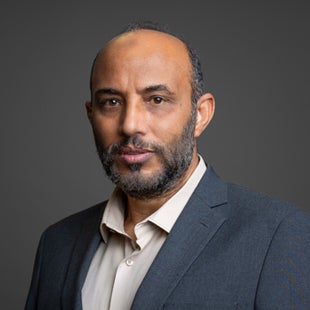
Dr. Ahmed Abdala
Professor
Dr. Ahmed Abdala
Professor
Educational Qualifications
PhD in Chemical Engineering and Fiber & Polymer Science (Double Major)
MS in Chemical Engineering
Entity
College of Science and Engineering
Biography
Dr. Ahmed Abdala is a Chemical Engineering Professor and Program Chair at the College of Science and Engineering, Hamad Bin Khalifa University. He received his PhD in chemical engineering and fiber & polymer science from North Carolina State University. His research focuses on developing advanced materials for energy and environmental applications, utilizing polymers and nanomaterials. His work includes polymer nanocomposites, functionalized graphene materials, anti-corrosion coatings, polymeric membranes for gas separation and water treatment, and nanohybrids of metal/metal oxides and 2D nanomaterials for catalysis, adsorption, energy storage, and thermoelectric materials.
Dr. Abdala has published 120 peer-reviewed journal articles, with an H-index of 49 and 20,150 citations, and holds 7 US patents. He is the recipient of several prestigious awards, including the 2023 Texas A&M University at Qatar Faculty Excellence Award, the 2019 Distinguished Researcher Award from the Indian Association of Solid-State Chemists & Allied Scientists (ISCAS), the 2016 Qatar Excellence in Innovation Award from Thomson Reuters, and the 2013 and 2014 “Science Lantern Faculty Award” from the Abu Dhabi National Oil Company.
PhD in Chemical Engineering and Fiber & Polymer Science (Double Major)
North Carolina State University, United States
2003
MS in Chemical Engineering
North Carolina State University, United States
2001
MS in Petroleum Refining Engineering
Suez Canal University, Egypt
1995
BS in Petroleum Refining Engineering
Suez Canal University, Egypt
1990
- Nanomaterials and Nanocomposites
- Advanced membranes for water treatment, gas separation, and electrochemical applications
- Nanocomposite coatings
- Adsorbents, photocatalysts, and electrocatalysts
Professor
College of Science and Engineering, Hamad Bin Khalifa University
2024 - Present
Adjunct Professor
Chemical Engineering, Texas A&M University at Qatar (TAMUQ)
2024 - Present
Professor
Chemical Engineering, Texas A&M University at Qatar (TAMUQ)
2021 - 2024
Associate Professor
Chemical Engineering, Texas A&M University at Qatar (TAMUQ)
2017 - 2021
Adjunct Associate Professor
College of Science and Engineering, Hamad Bin Khalifa University
2015 - 2017
Senior Scientist
Qatar Environment and Energy Research Institute (QEERI), Hamad Bin Khalifa University
2015 - 2017
Associate Professor
Chemical Engineering, The Petroleum Institute, United Arab Emirates
2011 - 2015
Assistant Professor
Chemical Engineering, The Petroleum Institute, United Arab Emirates
2006 - 2011
Assistant Professor
Chemical and Petroleum Refining Engineering, Suez Canal University, Egypt
2004 - 2006
- Faculty Excellence Award, Texas A&M University at Qatar, May 2023.
- Distinguished Researcher Award, Indian Association of Solid-State Chemists & Allied Scientists (ISCAS), 2019.
- Qatar Excellence in Innovation Award: Citation Impact Classified by Web of Science, Clarivate Analytics, 2016.
- Science Lantern Faculty Award, Abu Dhabi National Oil Company (DNOC) Research & Development Division, 2012, 2013, and 2014.
- Nancy G. Pollock Thesis and Dissertation Award for the best Ph. D. Thesis in the College of Engineering, North Carolina State University, 2003.
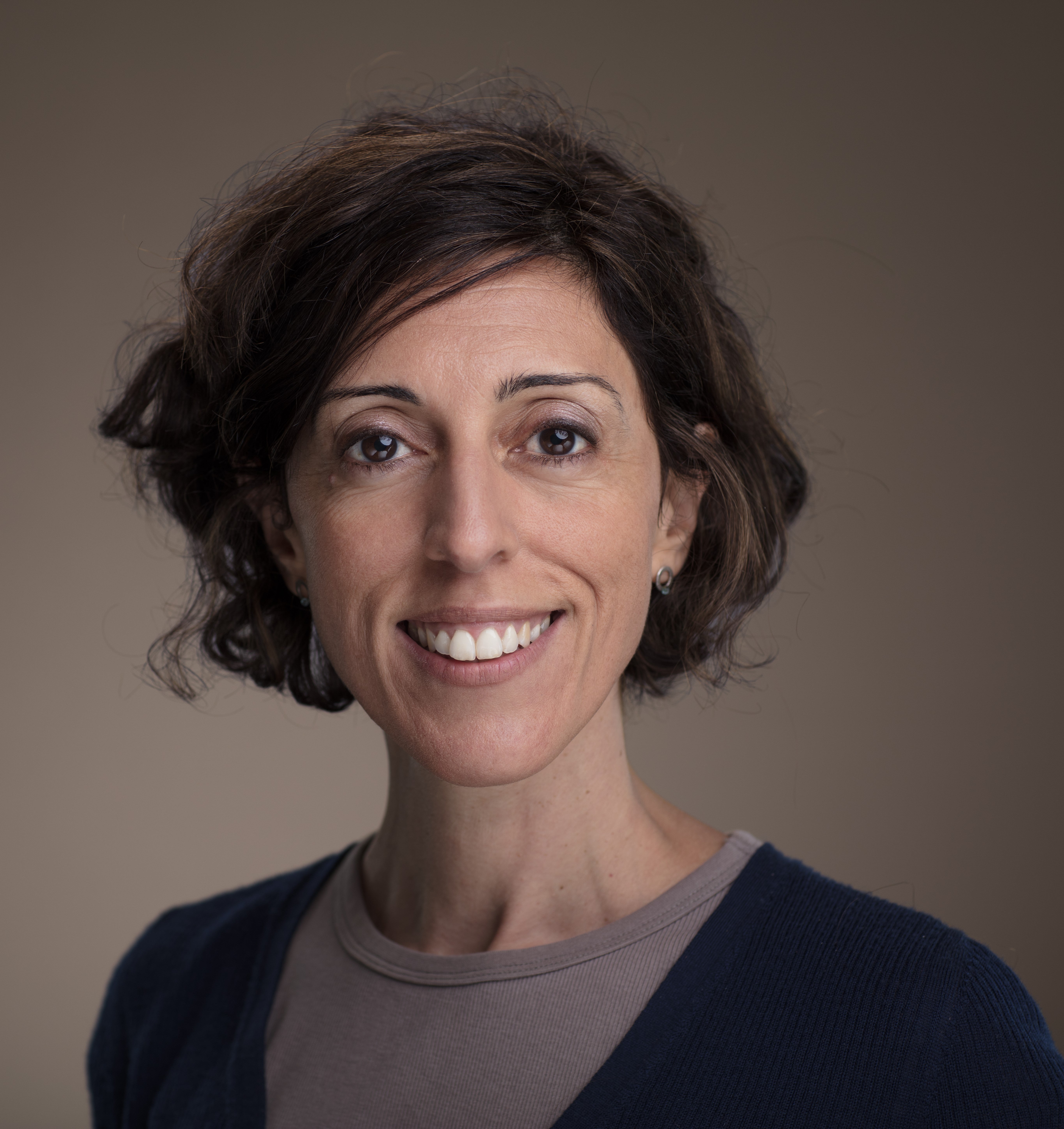
Dr. Eleni Polymenopoulou
Associate Professor
Dr. Eleni Polymenopoulou
Associate Professor
Educational Qualifications
Doctorate (PhD) in Human Rights Law/International Law
Master in ‘History, Law & Human Rights’
Entity
College of Law
Biography
Eleni Polymenopoulou is an Associate Professor at the College of Law at Hamad Bin Khalifa University and an Adjunct Associate Professor at Georgetown University, Edmund A. Walsh School of Foreign Service. She holds a diploma in Law from the University of Athens and a Master in Law and PhD in Human Rights Law/International Law from the University of Grenoble-Alpes (France).
Before her current appointment, she practiced law and collaborated with several NGOs, including the Greek Council for Refugees (GCR), Article 19 (on freedom of expression) and the International Press Institute (IPI). Eleni also holds a diploma in Applied Arts, Comics and Illustration (Athens) and has published books as a children’s book author and illustrator. In 2019, she received an honorary research fellowship award at University College London (UCL-Qatar) for her project on cultural heritage and Islamic law and a research grant in 2022 to set up the ‘Art and Law’ Lab at VCUarts – Qatar (with Prof. Radha Dalal).
Her most recent published book is Artistic Freedom in International Law (CUP 2023). Currently, she is working on a monograph on Cultural Heritage Law in the Arabian Gulf: An International and Comparative Law Perspective.
Doctorate (PhD) in Human Rights Law/International Law
University of Grenoble, France and the University of Athens co-supervising
2011
Master in ‘History, Law & Human Rights’
University of Grenoble, France
2004
Degree in Law
National Kapodistrian University of Athens, Greece
2003
- Public international law
- International human rights law
- Cultural rights and heritage
- Islamic law and legal systems
Lecturer in Law
Brunel Law School, Brunel University
2012 - 2018
Polymenopoulou, E. (forthcoming). Sharia and human rights law in the constitutional framework of Gulf States. Human Rights Quarterly, 46 (1).
Polymenopoulou, E. (forthcoming) Rembrandt’s Missing piece: AI Art and the Fallacies of Copyright Law. Washington Journal of Law, Technology & Arts.
Complete Publication Listing(s): Academia | Google Scholar | Research Gate
- 2022: Co-PI in Managing Social Transformation in Qatar: Risks, Trends and Future Trajectories (co-PI – LPI is Dr. Anis Ben Brik, College of Public Policy, HBKU )
- 2020: Honorary Senior Research Fellowship at University College London (UCL) – Qatar, Arts and cultural heritage in the Islamic legal tradition
- 2015: Seminar Series award, ‘Culture on the move: migration, living traditions and cultural heritage protection’, awarded by Brunel University London
- 2013: Pilot Project on gender and human rights in the Muslim South-Asia (India & Bangladesh), awarded by Brunel University London
- 2009: PhD Laureate 2009, grant awarded by the ‘Heinrich Klebès Association for the Promotion of Human Rights and democracy in Europe’, France

Minhaj Ahmad
Software Engineer
Minhaj Ahmad
Software Engineer
Educational Qualifications
Master of Technology (Computer Science and Engineering)
Bachelor of Technology(Computer Engineering)
Entity
Qatar Computing Research Institute
Division
Cybersecurity
Biography
I am a Software Engineer with years of industry experience in different technologies. I have extensive experience in data processing and big data technologies and web related backend technology.
I also have some experience administration and maintenance of Big data related clusters like Hadoop and Spark cluster.
Being part of the Cybersecurity group along, I also have experience in Cybersecurity related research aspects.
Master of Technology (Computer Science and Engineering)
Indian Institute of Technology Delhi; India
2012 - 2014
Bachelor of Technology(Computer Engineering)
Aligarh Muslim University; India
2006 - 2010
- Cyber Security
- Big Data
- Data Science
Software Engineer
Qatar Computing Research Institute HBKU
Sep 2016 - present
Software Engineer
Cisco
Aug 2014 - Aug 2016
Teaching Assistant
Indian Institute of Technology Delhi
Jul 2012 - May 2014
Assistant Systems Engineer
Tata Consultancy Services
Jul 2010 - Jul 2012
- Mar 2012; Graduate Aptitude Test in Engineering (GATE) 99.86 Percentile; IITs and IISCs; India
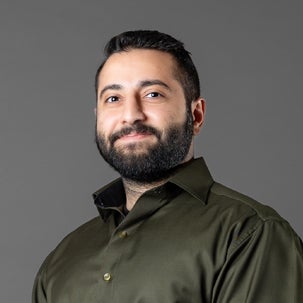
Mr. Ahmad Musleh
Software Engineer
Educational Qualifications
BSc. Computer Science
Entity
Qatar Computing Research Institute
Biography
Ahmad Musleh is a software engineer at Qatar Computing Research Institute. He carries an interest in taking prototypes and forming them into industry grade products. He previously held research assistant positions at Qatar University and Carnegie Mellon University in Qatar. Musleh graduated with a degree in Computer Science from Carnegie Mellon University, in 2015.
BSc. Computer Science
Carnegie Mellon University
2011-2015
- Software Engineering
- DevOps
- Data Engineering
Software Engineer
QCRI
Present
Research Assistant
Qatar University
July 2017 - March 2018
Research Assistant
CMU-Q
January 2017 - April 2017
"LA3: A Scalable Link- and Locality-Aware Linear Algebra-Based Graph Analytics System" Proceedings of the 44th International Conference on Very Large Data Bases (VLDB 2018)
In Proceedings of the 16th Conference on Intelligent Text Processing and Computational Linguistics (CICLING), Konya, Turkey, April

Dr. Georgios Dimitropoulos
Professor and Associate Dean for Research
Dr. Georgios Dimitropoulos
Professor and Associate Dean for Research
Educational Qualifications
Doctor of the Science of Law (J.S.D.)
LL.M.
Entity
College of Law
Biography
Dr. Georgios (George) Dimitropoulos is a Professor of Law and Associate Dean for Research and S.J.D. Program Coordinator at the College of Law, as well as an adjunct faculty member at Georgetown University in Qatar. His research focuses on redefining the boundaries of domestic and international law, with particular emphasis on economic sovereignty and the impact of digital technologies on traditional legal models.
Dr. Dimitropoulos is currently the Lead Principal Investigator of the Industrial Policy for Digital Development (IPDD) Project, funded by the Qatar National Research Fund (QNRF). He is also an incoming WTO Chairholder of the World Trade Organization Chairs Programme (WCP). He serves on the editorial boards of the Journal of World Investment & Trade and the Asia Pacific Law Review and is Vice-Chair of the International Law and Technology Interest Group of the American Society of International Law (ASIL).
George holds an LL.M. and J.S.D. from Yale Law School, and an LL.M. and Ph.D. summa cum laude from the University of Heidelberg. He has held visiting positions at institutions like NYU, UCL, and SMU. His work has appeared in leading journals such as the Washington Law Review, the World Trade Review, and the Journal of International Economic Law. Some of his recent work includes the books Regulating Blockchain: Techno-Social and Legal Challenges (co-edited with Philipp Hacker, Ioannis Lianos, and Stefan Eich, OUP, 2019) and International Commercial Courts: The Future of Transnational Adjudication (co-edited with Stavros Brekoulakis, CUP, 2022).
Doctor of the Science of Law (J.S.D.)
Yale Law School, United States
2021
LL.M.
Yale Law School, United States
2014
PhD in Law
University of Heidelberg, Germany
2011
LL.M.
University of Heidelberg, Germany
2008
LL.B.
University of Athens, Greece
2006
- International Economic Law & Adjudication
- Digital Law & Policy
- Special Jurisdictions (special economic zones; international commercial courts)
Senior Research Affiliate
Centre for Digital Law, Singapore Management University, Singapore
2025 - Present
Professor
College of Law, Hamad Bin Khalifa University
2025 - Present
Associate Dean for Research
College of Law, Hamad Bin Khalifa University
2024 - Present
Fellow
Athens Public International Law Center, University of Athens, Greece
2023 – Present
S.J.D. Program Coordinator
College of Law, Hamad Bin Khalifa University
2021 - Present
Research Fellow
Yong Pung How School of Law, Singapore Management University, Singapore
2023 - 2024
Associate Dean for Academic Affairs
College of Law, Hamad Bin Khalifa University
2021 - 2024
Associate Professor
College of Law, Hamad Bin Khalifa University
2019 - 2024
Assistant Professor
College of Law, Hamad Bin Khalifa University
2016 - 2019
Senior Research Fellow
Max Planck Insitute, Luxembourg
2013 - 2016
Global Fellow (Hauser Research Scholar)
School of Law, New York University, United States
2011 - 2012
Dimitropoulos, G. (2020). The law of blockchain. Washington Law Review, 95, 1117.
Complete Publication Listing(s): Google Scholar
- 2025 – WTO Chair, World Trade Organization Chairs Programme (WTP)
- 2024 – Excellence in Teaching Award, HBKU
- 2021 – Outstanding Law Professor of the Year, Qatar Business Law Forum
- 2011 – European Group of Public Law (EGPL) Doctoral Thesis Prize, European Group of Public Law
- 2011 – Hauser Research Scholarship, New York University (NYU) School of Law