 قدِّم طلبك الآن

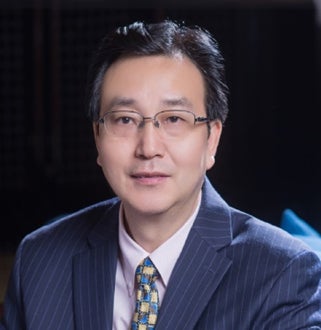
الدكتور كونج وانج
باحث رئيسي والمدير العلمي
المؤهلات العلمية
PhD in Medical Immunology
Experimental Medicine
الكيان
معهد قطر لبحوث الطب الحيوي
القسم
مركز بحث السكري
السيرة الذاتية
Dr. Cong-Yi (CY) Wang is the Scientific Director of the Diabetes Research Center at the Qatar Biomedical Research Institute. He earned his Ph.D. in Medical Immunology from Tongji Medical College, Huazhong University of Science and Technology, China. He completed postdoctoral training in population genetics, genomics, and immunology of type 1 diabetes (T1D) at the University of Florida under Dr. Noel Maclaren, a pioneer in endocrinology and metabolism.
Dr. Wang was later recruited as a tenure-track Assistant Professor at the Center for Biotechnology and Genomic Medicine, Medical College of Georgia (now Augusta University), where he studied genetic and environmental factors influencing T1D risk. He was also appointed Scientific Director of the Georgia Exoteric and Molecular Laboratories at the Medical College of Georgia Health Science Center after his tenure as Assistant Professor.
In 2014, Dr. Wang was recruited by the Tongji Medical College, Huazhong University of Science and Technology, as a tenured professor. At Tongji Hospital, he established the Center for Biomedical Research, Tongji Biobank, and the Tongji SPF Animal Center. He served as Director of the Center for Biomedical Research, Tongji Biobank, and the National Health Commission Key Laboratory of Respiratory Diseases, as well as Associate Director of Sponsored Program Administration.
Dr. Wang’s research focuses on the genetic and epigenetic mechanisms of type 1 and type 2 diabetes. His team investigates the crosstalk between different cell types and metabolic organs, by which he aims to identify diet-derived metabolites or small molecules that could be employed to prevent or treat metabolic disorders such as obesity and insulin resistance.
PhD in Medical Immunology
Tongji Medical College, Huazhong University of Science and Technology, China
2008
Experimental Medicine
Tongji Medical University, China
1989
- The genetic and epigenetic factors underlying metabolic and autoimmune disorders
- Diet-derived metabolites or small molecules for the prevention/intervention or treatment of metabolic or autoimmune disorders
- The crosstalk between metabolic organs or organelles within the cells and their relevance to the development of metabolic disorders
- The mechanisms underlying the recurrence of obesity following weight loss
Scientific Director
Diabetes Research Center, Qatar Biomedical Research Institute
2025 - Present
Principle Investigator
Diabetes Research Center, Qatar Biomedical Research Institute
2025 - Present
Visiting Professor
Department of Pharmacology, University of Hong Kong
2025 - Present
Professor and Director
The Center for Biomedical Research, Tongji Hospital, Huazhong University of Science and Technology, China
2014 - 2025
Associate Professor
The Center for Biotechnology and Genomic Medicine, Georgia Regents University, Georgia
2007 - 2010
Assistant Professor
The Center for Biotechnology and Genomic Medicine, Georgia Regents University, Georgia
2002 - 2007
- 2023; The third prize award, Translational Research, Health Committee of Hubei State
- 2021; The first prize award, Translational Research, Health Committee of Hubei State
- 2019; The 11th Top Talent Scientist Award, Qiaokou, Wuhan, China
- 2011; Professor, The One Hundred Talented Scientist program in Hubei State
- 2011; Professor, Chutian Scholar Program, Hubei