 قدِّم طلبك الآن
primary
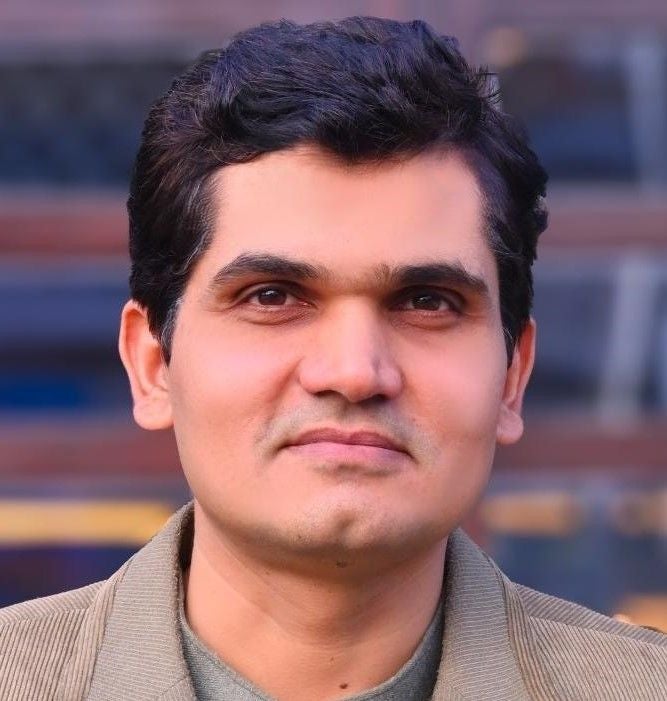
Dr. Mahmood Irtiza Hussain
Senior Scientist Quantum Sensing
المؤهلات العلمية
PhD in Physics
MSc in Applied Physics
السيرة الذاتية
Dr. Irtiza obtained his PhD from Griffith University, Queensland, Australia. He worked with numerous internationally renowned research teams and institutions in the field of quantum information sciences. He was a member of Prof. Rainer Blatt's group at the Institute for Quantum Optics and Quantum Information (IQOQI) at the Austrian Academy of Sciences and later at the University of Innsbruck, Austria with Prof. Christian F. Roos. Subsequently, he joined the EU Thorium Nuclear Clock project where he stayed in Prof. Peter Thirolf's group at the University of Munich (LMU) and the Fraunhofer Institute for Laser Technology in Germany. In addition, he worked as a consultant at IonQ Quantum Inc. MD, USA, and conducted research at the National Institute of Informatics in Tokyo, Japan.
PhD in Physics
Griffith University, Australia
2017
MSc in Applied Physics
University of Engineering and Technology, Lahore, Pakistan
2008
BSc in Physics/Mathematics
University of Sargodha, Punjab, Pakistan
2006
- Trapped ion quantum information
- Matter wave interferometry
- Atomic and nuclear clock
- Ultrafast lasers (frequency combs)
Sr. Scientist
Qatar Center for Quantum Computing, Hamad Bin Khalifa University
2024 - Present
Consultant
R&D, IonQ Quantum Inc. Maryland, USA
2023 - 2025
Scientific Staff
Department of Physics, Ludwig Maximilian University of Munich, Germany
2021 - 2024
Guest Scientist
Laser and Optical Systems, Fraunhofer Institute of Laser Technology, Aachen, Germany
2021 - 2023
Postdoc
IQOQI, Innsbruck and Institute for Experimental Physics, Austrian Academy of Science and the University of Innsbruck, Austria
2018 - 2021
Research Fellow
Center for Quantum Dynamics, Griffith University, Queensland, Australia
2017
Researcher
NII, National Institute for Informatics, Tokyo, Japan
2012
Research Associate
Center for Quantum Physics, COMSATs University Islamabad, Pakistan
2010 - 2011
Torrontegui, E., Heinrich, D., Hussain, M. I., Blatt, R., & García-Ripoll, J. J. (2020, October). Ultra-fast two-qubit ion gate using sequences of resonant pulses. New Journal of Physics, 22(10), 103024.
Heinrich, D., Guggemos, M., Guevara-Bertsch, M., Hussain, M. I., Roos, C. F., & Blatt, R. (2019). Ultrafast coherent excitation of a 40Ca⁺ ion. New Journal of Physics, 21(7), 073017.
Complete Publication Listing(s): Google Scholar
- Griffith International Postgraduate Scholarship
- Griffith Postgraduate Scholarship
- National Institute of Informatics, Japan, fully funded researcher.
- Research and productivity award COMSATs University
- 2nd Position research compilation video competition, Griffith University, Australia

Aisha Al-Sulaiti
Master Student Quantum Communication
Muhammad Talha Rahim
PhD Student Quantum Sensing
المؤهلات العلمية
M.S. in Electronics Engineering
B.S. in Electrical Engineering
السيرة الذاتية
Muhammad Talha Rahim is a PhD student at the Qatar Center for Quantum Computing (QC2), Hamad Bin Khalifa University. With a technical foundation in Electrical Engineering from NUST, Pakistan (2019), he transitioned into the quantum domain during his Master’s at Kyung Hee University (2023).
His previous work focused on quantum metrology and communication, exploring the fundamental limits of measurement and information transfer. Currently, his research at HBKU aims to develop error-mitigated solutions for quantum sensing and communication, leveraging his international background to address the critical challenges of noise and decoherence in quantum systems.
M.S. in Electronics Engineering
KyungHee University, South Korea
2023
B.S. in Electrical Engineering
National University of Sciences and Technology, Pakistan
2019
- Quantum sensing
- Quantum communication
- Quantum error correction
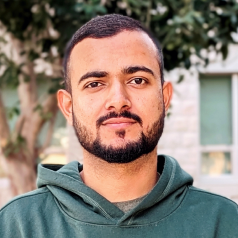
Rakesh Saini
PhD Student Quantum Computing
المؤهلات العلمية
M.Sc. in Physics
Bachelor of Science
السيرة الذاتية
Rakesh Saini is a PhD student at the Qatar Center for Quantum Computing, Hamad Bin Khalifa University, under the supervision of Dr. Saif Al-Kuwari. His research focuses on quantum optimization in the NISQ (Noisy Intermediate-Scale Quantum) era, encompassing algorithmic design and performance analysis, mainly using the Quantum Approximate Optimization Algorithm (QAOA) for constrained combinatorial problems. He has also worked on quantum image encryption and quantum machine learning using variational quantum circuits. His previous research includes quantum Darwinism, quantum circuit architecture design, and quantum key distribution protocols demonstrated on IBM Quantum hardware. He is an IBM Qiskit Advocate and IBM Certified Associate Developer in Quantum Computation.
M.Sc. in Physics
Indian Institute of Technology (ISM), Dhanbad, India
2020
Bachelor of Science
University of Rajasthan, India
2017
- Quantum optimization algorithms for combinatorial and constrained problems
- Quantum machine learning and variational quantum algorithms
- Quantum circuit design for NISQ devices
- Quantum cryptography and quantum key distribution
Saini, R., Bera, A., Behera, B. K., Ahmed, E. A., Jamjoom, M., & Farouk, A. (2023). Designing quantum blockchain system integrated with 6G network. Journal of King Saud University – Computer and Information Sciences, 35(10), 101847.
Saini, R., & Behera, B. K. (2022). Demonstration of quantum Darwinism on quantum computer. Quantum Information Processing, 21(4), 129.
Azad, U., Papneja, A., Saini, R., Behera, B. K., & Panigrahi, P. K. (2021). Circuit centric quantum architecture design. IET Quantum Communication, 2(1).

Dennis Lima
PhD Student Quantum Computing
المؤهلات العلمية
M.S. in Physics
B.S. in Chemistry
السيرة الذاتية
Dennis Lima has experience in variational quantum algorithms, particularly Variational Quantum Eigensolvers (VQE), Hamiltonian compression techniques for VQE, and molecular simulations using DFT and Hartree-Fock (HF) methods with PySCF. His work also includes developing Quantum Genetic Algorithms (QGA) and conducting simulations for heterogeneous catalysis. Dennis is especially interested in advancing Hamiltonian preparation and quantum eigensolvers for molecular simulations, with current applications focused on the Haber-Bosch process. These methods can be easily adapted to other chemical systems of interest. His previous research experiences include quantum walks, experimental optics, and pseudo-unitary quantum mechanics.
M.S. in Physics
Universidade Federal do Rio Grande do Norte, Brazil
2022
B.S. in Chemistry
Universidade Federal do Rio Grande do Norte, Brazil
2020
- Quantum eigensolvers
- Molecular simulation
- Heterogeneous catalysis
- Matrix compression
Intern
Quantum Chemistry, Cambridge Office, Quantinuum Company
2025 - 2025
Complete Publication Listing(s): Google Scholar
Mughees Khan
PhD Student Quantum Communication
المؤهلات العلمية
M.S. in Physics
B.S. in Physics
السيرة الذاتية
Mughees Ahmed Khan is a PhD researcher at the College of Science and Engineering, Hamad Bin Khalifa University (HBKU), Qatar. His research is focused on the theoretical foundations of quantum communication, with particular emphasis on distributed quantum systems and the realization of quantum repeater networks in hybrid systems. By exploring these frontiers, his work contributes to the advancement of next-generation quantum technologies that aim to revolutionize secure communication and quantum networking. Mughees earned his Master’s degree in Physics from COMSATS University Islamabad, Pakistan, where he developed a strong academic foundation in theoretical and applied physics. His current work reflects a dedication to both fundamental research and its technological applications, positioning him at the intersection of quantum theory and engineering innovation.
M.S. in Physics
COMSATS University Islamabad, Pakistan
2023
B.S. in Physics
COMSATS University Islamabad, Pakistan
2021
- Quantum communication networks
- Distributed quantum systems
- Quantum repeaters

Lolwa Al-Naser
Master Student Quantum Computing
Asad Ali
PhD Student Quantum Communication

Asma Al-Othni
PhD Student Quantum Computing
المؤهلات العلمية
M.S. in Cybersecurity
B.S. in Computer Engineering
السيرة الذاتية
Asma Al-Othni is a PhD student at Hamad Bin Khalifa University’s Qatar Center for Quantum Computing. Her current research focuses on Quantum Generative AI, specifically in the areas of Large Language Models (LLMs) and Transformers. She received her bachelor’s degree in Computer Engineering from Qatar University in 2018 and her master’s degree in Cybersecurity from Hamad Bin Khalifa University in 2025, where her research focused on Quantum Generative Adversarial Networks.
Concurrently, Asma works as a Computer Engineer at the Ministry of Environment and Climate Change. In this role, she is responsible for the cybersecurity of the ministry’s IT infrastructure, drawing upon her experience in systems and networking. Additionally, she contributes to initiatives aimed at integrating Generative and Agentic AI within the ministry’s operational framework, bridging her research to aid the ministry’s digital evolution in alignment with Qatar’s national digital transformation goals.
M.S. in Cybersecurity
Hamad bin Khalifa University
2025
B.S. in Computer Engineering
Qatar University
2018
- Quantum machine learning
- Quantum generative models
Computer Engineer
Information System Department, Ministry of Environment and Climate Change
2021 - Present
Syed Muhammad Arslan
PhD Student Quantum Communication
المؤهلات العلمية
M.S. in Physics
B.S. in Physics
السيرة الذاتية
Syed Muhammad Arslan Anis is a PhD student at Hamad Bin Khalifa University (HBKU), specializing in Quantum Communication with a focus on Quantum Key Distribution (QKD) and Device-Independent Cryptography. His research explores the intersection of quantum communication protocols and cryptographic security. His academic journey is marked by a strong foundation in applied cryptography, quantum computation, and communication technologies, complemented by interdisciplinary collaborations. His goal is to advance scalable, secure, and practical quantum communication systems that can be deployed in real-world settings.
M.S. in Physics
COMSATS University Islamabad, Pakistan
2020
B.S. in Physics
COMSATS University Islamabad, Pakistan
2017
- Quantum Key Distribution (QKD)
- Quantum cryptography
- Quantum games and protocol design
- Machine learning in quantum communication
Anis, S. M., Abbas, T., & Imran, M. (2021). Engineering quantum networks through Bragg diffracted hyperentangled atoms. Physica Scripta, 96(12), 125102.
Hasan, S. S., Anis, S. M., Imran, M., Islam, R., Al-Kuwari, S., & Abbas, T. (2025). Entanglement swapping using hyperentangled pairs of two-level neutral atoms. IET Quantum Communication, 6(1), e12121.
Arslan, S. M., Al-Kuwari, S., & Abbas, T. (2024). Superdense coding using Bragg diffracted hyperentangled atoms. IEEE Journal on Selected Areas in Communications, 42(7), 1950–1959.
- 2016: 3rd Prize in Poster Presentation in the International Nathiagali Summer College on Physics
- 2020: 3rd Prize in Poster Presentation in the International Nathiagali Summer College on Physics
- Selected for fully funded Winter College on Optics at the Abdus Salam International Centre for Theoretical Physics (ICTP), Trieste, Italy.