

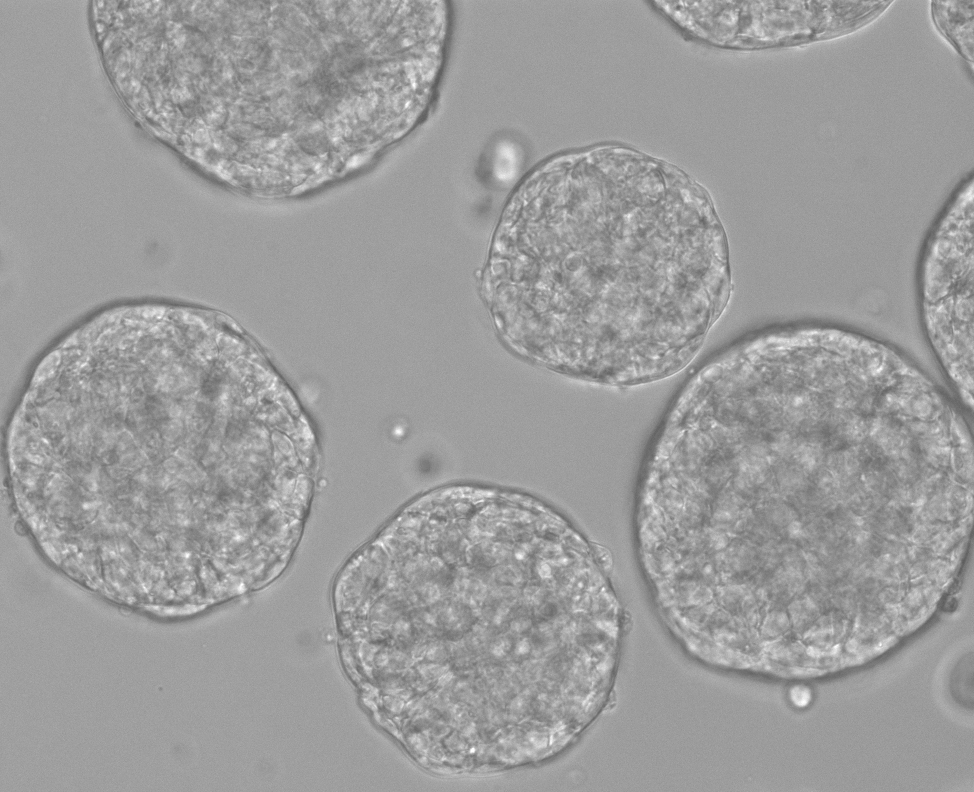
This research team focuses on the generation of insulin-producing pancreatic beta cells from human pluripotent stem cells (hPSCs), using both hiPSCs and hESCs.

Their work also includes the study of hPSC-derived pancreatic beta cells maturation by exploring the expression and role of transcription factors involved in the maturation of pancreatic beta cells using advanced genome editing technology such as the CRISPR-Cas9 system.

Research Team

Dr. Heba H. Al-Siddiqi

Scientist

Qatar Biomedical Research Institute

Dr. Abdoulaye Diané

Postdoctoral Researcher

Qatar Biomedical Research Institute

Dr. Razik Bin Abdul Mu-u-min

Research Associate

Qatar Biomedical Research Institute

Noora Ali Al-Shukri

Research Assistant

Qatar Biomedical Research Institute

Current Projects

QBRI Startup Project: Generation of Functional Pancreatic Beta Cells from Human Pluripotent Stem Cells

ECRA Grant: MAFA and MAFB Gene Expression Profiling and Role During Directed Differentiation of Human Pluripotent Stem Cells to Insulin Producing Pancreatic Beta Cells

QBRI-HSCI Project 1: Investigating the Role of Key Transcription Factors in Human Pancreatic Beta Cell Development and Maturation using hPSCs.

ID-IDRP: Integrative, Translational Research Against COVID-19

Latest Publications

Ahfeldt T*, Schinzel R*, Lee YK*, Hendrickson D, Kaplan A, Lum DH, Camahort R, Xia F, Shay J, Rhee EP, Clish CB, Deo RC, Shen T, Lau F, Cowley A, Mowrer G, Al-Siddiqi H, Nahrendorf M, Musunuru K, Gerszten RE, Rinn JL, and Cowan CA. Programming human pluripotent stem cells into white and brown adipocytes. Nature Cell Biology (2012) (* Co-first author).
Sophia Malandraki-Miller, Colleen A. Lopez, Heba Al-Siddiqi, Carolyn A. Carr. Chaning metabolism in differentiating cardiac progenitor cells – Can stem cells become metabolically flexible cardiomyocytes? Frontiers in Cardiovascular Medicine (2018).
Al-Siddiqi, H., Lee, YK., Ahfeldt, T., and Cowan, CA., 2010. Differentiation of Adipocytes from human-Inducible Pluripotent Cells. Qatar Foundation Annual Research Forum, December 12-13, 2010, Doha, Qatar.
Al-Siddiqi, H., Ng, R., Jank, B., Song, JJ., Vacanti, JP., Ott, H., 2011. Native Lung Extracellular Matrix Scaffolds and Biomimetic Culture Conditions Alone Do Not Induce Lung Tissue Formation from Pluripotent iPS cells. Society for Laboratory Automation and Screening (SLAS) for Screening Stem Cells 2011: From Reprogramming to Regenerative Medicine, September 26-27, 2011, Boston, MA, USA.
Al-Siddiqi, H., Ng, R., Jank, B., Song, JJ., Vacanti, JP., Ott, H., 2011. Undifferentiated iPS Cells Do Not Regenerate Functional Lung Tissue When Seeded on Native Lung Extracellular Matrix under Biomimetic Culture Conditions. Qatar Foundation Annual Research Forum, November 20-22, 2011, Doha, Qatar.
Al-Siddiqi, H., Ahfeldt T., Schinzel R., Lee YK., and Cowan, CA., 2012. Programming human pluripotent stem cells into white and brown adipocytes, Qatar International Conference on Stem Cells Science and Policy, February 27- March 1, 2012, Doha, Qatar.
Al-Siddiqi, H., Board, M., Carr, C., and Clarke, K., 2014. Human Inducible-pluripotent stem cells as an in vitro model for human cardiomyocytes to study maturation and metabolism. Sherrington Poster Day, October 23, 2014. Oxford, UK.
Al-Siddiqi, H., Lis Heather, Carolyn Carr., 2016. The Effect of Oleic Acid and a PPAR-α agonist on Beating human inducible Pluripotent Stem Cell-derived Cardiomyocytes. BHF CRE Oxford Annual Research Symposium, September 19, 2016. Oxford, UK.