 Apply Now
Overview
Advancing water safety and resilience through contaminant removal, real-time monitoring, and wastewater epidemiology for stronger environmental health.
Projects
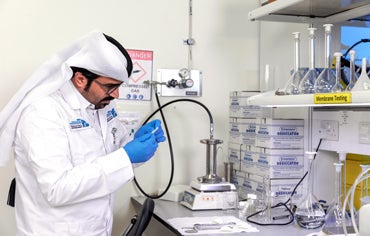
This project aims to address the presence of emerging contaminants, particularly per- and polyfluoroalkyl substances (PFAS) and pharmaceuticals, in Qatar’s treated sewage effluent (TSE) and drinking water. The first phase will focus on the detection and quantification of these contaminants using high-resolution liquid chromatography, mass spectrometry (LC-MS), to establish Qatar’s first national baseline for PFAS and pharmaceutical pollution. This will provide critical data for understanding exposure risks and inform regulatory and operational decisions.
Following baseline establishment, the project will develop a multi-stage treatment system combining membrane filtration, computational modeling, adsorption, and catalytic degradation. Membrane separation will serve as a pre-concentration step to enhance downstream treatment. Computational modeling will predict interactions between contaminants and engineered surfaces, guiding the design of efficient adsorbents such as functionalized biochar, polymers, and hybrid materials. Catalytic materials will be synthesized to degrade retained contaminants through oxidative and reductive pathways. LC-MS will be used throughout to monitor both parent compounds and transformation products.
The project is closely aligned with national water quality goals, with Kahramaa, Qatar’s national water utility, serving as the primary stakeholder due to their responsibility for water quality management and implementation. It also maintains an active research agreement with ExxonMobil Research Qatar, focused on PFAS detection and treatment development. In addition, there is a potential opportunity for future collaboration with Qatar LNG, as they explore advanced water treatment technologies.
This work directly contributes to Qatar National Vision 2030 and Sustainable Development Goal 6 by advancing water security and sustainable treatment innovation.
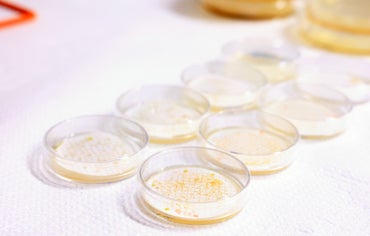
Wastewater represents a convergence of human and environmental health, offering a powerful lens to monitor infectious diseases and antimicrobial resistance (AMR) at the population level. This project focuses on establishing an advanced environmental health surveillance framework, leveraging wastewater-based epidemiology (WBE) to generate predictive intelligence that strengthens Qatar’s public health preparedness. In Qatar, rapid urbanization, population mobility, and environmental pressures create conditions for emerging diseases and resistance spread, including zoonotic risks. To address this, the project will systematically collect and analyze wastewater from municipal treatment plants, healthcare discharges, and coastal waters. Using metagenomic sequencing and targeted qPCR assays, it will enable early detection of circulating pathogens, AMR genes, and potential zoonotic threats.
The initiative will be implemented in close collaboration with the Ministry of Public Health (MOPH), the Ministry of Municipality, and Hamad Medical Corporation (HMC), while remaining aligned with regional and international WHO guidelines. By combining methodological innovation with strategic stakeholder engagement, the project will establish an early warning system for outbreaks, identify AMR hotspots, and guide evidence-based interventions.
Beyond protecting public health, the system will generate insights that can indirectly support national sectors such as agriculture and dairy, where zoonotic and AMR risks may emerge. The initiative directly supports the Qatar National Vision 2030 and the Third National Health Strategy (2024–2030) by advancing sustainable health systems, antimicrobial stewardship, and pandemic preparedness. Ultimately, this effort will position Qatar as a regional leader in integrated environmental surveillance, strengthening multisectoral coordination and laboratory capacity to ensure resilient, proactive health protection.
This project establishes an integrated water management framework to enhance Qatar's resilience to arid climate impacts such as rising temperatures, high evaporation rates, increased salinity, and variability in water availability, alongside pressures from urbanization and natural environmental factors that affect water quality. It combines advanced real-time monitoring of the water distribution network with a holistic analysis of water quality, utilization, and cost at the household level. The project will leverage the Education City Living Lab as a testbed to monitor water quality from the desalination plant to the tap, assessing where and why it declines. It also responds to the growing need for greater visibility and transparency regarding the quality of water people consume. Concurrently, it will investigate consumer behavior and the economic and environmental costs of reliance on bottled water. The framework is supported by the development of novel technologies, including smart household filtration systems and advanced atmospheric water generation (AWG). This hybrid AWG unit integrated with smart filtration will be designed to provide a safe and reliable water source for both human consumption and agricultural applications. A key component involves screening for microplastics in bottled water to scientifically quantify the environmental impact of plastic waste. The ultimate goal is to provide a data-driven framework for policy recommendations that improve water quality, promote tap water utilization, reduce household costs, and minimize environmental impact.