 Apply Now
Overview
Advancing sustainable water management through produced water treatment, wastewater reuse, and waste-to-resource conversion to support Qatar’s circular economy.
Projects
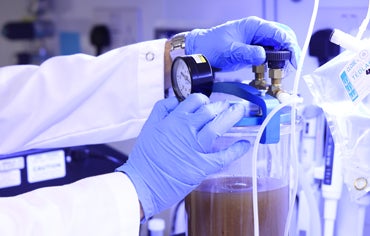
The project "Biorefinery for Converting Waste Streams to Value-Added Products (BioWaste2Value)" aims to establish an integrated biorefinery platform that transforms diverse waste streams into high-value, sustainable biomaterials, contributing to resource recovery, circular economy, and environmental sustainability. The project focuses on three interconnected pathways:
- Waste-to-Protein, where agro-industrial and food waste is converted into microbial protein, such as Saccharomyces cerevisiae and methanotroph-based biomass, for use as sustainable animal feed in aquaculture and poultry industries.
- Waste-to-Bioplastics, targeting the conversion of agricultural and food waste into biodegradable plastics, offering an eco-friendly alternative to conventional plastics and reducing environmental pollution.
- Waste-to-Biochar, producing biochar from various waste streams for applications in soil enhancement, carbon sequestration, and sustainable energy.
The project aligns strongly with Qatar National Vision 2030 and Qatar National Development Strategy by promoting sustainable economic development, efficient resource utilization, and environmental preservation. It addresses key pillars, including environmental sustainability through waste management and pollution reduction, economic diversification by fostering innovative biotechnologies, and food security by supporting local aquaculture and agriculture sectors. By transforming waste challenges into opportunities, this project contributes to Qatar’s transition toward a knowledge-based economy and advances the country’s commitment to global sustainability goals, such as the United Nations Sustainable Development Goals (SDGs). Through its innovative and scalable solutions, the project supports Qatar's vision for a sustainable, self-sufficient, and resilient future.
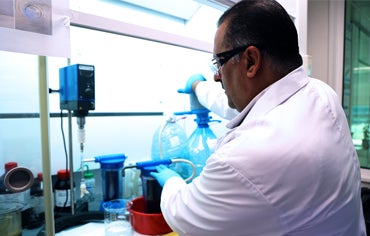
Produced water (PW) is generated in very large volumes in Qatar as a by-product of natural gas production and is typically disposed of via deep-well injection, a practice that poses risks of long-term environmental contamination. Reuse of gas-derived PW represents a promising alternative for applications such as district cooling, aquifer recharge, and landscape irrigation. However, the presence of residual oil, toxic organic compounds, and heavy metals in treated PW must be effectively addressed before safe reuse is possible.
This project is a collaborative effort between QEERI, ExxonMobil Research Qatar (EMRQ), local company APEX Water Solutions & Services, and QatarEnergy LNG. The primary objective is to evaluate and optimize the performance of two hybrid treatment trains for PW purification:
- constructed wetland - adsorption - membrane treatment
- coalescent media/APEX ceramic filtration - adsorption - membrane treatment.
In the first treatment train, pilot-scale wetland systems (developed and operated at EMRQ) will be assessed for their effectiveness in removing oil and organic pollutants from PW, followed by adsorption processes and desalination-grade membrane filtration. In the second treatment train, porous coalescent materials and APEX ceramic membranes will be tested for oil and suspended solids removal as a potential replacement for wetlands in hybrid treatment schemes.
A fully integrated prototype system for PW treatment will be designed, fabricated, and tested with real gas PW under field-relevant conditions. Comprehensive life cycle assessment and scalability analyses will be conducted to evaluate the environmental and economic feasibility of PW treatment and reuse pathways in Qatar.
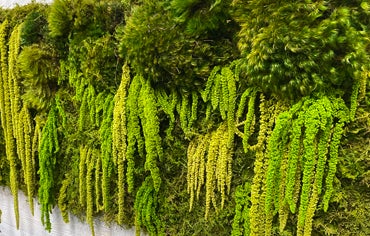
This project introduces a novel system based on wastewater management to support water and food security with urban infrastructures. It proposes an integrated and closed-loop decentralized wastewater treatment solution by integrating engineered and nature-based processes to produce high-quality effluent for non-potable reuse, such as flushing, and to support crop production using biochar derived from the waste by-products.
The system integrates a Membrane Aerated BioReactor (MABR) with a living wall bioreactor, supported by engineered substrates derived from local agri-waste, generating effluent and sludge as by-products. The MABR uses oxygen-permeable membranes to enhance nitrification–denitrification with low energy input, maintaining resilience under variable loads. Its effluent is polished in the living wall, which combines vegetation with tailored substrates (hydrogel and biochar) for nutrient and contaminant removal. In addition to treatment efficiency, the living wall provides ecological and aesthetic value, enabling integration into urban spaces and infrastructure.
The sludge by-product from MABR and other agri-waste is converted to biochar, which will be applied to recover the nutrients from the effluent within the living wall and to support crop production through enhanced nutrient and water retention. Within this, biochar is modified and optimized through urea coating, then tested for its ability to improve crop yields. This component reinforces the project’s integrated vision of circularity by transforming local waste into materials that support both treatment performance and agricultural productivity.
By merging energy-efficient biological processes, nature-based treatment, and local waste valorization, the project establishes a technically robust and environmentally integrated model for next-generation decentralized wastewater management.