
 Apply Now

Overview
This initiative drives innovations in energy, water, and environment through advanced materials discovery, combining synthesis, plasma science, and AI-driven design that unlock transformative applications and boost next-generation technologies.
Projects
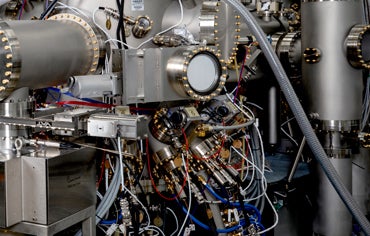
This project addresses a critical global challenge: detecting hazardous gases in confined or high-risk environments. Such spaces are prone to the buildup of hazardous gases, including methane (CH4), hydrogen sulfide (H2S), carbon monoxide (CO), carbon dioxide (CO2), and volatile organic compounds (VOCs). Accurate and timely detection of these gases is essential for protecting human health, ensuring operational safety, and preventing environmental harm. However, current detection systems often suffer from limited sensitivity, selectivity, and real-time performance, especially in harsh or variable conditions. To overcome these limitations, the project focuses on developing advanced functional materials and sensor platforms using Molecular Beam Epitaxy (MBE) and state-of-the-art nanofabrication techniques. These include gallium oxide (Ga2O3) and two-dimensional layered semiconductors for high-performance gas sensors and photodetectors, complemented by engineered carbon nanostructures for RFID-enabled wireless sensing. The resulting devices are designed for real-time monitoring, IoT integration, and robust operation in extreme environments. Beyond industrial safety, the project leverages terahertz (THz) sensing technologies to broaden its impact across environmental and societal domains. THz sensors offer high sensitivity for detecting trace pollutants through molecular fingerprinting, safe non-ionizing operation, and the ability to penetrate non-metallic materials. These features enable precise, contactless analysis for diverse applications such as air quality management, climate monitoring, precision agriculture, and disaster response. By integrating advanced materials, multifunctional sensing platforms, and THz-enabled capabilities, the project aims to deliver scalable, durable, and intelligent solutions for hazardous gas detection, worker safety, and sustainable environmental monitoring.
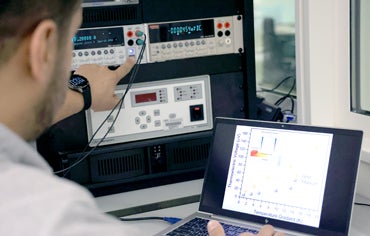
This project aims to advance nanomaterials for both TE and RC applications by researchers from Qatar and leading international institutions. Novel TE thin films will be developed via Molecular Beam Epitaxy (MBE), while bulk TE materials will be synthesized through advanced solid-state reactions. Comprehensive TE measurements and structural characterization at HBKU and partner laboratories will establish critical links between material properties and energy-conversion efficiency. Simultaneously, innovative RC nanomaterials will be engineered to enhance passive RC under extreme environmental conditions. Furthermore, different engineering approaches will be investigated for deploying TE coolers for managing heat in electric vehicle chargers. Ultimately, this project aligns with Qatar’s National Development Strategy, strengthening its global role in advancing zero-carbon energy solutions.