
 Apply Now

Overview
The initiative assesses environmental risks within Qatar’s built environment, and evaluates and develops sustainable, human-centred solutions to improve indoor environmental quality, urban cooling, and climate adaptation.
Projects
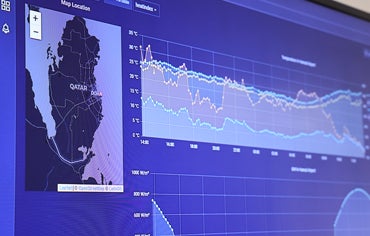
The aim of this research project is to optimize indoor environmental quality (IEQ) and energy efficiency through innovative managed fresh air intake strategies and integrated HVAC control systems. The project will conduct well-designed systematic IEQ experiments, advanced IEQ sensing, high-fidelity indoor environment simulations, AI-driven automation and multi-objective optimization to enhance energy efficiency, occupant well-being, and adaptive indoor comfort. The integration of multi-parameter monitoring with predictive algorithms supports real-time, adaptive management of indoor environments, while leveraging validated numerical models to calibrate the control algorithms for fine-tuned performance. Predictive analytics, including weather and occupancy forecasting, will dynamically adjust setpoints to maintain occupant-preferred humidity-compensated comfort and IEQ based on international standards such as those from the world health organization (WHO) and ASHRAE. Key performance indicators include adaptive comfort, pollutant concentrations, HVAC energy demand, and system responsiveness. The project’s novelty lies in its integrated, scalable, and AI-driven building management solutions for real-time IEQ monitoring and control. The outcomes strongly align with HBKU’s sustainability and innovation goals and have high potential for technology transfer across residential and commercial buildings.