

 Apply Now
This research group focuses on the crosstalk between the nervous system and the peripheral immune system in autism. Despite the numerous reports on immune abnormality in the circulating blood in autism, the major questions that remain are:
What causes immune abnormality in the blood in autism? What is the functional relevance of these abnormal immune factors to the autism disorder?
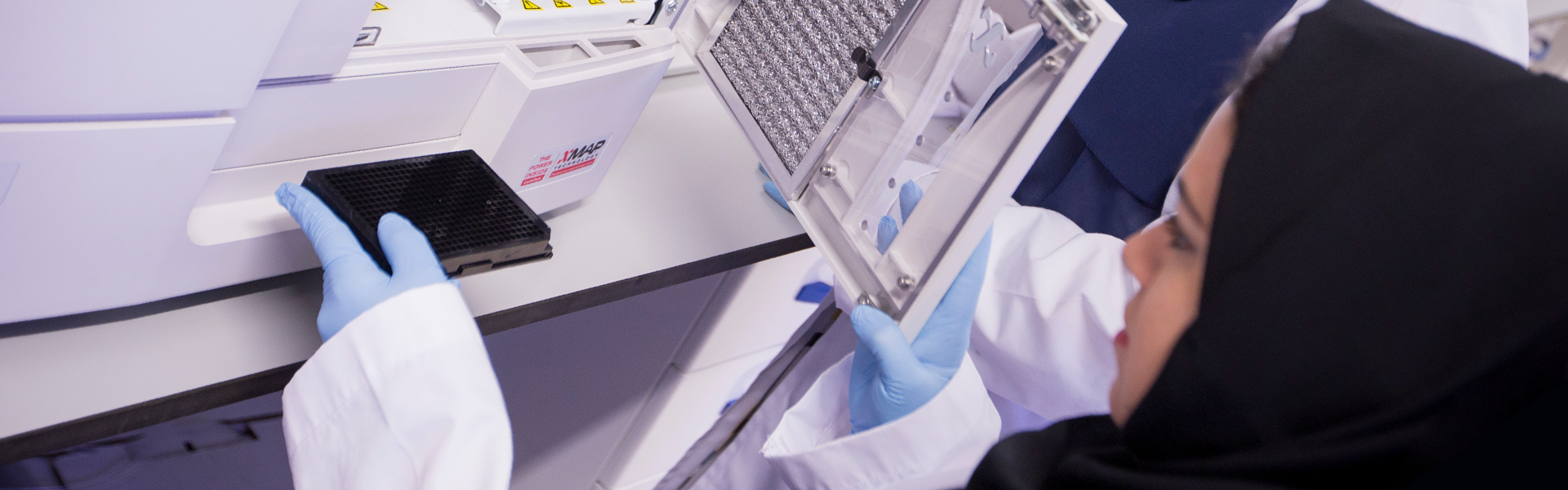
In order to tackle these questions, the group uses a multidisciplinary approach in studying autism, in which human subjects with autism and their matching controls are recruited, and data is collected and integrated from the fields of psychology, medical history, immunology, genomics, and neurosciences. Some of the research techniques used in the lab for the analysis of human blood samples include flow cytometry, immunohistochemistry, proteomics, and transcriptomics. This is in addition to functional studies in which patient-specific induced pluripotent stem cells (iPSC) are generated and converted into brain-specific cells to further understand the disease mechanisms in cell culture models. The ultimate goal of this group is to understand the underlying cause of immune dysfunction in autism and to confirm their functional relevance to the disorder as a future target for autism therapy.
Research Team

Dr. Abeer Al-Shammari
Scientist
Qatar Biomedical Research Institute
Dr. Wared Nour Eldine
Postdoctoral Researcher
Qatar Biomedical Research Institute

Samia Ltaief
Senior Research Associate
Qatar Biomedical Research Institute

Muhammad Marwan
PhD Student

Maab Salih
MS Student
Current Projects
Studying the blood immune phenotypes in autism and its association with the clinical severity of autism and medical history complications.
Investigating the underlying molecular mechanisms for immune abnormalities in autism.
Studying the functional impact of the autism-related immune factors on iPSC-derived brain cells.