
 Apply Now
Overview
This initiative is dedicated to advancing solutions at the intersection of the power grid and end-users.
Projects
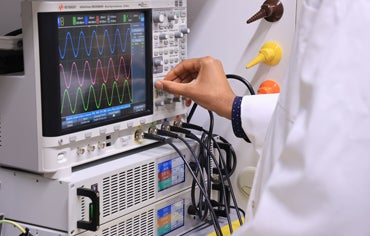
This project targets the development of a next-generation energy framework that enhances power system resilience and sustainability amid rising energy demands, climate challenges, and renewable integration. Building on the iCUBE and EVI projects, it combines electric vehicle (EV) infrastructure, modular energy hubs, renewable energy, and energy storage into a scalable, climate-resilient architecture. Central to the project is the deployment of modular grid-forming inverters integrated with photovoltaics, green hydrogen, and batteries to form hybrid microgrids capable of both on-grid and off-grid operation.
A key innovation is the development of robust, thermally-managed AC/DC fast EV chargers with V2G capabilities, dynamic pricing, and AI-driven charging schedules optimized for grid conditions, user behavior, and battery health. These EV systems function not only as mobility tools but also as grid-support assets.
To ensure operational intelligence, a multi-layer digital twin platform will simulate and optimize system performance under various disruptions, environmental, technical, and cyber, using AI/ML techniques for predictive maintenance and anomaly detection. The project also focuses on defining resilience KPIs, techno-economic evaluation, and policies supporting flexibility services such as peak shaving and frequency response.
Cybersecurity and interoperability across all components will be prioritized using standards like OCPP and IEC 61850. Sustainable hardware practices, including life cycle assessment and second-life battery use, are integral to the project.
Deliverables include pilot sites, AI-enabled platforms, policy papers, and training modules, aiming to reach TRL 5–6. This initiative aspires to position Qatar and the MENA region as leaders in smart, resilient, and sustainable energy systems.
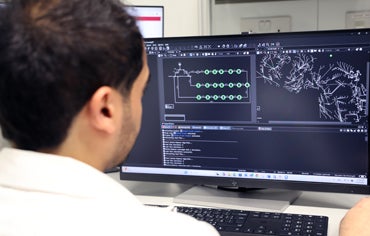
EnergyIQ Project aims to enhance energy efficiency and system resilience across QF facilities and households through a unified smart platform that integrates predictive analytics, behavioural interventions, and Distributed Energy Resources (DERs). While rooftop solar PV is an important input, the scope explicitly extends to non-PV end-uses such as HVAC, lighting, and appliances, where the highest DSM potential lies.
Given current monitoring limitations, EnergyIQ will rely on high-resolution smart meter datasets and interactive Power BI dashboards, developed in coordination with KAHRAMAA and QF-CO, to ensure seamless data exchange. Alignment with the QF Energy Management System and the Smart Campus Dashboard ensures interoperability, minimizes redundancy, and strengthens operational integration.
By coupling AI-driven analytics with policy-aligned demand response tools, the DSM platform enables data-driven decision-making and fosters smarter electricity use, cost savings, and carbon reduction across QF operations and households.