
Motivation
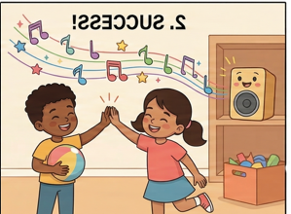
“Just play together and pass the ball.” — Is collaborative play really that simple? For many children with ASD, reciprocal play, turn-taking, and coordinated movement do not emerge naturally, making it difficult to design activities that are both engaging and capable of eliciting measurable peer interaction.
Research
A structured cooperative game-based method for assessing collaboration in children with ASD via a ball-based exergame. The project focuses on measuring peer interaction through behavioral indicators such as passing, waiting, responding to a partner, and coordinated action toward a shared goal.
Outcome
Collaborative behavior during ball-based play is expected to vary across children with ASD, particularly in turn-taking, partner response, waiting, and coordinated movement. The project aims to deliver a structured exergame and an assessment framework capable of eliciting and capturing measurable peer interaction.