
Motivation
Joint attention is a cornerstone of social and cognitive development, developing from 6 months to 12 months of age, and forms the basis for language acquisition, social bonding, and adaptive functioning. Children with ASD often struggle to establish and maintain joint attention. Conventional assessment methods are subjective, require highly trained professionals, and are time-consuming to administer reliably.
Research
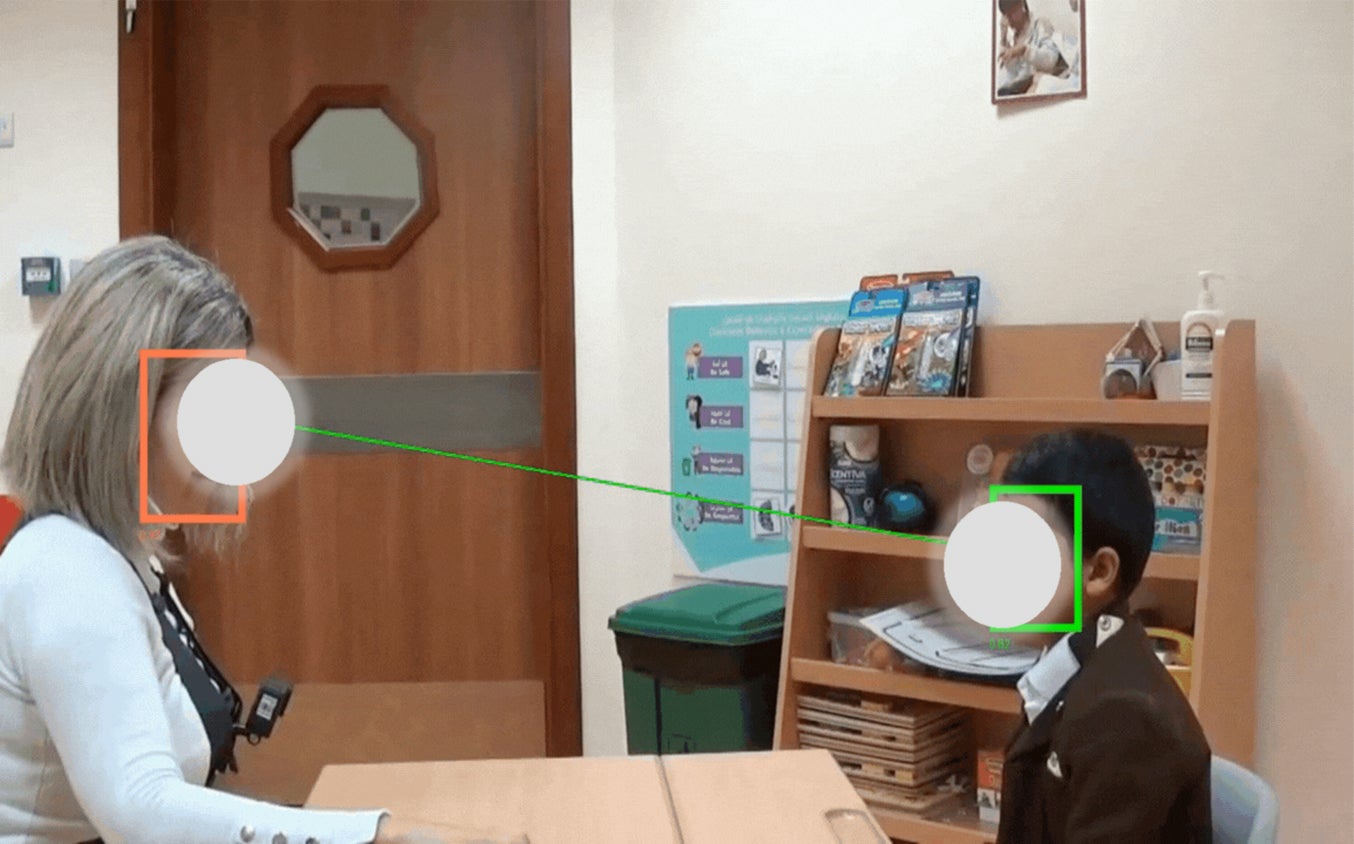
Develop computer vision methods that reduce bias in human observation, enable continuous monitoring of joint attention over time, and provide valuable insights into developmental progress and intervention effectiveness.
- Non-Screen-Based Approach:
- Early Social and Communication Scale (ESCS) administered by trained professional under recording
- Collaboration with Renad Academy
- Screen-Based Approach:
- Eye-tracking based experiment during book reading with JA cues embedded
Impact
Enables earlier, more accurate detection of social communication skills and supports personalized, data-driven intervention planning. It also makes social attention evaluation scalable, non-intrusive, and effective in fostering the development of higher-level social and cognitive abilities.