Quantum Transformers
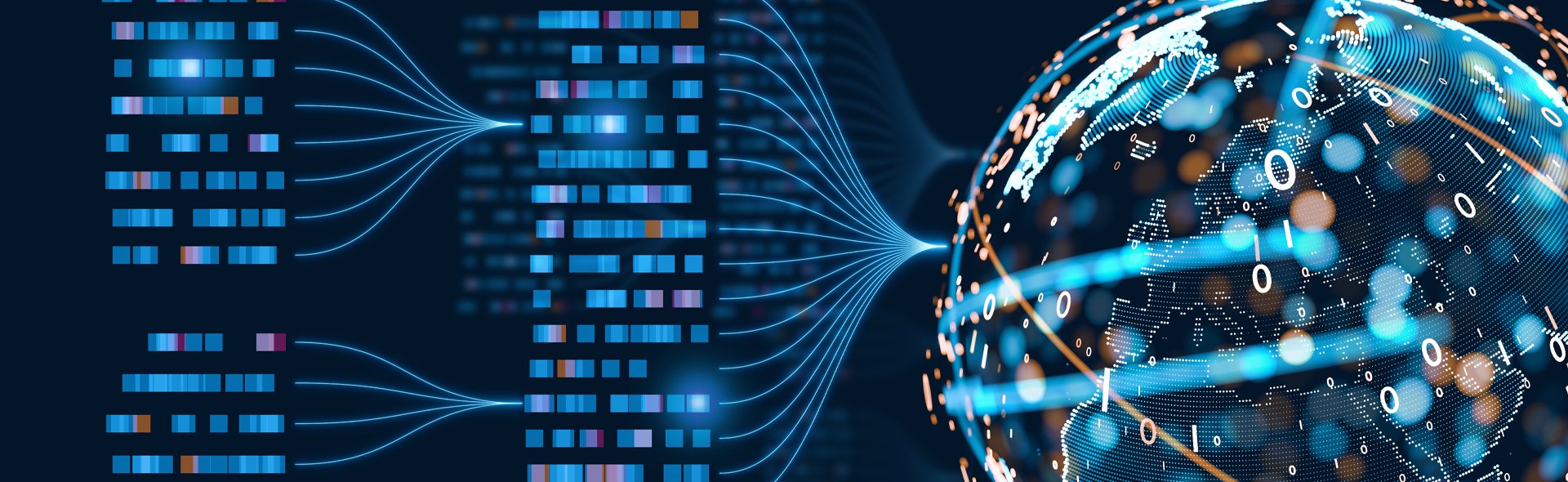
Quantum Transformers represent a new research direction at the convergence of quantum computing and classical Transformer architectures, aiming to overcome fundamental limitations of purely classical learning systems in real-world environments. Classical Transformers excel under controlled conditions, yet their performance and trustworthiness often degrade in the presence of noise, drift, missing data, domain shifts, and strict resource constraints. At the same time, quantum computing introduces powerful primitives, such as quantum feature spaces, quantum optimization, and simulation-inspired dynamics, while also facing practical challenges, including noisy hardware, limited qubit availability, and sampling overhead. This research explores quantum-aware Transformer methodologies and deployment-first engineering practices that strategically combine quantum and classical capabilities to enable robust, scalable, and reproducible learning systems. It advances three tightly integrated thrusts: scalable representation learning and global mixing, developing efficient long-context models for multivariate time series and multimodal sensing through compute-aware alternatives to standard attention, context-aware fusion of heterogeneous sensors, and physics or measurement informed embeddings that enhance stability and interpretability; quantum-enhanced learning, reasoning, and optimization, investigating hybrid quantum, classical pipelines that leverage quantum feature mapping, quantum optimization, and simulation-inspired modules to accelerate difficult inference and search tasks, improve generalization in high-dimensional regimes, and reduce labeling requirements where possible; and trust, verification, and deployment-first evaluation, establishing rigorous protocols that include leakage-resistant data splits, stress testing under noise, missingness, and adversarial corruption, calibrated uncertainty estimation, and operational profiling of latency, memory, and energy proxies alongside parameter-efficient adaptation. Collectively, this work aims to move Quantum Transformers from conceptual promise toward validated, trustworthy systems capable of delivering measurable impact in real-world scientific and engineering applications.
Funding