
 Apply Now
Overview
Embodied within a research-driven university, the College of Islamic Studies (CIS), strives to advance a more nuanced understanding of Islam and its social dimensions in a rapidly changing world. To complement this, the research ecosystem at the College is designed to stimulate learning and collaborative research through its multifaceted infrastructure, which comprises the research division, research clusters, research centers, and value-driven projects.
Altogether, the research infrastructure facilitates the promotion of interdisciplinary research agendas and new contributions to the world of global Islamic scholarship. It streamlines the diverse research activities of CIS towards its key research areas of excellence and its research clusters.
Research Clusters
The research clusters are a faculty-driven substructure within CIS and its RD. The clusters help recalibrate the focus of research production and create new possibilities for outputs, engagement, and impact. The clusters encompass a broad range of topics and promote interdisciplinarity as a feature for research projects. Research conducted within these clusters brings together faculty from across different disciplines and engages students in the research process and production. It further encourages collaborative projects with national and international institutions, clearly demarcating deliverables for scholarly and community impact.
Islam and Applied Ethics
Focuses on the practical application of the ethical concepts, particularly those emanating from Islamic sources to solve the contemporary moral and ethical dilemmas facing humanity.

Islam and Religious Worldviews: Traditions Modernities
Investigates the Islamic intellectual tradition and its development in the multi-faceted understandings and their continuous relevance to the contemporary Muslim world in addressing the challenges of modernity.
Islam, Society and Global Affairs
Critically analyzes the pressing global issues affecting contemporary Muslim societies and humanity globally and examines issues pertaining to sustainable development in Muslim states.
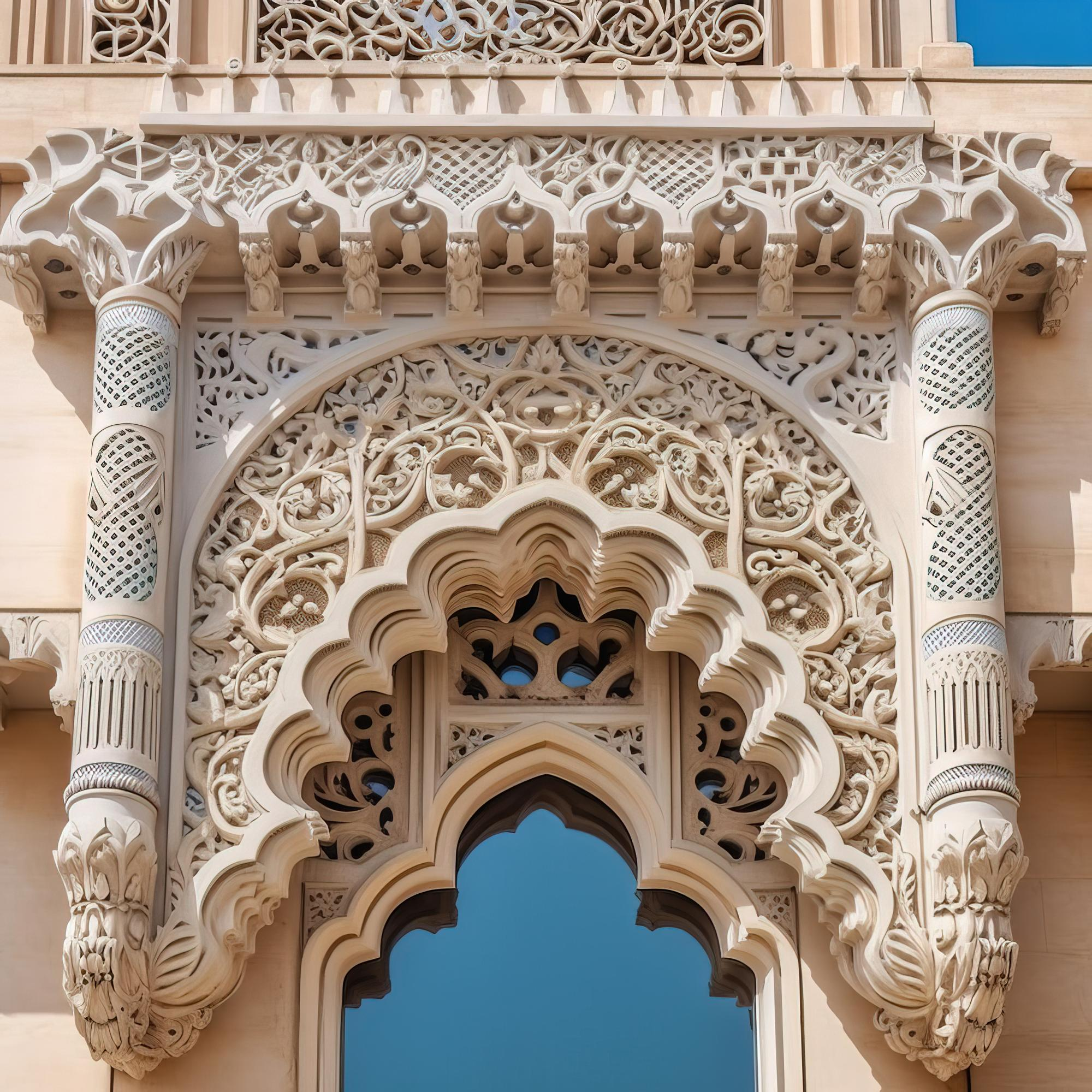
Islamic Architecture and Urbanity
Hosts contemporary theoretical and critical discourses in relation to Islamic art, identity, and urban life, while highlighting the overlap with Islamic values.

Islamic Civilization and Global Context
Engages with critical discourses on contemporary issues of Islamic civilizations globally and explores the relevance and role of Islam from a global and historic perspective, in light of major economic, cultural, and anthropological trends.

Islamic Finance and Moral Economies
Examines the interdisciplinary study of the Islamic banking and finance industry, as well as emerging concepts such as fintech, blockchain, digital financing, circular economy, green financing, and morally driven investments.

Islamic Law in Changing Contexts
Addresses the challenges and their impact on Islamic jurisprudence, while also developing innovative Islamic solutions, encompassing Science, Religion, and Contemporary Rulings; Islamic Law and Maqasid; and Codification of Islamic Law.

Bibliographic Capacity in Islamic Studies
Explores development of much-needed repositories in essential fields of Islamic studies to reflect the CIS faculty research and further enhance its scope and impact.
Research Centers
CIS comprises three research centers that complement its academic programs as well as its research areas of excellence. Each center monitors the trends and developments within its associated fields and encourages distinct inquiries to advance current scholarship. The centers further consolidate synergies amongst multidisciplinary scholars and engage specialized and novel approaches to current research debates.
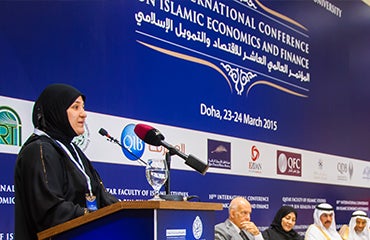
Center for Islamic Economics and Finance
In the contemporary world, the principles, premises, and institutions of Islamic economics are increasingly becoming relevant for the formulation of policies and management of economies and businesses...
Learn more
Research Center for Islamic Legislation and Ethics
The Research Center for Islamic Legislation and Ethics (CILE), leads the reform and renewal of contemporary Islamic legal and ethical thought and behavior by contributing a sustainable ethical framework for addressing contemporary global challenges.
Learn more
Muhammed Bin Hamad Al-Thani Center for Muslim Contribution to Civilization
The Muhammad Bin Hamad Al Thani Center for Muslim Contribution to Civilization was established in 1983 in order to provide non-Arabic speakers with access to scholarly works that underscore the contributions Muslims have made to human civilization.
Research Highlights
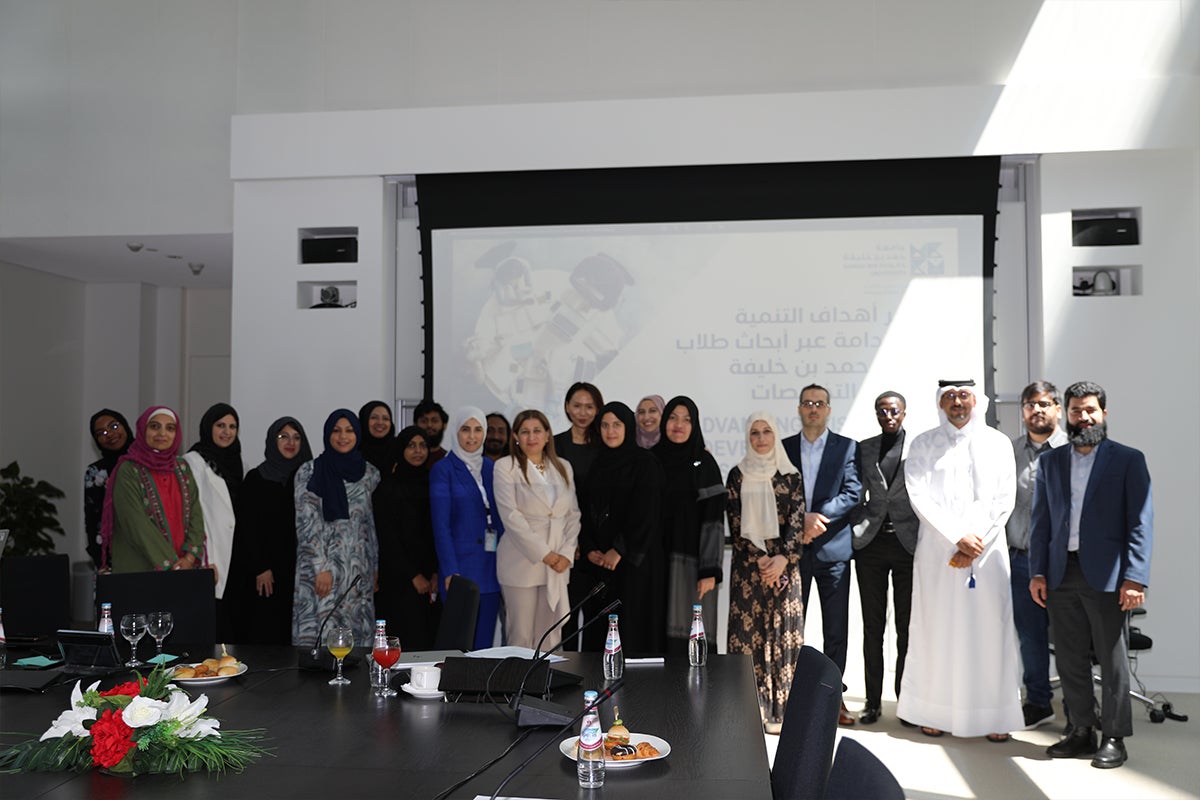
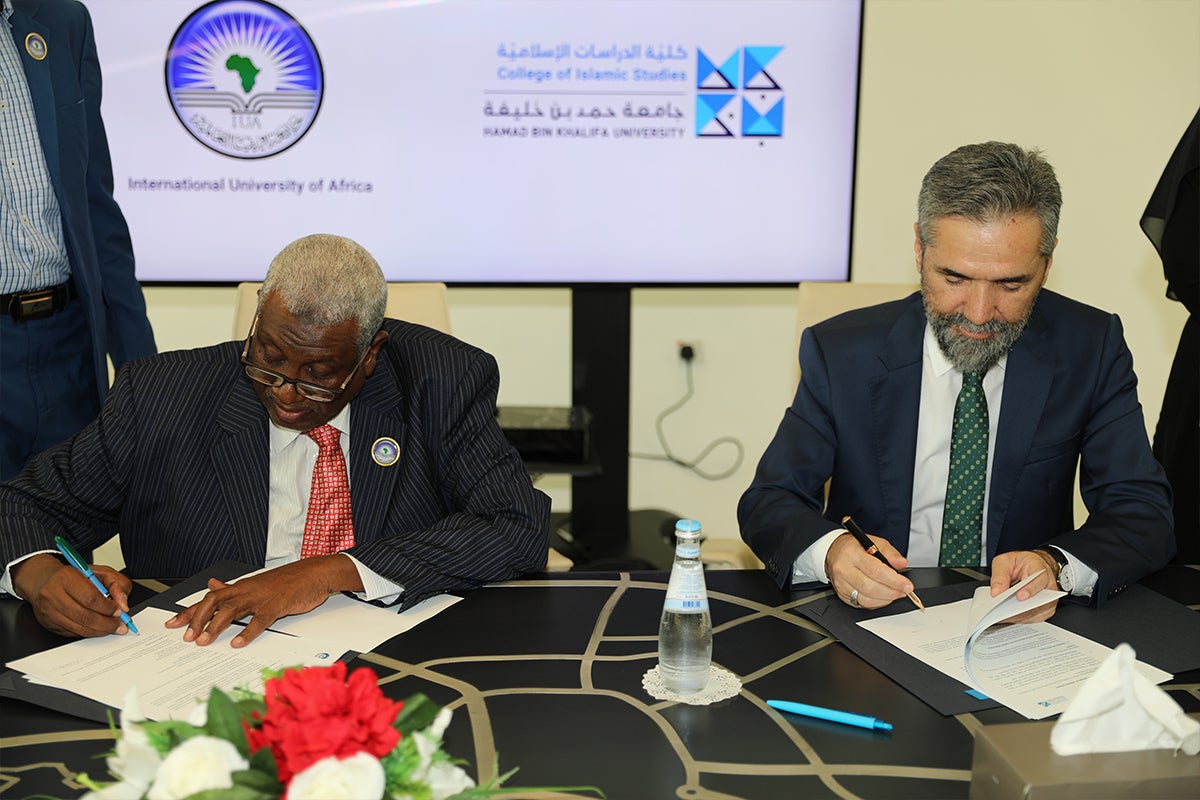
CIS Signs MOU on Research Collaboration with the International University of Africa
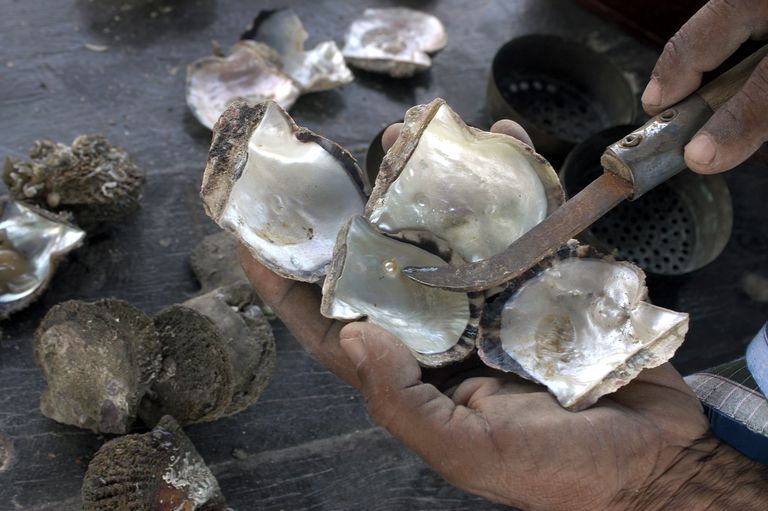
Hamad Bin Khalifa University Spearheads Academic Initiatives Amid COVID-19 Pandemic
Maker Majlis
Maker Majlis is a platform operating under the College of Islamic Studies (CIS) at Hamad Bin Khalifa University (HBKU) for youth to engage in timely topics through an Islamic lens and strengthen their ties to their faith.

Astrolabe
A CIS Student Research Journal is an annual publication that seeks to highlight the applied nature of Islamic Studies and showcases our students’ voices from the fields of Shari’a, Qur’anic Studies, Islamic Ethics, Islamic Art, Education, Islamic Finance, and Social Sciences.